


Futures
Access hundreds of perpetual contracts
TradFi
Gold
One platform for global traditional assets
Options
Hot
Trade European-style vanilla options
Unified Account
Maximize your capital efficiency
Demo Trading
Introduction to Futures Trading
Learn the basics of futures trading
Futures Events
Join events to earn rewards
Demo Trading
Use virtual funds to practice risk-free trading
Launch
CandyDrop
Collect candies to earn airdrops
Launchpool
Quick staking, earn potential new tokens
HODLer Airdrop
Hold GT and get massive airdrops for free
Launchpad
Be early to the next big token project
Alpha Points
Trade on-chain assets and earn airdrops
Futures Points
Earn futures points and claim airdrop rewards


More



#GateWeb3UpgradestoGateDEX
My Views on Trump’s 25% Tariff Threat and Its Impact on Global, Financial, and Crypto Markets
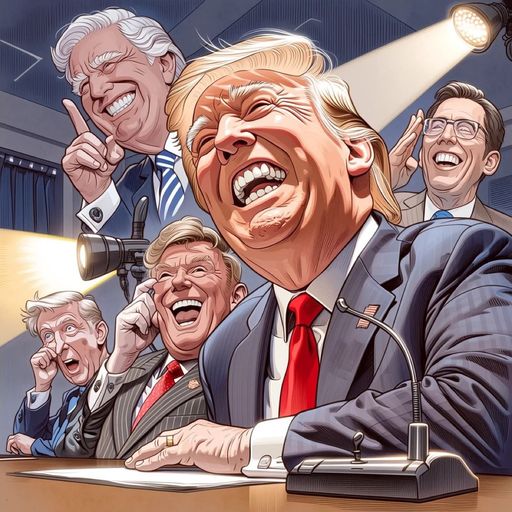
Former U.S. President Donald Trump has stated that the United States will impose a 25% tariff on countries trading with Iran. In my view, this announcement should be taken seriously by markets, but not interpreted blindly as an immediately enforceable policy. Historically, such statements function first as geopolitical pressure tools rather than instant economic actions. However, markets react to signals long before policies are formally implemented, which is why this development deserves close attention.
From my perspective, enforcement remains the key uncertainty. Implementing such tariffs would require coordination across U.S. institutions, compliance mechanisms, and international cooperation. Many countries maintain complex trade relationships with Iran, particularly in energy and commodities, and abrupt enforcement would create diplomatic and economic friction. That said, even without full enforcement, the announcement alone can influence behavior, shift capital flows, and raise risk premiums across markets.
Geopolitically, this move increases pressure in an already fragile environment. Iran plays a strategic role in Middle Eastern energy supply, and any escalation real or perceived can ripple through oil and gas markets. In my view, energy markets will act as the first stress indicator. Rising oil prices would not just reflect supply concerns, but also broader geopolitical risk, which tends to tighten global financial conditions. This is where macro risk begins to spill into equities, bonds, and alternative assets.
From a traditional market standpoint, I expect short-term volatility rather than immediate structural damage. Equity markets generally dislike uncertainty, and sectors exposed to global trade, logistics, and energy may experience sharper reactions. Commodities, particularly oil and metals, could see upside pressure as traders price in supply risks. Currency markets may shift toward safe havens like the U.S. dollar, Japanese yen, or Swiss franc if tensions escalate further. These reactions are often reflexive at first, followed by more rational repricing once clarity improves.
Regarding crypto markets, my view is balanced but constructive. Geopolitical shocks typically introduce volatility into Bitcoin and major altcoins, especially in the short term. However, crypto has increasingly behaved as a macro-sensitive asset rather than a purely speculative one. In periods of geopolitical stress, Bitcoin often regains attention as a hedge against uncertainty, capital controls, and systemic risk. I do not see this event as structurally bearish for crypto. Instead, it may create sharp moves that reward disciplined traders and patient long-term holders.
My advice is clear:
do not react emotionally to headlines. Traders should expect volatility spikes and use them tactically with proper risk management. Long-term investors should remain focused on fundamentals, adoption trends, and liquidity cycles rather than short-term geopolitical noise. Diversification becomes critical in this environment, especially across assets sensitive to energy prices, macro liquidity, and geopolitical risk.
In my assessment, the most likely scenario is a period of heightened uncertainty followed by range-bound market behavior while participants wait for confirmation of enforcement. If this remains largely political signaling, markets may stabilize quickly. If enforcement escalates alongside broader geopolitical tensions, risk assets could see temporary corrections, commodities could strengthen, and crypto could experience sharp but tradeable volatility.
My final view is this:
this situation is not about panic, but positioning. Geopolitical pressure rarely unfolds in a straight line, and markets tend to overreact before recalibrating. Those who stay informed, manage risk, and distinguish between political rhetoric and actual policy implementation will be best positioned to navigate both traditional and crypto markets in the weeks ahead.