

Trade
Basic
Futures
Futures
Hundreds of contracts settled in USDT or BTC
Options
HOT
Trade European-style vanilla options
Unified Account
Maximize your capital efficiency
Demo Trading
Futures Kickoff
Get prepared for your futures trading
Futures Events
Futures Mall
Participate in events to win generous rewards
Demo Trading
Use virtual funds to experience risk-free trading
Earn
Launch
CandyDrop
Collect candies to earn airdrops
Launchpool
Quick staking, earn potential new tokens
HODLer Airdrop
Hold GT and get massive airdrops for free
Launchpad
Be early to the next big token project
Alpha Points
NEW
Trade on-chain assets and enjoy airdrop rewards!
Futures Points
NEW
Earn futures points and claim airdrop rewards
Investment
Simple Earn
Earn interests with idle tokens
Auto-Invest
Auto-invest on a regular basis
Dual Investment
Buy low and sell high to take profits from price fluctuations
Soft Staking
Earn rewards with flexible staking
Crypto Loan
0 Fees
Pledge one crypto to borrow another
Lending Center
One-stop lending hub
VIP Wealth Hub
Customized wealth management empowers your assets growth
Private Wealth Management
Customized asset management to grow your digital assets
Quant Fund
Top asset management team helps you profit without hassle
Staking
Stake cryptos to earn in PoS products
Smart Leverage
NEW
No forced liquidation before maturity, worry-free leveraged gains
GUSD Minting
Use USDT/USDC to mint GUSD for treasury-level yields

More





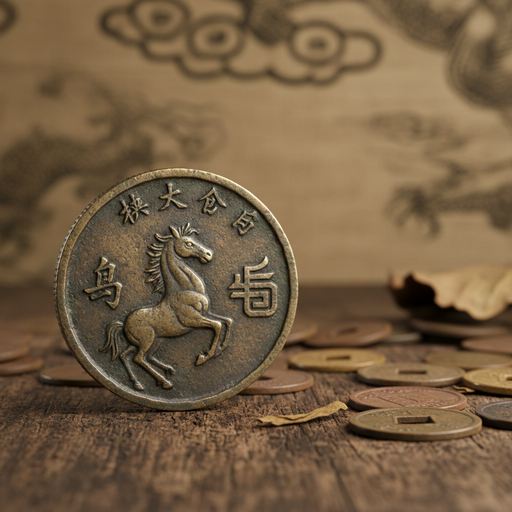

Why Does Inferior Money Always Dominate? Understanding Gresham's Law Across History and Modern Markets
When people face a choice between holding two types of currency with different values, they naturally prefer to keep the more valuable one and spend the less valuable. This seemingly simple human behavior has shaped economic systems for centuries. This dynamic is the foundation of what economists call Gresham’s law—a principle explaining why “bad money drives out good,” revealing fundamental truths about how people interact with money and how governments’ monetary policies influence market behavior.
The Essential Principle: Why People Hoard Good Money and Spend Bad Money
At its core, Gresham’s law describes what happens when two types of money circulate simultaneously as legal tender, but one possesses greater intrinsic worth than the other. People naturally gravitate toward spending the money with lower value while accumulating the money with higher value. This isn’t greed or irrationality—it’s basic economic logic. If you hold a coin made of pure gold and another made of base metal, both accepted at the same nominal face value, which would you spend first?
The mechanism behind this behavior is straightforward: individuals want to preserve their wealth. Money with genuine underlying value—whether through precious metal content or other forms of worth—represents real purchasing power that endures. Money artificially kept at an inflated value through government decree lacks this stability. Consequently, superior money disappears from everyday transactions while inferior money remains in circulation.
This principle gained its name from Sir Thomas Gresham, a 16th-century English financier and merchant who established the Royal Exchange in London. Though Gresham didn’t formally define the law bearing his name, he observed this phenomenon firsthand while serving as financial advisor to Queen Elizabeth I. He witnessed how currency debasement—the government’s practice of reducing precious metal content while maintaining face value—triggered predictable hoarding behavior among the population. The term “Gresham’s law” itself was formally coined in the 19th century by economist Henry Dunning Macleod, who credited Gresham for identifying the principle.
Government Intervention: The Missing Piece in Understanding Money Displacement
A crucial insight came from economist Murray Rothbard of the Austrian school, who clarified that Gresham’s law specifically describes what occurs under artificial market conditions—specifically when governments impose price controls on money. According to Rothbard’s reinterpretation, the phenomenon doesn’t emerge from free market dynamics but from regulatory distortion.
When a government mandates that two forms of money maintain a fixed exchange rate despite their differing intrinsic values, it creates market distortion. The “good” money becomes artificially undervalued, while the “bad” money becomes overvalued. This regulatory mismatch incentivizes accumulation of the undervalued asset and spending of the overvalued one. Rothbard emphasized that without such government controls, the opposite would occur: people would naturally prefer to use and circulate good money while rejecting inferior alternatives.
This distinction matters profoundly. Gresham’s law isn’t an inevitable market outcome but rather a consequence of government policies that prevent markets from functioning properly. In unregulated environments, superior money would naturally drive out inferior money through competitive preference rather than through accumulation and hoarding.
Historical Demonstrations: When Bad Money Conquered Economies
Ancient Rome’s Currency Collapse
Perhaps the most dramatic historical illustration of Gresham’s law unfolded in Ancient Rome during the third century AD. Facing mounting military expenses from continuous campaigns, the Roman Empire needed to fund its operations. Rather than raising taxes or reducing spending, the government chose monetary debasement. Coin by coin, Rome reduced the silver content of its currency while declaring that the debased coins maintained their original face value.
Romans responded predictably. Those possessing older, higher-quality coins—with genuine silver content—hoarded them for international transactions where metal weight mattered, or accumulated them as stores of value. Meanwhile, the newly debased coins remained in circulation for everyday domestic transactions because merchants had no choice: they were legal tender. The empire’s wealthier citizens and foreign traders, however, sought to transact in the higher-quality older coins, causing them to disappear from daily circulation. This process contributed significantly to Rome’s eventual economic deterioration.
England’s Great Recoinage of 1696
Centuries later, England faced a similar crisis. By the 1690s, British currency had been severely compromised by both official debasement and widespread counterfeiting. Coins had been “clipped”—their edges shaved down—reducing their actual metal content while their face value remained unchanged. The currency system was on the verge of collapse.
King William III’s government attempted a radical solution: the Great Recoinage of 1696. The plan involved removing all debased and counterfeit coins from circulation and replacing them with new, higher-quality milled coins that couldn’t be easily clipped. However, execution revealed the limits of government authority over economic behavior. The Royal Mint couldn’t produce enough new coins—they managed to mint only about 15% of the silver coins needed for the transition. Additionally, approximately 10% of the existing currency consisted of forged coins that authorities couldn’t remove quickly.
The market responded with its own logic. The new, high-quality milled coins—the “good money”—were immediately hoarded and exported to continental Europe where precious metal had greater value. The old, clipped coins—the “bad money”—remained in domestic circulation because people had no choice. This was Gresham’s law operating with textbook precision: despite government’s best efforts to restore currency quality, market forces ensured that good money vanished while bad money persisted in everyday transactions.
Colonial America During Revolutionary Turmoil
When American colonists rebelled against British rule, they encountered immediate economic challenges. The flow of British currency into the colonies dried up as tensions escalated. Colonial governments responded by issuing their own paper money without adequate reserves or backing. Unlike coins with intrinsic metal value, this “continental currency” had value only through faith in the colonial government’s ability to redeem it.
As the Revolutionary War dragged on, confidence in that government guarantee eroded. Continental currency experienced rapid depreciation, with its purchasing power plummeting month by month. British coins, by contrast, retained their value due to their precious metal content. The market made its choice clear: colonists hoarded British coins while spending continental currency. The “good money” of British bullion disappeared from circulation while the “bad money” of paper currency remained in everyday use. This classic demonstration of Gresham’s law highlighted how loss of confidence amplifies the phenomenon.
Why Historical Context Remains Relevant
Understanding these historical examples illuminates why Gresham’s law matters beyond pure academic interest. Across different centuries, political systems, and types of money, the same behavioral pattern emerged. Humans consistently act to preserve value when given the choice, and this rationality systematically disadvantages inferior money when both compete for circulation.
Importantly, all these historical cases involved legal tender laws—government mandates that required acceptance of money at face value regardless of its actual worth. Without such compulsion, merchants could simply reject the inferior money, which would accelerate its removal from circulation rather than perpetuate its use. The law’s mechanism thus requires both a government-enforced price distortion AND legal tender requirements to function.
The Inverse Phenomenon: When Bad Money Becomes Too Worthless
An important counterpoint exists to Gresham’s law: Thiers’ law, describing the opposite dynamic. When currency depreciates so severely that it approaches worthlessness, even legal tender status cannot compel its acceptance. People will spontaneously abandon it in favor of alternative currencies, regardless of legal prohibitions against doing so.
Hyperinflation provides the most vivid examples. During Venezuela’s currency crisis or Zimbabwe’s monetary collapse, the official domestic currency became so worthless that merchants refused to accept it despite laws requiring acceptance. Populations spontaneously adopted foreign currencies—dollars, euros—that maintained purchasing power. In these extreme scenarios, good money drives out bad money through market rejection, inverting Gresham’s law.
Gresham’s Law in the Contemporary Era: Fiat Money vs. Commodity Alternatives
The transition to fiat currencies—money with value based entirely on government backing and legal mandate rather than precious metal content—seemed to make Gresham’s law obsolete. After all, if all circulating money is fundamentally the same (all backed by the same government), how could one type drive out another?
Yet the principle resurfaces whenever alternative forms of money emerge. Consider the coexistence of fiat currencies with precious metals. Central banks worldwide maintain gold reserves not because gold is legal tender but because gold retains value independent of government declarations. When confidence in fiat money erodes—through inflation or debasement—people seek commodity alternatives. The hoarding of gold or silver during inflationary periods reflects Gresham’s law operating: people accumulate “good money” (precious metals with intrinsic value) while continuing to circulate “bad money” (depreciating fiat currency).
Hyperinflationary periods demonstrate this vividly. As domestic currencies lose value through rapid monetary expansion, citizens seek stable alternatives: foreign currencies, precious metals, or any asset that preserves purchasing power. The worthless domestic currency remains in forced circulation for essential transactions (because legal tender laws still apply), while stable alternatives are hoarded. This perpetuates the economic dysfunction—bad money dominates transactions precisely when people most need to escape it.
Bitcoin and Gresham’s Law: Money for the Digital Age
One of the most compelling modern illustrations of Gresham’s law involves Bitcoin’s relationship with fiat currencies. Bitcoin, created by Satoshi Nakamoto in 2009, introduced a form of digital money with fixed supply and no central issuer—fundamentally different from government-backed fiat currency.
When Bitcoin and fiat currency coexist as available forms of money, Gresham’s law predicts that people will accumulate Bitcoin (perceived as “good money” due to its fixed supply and appreciation potential) while circulating fiat currency (perceived as “bad money” due to continuous inflation and debasement). This is precisely what has occurred. Holders who believe Bitcoin will appreciate resist spending it, instead preserving it as an asset while using fiat currency for transactions.
This pattern might initially seem irrational—why refuse to spend appreciating money? Yet it’s entirely consistent with Gresham’s logic: individuals rationally preserve money that retains or increases value while spending money that depreciates. Bitcoin’s limited circulation as a medium of exchange stems not from failure but from success in storing value, triggering the exact hoarding behavior Gresham’s law predicts.
The meeting point between Bitcoin and Gresham’s law lies in this timing question: when will Bitcoin function as everyday medium of exchange rather than stored asset? Gresham’s law suggests the answer: only when fiat currency becomes too unstable as a medium of exchange, or when individuals receive their entire income in Bitcoin and can pay all expenses with it. At that inflection point, when fiat no longer reliably facilitates transactions, Bitcoin’s superior stability would make it the preferred medium of exchange. Until then, the rational response is to spend fiat while preserving Bitcoin—exactly as Gresham’s law predicts.
Modern Relevance: Why Policymakers Still Must Consider This Ancient Principle
Though modern economies operate almost entirely on fiat money, Gresham’s law retains significant policy implications. The principle illuminates why currency debasement—whether through government spending, monetary expansion, or inflation—creates predictable economic distortions.
When governments continuously expand money supplies, they effectively implement a form of debasement. Citizens respond by seeking alternative value stores: foreign currencies, precious metals, real estate, commodities, or digital assets like Bitcoin. Money that depreciates through inflation remains in circulation (often forced by legal tender laws and practical necessity) while alternative value preserves are accumulated. The resulting capital flight, reduced velocity of money, and economic dysfunction reflect Gresham’s law operating in modern contexts.
Policymakers who understand Gresham’s law recognize that monetary stability matters not just for price levels but for currency preservation itself. Severe debasement through inflation ultimately destroys currencies—not through legal abolition but through market rejection and the emergence of alternatives. The law thus explains why countries experiencing hyperinflation spontaneously adopt foreign currencies despite legal prohibitions, reverting to barter, or embrace alternative currencies like Bitcoin.
Conclusion: An Ancient Principle Governing Modern Money
Gresham’s law remains one of economics’ most powerful explanatory principles because it describes fundamental human behavior: the rational preference to preserve value while spending what depreciates. Named for a 16th-century English financier who observed it, formalized by 19th-century economists, and reinterpreted by 20th-century Austrian school theorists, the principle has proven remarkably durable across technological and systemic changes.
The historical examples—from Roman coin debasement through English recoinage to American Revolutionary currency—demonstrate that Gresham’s law transcends specific historical contexts. More recently, the coexistence of fiat currencies with Bitcoin shows that the principle applies equally to digital money as to precious metal coins.
For anyone seeking to understand monetary systems, inflation’s effects, or alternative currencies’ emergence, Gresham’s law provides essential insight. It explains why inferior money persists in circulation while superior alternatives are hoarded, why governments cannot easily impose value through decree, and why financial stability requires more than just legal mandates. The principle ultimately reveals that money’s true value lies not in what governments declare but in what people collectively believe and accept—and that belief follows rational economic logic as predictably as night follows day.