


Futures
Access hundreds of perpetual contracts
TradFi
Gold
One platform for global traditional assets
Options
Hot
Trade European-style vanilla options
Unified Account
Maximize your capital efficiency
Demo Trading
Introduction to Futures Trading
Learn the basics of futures trading
Futures Events
Join events to earn rewards
Demo Trading
Use virtual funds to practice risk-free trading
Launch
CandyDrop
Collect candies to earn airdrops
Launchpool
Quick staking, earn potential new tokens
HODLer Airdrop
Hold GT and get massive airdrops for free
Launchpad
Be early to the next big token project
Alpha Points
Trade on-chain assets and earn airdrops
Futures Points
Earn futures points and claim airdrop rewards


More



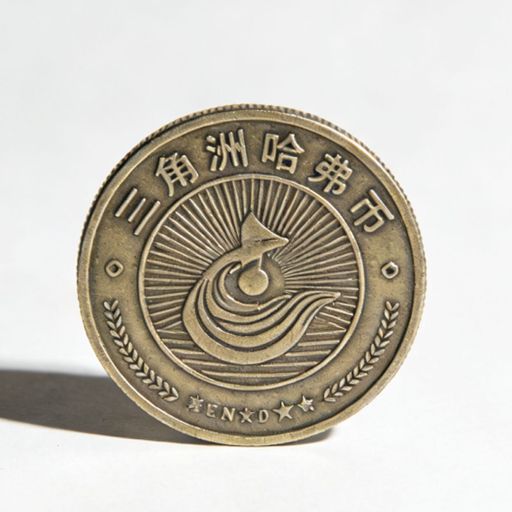


What Are Inscriptions? An In-Depth Analysis of Digital Asset Innovation and Investment Mechanisms on Bitcoin
What exactly are inscriptions? Simply put, they are a way to permanently embed data into the Bitcoin blockchain using the Ordinals protocol. If you think of Bitcoin as digital gold, inscriptions are like the unique engravings carved onto that “gold”—each one carrying the story and value of its owner. Can ordinary people participate? What are the profit opportunities and risks in this market surge that began in 2023?
In-depth Definition of Bitcoin Inscriptions—From Ordinals Protocol to Satoshi
To understand what inscriptions are, first recognize the innovative Ordinals protocol. Its core innovation is: embedding any content (text, images, videos, etc.) into satoshis—the smallest units of Bitcoin—for permanent inscription. These embedded contents are collectively called “inscriptions.”
Traditional Bitcoin blockchain only records transaction data, which is efficient and straightforward. But this simplicity also limits functionality. The birth of inscriptions breaks this barrier, enabling Bitcoin to carry more information and creating a new category of digital assets. Think of it this way: if 1 gram of gold is worth over $300, then jewelry made from that gram—bracelets, rings—can be worth multiple times more. Inscriptions follow this logic—adding extra value through creativity and scarcity on the same Bitcoin foundation.
Inscriptions vs. Traditional NFTs: Why Inscribe on Bitcoin?
On Ethereum, creating NFTs is called “minting.” On Bitcoin, this action has a new name—“inscribing,” and the resulting product is called an “inscription.” When people say “minting inscriptions,” they mean creating and publishing new Bitcoin NFTs.
Why inscribe on Bitcoin? There are three main reasons:
Maximum Security—Bitcoin is the most decentralized and censorship-resistant blockchain, making inscriptions on it highly permanent.
New Narrative—After multiple cycles in the Ethereum NFT market, innovators seek new stories. Inscriptions on Bitcoin offer a fresh narrative.
Market Hype—Since the launch of the Ordinals protocol, it has quickly attracted investors and speculators, forming a hot new ecosystem.
The Truth Behind the BRC-20 Boom: Bubble Concerns Amid Market Prosperity
As investors chase profits, various inscriptions emerge. The most notable is the experimental meme token standard called BRC-20. Some have dubbed it a “new way to distribute tokens,” claiming it has no project team, no risk of rug pulls, and offers equal opportunities.
Sounds great, but what’s the reality?
BRC-20 tokens are indeed decentralized—anyone can deploy and mint them, with no private sales, pre-sales, or unlock mechanisms. This openness lowers entry barriers. However, it also means the ecosystem is a mixed bag. Currently, 85% of inscriptions on Bitcoin are BRC-20 tokens, most of which are meaningless and just attempts by speculators to replicate the success of ORDI (short for Ordinals tokens).
The most famous case is the ORDI project. Early 2023, you could mint 100,000 ORDI for just $3,000, with a peak price of $4.50. But by March 2026, ORDI had fallen to $2.49, a drop of over 75%. This shows that early entrants profit well, but latecomers face huge risks.
How about other mainstream BRC-20 projects? Not much better. Many rely on continuous new investors to keep their value afloat. Once hype fades and funds dry up, they risk collapsing to zero—similar to the meme coins during the 2021 bull run.
Data Snapshot: Current State of Inscriptions—ORDI, SATS, RATS, and More
Let’s look at the latest on-chain data to gauge the real situation.
As of March 2026:
SATS project—24-hour trading volume: $667,100; holders: 54,050 addresses. Total historical trading volume exceeded $84 million, making it one of the most active BRC-20 tokens.
RATS project—24-hour trading volume: $1,133,000; holders: 17,904 addresses. Fewer holders than SATS, but with higher average holdings per address, indicating more concentrated ownership.
ORDI project—the leading inscription ecosystem—current price: $2.49, with a 1-year decline of 75.22%. Once popular, now significantly shrunk.
Other projects—CATS, BTCS, BEAR, etc.—also had high historical trading volumes but face similar issues: after hype subsides, funds flow out, and project values become uncertain.
These figures reveal a harsh reality: most inscription projects are fleeting meme tokens. Only a few can gain long-term recognition; the rest risk becoming worthless.
How ERC-20 Changes the Inscriptions Game
After issues with BRC-20, a new solution emerged—an improved version based on ERC-20 standards. It may seem contradictory, but it reflects a truth: BRC-20 introduced a concept, and the new solutions address its shortcomings.
Why? Because Bitcoin’s technical limitations are clear:
Due to these issues, improved ERC-20 solutions (sometimes called next-generation inscription protocols) are gaining attention. They retain decentralization but significantly boost transaction speed and reduce costs, improving user experience.
Currently, BRC-20 and ERC-20 coexist, but only these two standards have real value. Other projects trying to ride the inscription wave are mostly bubbles.
Risks and Opportunities You Must Know Before Investing in Inscriptions
There are real profit opportunities in the inscription market, but risks are also high. The key is how to evaluate them.
Profits mainly come from early-stage minting—the biggest gains are in the initial creation phase. But this requires information advantage and luck. Besides success stories like ORDI, most early inscriptions turn out to be false opportunities.
Information asymmetry is deadly—choosing inscriptions often depends on recommendations or community hype. This imbalance causes market distortions—insiders exit early, leaving latecomers to bear losses.
Transaction bottlenecks—Bitcoin’s network congestion, high fees, and low efficiency still hinder trading convenience and costs.
Meme tokens’ fate—most BRC-20 projects are meme-driven, with value depending on community hype and speculation. Once enthusiasm wanes, they risk collapsing like fireworks.
Conclusion: Standing at the Crossroads of Opportunity and Risk
What are inscriptions? They embody Bitcoin’s innovative spirit and a new wave of speculation. The market features genuine technological progress alongside bubbles and traps.
Opportunities exist, but risks are substantial. Before participating, ask yourself: Do you truly understand the project’s fundamentals? Can you afford to lose everything? Are you late to the game compared to early profit-takers?
Investing in inscriptions requires caution, and risks are yours to bear. But regardless, this new experiment in digital assets is worth watching—it could shape the future or leave a fleeting footnote in history. May every explorer find their own answer in this era full of possibilities.