


Futures
Access hundreds of perpetual contracts
TradFi
Gold
One platform for global traditional assets
Options
Hot
Trade European-style vanilla options
Unified Account
Maximize your capital efficiency
Demo Trading
Introduction to Futures Trading
Learn the basics of futures trading
Futures Events
Join events to earn rewards
Demo Trading
Use virtual funds to practice risk-free trading
Launch
CandyDrop
Collect candies to earn airdrops
Launchpool
Quick staking, earn potential new tokens
HODLer Airdrop
Hold GT and get massive airdrops for free
Launchpad
Be early to the next big token project
Alpha Points
Trade on-chain assets and earn airdrops
Futures Points
Earn futures points and claim airdrop rewards


More




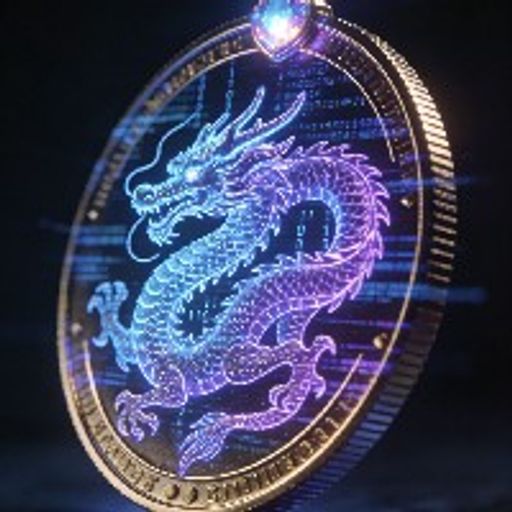

On the fifth day of the first lunar month, which is an important day during the Chinese traditional Spring Festival, also known as 'Breaking Five' or 'Welcoming the God of Wealth Day'. This day carries people's good wishes for prosperous financial luck and abundant life in the new year, and the main customs revolve around 'Sending away the God of Poverty and Welcoming the God of Wealth'. Here is a detailed explanation of the relevant customs and cultural connotations:
---
#Deepseek爆火 **1. The Origin of Welcoming the God of Wealth**
1. **God of Wealth Worship**
The God of Wealth in Chinese folk beliefs is responsible for wealth, with different images in different regions. Common ones include:
- **God of Wealth in Literature**:Bi Gan (impartial and selfless), Fan Li (wise in business);
- **God of Wealth** : Guan Yu (loyalty, righteousness, and honesty), Zhao Gongming (Taoist god of wealth);
- **Local God of Wealth**: Such as the "Five Routes God of Wealth" worshipped in the southeastern coastal areas (symbolizing wealth from the five directions of east, west, south, north, and center).
2. **The Significance of the Fifth Day of the Lunar New Year**
Legend has it that the God of Wealth descends upon the mortal world on the fifth day of the lunar new year. People welcome him through worshipping and pray for good fortune in the new year. At the same time, the fifth day is also known as the day to break the taboos of the Spring Festival (such as not using scissors, not taking out the trash, etc.), hence it is called 'Po Wu'.
---
### **2. Main Customs and Activities**
1. **Worship the God of Wealth**
- **Time**: The fifth day of the Lunar New Year, early morning or dawn, to greet the new year with piety.
- **Way**: The offering table is set with incense, pastries, fruits (such as apples symbolizing peace, oranges symbolizing good luck), and food symbolizing wealth (such as rice cakes, fa cakes). In some areas, live carp may be used for worship, because the homonym for "carp" is "profit", and releasing them after the offering symbolizes "thriving business and flowing wealth".
- **Ceremony**: Burning incense and kowtowing, reciting blessings, burning paper money with the image of the God of Wealth (such as "fortune symbols").
2. **Setting off firecrackers**
Drive away bad luck with firecrackers and attract the attention of the God of Wealth. There is a saying among the people: 'The earlier you welcome the God of Wealth, the better your fortune will be'.
3. **Eat foods that symbolize wealth**
- **Dumpling/Yuan Bao Soup**: Dumplings shaped like yuan bao are commonly made on the fifth day of the Lunar New Year in northern China, known as "pinching the mouth of a little person" (to prevent gossip); in some southern regions, people eat "God of Wealth Cake" or noodles, symbolizing longevity.
- **Hair Seaweed and Oyster Sauce**: A dish commonly made in the Guangdong region using hair seaweed (homophone for "prosperity") and oyster sauce (homophone for "good market").
4. **"Sending the Poor" and Cleaning**
- On the morning of the fifth day, clean the house and dispose of the rubbish called 'poor soil', symbolizing the departure of poverty.
In some regions, there is a ritual of 'sending the five poverties' (intellectual poverty, academic poverty, literary poverty, destiny poverty, social poverty), burning paper dolls or paper cutting to drive away bad luck.
5. **Merchant Opening**
Traditional shops often open on the fifth day of the Lunar New Year, with activities such as worshiping the God of Wealth, lion dances, and setting off firecrackers to bring good luck and pray for a prosperous business in the new year.
---
### **Three, Regional Differences**
1. **North**:Focus on the custom of "breaking the fifth", emphasizing the breaking of taboos, and eating dumplings.
2. **Jiangnan**: It is popular to worship the 'Roadside God' (an incarnation of the God of Wealth), and common offerings include carp and whole pig heads.
3. **Fujian and Guangdong**: Pay attention to worshiping the Five Wealth Gods, and the scale of the business opening is grand. The dragon and lion dances are extremely lively.
---
### **IV. Cultural Connotation**
- **Wealth Concept**: It reflects the Chinese people's yearning for material abundance, while emphasizing the importance of obtaining wealth in a righteous way. The image of the God of Wealth, such as Guan Yu, conveys the concept of honest and trustworthy business.
- **Bid farewell to the old and welcome the new**: Say goodbye to the difficulties of the old year through a ceremony and start the new year with a positive attitude.
- **Community Cohesion**: Collective worship activities enhance the connection between families and neighbors, while business rituals strengthen the sense of belonging to the industry community.
---
Today, despite the changes in modern lifestyles, many families still observe the tradition of welcoming the God of Wealth on the fifth day of the Lunar New Year. This not only carries on the traditional culture, but also represents people's aspirations for a better life.