# USIranTalksProgress

912K
#USIranTalksProgress
Ceasefire Extension, Oil Shockwaves, and the Global Market Reset: A Macro Breakdown 🌍📊
The evolving diplomatic situation between the United States and Iran has become one of the most powerful macro drivers shaping global markets right now. What initially appeared to be a temporary pause in tensions has transformed into a complex, fragile negotiation phase where every headline has immediate consequences across commodities, equities, and digital assets. The extension of the ceasefire has not resolved the conflict—it has merely delayed escalation, creating a high-stakes en
BTC-1,07%
DOGE-0,05%
MrFlower_XingChen
#USIranTalksProgress
Ceasefire Extension, Oil Shockwaves, and the Global Market Reset: A Macro Breakdown 🌍📊
The evolving diplomatic situation between the United States and Iran has become one of the most powerful macro drivers shaping global markets right now. What initially appeared to be a temporary pause in tensions has transformed into a complex, fragile negotiation phase where every headline has immediate consequences across commodities, equities, and digital assets. The extension of the ceasefire has not resolved the conflict—it has merely delayed escalation, creating a high-stakes environment where uncertainty dominates pricing behavior.
At the center of this geopolitical equation is the strategic importance of energy flows. The Strait of Hormuz remains one of the most critical arteries in the global economy, responsible for roughly 20% of the world’s oil supply. Any disruption here does not just impact regional stability—it reverberates through inflation, currency strength, and global risk appetite. Even partial operational constraints have been enough to inject volatility into oil markets, keeping traders on edge despite diplomatic signals.
The extension announcement linked to Donald Trump has introduced a temporary sense of relief, but markets are not treating it as a resolution. Instead, it is being priced as a “pause with risk.” Oil markets reacted immediately, with prices easing as traders interpreted the move as a short-term de-escalation. However, the continued US naval presence and sanctions framework signal that underlying tensions remain unresolved, preventing any sustained collapse in crude prices.
This dynamic creates a direct feedback loop into inflation expectations. Lower oil prices reduce input costs across transportation and manufacturing, which in turn eases inflation pressure globally. This has a significant influence on central bank policy expectations, particularly those of the Federal Reserve. As inflation expectations soften, markets begin pricing in a higher probability of rate cuts, which supports risk assets including equities and cryptocurrencies.
Gold, represented by Gold, has responded in a more nuanced way. While traditionally a safe-haven asset during geopolitical crises, the recent price action suggests a shift in narrative. Instead of purely reacting to conflict risk, gold is now balancing between inflation expectations and monetary policy outlook. The slight upward movement following the ceasefire extension indicates that investors are still hedging against uncertainty, even as immediate escalation fears ease.
In the cryptocurrency market, the reaction has been swift and structurally significant. Bitcoin surged during the initial ceasefire announcement, driven largely by a massive liquidation of short positions. This type of move highlights how sensitive crypto markets are to macro catalysts, particularly when positioning becomes crowded. The liquidation cascade not only pushed prices higher but also reset market sentiment, shifting traders from defensive to opportunistic modes.
Meanwhile, Ethereum demonstrated relative strength on a percentage basis, reflecting a broader rotation into higher-beta assets during risk-on phases. This pattern suggests that when macro uncertainty temporarily declines, capital tends to flow deeper into the crypto ecosystem, benefiting altcoins and decentralized finance sectors.
Equity markets have mirrored this behavior. The S&P 500 responded positively to ceasefire developments, with futures rising as investors priced in reduced geopolitical risk and improved economic stability. At the same time, the US dollar weakened slightly, reflecting reduced demand for safe-haven currencies. This combination—rising equities and a softer dollar—is typically associated with a risk-on environment that supports global asset prices.
However, beneath this optimism lies a critical layer of fragility. The absence of a formal agreement between the US and Iran means that markets are effectively trading on expectations rather than confirmed outcomes. The cancellation of high-level talks and ongoing disagreements over nuclear policy and military activity highlight how far both sides remain from a comprehensive deal.
From a macro trading perspective, oil remains the key variable that will dictate the next phase. If crude stabilizes within the $85–$95 range, markets are likely to maintain a balanced outlook, allowing risk assets to gradually build momentum. However, any breakout above $100 would reintroduce inflation fears, forcing central banks to maintain tighter policies and potentially triggering a broad risk-off reaction.
The implications for crypto are particularly important. In a successful de-escalation scenario, Bitcoin could break above key resistance levels, supported by improved liquidity conditions and stronger institutional participation. This would likely lead to a decline in Bitcoin dominance as capital rotates into altcoins, amplifying gains across the broader market.
On the other hand, a breakdown in negotiations could have the opposite effect. A surge in oil prices would tighten financial conditions, strengthen the dollar, and reduce liquidity—factors that historically pressure cryptocurrencies. In such a scenario, Bitcoin could revisit lower support zones, while altcoins experience sharper drawdowns due to their higher risk profiles.
Another dimension to consider is market psychology. Right now, traders are operating in a headline-driven environment where reactions are immediate and often exaggerated. This creates opportunities, but also increases the risk of false signals. Rapid shifts between risk-on and risk-off sentiment can lead to volatility spikes, making disciplined risk management more important than ever.
Institutional behavior also plays a growing role in this environment. Large funds are increasingly using macro hedging strategies, balancing exposure between commodities, equities, and crypto. This interconnected approach means that movements in one market—such as oil—can trigger repositioning across multiple asset classes simultaneously.
Looking forward, the path of diplomacy will likely remain the dominant catalyst. If Iran presents a formal proposal and negotiations resume, markets could experience a sustained relief rally. Conversely, any escalation—whether through military action, stricter sanctions, or disruption in shipping routes—would quickly reverse current gains.
The key takeaway is that we are in a transitional macro phase where geopolitics is directly influencing financial markets at an accelerated pace. Traditional boundaries between asset classes are blurring, and traders must adopt a more holistic view that considers global events alongside technical and on-chain data.
For now, caution and flexibility are essential. Position sizes should reflect the elevated uncertainty, and strategies should account for both bullish and bearish scenarios. In a market driven by headlines, the ability to adapt quickly is often more valuable than trying to predict a single outcome.
Diplomacy may be the catalyst—but volatility is the constant.
$BTC
$DOGE ‌ ‌

  • Reward
  • Comment
  • Repost
  • Share
#USIranTalksProgress
US-Iran Talks Enter Final Stretch Markets Brace for Impact
The geopolitical chess match between the United States and Iran is reaching a phase, with global markets closely tracking every headline. While both sides signal progress, the reality beneath the surface is far more complex—and fragile.
At the center of the tension lies the Strait of Hormuz, a narrow corridor that quietly controls nearly a fifth of the world’s oil supply. Any disruption here doesn’t just move prices—it shakes the entire financial system.
A Deal Close… But Not Close Enough
Optimism has been fueled
BTC-1,07%
XAUT-0,82%
  • Reward
  • Comment
  • Repost
  • Share
#USIranTalksProgress
US-Iran Talks Enter Final Stretch Markets Brace for Impact
The geopolitical chess match between the United States and Iran is reaching a phase, with global markets closely tracking every headline. While both sides signal progress, the reality beneath the surface is far more complex—and fragile.
At the center of the tension lies the Strait of Hormuz, a narrow corridor that quietly controls nearly a fifth of the world’s oil supply. Any disruption here doesn’t just move prices—it shakes the entire financial system.
A Deal Close… But Not Close Enough
Optimism has been fueled
BTC-1,07%
XAUT-0,82%
post-image
  • Reward
  • 2
  • Repost
  • Share
CryptoEye:
2026 GOGOGO 👊
View More
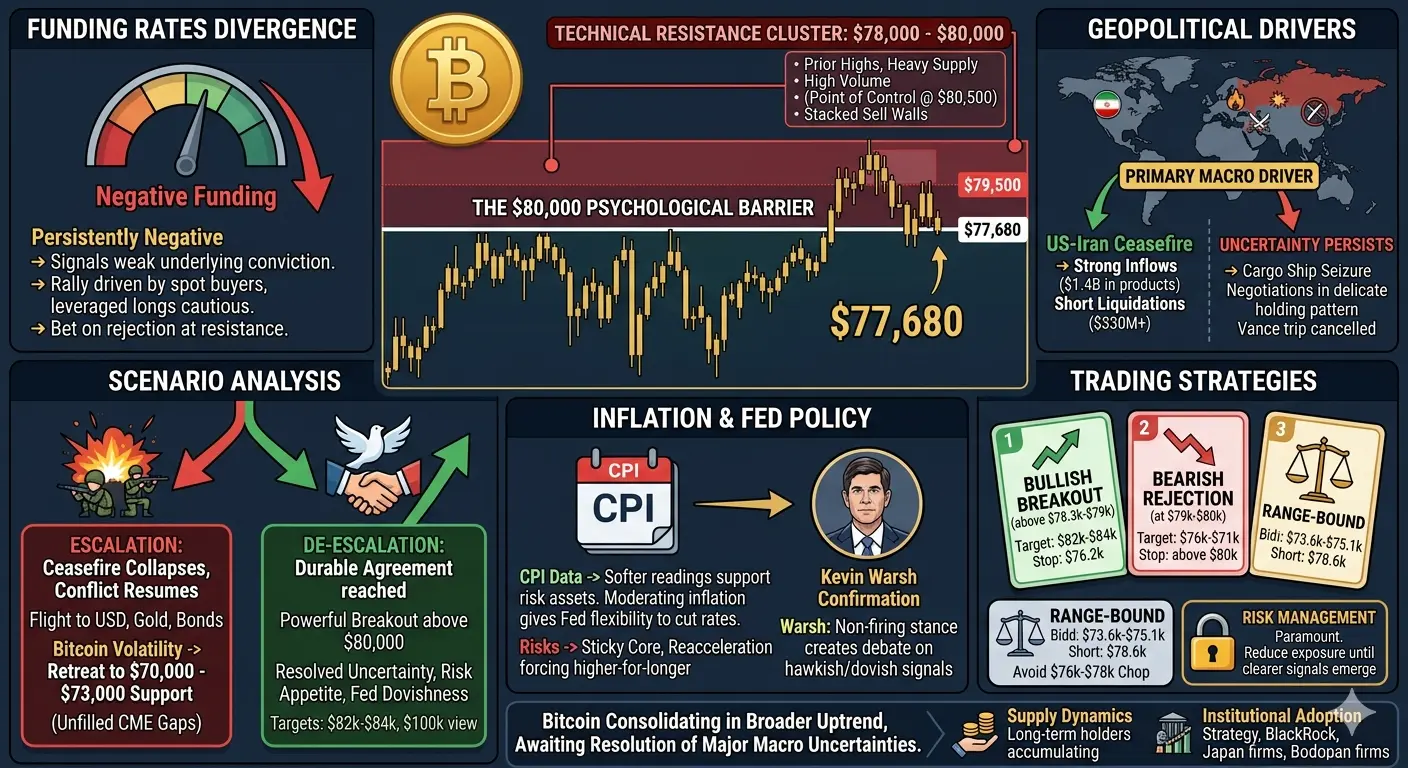
#USIranTalksProgress #WarshHearingSparksDebate 📊 Technical & Liquidity Landscape
The $80k "Wall": You correctly identified the heavy sell walls. Order book data shows significant liquidity stacked between $80,000 and $84,000. Breaking this requires more than just a squeeze; it requires "organic" spot demand to chew through that supply.
Point of Control (POC): With the POC near $80,500, the market is currently in a "value search." If we consolidate here without a deep breakdown, it suggests the market is accepting these higher prices, building a floor for an eventual moonshot.
📉 The Derivativ
BTC-1,07%
AYATTAC
#WarshHearingSparksDebate 📊 Technical & Liquidity Landscape
The $80k "Wall": You correctly identified the heavy sell walls. Order book data shows significant liquidity stacked between $80,000 and $84,000. Breaking this requires more than just a squeeze; it requires "organic" spot demand to chew through that supply.
Point of Control (POC): With the POC near $80,500, the market is currently in a "value search." If we consolidate here without a deep breakdown, it suggests the market is accepting these higher prices, building a floor for an eventual moonshot.
📉 The Derivatives Divergence
Your observation on negative funding rates is the most critical "hidden" bullish signal.
Short Squeeze Potential: Despite BTC trading near $78,000, funding remains at roughly -0.02%. This means bears are paying a premium to stay short.
Liquidation Imbalance: We just saw over $330 million in short liquidations in a single window. If BTC pushes past $80,200, the next "liquidation cascade" could mechanically propel the price toward $84,000 regardless of the news.
🌍 Geopolitical & Macro Catalysts
The market is currently a "headline-driven" environment:
US-Iran Ceasefire: This is the primary "Risk-On" switch. The volatility you noted (dropping below $74k on cargo vessel tensions) proves that BTC is being traded as a global liquidity barometer.
Institutional Inflows: The $1.4 billion in weekly ETF inflows (led by BlackRock and the new Morgan Stanley ETF) provides a "passive" bid that limits how deep the pullbacks can go.
The "Fed" Factor: With CPI easing but Core inflation remaining "sticky," the market is pricing in a "Higher for Longer but Peaked" scenario, which historically favors Bitcoin over the mid-term.🔮 The "Final Boss" Level
The shift from short-term holders to long-term holders (the +303,000 BTC accumulation) suggests we are in the "re-accumulation" phase of the cycle. While $80,000 is a psychological nightmare for now, on-chain metrics suggest the supply shock is worsening.
repost-content-media
  • Reward
  • 2
  • Repost
  • Share
AylaShinex:
To The Moon 🌕
View More
#USIranTalksProgress
US-Iran Talks Progress: A Comprehensive Analysis of Geopolitical Developments and Market Implications
The ongoing negotiations between the United States and Iran have entered a critical phase, with both sides making conflicting claims about progress while the Strait of Hormuz remains a central point of contention. This article examines the current state of talks, the key sticking points, and the potential impact on major assets including Bitcoin, gold-backed tokens, and crude oil.
Current State of US-Iran Negotiations
The talks between Washington and Tehran have been char
post-image
  • Reward
  • Comment
  • Repost
  • Share
#USIranTalksProgress
Diplomacy doesn’t move markets on headlines.
It moves them on expectations of what breaks next.
The latest signals around U.S.–Iran nuclear talks are not about resolution yet — they’re about reduced escalation pressure. And that alone is enough to shift positioning across global assets.
Markets aren’t celebrating peace.
They’re pricing less chaos.
Sharp insight:
Risk assets don’t need certainty — they need breathing room.
And that’s exactly what talks like this create first.
What’s actually changing under the surface:
→ Geopolitical risk premium starts to compress
→ Energ
BTC-1,07%
post-image
  • Reward
  • 6
  • Repost
  • Share
HighAmbition:
Buy To Earn 💰️
View More
#USIranTalksProgress
The evolving situation around the U.S.–Iran negotiations has become one of the most important macro narratives shaping global markets right now. What initially appeared to be another round of diplomatic engagement has rapidly transformed into a high-stakes geopolitical turning point—one that could influence oil prices, financial markets, and the direction of risk assets, including crypto, over the coming months.
At the center of this story is a fragile balance between diplomacy and escalation. The recent round of talks in Islamabad, involving U.S. officials including JD V
BTC-1,07%
CryptoDiscovery
#USIranTalksProgress
The evolving situation around the U.S.–Iran negotiations has become one of the most important macro narratives shaping global markets right now. What initially appeared to be another round of diplomatic engagement has rapidly transformed into a high-stakes geopolitical turning point—one that could influence oil prices, financial markets, and the direction of risk assets, including crypto, over the coming months.
At the center of this story is a fragile balance between diplomacy and escalation. The recent round of talks in Islamabad, involving U.S. officials including JD Vance, highlighted both progress and deep divisions. While both sides described the discussions as constructive in tone, the absence of a concrete agreement revealed how far apart the core positions still remain. Iran’s stance suggests a longer negotiation horizon, while the U.S. appears to be pushing for quicker, more definitive commitments.
What makes this moment particularly critical is timing. The temporary ceasefire window is approaching expiration, and markets are increasingly sensitive to any signal—positive or negative—that could indicate what comes next. The role of Islamic Revolutionary Guard Corps in shaping Iran’s negotiation posture has added another layer of complexity, signaling that decisions are not purely diplomatic but also strategic and security-driven.
Meanwhile, developments on the ground are amplifying the stakes. The Strait of Hormuz remains the single most critical pressure point in the global energy system. Any disruption here does not just affect regional trade—it has immediate global consequences. With roughly a fifth of the world’s oil passing through this narrow corridor, even the perception of risk is enough to move markets aggressively.
Recent reports of increased naval monitoring and shipping disruptions have already introduced a significant risk premium into oil prices. Brent Crude hovering near elevated levels reflects not just current supply conditions, but fear of what could happen next. Insurance costs for tankers have risen, rerouting has begun in some cases, and governments are closely watching energy security implications.
What’s new—and increasingly important—is how deeply interconnected these geopolitical tensions have become with financial markets beyond oil. Unlike previous cycles, crypto markets are now reacting in real time to macro events. Bitcoin, in particular, has shown notable resilience. While traditional assets have displayed sharp reactions to headlines, Bitcoin’s relatively controlled volatility suggests that a portion of geopolitical risk may already be priced in.
Institutional behavior is another key variable shaping the narrative. Large players are no longer reacting impulsively to geopolitical stress. Instead, they are positioning strategically. Flows into spot ETFs, accumulation by corporate treasuries, and steady on-chain activity indicate that long-term conviction remains intact even as short-term uncertainty rises.
At the same time, traditional safe-haven dynamics are reasserting themselves. Gold continues to attract defensive capital, while the US Dollar strengthens during moments of heightened tension. This creates a complex environment where capital rotates rapidly between risk-on and risk-off assets depending on headlines, rather than long-term trends.
Looking deeper, the oil market itself is entering a structurally sensitive phase. Supply chains are already tight, and spare production capacity globally is limited. Any escalation would not just cause a temporary spike—it could trigger a sustained supply shock. On the other hand, even a partial diplomatic breakthrough could release significant downward pressure on prices as risk premiums unwind.
From a broader macro perspective, this situation is also feeding directly into inflation expectations. Rising energy prices impact transportation, manufacturing, and food supply chains. Central banks, already navigating a delicate balance between growth and inflation, may be forced to reassess their policies if oil remains elevated or spikes further.
For traders and investors, the current environment is defined by asymmetry. The upside reaction to a successful deal may be gradual and measured, driven by relief and normalization. The downside—or rather, the escalation scenario—carries far more explosive potential, with rapid price spikes in oil and sharp sell-offs in risk assets.
Crypto markets, however, present a slightly different dynamic. If a deal is reached, the removal of macro uncertainty could unlock significant upside momentum, especially as institutional inflows accelerate. If tensions escalate, short-term volatility is likely, but strong structural demand may limit deeper downside compared to traditional markets.
Another emerging factor is market adaptation. Compared to previous geopolitical crises, markets today are quicker to absorb shocks. Algorithmic trading, global liquidity flows, and 24/7 crypto markets create a system where reactions are faster—but recoveries can also be quicker if conditions stabilize.
What makes this moment unique is not just the geopolitical tension itself, but how many layers of the global system it touches simultaneously—energy, finance, crypto, policy, and investor psychology. Each headline now carries cross-market implications, and each decision made in negotiations has ripple effects far beyond the region.
As the deadline approaches, all eyes remain on whether diplomatic channels can produce a workable framework or whether tensions will re-escalate into a more disruptive phase. The next signals—whether it’s a new delegation, a policy statement, or changes in shipping activity—will likely determine short-term market direction.
For now, markets remain in a state of heightened alertness, balancing optimism with caution. Volatility is not just expected—it is inevitable in such an environment.
And in times like these, one principle continues to define successful positioning: understanding that geopolitical events are no longer isolated incidents—they are catalysts that reshape entire market ecosystems in real time. 📊🔥🌐
#Gate13thAnniversaryLive
repost-content-media
  • Reward
  • Comment
  • Repost
  • Share
#USIranTalksProgress
US-Iran Negotiations: Current Status and Market Implications
The ongoing negotiations between the United States and Iran represent one of the most significant geopolitical developments affecting global markets in 2026. Here is a comprehensive breakdown of the current situation and actionable guidance for traders.
The Negotiation Landscape
Talks began in April 2025 following correspondence between the Trump administration and Iranian leadership, evolving through multiple rounds mediated by Oman and more recently Pakistan. The current phase involves high-level delegations i
BTC-1,07%
Yusfirah
#USIranTalksProgress
US-Iran Negotiations: Current Status and Market Implications
The ongoing negotiations between the United States and Iran represent one of the most significant geopolitical developments affecting global markets in 2026. Here is a comprehensive breakdown of the current situation and actionable guidance for traders.
The Negotiation Landscape
Talks began in April 2025 following correspondence between the Trump administration and Iranian leadership, evolving through multiple rounds mediated by Oman and more recently Pakistan. The current phase involves high-level delegations including US Vice President JD Vance, envoy Steve Witkoff, and senior adviser Jared Kushner engaging with Iranian officials.
The core objective is reaching a framework agreement to replace or succeed the 2015 JCPOA (Joint Comprehensive Plan of Action), which the US exited in 2018. However, the scope has expanded beyond nuclear issues to encompass broader regional security concerns.
**Key Positions and Sticking Points**
Iran has presented a revised counter-offer that softens previous stances on uranium enrichment, US troop presence in the region, and war reparations. Tehran seeks a full peace treaty ratified by both the US Congress and Iran's Shura Council, immediate sanctions relief including the unfreezing of approximately $6-20 billion in frozen assets, and involvement of China and Russia in enforcement mechanisms. Iran rejects limits on its missile program but remains open to prior Omani and Geneva nuclear frameworks.
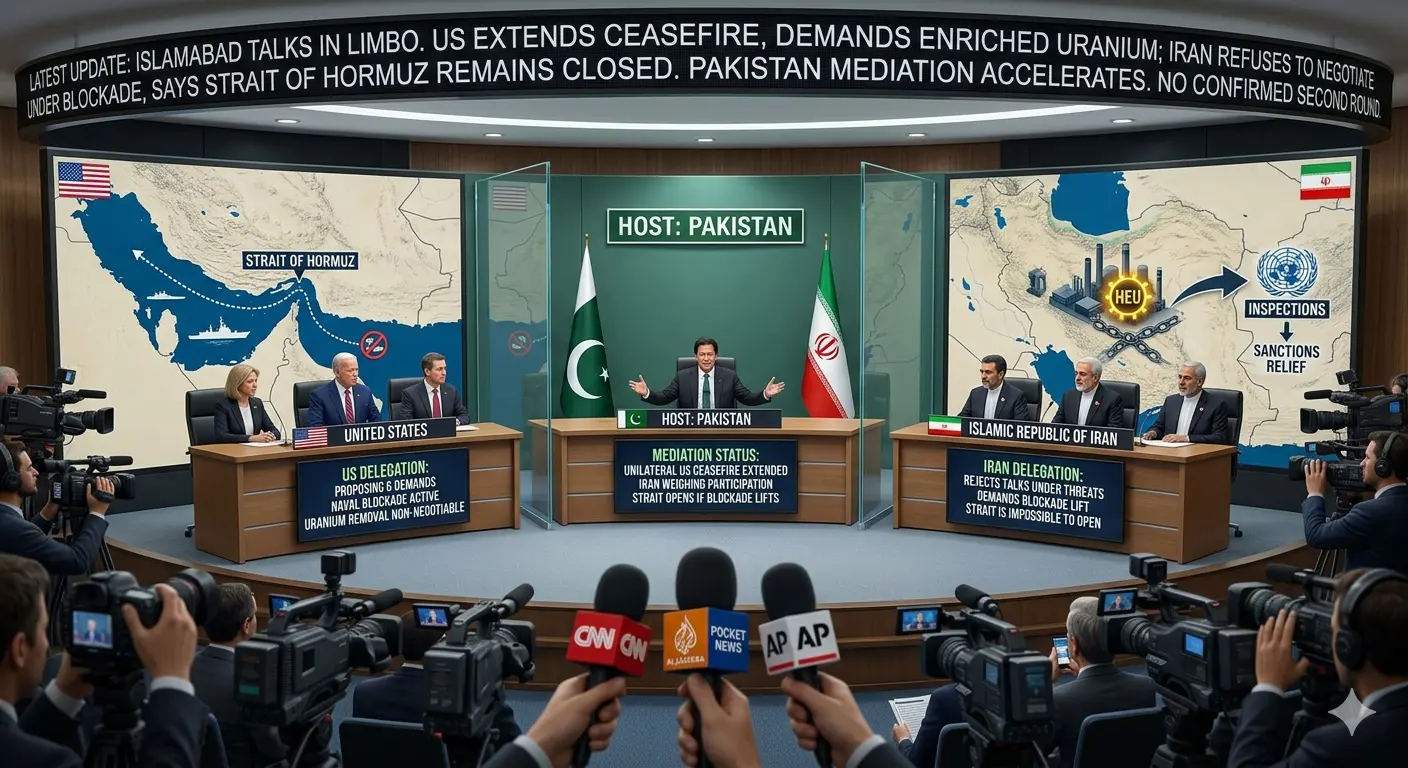
The US position demands a 20-year freeze on uranium enrichment activities, contrasting with Iran's offer of a 5-year suspension. Washington also opposes formal Iranian sovereignty claims over the Strait of Hormuz, where Tehran has been tightening control to maintain leverage over global oil prices.
Critical unresolved issues include nuclear enrichment levels, navigation and security arrangements in the Strait of Hormuz, ceasefire terms regarding Lebanon (which Iran insists upon while Israel refuses), and questions of regime accountability.
**Current Status**
President Trump extended the ceasefire on April 22 but issued a warning of a short window of several days for Iranian factions to unify a coherent counter-offer, threatening a return to hostilities if progress stalls. The administration appears wary of prolonging an unpopular military engagement while favoring indefinite economic pressure as an alternative strategy. Frustration is reportedly growing within the US camp over perceived Iranian delaying tactics.
No final deal has been reached, though Iranian sources express confidence while acknowledging persistent gaps remain.
---
**Market Impact Analysis**
**Oil Markets**
The Strait of Hormuz facilitates approximately 20 million barrels of oil shipments daily, representing roughly 20 percent of global oil trade. This chokepoint has become the central flashpoint in the conflict.
Recent developments have created significant volatility. When Iran announced the reopening of the Strait on April 17, oil prices plunged 10 percent and equity markets rallied sharply. Conversely, periods of tension have driven crude prices toward $110-120 per barrel with refined fuels like diesel and jet fuel at times exceeding $200.
Bloomberg Economics modeling suggests oil at $110 per barrel would produce a marked but manageable inflation boost and growth impact. However, a prolonged closure could trigger supply shocks of historic proportions. The International Energy Agency reported global oil supply posted its largest drop in history during March 2026.
**Cryptocurrency Markets**
The crypto market has demonstrated acute sensitivity to Hormuz developments. Bitcoin broke a two-month high following the April 17 reopening announcement, with crypto stocks including Strategy, Robinhood, and Coinbase rallying alongside broader equity markets.
The correlation operates through multiple channels. First, oil price shocks feed directly into inflation expectations, influencing Federal Reserve policy outlook and risk asset valuations. Second, geopolitical risk premiums drive flight-to-safety flows that historically benefit Bitcoin during periods of dollar weakness or institutional hedging. Third, Iran's reported acceptance of cryptocurrency payments for Hormuz transit tolls (including Bitcoin and USDT alongside Chinese yuan) introduces a novel demand vector for digital assets.
The market has experienced significant drawdowns during peak conflict periods, with Bitcoin declining from approximately $125,000 in October 2025 to around $63,000 by February 2026 during the war's acute phase.
---
**Trading Recommendations**
**For Short-Term Traders**
Monitor ceasefire deadlines and negotiation announcements closely. The Trump administration's warning of a short window suggests elevated event risk over the coming days. Consider reducing position sizes ahead of scheduled negotiation rounds or deadline expirations.
Watch for divergence between spot oil prices and crypto volatility. The correlation has been strong but not perfect, creating potential arbitrage opportunities between energy and digital asset markets.
Maintain flexibility for rapid position adjustments. The April 17 reopening announcement produced immediate 10 percent moves in oil and significant crypto rallies within hours.
**For Medium-Term Position Traders**
Consider the asymmetric risk profile. A failed negotiation and return to conflict likely produces sharper downside in risk assets than the upside from a successful deal, given that markets have partially priced in optimistic outcomes.
The $110-120 oil price range appears to be a critical threshold. Sustained prices above this level would likely pressure Fed policy expectations and create headwinds for crypto valuations, while stabilization below $90 would support risk-on positioning.
Bitcoin's correlation with traditional risk assets has increased during this crisis. Traders should monitor equity market sentiment as a leading indicator for crypto direction.
**Risk Management**
Implement wider stop losses than normal given event-driven volatility. The April period has demonstrated that single headlines can produce 5-10 percent intraday moves.
Consider options strategies or reduced leverage. Implied volatility in crypto markets has likely expanded during this period, making long volatility positions potentially attractive ahead of key negotiation dates.
Maintain awareness of weekend risk. Geopolitical developments often occur outside standard trading hours, creating gap risk for positions held over weekends.
**Fundamental Considerations**
The structural implications extend beyond immediate price action. A successful deal would likely produce sustained dollar weakness and improved global growth outlooks, historically constructive for Bitcoin and crypto assets. Conversely, a return to conflict with Hormuz closure would create stagflationary conditions that have historically challenged risk assets while potentially accelerating institutional crypto adoption as a hedge.
The novel element of cryptocurrency acceptance for strategic commodity transit represents a potential long-term demand driver that merits monitoring regardless of negotiation outcomes.
---
**Conclusion**
The US-Iran negotiations sit at a critical juncture with significant implications for oil, equity, and cryptocurrency markets. Traders should maintain heightened alertness to headline risk, implement appropriate position sizing for elevated volatility, and recognize that the market has likely underpriced the probability of adverse outcomes relative to the potential magnitude of such events.
repost-content-media
  • Reward
  • 3
  • Repost
  • Share
Ruichen:
To The Moon 🌕
View More
MemeCore’s $M token is up 118% YTD, and it’s signaling something deeper than just another meme cycle.
It’s testing whether viral culture can sustain real economic infrastructure.
That’s the “meme 2.0” thesis.
Not just tokens riding attention
but entire ecosystems built around memetic economies.
On paper, it sounds unserious.
In practice, it makes sense.
Memes are native to the internet.
They generate attention, communities, and liquidity.
Turning that into structured economic activity isn’t irrational it’s an extension.
$M benefits from operating in a category most general-purpose L1s don’t o
M-4,38%
post-image
  • Reward
  • Comment
  • Repost
  • Share
#USIranTalksProgress
The US-Iran conflict entered a critical diplomatic phase. Trump announced a ceasefire extension on April 21 via Truth Social, allowing Iran more time to submit a "unified proposal." The original two-week ceasefire brokered by Pakistan on April 7 was set to expire but has now been extended indefinitely. However, the US naval blockade on Iranian ports remains fully active, which Iran has labeled an "act of war," creating a fragile and uncertain path toward any real peace deal.
Progress Details Where Things Stand
The US is seeking a complete shutdown of Iran's nuclear progra
BTC-1,07%
ETH-3,22%
post-image
post-image
  • Reward
  • 18
  • Repost
  • Share
Luna_Star:
LFG 🔥
View More
Load More