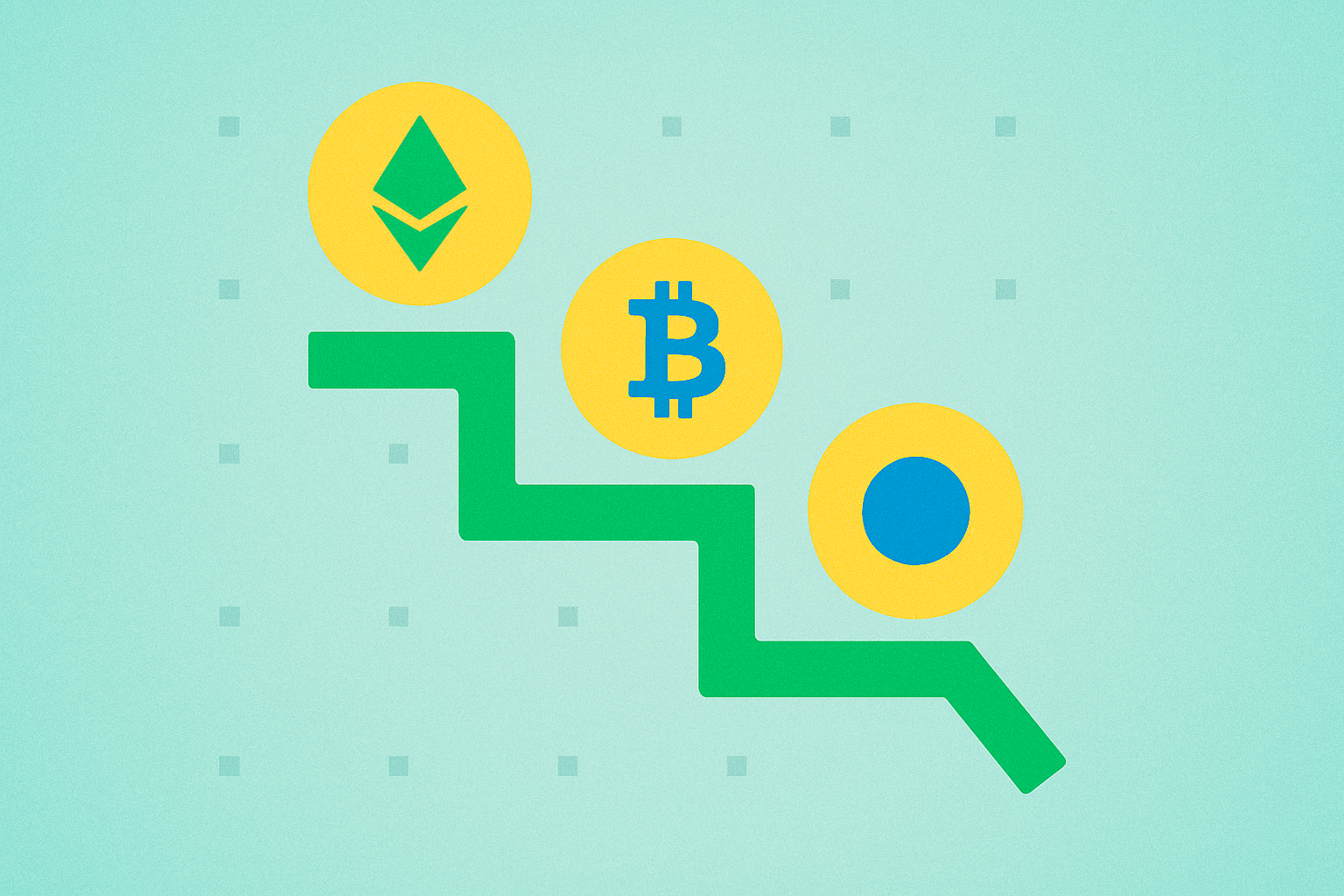
This article explores Dutch auctions, a descending-price bidding mechanism revolutionizing cryptocurrency token distribution. Starting with historical origins, it explains how Dutch auctions systematically reduce prices until buyer demand emerges, contrasting sharply with traditional ascending auctions. The article details key benefits including democratized access for retail investors and enhanced transparency through real-time price discovery, while addressing drawbacks like reduced price predictability and timing complexity. Through real-world examples—notably Algorand Foundation's successful $60 million token sale—it demonstrates how smart contracts automate this process on blockchain networks. Perfect for investors, crypto projects, and NFT enthusiasts, this guide clarifies Dutch auction mechanics, compares them with ICOs and IDOs, and provides practical risk assessment strategies for informed participation in this increasingly popular fundraising model.
What Is a Dutch Auction?
The term "Dutch auction" has its roots in 17th-century Holland, where this innovative bidding strategy was developed to enhance the efficiency of the highly competitive Dutch tulip market. A Dutch auction, also referred to as a descending price auction, represents a unique auction format where the auctioneer establishes an initially high starting price and then systematically reduces it until a participant places a bid. Once the first bid is received (provided it exceeds the reserve price), the auction concludes without further competitive bidding. This mechanism stands in stark contrast to traditional ascending-price auctions, where the price begins low and gradually increases as multiple bidders compete to secure the winning position.
In modern financial markets, a refined variation of this strategy has been adopted. During a Dutch auction for securities, investors submit bids specifying both the quantity and price of the securities they wish to purchase. After collecting all bids, the offering price is determined as the highest price point at which the entire offering can be successfully sold. Typically, the price that attracts the most bidders becomes the final offering price, ensuring that all assets are sold at a uniform price. This final price may not necessarily be the highest bid submitted. For instance, a highly sought-after NFT collection might initiate a Dutch auction at 1 ETH and decrease the price by 0.1 ETH every 10 minutes until buyers begin placing orders. This descending price mechanism creates urgency among potential buyers while establishing a fair market price through collective participation.
The Dutch auction model has gained significant attention in the cryptocurrency space due to its potential to address transparency concerns and democratize access to token sales. Unlike traditional Initial Coin Offerings (ICOs), which dominated the cryptocurrency landscape during the 2017 bull run, Dutch auctions offer a more structured and equitable approach to token distribution. During that period, numerous projects with minimal business foundations managed to raise substantial capital through ICOs, but many subsequently failed, eroding investor confidence. The shift toward Dutch auctions by prominent initiatives, such as the Algorand Foundation, reflects an industry-wide effort to restore trust and implement more transparent fundraising mechanisms.
Benefits and Drawbacks of Dutch Auctions
Benefits
Democratization of Access: Dutch auctions facilitate a democratic process that enables equal participation from all market participants, regardless of their financial capacity. Unlike traditional private sales or exclusive pre-sales that favor institutional investors or high-net-worth individuals, Dutch auctions allow small retail investors to participate on the same terms as larger players. This inclusive approach helps prevent the concentration of tokens in the hands of a few wealthy participants and promotes broader community ownership. For example, in a traditional ICO, early investors or those with insider connections might secure tokens at preferential rates, but a Dutch auction ensures that all participants pay the same final clearing price, creating a level playing field.
Enhanced Transparency: The open bidding structure of Dutch auctions significantly increases transparency throughout the token sale process. All participants can observe the descending price mechanism in real-time, which helps prevent price manipulation and eliminates the possibility of preferential treatment for certain investors. This transparency extends to the final price determination, as the clearing price is established through a visible, algorithm-driven process based on aggregate demand. By making the entire process publicly observable, Dutch auctions reduce information asymmetry between project teams and investors, fostering greater trust in the token distribution mechanism.
Drawbacks
Reduced Price Control: One significant limitation of Dutch auctions is that investors have less control over the final price compared to traditional auction formats. Since the price is determined by the collective bidding behavior of all participants, individual investors cannot predict with certainty what the final clearing price will be. This uncertainty may lead to market volatility, particularly if demand is difficult to forecast. In some cases, assets may be sold at prices that are either significantly overvalued or undervalued relative to their true market worth. For instance, if initial demand is weak, the price may drop to levels that undervalue the project, while excessive early enthusiasm might result in a clearing price that is unsustainably high, leading to post-sale price corrections.
Timing Risk and Strategic Complexity: Participants in Dutch auctions face the challenge of determining the optimal moment to place their bids. Bidding too early at a higher price means potentially overpaying, while waiting too long risks missing the opportunity entirely if other bidders act first. This strategic complexity can be particularly challenging for less experienced investors who may lack the market knowledge to make informed timing decisions. Additionally, the descending price mechanism can create psychological pressure, as participants must balance the fear of missing out with the desire to secure the best possible price.
Dutch Auctions in Crypto: How Do They Work?
Dutch auctions have established a notable presence in the cryptocurrency industry, with applications extending well beyond NFT launches to encompass various token distribution mechanisms. The implementation of Dutch auctions in crypto represents an evolution in fundraising strategies, addressing many of the shortcomings associated with earlier ICO models.
In 2017, the cryptocurrency company Gnosis announced an ambitious plan to develop a decentralized exchange specifically designed for ERC-20 token issuances, built upon the Dutch auction framework. Although Gnosis later withdrew from the dxDAO initiative, the exchange platform continues to operate and serve the community, demonstrating the lasting viability of the Dutch auction concept in decentralized finance. This early adoption helped validate the Dutch auction model as a practical alternative to traditional token sale mechanisms.
A landmark example of Dutch auction implementation occurred in June 2019, when the Algorand Foundation conducted a Dutch auction distributing 25 million ALGO tokens, successfully raising $60 million. The auction spanned 4,000 bidding rounds, with the offering price systematically reduced from an initial $10 per token to a final clearing price of $2.40. This substantial price reduction illustrated how the Dutch auction mechanism responds to real market demand rather than predetermined pricing, allowing the market itself to establish a fair valuation. The Algorand auction demonstrated several key advantages: it enabled broad participation from the global crypto community, established a transparent price discovery process, and ensured that all participants paid the same final price regardless of when they entered their bids.
The operational mechanics of crypto Dutch auctions typically involve smart contracts that automatically execute the descending price algorithm. These smart contracts are programmed to reduce the token price at predetermined intervals until sufficient demand materializes to clear the entire offering. Participants submit their bids through blockchain-based interfaces, and the smart contract automatically allocates tokens once the clearing price is reached. This automation eliminates the need for intermediaries and reduces the potential for human error or manipulation.
In conclusion, the Dutch auction model provides an innovative and increasingly popular fundraising strategy for the cryptocurrency ecosystem. As the industry continues to mature and seek methods to enhance user experience and restore investor confidence, the Dutch auction mechanism offers a compelling alternative to traditional token sales. Certain crypto exchanges that prioritize innovation and user protection are closely monitoring the evolution of this model, recognizing its potential to reshape token distribution practices in the coming years. The transparency, democratization, and market-driven price discovery inherent in Dutch auctions align well with the core principles of decentralization and fairness that underpin the broader cryptocurrency movement.
FAQ
What is Dutch Auction? How does it differ from traditional auctions?
Dutch Auction starts at a high price and decreases over time. The first bidder accepting the current price wins, completing faster than traditional ascending auctions where price increases gradually.
How Does Dutch Auction Work in Cryptocurrency? How Is the Price Determined?
Dutch auction in cryptocurrency operates through descending price mechanism, starting high and gradually lowering until demand matches supply. The final price is determined when participants are willing to purchase at that level, ensuring fair market discovery while protecting against excessive price drops through downside protection clauses.
Why do cryptocurrency projects choose to use Dutch Auction for token issuance?
Cryptocurrency projects adopt Dutch Auction to ensure fairness and let markets determine token prices. The mechanism gradually reduces prices until all tokens are sold, promoting investor participation while giving projects pricing flexibility and reducing information asymmetry in token distribution.
Compared to ICO and IDO, what are the advantages and disadvantages of Dutch Auction?
Dutch Auction offers greater price discovery and market-driven transparency versus fixed-price offerings. Advantages include fair valuation and reduced manipulation risk. Disadvantages include higher price volatility, uncertain fundraising outcomes, and increased complexity for participants.
What are the risks of participating in Dutch Auctions? How should I assess the true value of a project?
Dutch Auction risks include overvaluation or undervaluation of projects. Assess value by analyzing market trends, comparable project histories, and fundamental metrics. Avoid emotional bidding decisions. Evaluate tokenomics, team credibility, and community sentiment for accurate pricing.
Which famous cryptocurrency projects have used Dutch auctions historically? How effective were they?
Azuki NFT and Art Blocks are notable projects that successfully used Dutch auctions. Azuki sold out in 3 minutes, while Art Blocks experimented extensively with this mechanism. Dutch auctions effectively reduced gas fee competition and ensured faster sales, making them popular in the NFT space.
* The information is not intended to be and does not constitute financial advice or any other recommendation of any sort offered or endorsed by Gate.