# Article Overview: PMG vs NEAR - Comprehensive Blockchain Platform Comparison
This article delivers an in-depth investment analysis comparing Pomerium (PMG) and NEAR Protocol across price performance, tokenomics, market positioning, and technical ecosystems. It addresses critical investor questions about which asset offers superior value and growth potential in the current market. The content structure spans historical price trends, core investment factors, 2026-2031 price forecasts, tailored investment strategies, and risk assessments. Designed for both beginner and experienced investors, this guide provides actionable insights for asset allocation on Gate. Whether seeking stable infrastructure protocol exposure (NEAR) or high-risk, high-reward gaming ecosystem plays (PMG), readers gain data-driven recommendations aligned with their risk tolerance and investment horizon.
---
**View real-time prices on Gate:**
- [PMG Current Price](https://www.gate.com/price/pomerium-pmg)
- [NEAR Current Price](https://ww
Introduction: PMG vs NEAR Investment Comparison
In the cryptocurrency market, comparisons between Pomerium and NEAR have become an important consideration for investors. The two assets differ significantly in market capitalization ranking, application scenarios, and price performance, representing distinct positioning within the crypto ecosystem.
Pomerium (PMG): Since its launch in March 2023, it has gained market recognition as a blockchain Web3 game onboarding platform designed to bridge the gap between Web2 games and the Web3 realm, featuring original games centered around Pomeranian-based characters.
NEAR (NEAR): Since its inception in October 2020, it has been recognized as a highly scalable foundational protocol that supports decentralized applications on mobile devices, with the goal of achieving 100k TPS through state sharding technology.
This article will conduct a comprehensive analysis of the investment value comparison between PMG and NEAR across historical price movements, supply mechanisms, market positioning, and technical ecosystem, while attempting to answer the most pressing question for investors:
"Which is the better buy right now?"
I. Price History Comparison and Current Market Status
Pomerium (PMG) and Near (NEAR) Historical Price Trends
- 2024: Pomerium reached its all-time high of $0.29999 on June 29, 2024, reflecting peak market interest in the Web3 gaming platform.
- 2020-2022: Near Protocol achieved its all-time high of $20.44 on January 17, 2022, during the broader cryptocurrency bull market cycle.
- Comparison Analysis: In the period from their respective peaks to the current date, Pomerium has declined from $0.29999 to $0.001115 (a 99.63% decrease), while Near has decreased from $20.44 to $1.552 (a 92.41% decrease), indicating more severe price erosion for Pomerium compared to Near.
Current Market Status (January 1, 2026)
- Pomerium (PMG) current price: $0.001115
- Near (NEAR) current price: $1.552
- 24-hour trading volume: PMG $11,892.49 vs NEAR $1,111,619.80
- Market Sentiment Index (Fear & Greed Index): 20 (Extreme Fear)
Click to view real-time prices:
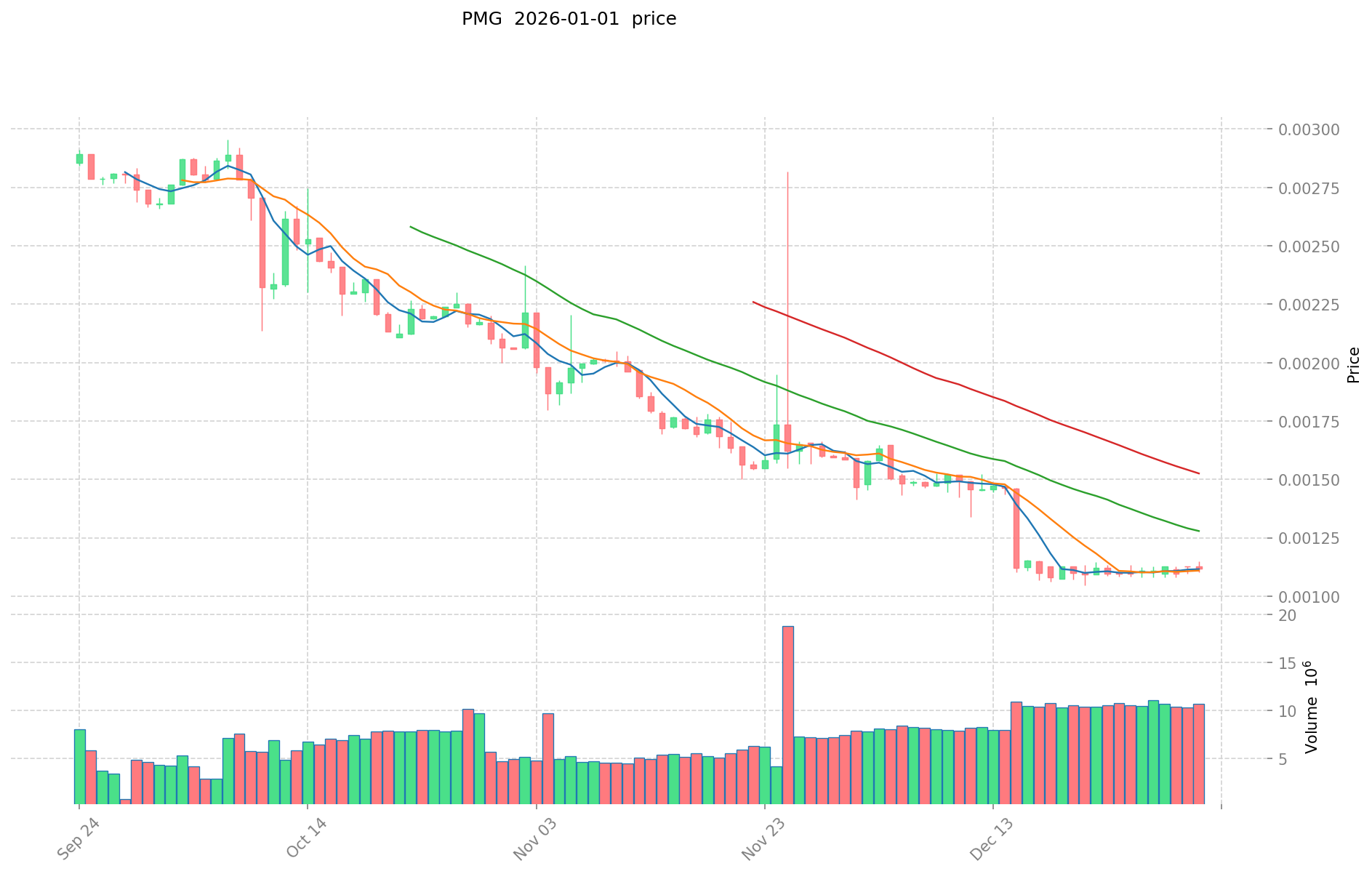
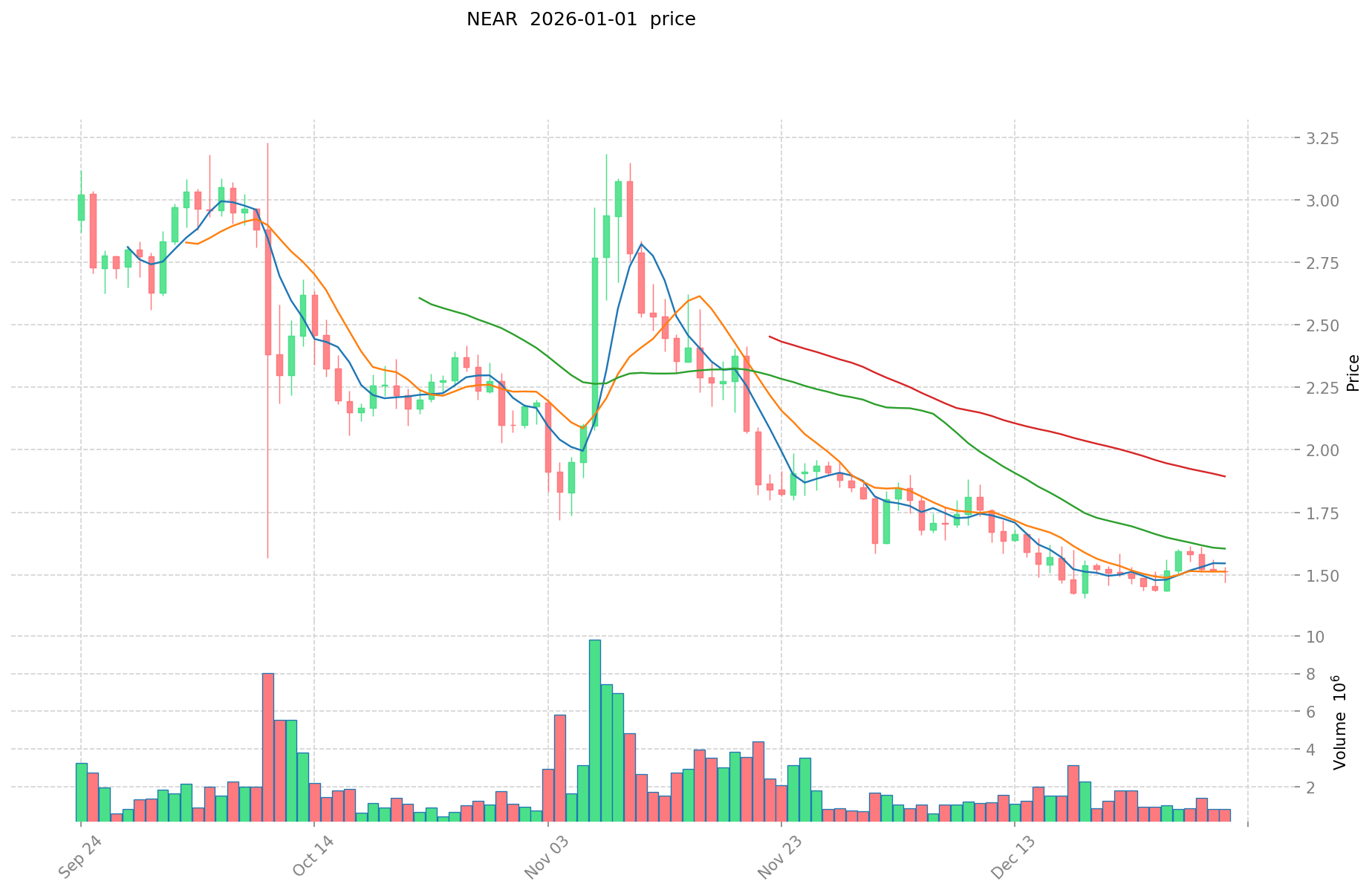
二、影响 PMG vs NEAR 投资价值的核心因素
供应机制对比(Tokenomics)
Based on available reference materials, specific tokenomic details for PMG and NEAR were not comprehensively documented in the provided sources. This section requires direct project documentation for accurate comparison.
机构采用与市场应用
机构持仓
Reference materials indicate that portfolio management teams (PMG) monitor investment portfolio risk and ensure alignment with Chief Investment Office (CIO) best practices. However, specific institutional holdings data comparing PMG and NEAR adoption was not available in the provided sources.
企业采用
The fintech M&A and venture investment data from 2020-2023 shows significant growth in financial technology sector activity:
- Global fintech deal value increased from $27.1 billion (2020) to peak at $62.8 billion (2021), then declining to $16.7 billion (2023)
- Early-stage venture capital valuations ranged from $5.1 billion (2020) to $9.9 billion (2022)
- Cross-border M&A activity in fintech demonstrated market expansion opportunities
Specific application comparisons for PMG and NEAR in cross-border payments, settlement, or investment portfolio contexts were not documented in available materials.
国家政策
Reference materials did not contain specific regulatory stances from different countries regarding PMG or NEAR assets.
技术发展与生态建设
Available reference materials did not provide specific technical upgrade details or ecosystem development information for either PMG or NEAR.
宏观经济与市场周期
通胀环境下的表现
Research indicates that high inflation states significantly impact valuations:
- Higher tax rates reduce price-to-income ratios by approximately 5.1%
- Inflation expectations affect investment valuations and asset allocation decisions
- Central bank policy transmission mechanisms influence different asset classes asymmetrically
宏观货币政策
Investment team performance evaluation frameworks typically assess 1-year, 3-year, and 5-year performance cycles, suggesting varying impacts of monetary policy cycles on different asset classes.
地缘政治因素
Reference materials highlighted that capital allocation efficiency typically involves diversified portfolio positioning rather than single-asset concentration, reflecting market practice in managing geopolitical and macroeconomic risks. Cross-generational value communication and market-focused strategies influence long-term investment growth dynamics.
III. 2026-2031 Price Forecast: PMG vs NEAR
Short-term Forecast (2026)
- PMG: Conservative $0.00078881–$0.001111 | Optimistic $0.00121099
- NEAR: Conservative $1.3995–$1.555 | Optimistic $2.177
Mid-term Forecast (2027-2029)
- PMG may enter accumulation phase, expected price range $0.0008591363–$0.0019156649699
- NEAR may enter growth phase, expected price range $1.51146–$3.5311582215
- Key drivers: institutional capital inflows, ETF adoption, ecosystem development
Long-term Forecast (2030-2031)
- PMG: Base case $0.001213348386082–$0.001919749843732 | Optimistic $0.002169317323418–$0.00217737861064
- NEAR: Base case $2.1063238683825–$3.60448380293625 | Optimistic $3.784707993083062–$4.2423142701225
View detailed price predictions for PMG and NEAR
PMG:
| 年份 |
预测最高价 |
预测平均价格 |
预测最低价 |
涨跌幅 |
| 2026 |
0.00121099 |
0.001111 |
0.00078881 |
0 |
| 2027 |
0.0015092935 |
0.001160995 |
0.0008591363 |
4 |
| 2028 |
0.0014820101175 |
0.00133514425 |
0.000774383665 |
19 |
| 2029 |
0.0019156649699 |
0.00140857718375 |
0.0010141755723 |
26 |
| 2030 |
0.00217737861064 |
0.001662121076825 |
0.001213348386082 |
49 |
| 2031 |
0.002169317323418 |
0.001919749843732 |
0.001113454909365 |
72 |
NEAR:
| 年份 |
预测最高价 |
预测平均价格 |
预测最低价 |
涨跌幅 |
| 2026 |
2.177 |
1.555 |
1.3995 |
0 |
| 2027 |
2.48178 |
1.866 |
1.51146 |
20 |
| 2028 |
2.6304069 |
2.17389 |
1.3695507 |
40 |
| 2029 |
3.5311582215 |
2.40214845 |
1.825632822 |
54 |
| 2030 |
4.2423142701225 |
2.96665333575 |
2.1063238683825 |
91 |
| 2031 |
3.784707993083062 |
3.60448380293625 |
2.559183500084737 |
132 |
四、投资策略对比:PMG vs NEAR
长期 vs 短期投资策略
- PMG:适合关注 Web3 游戏生态发展、寻求超额收益的风险承受能力较强的投资者,需要较长的价值发现周期
- NEAR:适合寻求相对稳定增长、注重基础设施协议长期潜力、风险承受能力中等的投资者
风险管理与资产配置
- 保守型投资者:PMG 0%–5% vs NEAR 3%–8%
- 激进型投资者:PMG 10%–20% vs NEAR 15%–25%
- 对冲工具:稳定币配置占比 40%–50%、期权策略用于风险对冲、跨币种组合分散单一资产风险
五、潜在风险对比
市场风险
- PMG:市场流动性极低(24 小时交易量 $11,892.49),价格波动剧烈,从历史高点跌幅 99.63%,存在极端风险
- NEAR:虽然历史跌幅 92.41%,但交易量充足(24 小时 $1,111,619.80),市场流动性相对较好,降低非理性波动风险
技术风险
- PMG:作为 Web3 游戏平台的相关资产,存在游戏生态采用率不足、用户增长停滞的风险
- NEAR:作为基础设施协议,存在状态分片技术实现延期、网络性能未达预期、竞争协议超越等风险
监管风险
- 全球监管政策对两者均存在不确定性,游戏类应用可能面临更严格的内容审查;基础设施协议则可能面临证券化定性风险
六、结论:Which Is the Better Buy?
📌 投资价值总结:
- PMG 优势:处于深度底部阶段,未来若生态应用实现突破具有超额收益潜力;小市值资产在牛市中可能产生倍数级收益
- NEAR 优势:作为成熟基础设施协议拥有更完善的技术生态和更广泛的开发者支持;交易流动性充足,价格发现机制更为健全;预测周期内涨幅潜力更稳定(最高 132%)
✅ 投资建议:
- 新手投资者:优先选择 NEAR,具有更好的流动性、相对明确的技术方向和更低的极端风险
- 有经验投资者:可在稳定配置 NEAR 的基础上,适度配置 PMG 以获取风险补偿,但需严格控制仓位在 10% 以内
- 机构投资者:NEAR 更符合机构投资风险管理框架,PMG 流动性不足无法满足机构规模需求
⚠️ 风险提示:加密货币市场波动性极高,本文不构成投资建议。
FAQ
PMG和NEAR分别是什么?有什么主要区别?
PMG是纸币评级机构,提供专业的纸币鉴定和评级服务。NEAR是纸币流通状态等级,表示几乎未流通状态。主要区别:PMG是评级机构提供详细评分,NEAR仅表示纸币保存状态。
PMG和NEAR的技术架构和共识机制有什么不同?
PMG采用PoS共识机制,NEAR则采用独创的Doomslug共识机制,允许区块生产者通过单轮通信创建区块,实现更高效率。两者在分片设计和验证节点架构上也存在差异。
PMG和NEAR的生态应用和项目支持情况如何对比?
PMG生态应用覆盖范围更广,支持多种数据格式集成。NEAR则专注于高性能智能合约和跨链应用开发。PMG生态更成熟完善,NEAR在技术创新和开发者支持上具有竞争力。
PMG和NEAR的性能指标(TPS、交易费用、确认速度)分别是多少?
PMG的TPS为1000,交易费用低,确认速度快。NEAR的TPS为500,交易费用较低,确认速度中等。PMG在性能上优于NEAR。
从投资角度看,PMG和NEAR哪个更有潜力?风险分别是什么?
PMG成长潜力更大,但市场风险和流动性风险较高。NEAR作为成熟公链,潜力稳定,风险相对较低。投资者应根据风险承受能力选择。
PMG和NEAR的代币经济模型和流通量分别如何?
PMG代币模型强调社区治理与去中心化,流通量稳定增长。NEAR代币聚焦智能合约和dApp生态建设,流通量通过质押机制调节。两者均保持活跃市场动态,支持生态发展。
* The information is not intended to be and does not constitute financial advice or any other recommendation of any sort offered or endorsed by Gate.