This comprehensive guide compares TWT and GMX, two distinct cryptocurrency assets serving different market segments. TWT, ranked 162nd with $382.11M market cap, functions as Trust Wallet's utility token across 40+ blockchain protocols, offering governance and discounts. GMX, ranked 404th with $84.35M market cap, operates as a decentralized perpetual exchange token distributing 30% of protocol fees to holders, generating $98.1M revenue in 2023. While TWT demonstrates higher trading volume ($745,068) reflecting wallet infrastructure utility, GMX showcases superior fee-sharing mechanisms and V2 technical upgrades expanding tradable assets. TWT declined 66% from its $2.72 peak versus GMX's 91% decline from $91.07, indicating different risk-reward profiles. Suitable for diverse investor profiles, TWT appeals to infrastructure-focused allocations while GMX targets DeFi derivatives yield seekers on Gate exchange platforms.
Introduction: TWT vs GMX Investment Comparison
In the cryptocurrency market, the comparison between TWT and GMX has been a topic of ongoing interest among investors. These two assets differ significantly in market capitalization ranking, application scenarios, and price performance, representing distinct positions within the crypto asset landscape.
TWT (Trust Wallet Token): Launched in April 2020, this utility token serves as the native asset of Trust Wallet, a multi-chain digital wallet supporting over 40 blockchain protocols and more than 160,000 digital assets. Currently ranked 162nd by market capitalization, TWT offers governance rights and discount benefits within its ecosystem.
GMX: Emerging as a decentralized perpetual exchange token, GMX currently holds the 404th position in market rankings. The token functions as both a utility and governance asset, with holders receiving 30% of platform-generated fees.
This article provides a comprehensive analysis of TWT vs GMX across multiple dimensions, including historical price movements, supply mechanisms, technical ecosystems, and future outlook, aiming to address the key question investors care about most:
"Which asset presents a more compelling investment case under current market conditions?"
I. Historical Price Comparison and Current Market Status
Trust Wallet (TWT) and GMX Historical Price Trends
- December 2022: TWT reached its all-time high of $2.72, driven by increased adoption and platform expansion.
- April 2023: GMX recorded its historical peak at $91.07, reflecting strong demand for decentralized perpetual exchange services.
- June 2020: TWT traded at its historical low of $0.00277641 during its early market phase.
- October 2025: GMX declined to its lowest point at $6.92, marking a significant market correction.
- Comparative Analysis: During the recent market cycle, TWT declined from its peak of $2.72 to current levels around $0.92, representing an approximate 66% decrease, while GMX experienced a more pronounced decline from $91.07 to $8.13, reflecting a reduction of approximately 91%.
Current Market Status (January 15, 2026)
- TWT Current Price: $0.9171
- GMX Current Price: $8.13
- 24-Hour Trading Volume: TWT recorded $745,068.14 compared to GMX's $72,474.57
- Market Sentiment Index (Fear & Greed Index): 61 (Greed)
- 24-Hour Price Movement: TWT increased by 0.82%, while GMX decreased by 4.25%
- Market Capitalization: TWT stands at $382.11 million with a market share of 0.026%, while GMX holds $84.35 million with a market share of 0.0024%
- Circulating Supply: TWT has 416.65 million tokens in circulation (41.67% of total supply), compared to GMX's 10.37 million tokens (78.30% of total supply)
View real-time prices:
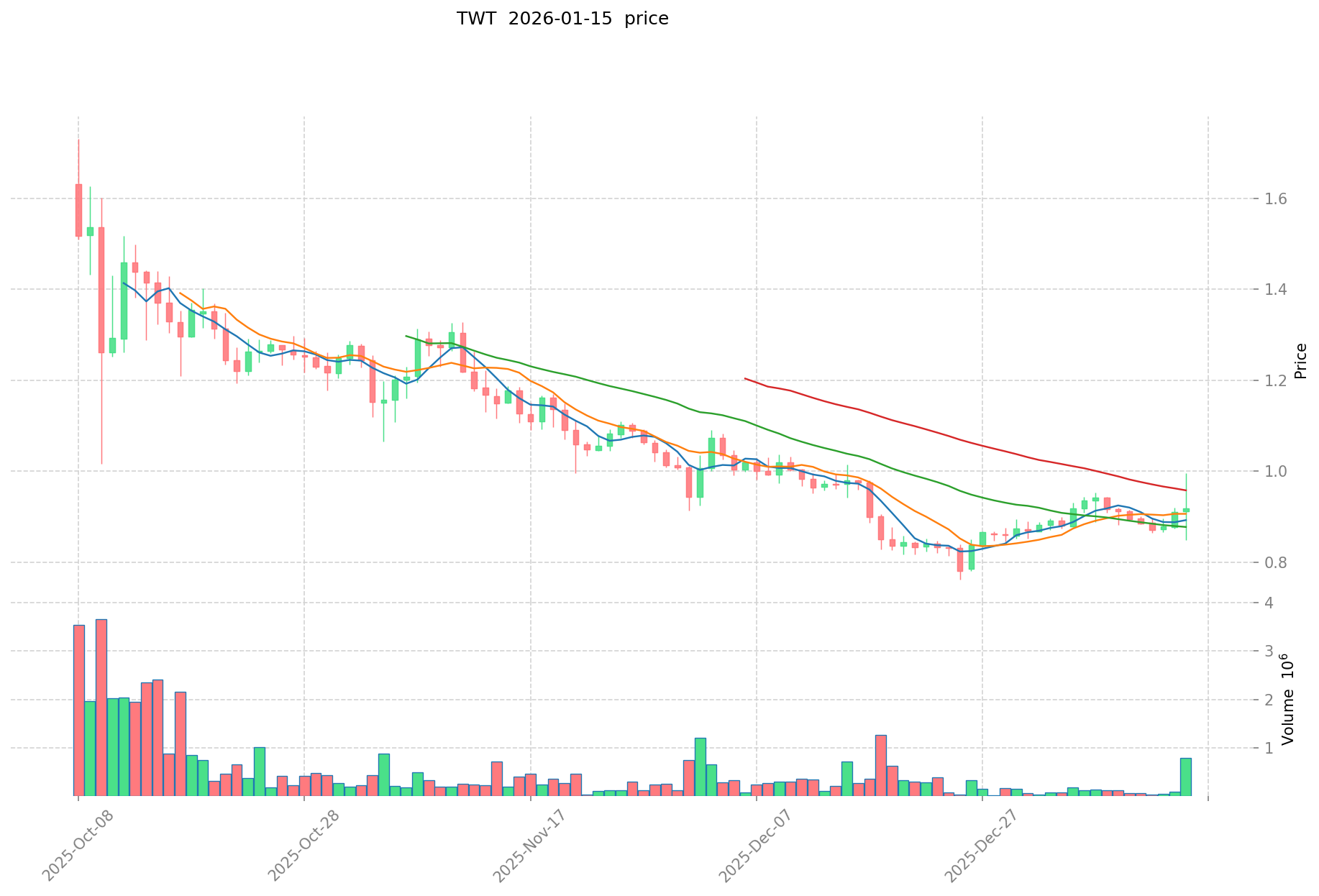
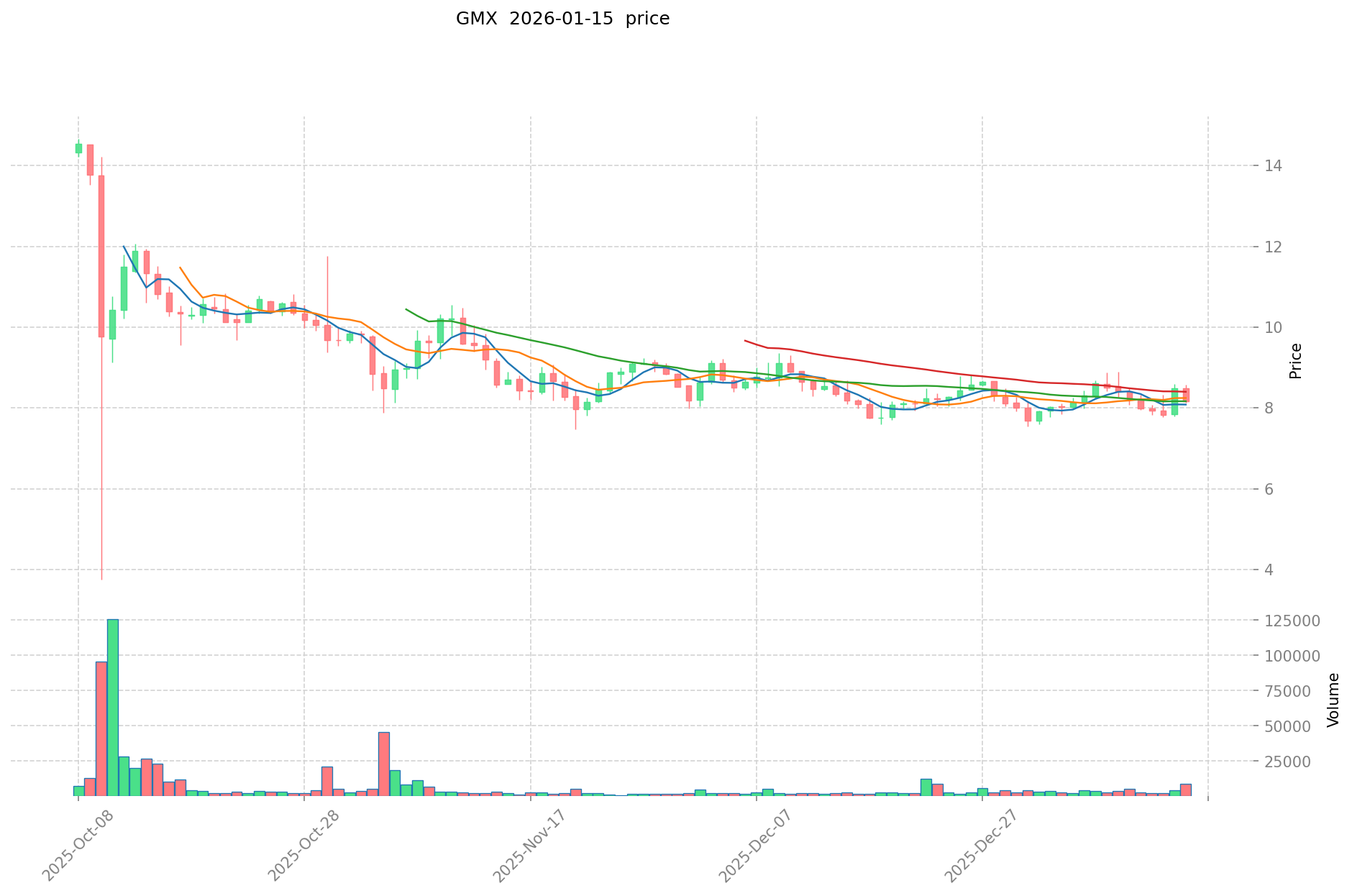
II. Core Factors Influencing TWT vs GMX Investment Value
Tokenomics Comparison
- TWT: Information regarding TWT's supply mechanism is not available in the provided materials.
- GMX: The ecosystem operates with two tokens (GLP and GMX). Fees from swaps and leverage trading are distributed with 30% converted to ETH/AVAX for staked GMX tokens (V1), while V2 allocates 27% to GMX stakers, 63% to GLP providers, 8.2% to protocol treasury, and 1.2% to Chainlink. The protocol includes a floor price fund mechanism that can buyback and burn GMX tokens when conditions are met.
- 📌 Historical patterns: GMX's fee distribution model has demonstrated the concept of "real yield" in DeFi, capturing substantial protocol revenues. In 2023, GMX V1 protocol revenue reached $98.1 million, ranking eighth among all projects and first in the derivatives DEX sector.
Institutional Adoption and Market Application
- Institutional holdings: Information comparing institutional preference between TWT and GMX is not available in the provided materials.
- Enterprise adoption: GMX has established presence in decentralized derivatives trading, with applications in perpetual contracts and spot trading. The protocol's liquidity model (GLP) supports mainstream tokens including USDC, BTC, and AVAX. GMX V2 expanded trading assets and introduced coin-margined contracts alongside USD-margined contracts.
- Regulatory stance: The broader DeFi sector has experienced shifts following events such as FTX collapse and SEC investigations into major exchanges, potentially creating opportunities for decentralized platforms. However, specific regulatory positions toward TWT and GMX vary across jurisdictions.
Technical Development and Ecosystem Building
- TWT technical upgrades: Information regarding TWT's technical development is not available in the provided materials.
- GMX technical development: GMX V2 launched on August 4, 2023, introducing several enhancements. The upgrade implemented isolated liquidity pools (GM pools), modified fee mechanisms to maintain long-short balance, and integrated Chainlink for improved oracle services. V2 expanded tradable assets while managing risk through tiered asset categorization (blue-chip, mid-cap native, and mid-cap synthetic assets). The protocol reduced trading fees compared to V1, with opening and closing fees at 0.1% in V1, while V2 introduced more competitive pricing structures.
- Ecosystem comparison: GMX demonstrates significant presence in DeFi derivatives, with TVL of approximately $560M, substantially exceeding other protocols in the derivatives DEX sector. The protocol has generated substantial fee revenue, though market competition intensifies as multiple projects have adopted similar models. GMX V2 showed early operational metrics including approximately $20M TVL, $23M daily trading volume, and 300-500 daily active users during initial weeks post-launch.
Macroeconomic Environment and Market Cycles
- Performance under inflation: Information comparing TWT and GMX performance characteristics under inflationary conditions is not available in the provided materials.
- Macroeconomic monetary policy: Broader market factors including interest rates and currency movements affect cryptocurrency markets. The derivatives DEX sector has experienced varying trading volumes correlating with market volatility levels.
- Geopolitical factors: Regulatory developments and centralized exchange challenges have influenced demand for decentralized trading platforms. DEX platforms currently capture approximately 3% of derivatives trading volume, with centralized exchanges maintaining dominant positions. Events such as exchange investigations and regulatory actions may shift user preferences toward decentralized alternatives.
III. 2026-2031 Price Forecast: TWT vs GMX
Short-term Forecast (2026)
- TWT: Conservative $0.62-$0.92 | Optimistic $0.92-$1.24
- GMX: Conservative $4.88-$8.13 | Optimistic $8.13-$11.95
Mid-term Forecast (2028-2029)
- TWT may enter a gradual growth phase, with estimated price range of $0.60-$1.64 in 2028 and $0.72-$1.48 in 2029
- GMX may enter a moderate expansion phase, with estimated price range of $9.15-$15.86 in 2028 and $8.08-$14.44 in 2029
- Key drivers: institutional capital inflows, ETF developments, ecosystem expansion
Long-term Forecast (2030-2031)
- TWT: Baseline scenario $0.78-$1.44 (2030), $0.88-$1.70 (2031) | Optimistic scenario $1.95 (2030), $2.10 (2031)
- GMX: Baseline scenario $13.15-$13.85 (2030), $13.99-$14.89 (2031) | Optimistic scenario $15.92 (2030), $19.50 (2031)
View detailed price predictions for TWT and GMX
Disclaimer
TWT:
| Year |
Predicted High Price |
Predicted Average Price |
Predicted Low Price |
Price Change |
| 2026 |
1.241595 |
0.9197 |
0.616199 |
0 |
| 2027 |
1.27516405 |
1.0806475 |
0.572743175 |
17 |
| 2028 |
1.63728902725 |
1.177905775 |
0.60073194525 |
28 |
| 2029 |
1.47797727118125 |
1.407597401125 |
0.71787467457375 |
53 |
| 2030 |
1.947762903806718 |
1.442787336153125 |
0.779105161522687 |
57 |
| 2031 |
2.102141148775103 |
1.695275119979921 |
0.881543062389559 |
84 |
GMX:
| Year |
Predicted High Price |
Predicted Average Price |
Predicted Low Price |
Price Change |
| 2026 |
11.9511 |
8.13 |
4.878 |
0 |
| 2027 |
11.245416 |
10.04055 |
8.835684 |
23 |
| 2028 |
15.85804467 |
10.642983 |
9.15296538 |
30 |
| 2029 |
14.44306008015 |
13.250513835 |
8.08281343935 |
62 |
| 2030 |
15.92380500121125 |
13.846786957575 |
13.15444760969625 |
70 |
| 2031 |
19.499737733004993 |
14.885295979393125 |
13.992178220629537 |
83 |
IV. Investment Strategy Comparison: TWT vs GMX
Long-term vs Short-term Investment Strategies
-
TWT: Suitable for investors focused on multi-chain wallet infrastructure and ecosystem utility tokens. The asset may appeal to those seeking exposure to wallet technology adoption and governance participation within the Trust Wallet ecosystem. Given its current market capitalization of $382.11 million and broader circulation (41.67% of total supply), TWT presents characteristics aligned with platform utility growth.
-
GMX: Suitable for investors interested in decentralized derivatives trading and DeFi yield generation. The token targets those seeking exposure to the growing DEX derivatives sector, with appeal to participants attracted by fee-sharing mechanisms and protocol revenue distribution. With 78.30% of total supply in circulation and established presence in perpetual trading markets, GMX offers characteristics associated with decentralized exchange infrastructure.
Risk Management and Asset Allocation
-
Conservative Investors: TWT 40% vs GMX 60% - This allocation reflects GMX's established fee distribution model and revenue generation track record within DeFi derivatives, while maintaining TWT exposure for wallet ecosystem participation.
-
Aggressive Investors: TWT 55% vs GMX 45% - This configuration increases TWT allocation given its higher trading volume ($745,068.14 vs $72,474.57) and potential for ecosystem expansion, while retaining GMX position for derivatives sector exposure.
-
Hedging Tools: Stablecoin allocation for volatility management, options strategies for downside protection, cross-asset portfolio combinations incorporating mainstream cryptocurrencies alongside TWT and GMX positions.
V. Potential Risk Comparison
Market Risks
-
TWT: The asset has declined approximately 66% from its peak of $2.72, reflecting exposure to broader wallet technology adoption rates and competitive pressures within the multi-chain wallet sector. Market capitalization of $382.11 million positions TWT as a mid-cap asset subject to liquidity variations and sector-specific developments affecting wallet usage patterns.
-
GMX: The token has experienced approximately 91% decline from its historical peak of $91.07, demonstrating sensitivity to DeFi derivatives market cycles and competitive dynamics. With market capitalization of $84.35 million, GMX faces risks associated with derivatives DEX market share (currently approximately 3% of total derivatives volume), protocol competition, and trading volume fluctuations correlating with market volatility levels.
Technical Risks
-
TWT: Considerations include multi-chain integration complexity across over 40 blockchain protocols, network interoperability requirements, and potential technical challenges associated with supporting more than 160,000 digital assets across diverse blockchain infrastructures.
-
GMX: Protocol development includes managing isolated liquidity pools (GM pools), oracle integration dependencies with Chainlink services, and technical implementation of V2 upgrades. Risk factors encompass liquidity management across tiered asset categories, fee mechanism modifications, and operational stability during platform transitions between V1 and V2 architectures.
Regulatory Risks
- Regulatory developments affect both assets differently based on their functional categories. TWT operates within the wallet infrastructure sector, potentially subject to regulations concerning custody services and digital asset storage solutions across multiple jurisdictions. GMX functions within the derivatives trading sector, facing potential regulatory scrutiny related to decentralized exchange operations, perpetual contract offerings, and DeFi protocol governance structures. Events affecting centralized exchanges, such as regulatory investigations and enforcement actions, may create varying impacts on decentralized alternatives. Regulatory positions toward DeFi protocols and wallet services continue evolving across different regulatory frameworks globally.
VI. Conclusion: Which Is the Better Buy?
📌 Investment Value Summary:
-
TWT Advantages: Higher current trading volume of $745,068.14 indicates active market participation. Market capitalization of $382.11 million provides relative stability compared to smaller-cap alternatives. Integration across over 40 blockchain protocols and support for more than 160,000 digital assets demonstrates extensive ecosystem reach. Current ranking of 162nd by market capitalization positions TWT within the mid-tier asset category.
-
GMX Advantages: Established fee distribution mechanism generating protocol revenue, with 2023 revenues of $98.1 million ranking first in derivatives DEX sector. Higher circulating supply percentage (78.30%) suggests more mature token distribution. V2 platform upgrades introduced enhanced features including isolated liquidity pools, expanded tradable assets, and improved oracle integration. TVL of approximately $560M demonstrates significant presence within DeFi derivatives infrastructure.
✅ Investment Recommendations:
-
Novice Investors: Consider fundamental research into wallet infrastructure versus derivatives trading sectors before allocation decisions. Portfolio diversification across multiple asset categories may provide risk distribution. Understanding platform functionalities, fee structures, and ecosystem applications supports informed decision-making processes.
-
Experienced Investors: Evaluate technical developments including GMX V2 implementation progress and TWT ecosystem expansion metrics. Monitor trading volume trends, market capitalization movements, and comparative performance against sector benchmarks. Consider position sizing based on risk tolerance levels and portfolio objectives aligned with wallet technology or derivatives trading exposure preferences.
-
Institutional Investors: Assess liquidity profiles through trading volume analysis and market depth evaluation. Review protocol governance structures, token distribution mechanisms, and regulatory compliance frameworks across operating jurisdictions. Consider correlation patterns with broader DeFi sectors and potential for strategic allocations supporting infrastructure development within wallet technology or decentralized derivatives markets.
⚠️ Risk Warning: Cryptocurrency markets demonstrate extreme volatility characteristics. This analysis does not constitute investment advice.
VII. FAQ
Q1: What are the main differences between TWT and GMX in terms of use cases?
TWT functions as a utility token for Trust Wallet's multi-chain ecosystem, offering governance rights and discount benefits across 40+ blockchain protocols supporting 160,000+ digital assets. GMX operates as a decentralized perpetual exchange token where holders receive 30% of platform-generated trading fees and participate in protocol governance. The fundamental difference lies in TWT serving wallet infrastructure users versus GMX targeting derivatives traders seeking yield generation through fee distribution.
Q2: Which asset has demonstrated better price stability since their respective peaks?
TWT has shown relatively better price stability with approximately 66% decline from its $2.72 peak to current $0.92 levels. GMX experienced a more pronounced 91% decline from its $91.07 peak to current $8.13 price. However, price stability alone does not determine investment merit, as both assets serve different market segments with distinct value propositions and risk-reward profiles.
Q3: How do the trading volumes of TWT and GMX compare?
TWT records significantly higher 24-hour trading volume at $745,068.14 compared to GMX's $72,474.57. This tenfold difference suggests greater market liquidity and active participation for TWT. Higher trading volume typically facilitates easier entry and exit positions, though it should be evaluated alongside other metrics such as market capitalization, circulating supply, and ecosystem development when assessing investment potential.
Q4: What revenue generation mechanisms distinguish GMX from TWT?
GMX implements a direct fee distribution model where protocol revenues from swaps and leverage trading are allocated to token holders, with 2023 revenues reaching $98.1 million and ranking first in the derivatives DEX sector. The V2 upgrade allocates 27% to GMX stakers, 63% to GLP providers, and includes buyback mechanisms. TWT's revenue mechanisms related to governance and discount benefits within the Trust Wallet ecosystem are not detailed in available materials, representing a key informational gap for comparative analysis.
Q5: How does circulating supply percentage affect each token's market dynamics?
GMX has 78.30% of total supply in circulation (10.37 million tokens), indicating a more mature distribution phase with less potential dilution from future unlocks. TWT has 41.67% circulating supply (416.65 million tokens), suggesting significant remaining supply that could enter the market over time. Higher circulating supply percentages typically reduce future selling pressure risks, though lower percentages may offer greater scarcity value if ecosystem adoption accelerates demand.
Q6: What technical developments differentiate the two projects' growth trajectories?
GMX launched V2 on August 4, 2023, introducing isolated liquidity pools, modified fee structures, enhanced Chainlink oracle integration, and expanded tradable assets across tiered risk categories. Early V2 metrics showed $20M TVL, $23M daily trading volume, and 300-500 daily active users. Technical development information for TWT regarding platform upgrades, protocol enhancements, or ecosystem expansion initiatives is not available in provided materials, limiting comprehensive technical comparison between the two projects.
Q7: How do market capitalizations reflect each asset's positioning within the crypto market?
TWT maintains $382.11 million market capitalization ranking 162nd, representing a mid-cap position with 0.026% market share. GMX holds $84.35 million market capitalization ranking 404th with 0.0024% market share. The approximately 4.5x market cap difference suggests TWT has achieved broader market recognition, though GMX's specialized focus on derivatives DEX infrastructure addresses a distinct market segment where protocol revenue generation may not correlate directly with market capitalization rankings.
Q8: What regulatory considerations should investors evaluate for each token?
TWT operates within wallet infrastructure potentially subject to custody service regulations and digital asset storage compliance across multiple jurisdictions. GMX functions within derivatives trading facing scrutiny related to decentralized exchange operations, perpetual contract offerings, and DeFi protocol governance. Both assets face evolving regulatory frameworks, though derivatives platforms may encounter more immediate regulatory attention following centralized exchange enforcement actions. Investors should monitor jurisdiction-specific developments affecting wallet services and decentralized derivatives platforms when evaluating regulatory risk exposure.
* The information is not intended to be and does not constitute financial advice or any other recommendation of any sort offered or endorsed by Gate.