# Article Introduction
This comprehensive crypto market overview examines 2025's digital asset landscape through market cap rankings, trading volume metrics, and liquidity conditions. Bitcoin dominates with 60% market share, while Ethereum anchors the smart contract ecosystem, with emerging assets like Solana and XRP reshaping institutional adoption patterns. The guide analyzes circulating versus total supply dynamics, explores 24-hour and 7-day trading volume trends averaging $2.9 trillion and $20.3 trillion respectively, and assesses market depth across major platforms including Gate. Designed for traders and investors, this resource clarifies token scarcity principles, liquidity assessment on Gate, and bid-ask spread indicators essential for informed trading decisions. Whether evaluating price discovery mechanisms or identifying optimal execution windows, readers gain actionable insights into crypto market structure and real-time trading conditions.
Top Cryptocurrencies by Market Cap: Leading Digital Assets Dominating 2025
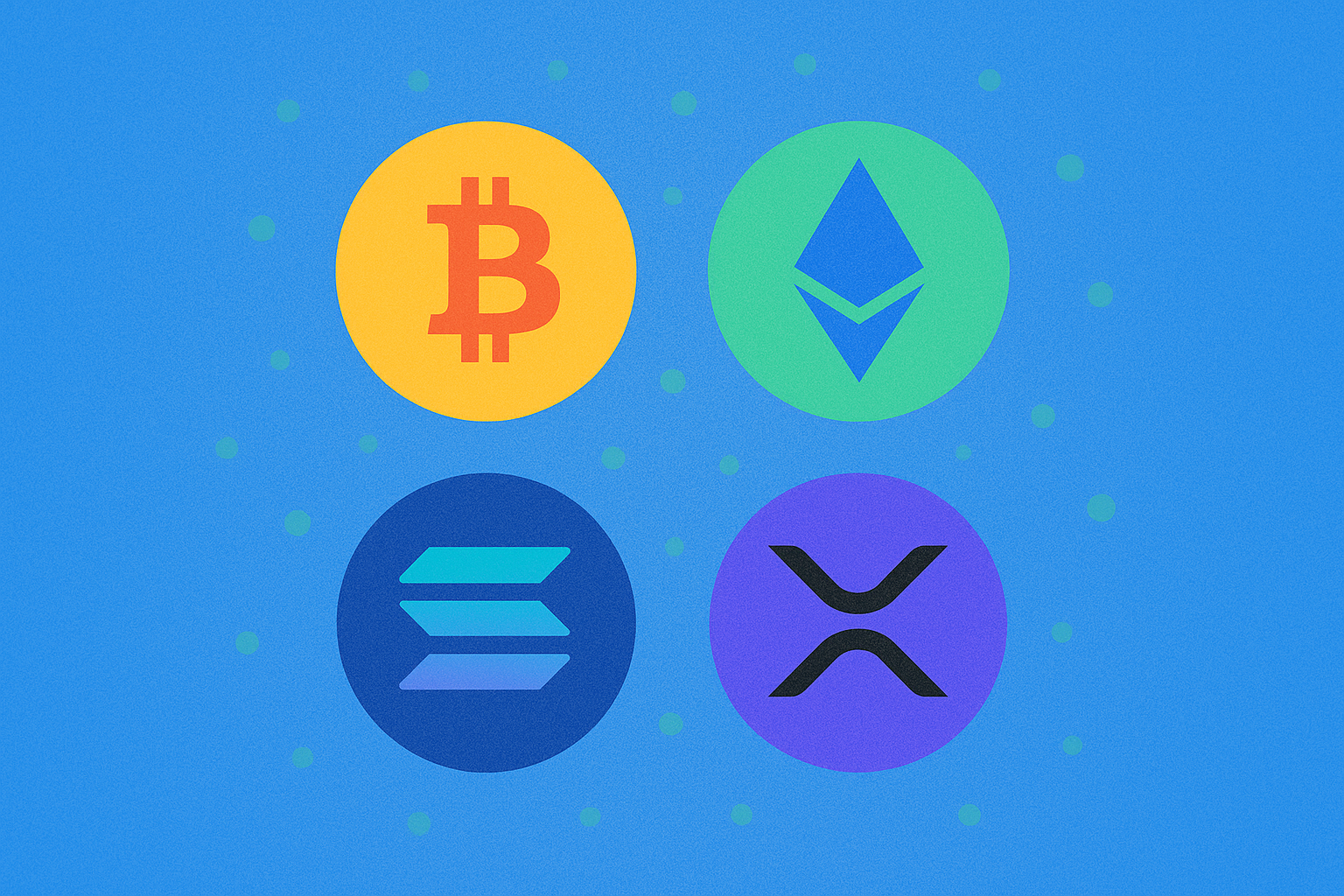
Bitcoin (BTC) stands as the undisputed leader in the digital asset market, commanding approximately 60% of the total cryptocurrency market cap in 2025. Often referred to as "digital gold," Bitcoin's dominance reflects its scarcity, decentralization, and proven resilience, making it the primary store-of-value in the crypto ecosystem. Ethereum (ETH) maintains its position as the second-largest cryptocurrency by market capitalization, anchoring the smart contract and decentralized finance landscape. The emergence of stablecoin infrastructure has also strengthened Ethereum's utility, with stablecoin supply reaching substantial levels throughout 2025.
Beyond these two pillars, the market has witnessed significant growth from newer digital assets gaining institutional traction. Solana has evolved into a major player, successfully transitioning from pure speculation to becoming a critical liquidity layer for global markets. Similarly, XRP and Hyperliquid have demonstrated strong performance, attracting investor interest as alternative blockchain platforms. The diversification across these leading cryptocurrencies reflects how institutional adoption—with major financial institutions integrating these assets into their operations—continues reshaping the market landscape. Market cap rankings provide crucial insight into how value distributes across the cryptocurrency ecosystem, helping investors understand which digital assets command the greatest confidence and liquidity in the market.
Circulating Supply vs Total Supply: Understanding Token Distribution and Scarcity
The distinction between circulating supply and total supply represents a fundamental principle in evaluating cryptocurrency market metrics and determining accurate valuations. Circulating supply refers to the number of tokens actively trading in the market, while total supply encompasses all tokens ever created, including those locked or vested. This difference directly influences how market capitalization is calculated and perceived within the crypto market overview.
Telcoin exemplifies this dynamic clearly. With a circulating supply of approximately 95.17 billion tokens against a maximum supply of 100 billion, TEL demonstrates how close to full distribution many established projects reach. The allocation breakdown—including 25% for crowdsale investors, 55% designated for community initiatives, and 10% for treasury distribution—illustrates deliberate token distribution strategies designed to incentivize long-term participation.
Token scarcity isn't merely about absolute quantity; it's shaped by vesting schedules, lock-up periods, and holder concentration patterns. Tokens subject to vesting arrangements remain unavailable for trading, effectively reducing the available float and influencing short-term market liquidity. Understanding this relationship helps traders and investors assess genuine market depth, as higher circulating supplies typically correlate with improved trading conditions and reduced volatility. When evaluating crypto market rankings and trading volume metrics, distinguishing between actual available tokens and locked holdings provides crucial context for realistic liquidity assessment and price discovery mechanisms.
Trading Volume Analysis: 24-Hour and 7-Day Metrics Reveal Market Activity Trends
Understanding both 24-hour and 7-day trading volume metrics provides crucial insights into market dynamics and trader participation levels. In 2025, the crypto market demonstrated substantial activity, with average daily 24-hour trading volume reaching approximately $2.9 trillion. When examining the broader picture through 7-day metrics, the average trading volume extended to $20.3 trillion, reflecting strong and sustained market engagement across different trading cycles.
These trading volume figures serve as essential indicators of market participation and liquidity conditions. A robust 24-hour trading volume suggests active daily market engagement, while analyzing 7-day metrics reveals whether this activity represents temporary spikes or sustained interest. The variance between these timeframes helps traders identify consistency in market behavior and detect potential reversals before they materialize.
The significant trading volume recorded throughout 2025 compared to previous periods demonstrates accelerating market maturation and increased institutional participation. High trading activity correlates directly with market strength, as it indicates multiple participants confidently entering and exiting positions. For market participants tracking cryptoassets on platforms like gate, these volume metrics become invaluable for validating price movements and assessing the reliability of emerging trends. Strong volume backing price changes confirms genuine market sentiment rather than superficial price fluctuations.
Market depth varies significantly across major cryptocurrency trading platforms, creating distinct advantages and challenges for different trading styles. Leading exchanges like Bitget and Binance demonstrate superior liquidity for major assets such as ETH and BTC, with deeper order books across multiple depth levels. Market depth is typically measured at the ±2% band around the mid-price, a standard metric that reveals how much liquidity is available for trades without causing substantial price slippage.
Exchange coverage continues to expand globally, but liquidity distribution remains uneven. The bid-ask spread—the difference between buy and sell prices—serves as a critical indicator of market depth quality. Exchanges with tighter spreads generally offer better trading conditions, particularly for larger orders. Research shows that some venues maintain significantly deeper order books at certain depth levels, with variations between ±0.5% and ±2% ranges reflecting how institutional and retail trading patterns influence liquidity concentration.
Temporal factors also impact market depth substantially. Liquidity fluctuates based on geographic trading sessions and institutional activity hours, creating optimal and suboptimal windows for trade execution. Traders seeking consistent market depth across platforms should examine real-time order book data and historical slippage metrics. Professional traders often monitor depth across multiple venues simultaneously to identify the best execution opportunities, ensuring their trades encounter sufficient liquidity without excessive market impact.
FAQ
What will be the crypto market cap in 2025?
The crypto market cap is projected to reach approximately $10 trillion in 2025. Bitcoin maintains dominance with over $2 trillion market cap, representing about 56% of the total market. Emerging projects continue to expand market participation and overall valuation growth.
What is liquidity volume and market cap in crypto?
Liquidity volume is the total trading amount of a cryptocurrency in a given period, indicating market activity. Market cap is calculated by multiplying a coin's price by its circulating supply, representing its total market value. Both metrics help assess investment potential and market conditions.
What crypto will be huge in 2025?
Bitcoin and Ethereum are expected to remain dominant in 2025, with strong institutional adoption and high utility. Cardano is also positioned for prominence due to its scalability solutions. Established assets with proven fundamentals will lead the market.
What is the total market cap in 2025?
As of late 2025, the global crypto market cap exceeds $3 trillion, driven by Bitcoin and Ethereum dominance alongside emerging altcoins and institutional adoption growth.
Which cryptocurrencies have the highest market cap rankings in 2025?
As of 2025, MYX Finance leads in market cap rankings, followed by BNB Chain, Ethereum, and Solana. The top cryptocurrencies are driven by strong fundamentals and innovative projects.
What factors are driving crypto market cap and trading volume growth in 2025?
Increased blockchain adoption, Ethereum's Fusaka hard fork improving scalability, DeFi ecosystem expansion, real-world asset tokenization, and growing institutional investor interest are key drivers of crypto market cap and trading volume growth in 2025.
How does crypto market liquidity affect trading and investment risk?
Higher liquidity enables faster trades at fair prices with lower slippage, reducing investment risk. Low liquidity increases price impact and potential losses during volatile markets, especially for less popular tokens with lower trading volume.
FAQ
Does Telcoin have a future?
Yes. Telcoin targets the $700 billion remittance market with innovative mobile money transfer technology. Its blockchain-based approach to international transfers positions it well for growth, especially as adoption of decentralized financial solutions increases globally.
Can Telcoin reach $1?
Yes, Telcoin can reach $1 in the long term with significant adoption and major partnership expansion. Success depends on growing remittance corridors and increasing transaction volume globally.
Is Telcoin crypto a good investment?
Telcoin demonstrates strong long-term potential with innovative mobile financial services. Experts suggest TEL could reach multi-dollar levels by 2040-2050. Short-term prices may range $0.006-$0.01. Investment suitability depends on your belief in decentralized financial adoption and risk tolerance.
Will Telcoin be added to Coinbase?
Yes, Telcoin is confirmed to be added to Coinbase's main app. The listing is already available on Coinbase Wallet and will expand to the main platform soon.
What is Telcoin (TEL) and what problem does it solve?
Telcoin (TEL) is a blockchain platform integrating mobile telecommunications with decentralized finance. It solves high fees and inefficiencies in traditional mobile payment systems by enabling faster, cheaper cross-border transactions through DeFi technology.
How do I buy and store Telcoin?
Purchase TEL through major crypto platforms using fiat or stablecoins like USDT. Transfer your tokens to a secure wallet such as MetaMask or hardware wallets for long-term storage. Always enable two-factor authentication for account security.
What are the risks and security considerations for investing in Telcoin?
Telcoin investments face market volatility and regulatory uncertainty risks. Ensure wallet security, use strong passwords, enable two-factor authentication, and only transact on verified platforms. Conduct thorough research before investing.
* The information is not intended to be and does not constitute financial advice or any other recommendation of any sort offered or endorsed by Gate.