As the decentralized finance (DeFi) ecosystem matures, Aave stands out as a leading lending protocol, effectively resolving issues of fragmented on-chain liquidity and high trust costs. With its native stablecoin GHO surpassing a $500 million market cap and the phased implementation of its V4 “Hub-and-Spoke” architecture, Aave is addressing multi-chain capital fragmentation with a sophisticated risk engine and cross-chain liquidity abstraction—reinforcing its position with over 60% market share.
From inception, Aave has leveraged smart contracts to build a permissionless, automated on-chain lending marketplace, enabling users worldwide to freely deposit, borrow, and manage risk without banks or manual approvals. The protocol’s mechanisms highlight the transformative potential of programmable finance for traditional credit systems, with robust risk controls and liquidation logic underpinning its stability.
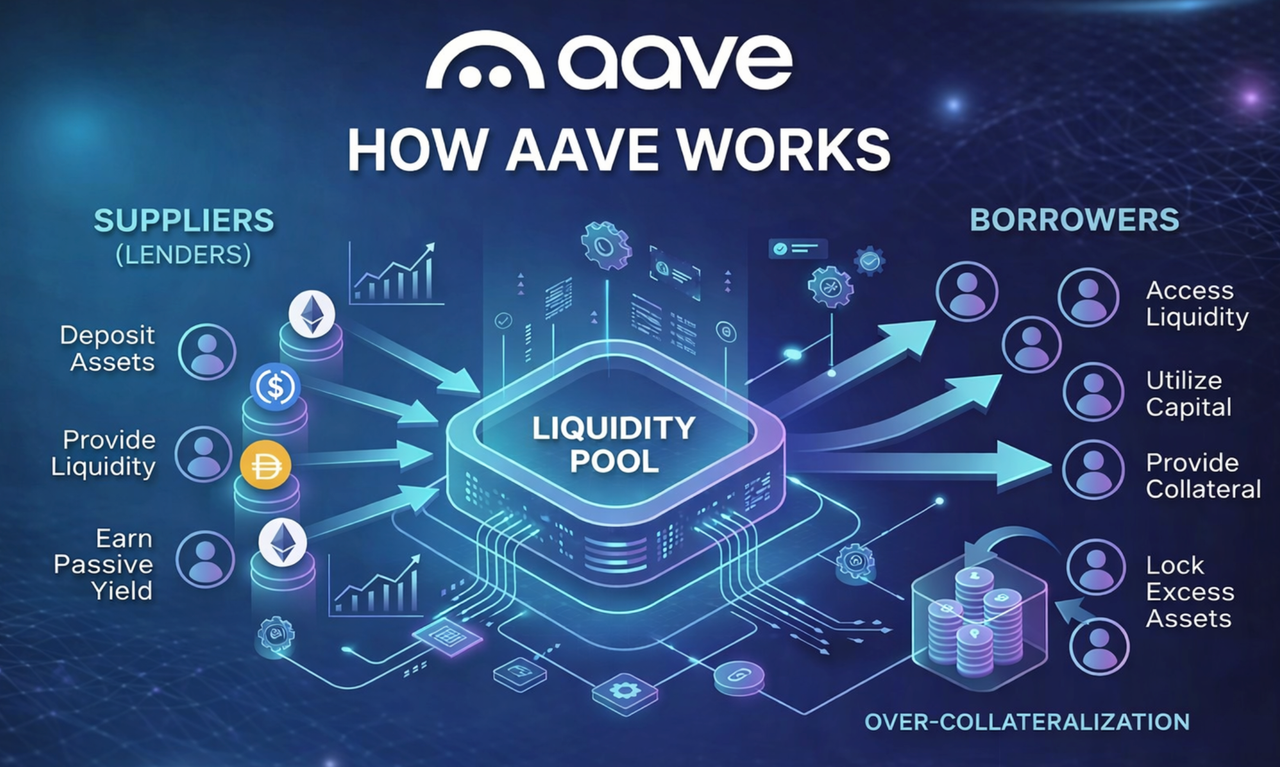
Aave Overview
Aave is a decentralized lending protocol built on Ethereum, originally launched as ETHLend in 2017 and later rebranded. Its mission is to establish a fully permissionless, intermediary-free lending marketplace powered by smart contracts.
With Aave, users can earn interest by depositing crypto assets or use their assets as collateral to borrow other tokens. All lending activity is facilitated through pooled liquidity, not peer-to-peer matching, significantly enhancing capital efficiency and depth.
AAVE is the protocol’s native governance token, used for voting, risk mitigation (Safety Module), and protocol incentives. Aave has expanded to a multi-chain ecosystem, introducing innovations like Flash Loans, Isolation Mode, and E-Mode, cementing its role as foundational DeFi infrastructure.
Aave’s Core Mechanisms
Aave’s core is its “pool-based lending” model. Unlike traditional peer-to-peer lending, Aave aggregates each type of asset into a single liquidity pool. Borrowers draw funds from these pools, while depositors share interest income proportionally.
| Core Component |
Function |
Mechanism |
| Liquidity Pools |
Token repositories |
Aggregate all deposits for on-demand access by borrowers. |
| aTokens |
Deposit receipt tokens |
1:1 tokens minted on deposit, with balances that increase in real time as interest accrues. |
| Health Factor |
Risk metric |
Measures the collateral-to-loan value ratio for borrowers. |
| Oracles |
Price feeds |
Use Chainlink and similar oracles to ensure real-time, accurate asset pricing. |
Aave enforces risk control through over-collateralization. For example, to borrow 100 USDC, a user typically must post more than $150 in ETH as collateral. This structure keeps protocol risk in check.
The protocol’s algorithmic interest rate model dynamically adjusts rates based on pool utilization: rates decrease when liquidity is abundant and increase as liquidity tightens, maintaining an automatic supply-demand balance. All operations are governed by smart contracts, with no centralized risk assessment or fund allocation.
In late 2025, Aave previewed v4. Building on v3, Aave v4 coordinates liquidity management through Liquidity Hubs, Spokes, and Reserves.
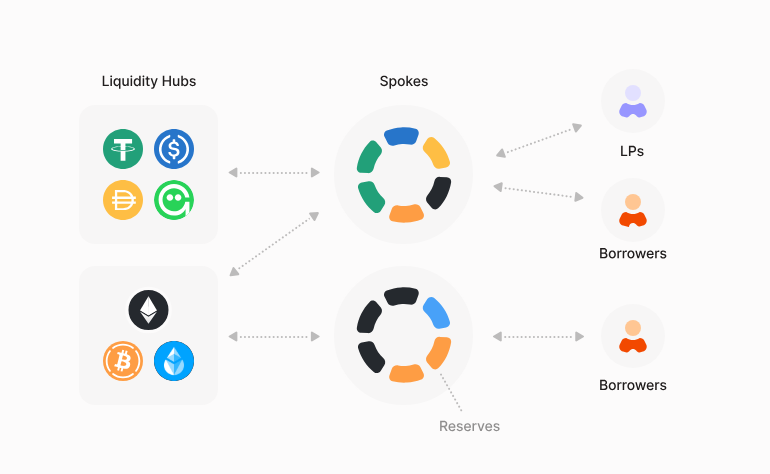
Pool-Based Lending Model
Liquidity pools are the backbone of Aave. Each asset (ETH, USDC, DAI, etc.) has its own dedicated pool. Depositors contribute assets, the protocol records their proportional share, and issues interest-bearing aTokens.
Borrowers do not need to match with individual lenders—they simply post collateral and borrow directly from the pool. This “pooled liquidity” structure maximizes capital efficiency and minimizes matching delays.
Interest paid by borrowers is automatically distributed to all depositors based on their share in the pool, so deposit yields reflect aggregate borrowing demand rather than individual counterparties. This design deepens liquidity and delivers a seamless user experience.
How Do Depositors Earn Yield?
When a user deposits assets into Aave, they receive corresponding aTokens (e.g., aUSDC). aTokens are proof of deposit and automatically accrue interest, with balances increasing in real time.
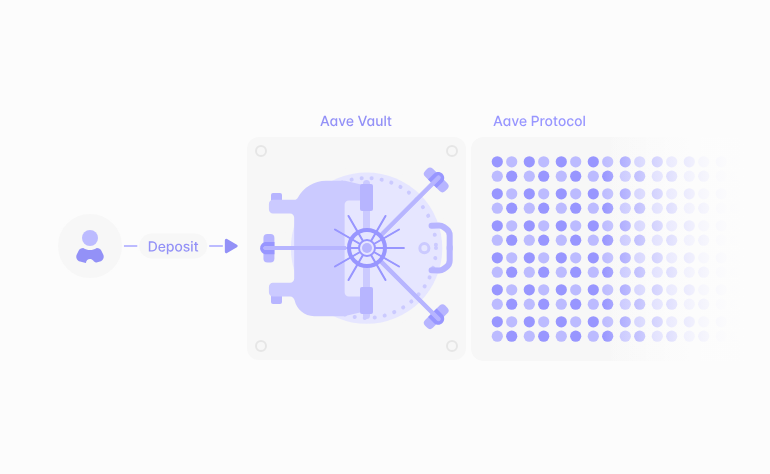
Yield is generated primarily from interest paid by borrowers. Rates are variable: yields increase as borrowing demand rises, and decrease when demand falls. The process is transparent and straightforward:
- Asset Deposit: Users transfer supported tokens into Aave’s smart contracts.
- Receive aTokens: The protocol mints and credits aTokens (e.g., deposit ETH to receive aETH).
- Interest Accrual: Interest from borrowers and flash loan fees is distributed in real time to aToken holders based on their share.
Some markets offer additional incentives, such as AAVE token liquidity mining, but the core yield is always driven by actual borrowing demand, not token subsidies.
How Do Borrowers Get Loans?
Aave’s lending is strictly over-collateralized to ensure solvency in volatile crypto markets.
- Deposit Collateral: Borrowers must first deposit assets worth more than the amount they wish to borrow.
- Borrowing Limit: The protocol calculates the maximum borrowable amount based on each asset’s Loan-to-Value (LTV) ratio.
- Pay Interest: Borrowers pay dynamic, algorithmically determined interest rates.
- AAVE Token Benefits: In some cases, holding or using AAVE tokens grants discounted rates or higher borrowing limits.
How Does Aave’s Interest Rate Model Work?
Aave governs rates using preset algorithmic curves to balance capital supply and demand:
- Low Utilization: When pools are flush with liquidity, rates stay low to encourage borrowing.
- High Utilization: As pool utilization approaches its limit, rates rise sharply.
This mechanism uses market forces to balance the system: higher rates attract depositors and incentivize borrowers to repay, maintaining protocol liquidity.
Liquidation Mechanism
If collateral values fall and a borrower’s Health Factor drops below 1, the position is liquidated.
Liquidators can repay part of the debt and receive discounted collateral as a reward. This system ensures the protocol avoids bad debt and sustains overall liquidity.
AAVE holders can also stake into the Safety Module to provide an additional risk buffer for the protocol.
Key Use Cases for AAVE
Aave is not just a lending tool—it serves as foundational infrastructure for the Web3 ecosystem:
- Leverage: Increase exposure by repeatedly depositing collateral and borrowing.
- Risk-Free Arbitrage: Exploit rate differentials between Aave and other DEXs, using Flash Loans for collateral-free arbitrage.
- Flash Loan Applications: Developers use Flash Loans for complex on-chain liquidations or asset swaps with no collateral required.
- Governance: AAVE holders can vote on protocol risk parameters, new asset listings, and more.
Flash Loans, in particular, have made Aave essential infrastructure for on-chain arbitrage and liquidation bots.
Summary
Aave is a smart contract-based lending protocol that delivers efficient capital allocation via liquidity pools. With pooled liquidity, dynamic rate models, and automated liquidations, Aave has built a trustless, decentralized lending system.
The protocol’s core: over-collateralization, algorithmic rates, and automated risk management.
FAQs
Why must Aave collateral exceed the loan amount?
Due to crypto’s high volatility, over-collateralization ensures that even if collateral values drop, the protocol can always repay depositors.
Can I withdraw my Aave deposit at any time?
As long as the pool has available liquidity, depositors can withdraw their funds and accrued interest at any time.
What does real-time aToken growth mean?
aToken balances increase not through new token issuance, but through direct balance updates in the user’s wallet by smart contract, reflecting real-time interest accrual.
How does Aave compare to protocols like Compound?
Compared to Compound, Aave supports more asset types and pioneered Flash Loans, offering clear advantages in capital efficiency and innovative features.







