As generative AI continues to merge with Web3 technologies, AI services are gradually shifting away from traditional centralized subscription models toward open, composable on chain resource networks. Within this context, Venice aims to build an AI platform that does not rely on centralized server control, while using tokenomics to encourage developers, users, and computing providers to jointly contribute to the ecosystem.
From the perspective of blockchain infrastructure development, Venice’s token system is designed not only for paying AI service fees but also for coordinating incentives and governance within the ecosystem. Through mechanisms such as staking, fee distribution, and ecosystem rewards, VVV attempts to connect the flow of value in the AI services market with user behavior, allowing the platform’s growth to be reflected directly in its token economy.
Overview of the VVV Token
VVV primarily supports AI service payments, network governance, platform incentives, and ecosystem resource coordination.
The design philosophy behind Venice is to create an open and privacy friendly AI platform. Unlike traditional AI services that rely on a single centralized provider, Venice allows developers, computing providers, and users to collaborate through a blockchain network to build AI applications together.
Within this architecture, VVV functions as an economic coordinator. Through its token mechanisms, the platform aims to achieve several goals:
-
Incentivize AI resource providers
-
Lower the barrier for users to access AI services
-
Establish a decentralized governance framework
-
Encourage ecosystem expansion and application development
For this reason, VVV is not merely a payment token. It serves as a core economic infrastructure supporting the operation of the Venice platform.
VVV Token Distribution and Issuance Mechanism
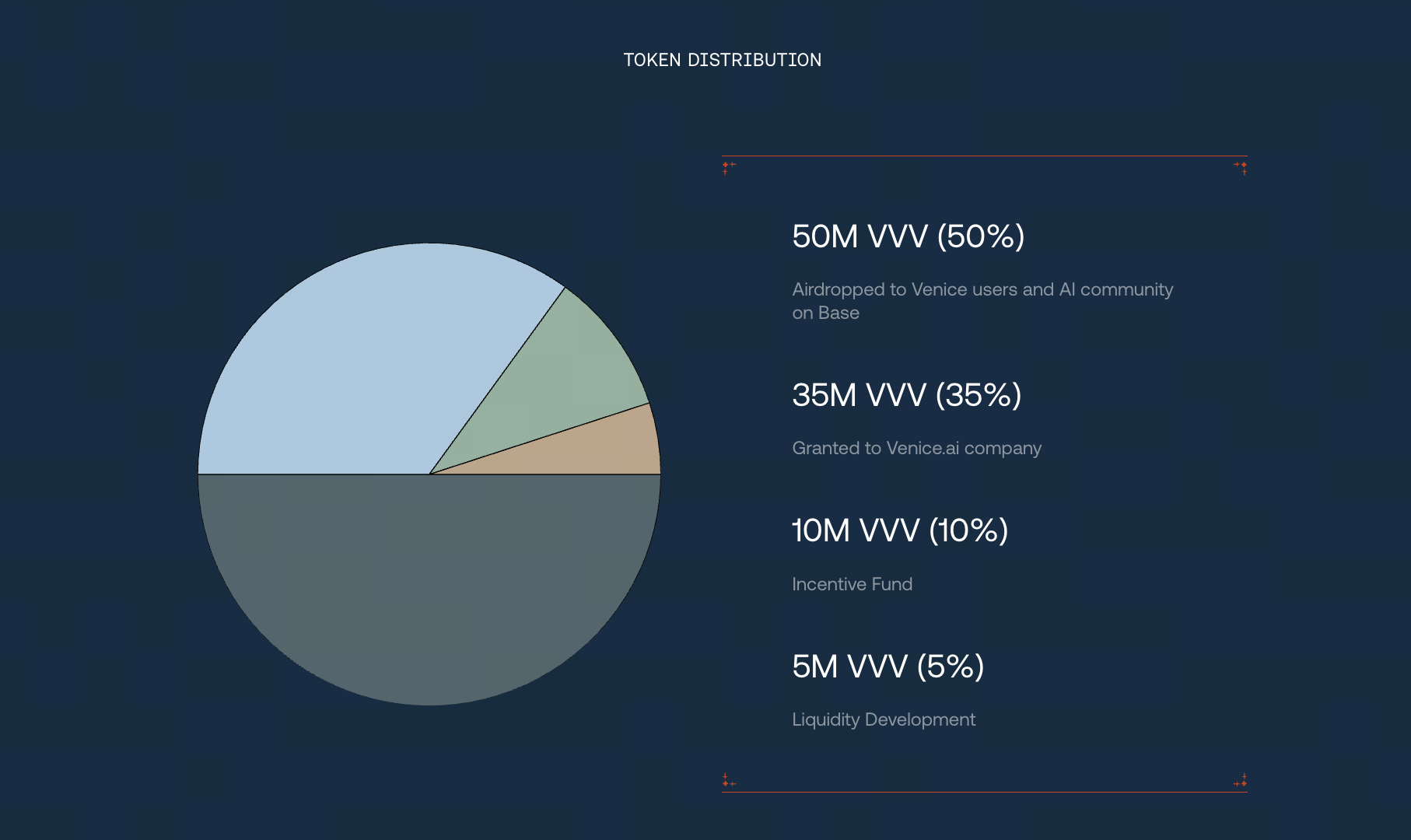 Image source: Venice official website
The tokenomics of VVV is generally designed around long term ecosystem growth and balanced incentives. Its distribution structure typically includes several core components.
- Ecosystem Incentives
Ecosystem incentives usually account for a significant portion of the supply and are used to reward:
The main objective of this allocation is to support platform expansion and ongoing technological innovation within the Venice ecosystem.
- Team and Core Contributors
Tokens allocated to the team are typically subject to long term vesting schedules and gradual release mechanisms. This ensures that core developers remain aligned with the long term success of the project.
Such structures help reduce short term selling pressure while encouraging continued development and technical iteration.
- Institutional Investors and Early Supporters
Early investors generally receive a portion of the token supply, though these allocations are often accompanied by lock up periods and phased unlock schedules to minimize sudden impacts on market liquidity.
- Community and User Incentives
Community incentives are used for initiatives such as:
Through these programs, Venice can rapidly expand its user base during the early stages of ecosystem development.
Overall, the issuance model of VVV emphasizes gradual release and prioritizes ecosystem incentives in order to support the long term development of the AI platform.
Core Functions and Use Cases of the VVV Token
VVV serves multiple practical functions within the Venice platform. Its primary use cases include the following.
AI Service Payments
When users access AI models on the Venice platform, they can pay for services using VVV. These services may include:
-
Text generation
-
Image generation
-
AI inference computation
-
Data processing
This payment structure enables AI services to be settled directly through blockchain infrastructure.
VVV holders can typically participate in the governance of the Venice protocol. Governance decisions may include:
-
Adjusting protocol parameters
-
Modifying fee structures
-
Allocating ecosystem funds
-
Approving new feature upgrades
Through governance participation, community members can help shape the platform’s long term direction.
Developer Incentives
Developers who publish AI applications or models on the Venice platform may receive:
This system encourages developers to build and launch more AI applications within the platform.
Network Resource Coordination
In certain AI infrastructure designs, tokens can also be used to allocate computing resources. Potential applications include:
VVV may eventually serve a similar role in coordinating computing resources within the Venice ecosystem.
Value Capture and Staking Mechanism of the Venice Protocol
The success of any token economy largely depends on its ability to capture value. Venice attempts to connect platform growth with token value through several mechanisms.
Staking Mechanism
VVV holders can stake their tokens to participate in network operations and earn rewards.
Staking rewards may come from sources such as:
This mechanism reduces circulating supply while encouraging long term participation.
Fee Redistribution
When users access AI services on the platform, part of the generated fees may be distributed to:
This revenue sharing model helps link platform activity with token demand and value.
Network Security Incentives
In certain decentralized architectures, staked tokens may also contribute to network security through roles such as:
-
Node operation
-
Task verification
-
Data consistency checks
Economic incentives help ensure stable and reliable platform operations.
Interaction Between VVV and Other Assets in the Ecosystem
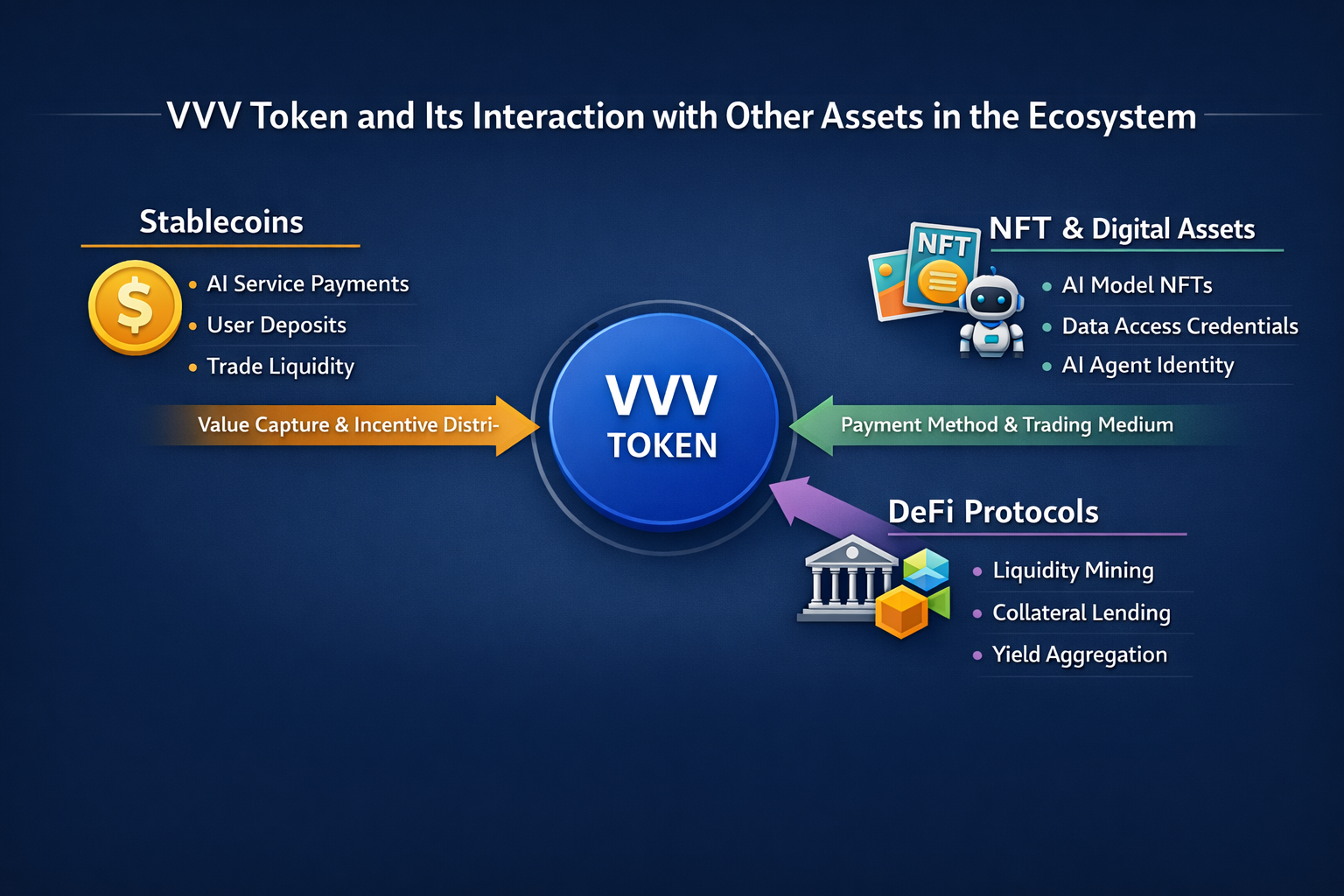
Within the Venice ecosystem, VVV functions not only as a payment and governance token but may also interact with various other digital assets.
Relationship With Stablecoins
Stablecoins are typically used for:
VVV, on the other hand, focuses on value capture and incentive distribution.
This structure resembles the dual layer economic model commonly seen in many Web3 protocols.
Integration With NFTs or Digital Credentials
Some AI platforms tokenize models, datasets, or agents as digital assets. Examples may include:
-
AI model NFTs
-
Data access credentials
-
AI agent identities
VVV can function as the payment medium when these assets are traded or accessed.
Integration With DeFi Protocols
As the ecosystem develops, VVV may also integrate with decentralized finance applications, such as:
-
Liquidity mining
-
Collateralized lending
-
Yield aggregation
These integrations can expand token liquidity and increase its range of use cases.
How Investors Can Optimize Returns With VVV
For investors, potential returns from VVV may come from several different strategies.
Long Term Holding
If the Venice platform continues to grow its user base and demand for AI services increases, platform revenue could rise as well, potentially supporting long term token value.
This approach follows the typical value accumulation model of platform based tokens.
Staking Rewards
By staking VVV, investors may earn rewards such as:
Staking can provide a relatively stable source of passive income.
Participating in Ecosystem Activities
During early development stages, projects often encourage community participation through programs such as:
Early participants may receive additional benefits through these initiatives.
Long Term Market Value and Development Potential of VVV
The long term value of VVV largely depends on the overall development of the Venice platform ecosystem.
Several factors may influence its future performance.
- Growth of the AI Market
The global AI market continues to expand rapidly. If Venice succeeds in establishing a stable user base within the decentralized AI sector, demand for its token could increase accordingly.
- Developer Ecosystem
The ability to attract developers who build AI applications on the platform will directly affect ecosystem activity and innovation.
- The Convergence of Web3 and AI
More projects are attempting to combine artificial intelligence with blockchain technologies, including:
If Venice develops a strong competitive position within this emerging sector, the value of its token could grow alongside the ecosystem.
- Sustainability of the Tokenomics Model
Effective inflation control, balanced staking incentives, and well designed revenue distribution mechanisms will play a key role in maintaining the long term stability of the VVV token economy.
Conclusion
Venice Token (VVV) serves as the core economic instrument of the Venice AI platform. Its design aims to create a decentralized value coordination mechanism for the AI services market. Through functions such as payments, staking, governance participation, and ecosystem incentives, VVV connects the economic relationships between platform users, developers, and computing resource providers.
From a tokenomics perspective, VVV attempts to capture value through fee redistribution and staking mechanisms, allowing platform growth to be reflected in token demand and network incentive structures.
As the integration between AI and Web3 continues to evolve, decentralized AI platforms may emerge as an important new infrastructure layer. If Venice successfully attracts developers and users to its ecosystem, its token economy could gradually develop a stronger and more stable value foundation in the future.







