What is zkPass?

(Source: zkPass)
zkPass is built on an innovative technology called zkTLS, which combines the 3P-TLS (Three-Party Transport Layer Security) protocol with a Hybrid-ZK (Hybrid Zero-Knowledge) cryptographic architecture. Its core capability enables users to extract verification data from any HTTPS-enabled website and generate verifiable Zero-Knowledge Proofs (ZKPs)—all without OAuth, API keys, or centralized authorization servers, and without exposing any user private information. With zkPass, users can generate the following categories of cryptographic proofs:
- Identity data: passports, driver’s licenses, national ID cards, KYC documents
- Financial records: bank balances, transaction histories, credit scores
- Medical information: medical records, prescriptions, genetic reports
- Social activities: social media accounts, interaction logs, contribution credentials
- Academic and professional background: degree certificates, work experience, professional qualifications
- Digital assets and activity: gaming accounts, loyalty points, RWA participation proofs
All proofs are generated locally on the user’s device, never transmitted through any intermediary server, and the original data never leaves the user’s environment. This privacy-centric design establishes zkPass as a secure data verification layer suitable for DeFi, AI, DePIN, digital identity (DID), governance, compliance, and other sectors.
Redefining Data Verification Standards
zkPass introduces a novel verification paradigm that resolves the privacy-for-trust trade-off inherent in current systems.
1. Privacy-Preserving
Sensitive information remains strictly on the user’s device, with only encrypted proofs generated. Applications verify the outcome without ever accessing raw data.
2. Verifiable Integrity
zkTLS extends standard TLS into a three-party architecture, ensuring the authenticity and immutability of data sources.
3. Universal Compatibility
Compatible with any HTTPS website—no server authorization or API integration required. Any existing web page can serve as a verifiable data source.
4. Anti-Cheating
zkPass employs templated verification logic to prevent users from forging achievements, credentials, or submitting falsified data.
5. Efficient Proof Generation
The built-in VOLE-in-the-Head (VOLEitH) algorithm enables the user’s device to generate publicly verifiable proofs within milliseconds.
6. Trustless Attestation
Distributed MPC nodes verify data integrity, ensuring that zkSBTs and credentials cannot be forged.
This architecture empowers zkPass to achieve true zero-trust verification and returns complete data sovereignty to users.
The Technical Core of zkPass
Traditional TLS (Transport Layer Security) secures connection encryption but does not allow third parties to verify the authenticity of data sources. zkPass introduces a 3P-TLS (Three-Party Protocol) model, adding a Verifier role so that verifiers can confirm data originates from a specific website and remains unaltered. The zkPass protocol involves three participants:
- P (Prover): the user, who possesses verifiable data
- V (Verifier): the verifier, who receives and validates the cryptographic proof
- S (Server): the data source (TLS server)
After P obtains data from S, P generates a ZKP and submits it to V for verification without revealing any underlying details. This process integrates MPC (Multi-Party Computation), NIZK (Non-Interactive Zero-Knowledge Proof), and VOLE-Based ZK technologies to ensure flexibility and security across any network environment.
zkPass supports two operational modes:
- Proxy Mode: the verifier acts as a proxy to transmit data, suitable for most websites.
- MPC Mode: activated when certain servers block proxies, enabling users and verifiers to jointly act as clients interacting with the server.
This Hybrid Mode architecture ensures zkPass can seamlessly address a wide range of real-world scenarios, from personal data verification to enterprise compliance audits.
Bridging Public and Private Data
In practice, data generally falls into two categories:
- Public Data: government statistics, climate data, public reports—transparent but lacking in personalized detail.
- Private Data: sensitive information such as identity, financial, health, and business secrets, which must be protected by law and cryptography.
zkPass’s mission is to bridge these two realms, enabling users to cryptographically prove data authenticity without disclosing the content itself—ultimately forming an interoperable, verifiable, and privacy-preserving data network.
Token Information
The native token of zkPass, $ZKP, is the core incentive of the ecosystem, powering node operations, validation rewards, governance, and reputation systems. Its primary functions include:
- Staking for Validators: validator nodes must stake $ZKP to participate in consensus, maintain network security, and earn rewards.
- Proof Incentives: users who generate and verify ZKPs can earn token rewards.
- Schema Access: select advanced data templates or APIs require payment in $ZKP.
- Governance: token holders can participate in DAO proposals and funding allocation decisions.
(Source: zkPass)
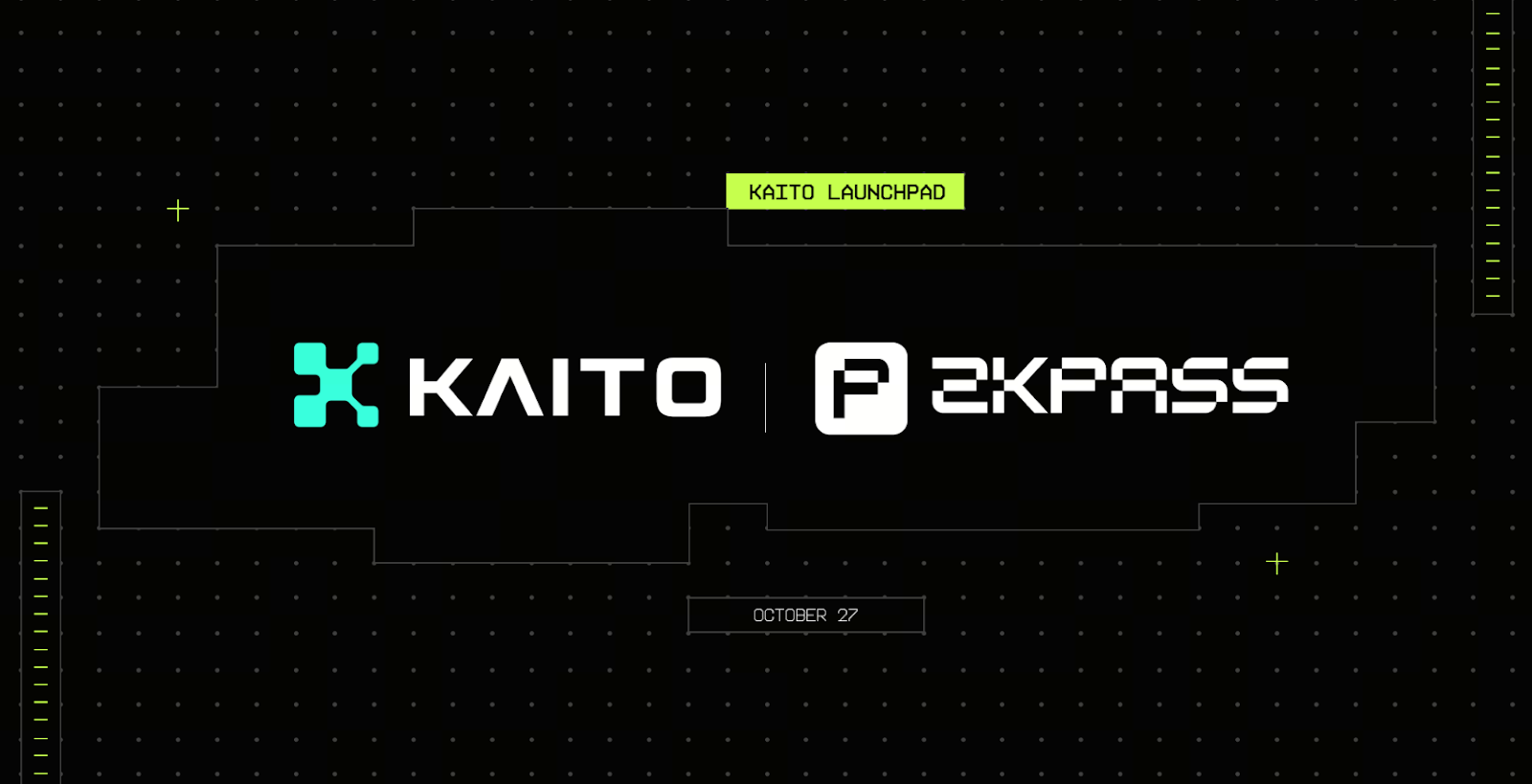
KaitoAI Capital Launchpad will lead the community round fundraising, targeting $2 million with a fully diluted valuation (FDV) of approximately $100 million. 50% of tokens will unlock at TGE, with the remaining 50% released after three months to ensure stable market liquidity.
To learn more about Web3, click to register: https://www.gate.com/
Conclusion
In an era where data breaches and misuse are commonplace, zkPass delivers a groundbreaking trust model for the web—one where privacy and verifiability are no longer mutually exclusive, and trust is anchored in cryptography and transparency rather than authority and censorship. zkPass is more than a protocol; it’s a paradigm shift, marking Web3’s entry into the era of zero-knowledge trust—a world where mathematics replaces trust and code guarantees privacy.