Lanat3noPey

vip
Age 0.2 Year
Peak Tier 0
No content yet
#DeepCreationCamp A 2026 Strategic Deep Dive Into Gate Square: Smarter Trading, AI Integration, and Multi-Chain Growth
Over the past few market cycles, my experience with Gate.io and its community hub Gate Square has evolved significantly. What once felt like a standard exchange interface now operates more like a full digital asset ecosystem—integrating trading, staking, DeFi exposure, AI analytics, and creator-driven campaigns such as Deep Creation Camp. In 2026, the platform is no longer just about executing trades; it’s about building structured strategies across multiple chains while stayi
BTC-2.53%
ETH-4.98%
ARB-0.02%
DEFI5.65%
StylishKurivip
#DeepCreationCamp A 2026 Strategic Deep Dive Into Gate Square: Smarter Trading, AI Integration, and Multi-Chain Growth
Over the past few market cycles, my experience with Gate.io and its community hub Gate Square has evolved significantly. What once felt like a standard exchange interface now operates more like a full digital asset ecosystem—integrating trading, staking, DeFi exposure, AI analytics, and creator-driven campaigns such as Deep Creation Camp. In 2026, the platform is no longer just about executing trades; it’s about building structured strategies across multiple chains while staying engaged with community-driven innovation.
Below is my updated strategic outlook, incorporating new trends like AI-assisted analytics, cross-chain capital efficiency, and smarter risk management frameworks.
1. Strategic Event Participation: From Rewards to Reputation Capital
Participating in campaigns such as Deep Creation Camp is no longer just about USDT incentives. In 2026, high-quality content creation functions as reputation capital. The more analytical, data-driven, and insightful your contributions are, the more visibility and credibility you gain within the ecosystem.
I’ve noticed that long-form research posts analyzing macro conditions, derivatives positioning, and sector rotation tend to generate stronger engagement than surface-level commentary. This shift shows that platforms increasingly reward depth over volume. Writing structured content forces deeper market research—improving both trading precision and strategic confidence.
2. AI-Assisted Analytics and Smarter Trading Execution
One of the biggest upgrades in 2026 is the integration of AI-driven analytics tools. Instead of relying solely on manual technical analysis, I now combine:
Market structure analysis
Funding rate monitoring
Liquidity heatmaps
AI-generated volatility projections
For major pairs like Bitcoin and Ethereum, I monitor order book depth alongside macroeconomic indicators. The key insight I’ve gained is that confluence matters more than single indicators.
Rather than chasing breakouts, I focus on:
High-liquidity support zones
Open interest resets
Neutral funding transitions
This reduces emotional entries and improves risk-adjusted returns.
3. Multi-Chain Capital Efficiency Strategy
In previous cycles, I kept most of my assets on one network. Now, capital mobility is essential. With ecosystem growth across chains like Arbitrum and Polygon, yield opportunities differ significantly.
My 2026 approach includes:
Holding core assets on main exchange wallets for liquidity
Allocating a portion to staking pools
Deploying smaller allocations to DeFi farms across multiple chains
Rotating capital based on yield sustainability, not just APY size
The lesson I’ve learned: sustainable yields outperform temporary high-return traps.
4. Advanced Risk Structuring and Portfolio Balance
Market volatility remains constant, but my risk management has matured. I divide my portfolio into three categories:
Core Holdings: Long-term BTC and ETH exposure
Yield Allocation: Staking, structured earn products
Active Trading Capital: Short-term swing and derivatives trades
This structure prevents overexposure to short-term volatility while preserving growth potential.
Another improvement in 2026 is monitoring stablecoin liquidity trends. Expanding stablecoin supply often precedes market expansion phases. Watching these macro liquidity signals provides early insight into broader momentum shifts.
5. DeFi Integration Beyond Passive Staking
Previously, staking was my primary passive income method. Now, I combine:
Flexible staking
Liquidity provision with tight risk limits
Automated reward harvesting
Rebalancing during volatility compression
The goal is not maximizing raw APY—but optimizing risk-adjusted yield while preserving liquidity for sudden market opportunities.
6. Community Intelligence as a Market Edge
Gate Square’s community discussions have become increasingly analytical. I now treat community sentiment as a supplementary data layer.
By observing:
Topic engagement spikes
Sector-focused discussions (AI tokens, RWA, Layer 2 scaling)
Reaction to macro news
I gain insight into capital rotation trends before they fully materialize in price charts.
Thoughtful engagement—asking strategic questions and sharing structured analysis—continues to strengthen both credibility and knowledge depth.
7. Continuous Learning and Adaptive Strategy
The crypto ecosystem evolves rapidly. In 2026, AI + blockchain integration, tokenized real-world assets, and cross-chain interoperability are shaping new narratives.
To adapt, I:
Test new strategies with small capital
Review performance metrics monthly
Adjust allocation based on volatility conditions
Document lessons learned from both profitable and losing trades
Deep Creation Camp plays a major role in this process. Writing forces disciplined thinking. It transforms trading experiences into structured knowledge.
My Updated Perspective for the Future
Gate Square is no longer just a trading portal—it functions as:
A content-driven research hub
A multi-chain asset management interface
A staking and yield optimization platform
A collaborative learning environment
The biggest lesson I’ve learned is that consistency beats intensity. Strategic allocation, disciplined execution, and thoughtful community participation create compounding advantages over time.
Final Strategic Takeaway
To maximize long-term growth in 2026 and beyond:
Combine AI-assisted analytics with structured risk management
Diversify across chains and yield strategies
Treat community engagement as a knowledge asset
Focus on sustainable capital efficiency, not hype-driven moves
Commit to continuous education through structured content creation
By approaching Gate Square with a holistic mindset—balancing trading, staking, analytics, and community learning—you transform the experience from simple speculation into a strategic growth journey.
#DeepCreationCamp

repost-content-media
  • Reward
  • Comment
  • Repost
  • Share
#DeepCreationCamp A Strategic Deep Dive Into Gate Square, Smart Capital Allocation, and Future-Ready Crypto Participation

Over the years, I’ve explored multiple exchanges and ecosystems, but Gate.io — particularly its Gate Square community layer — has evolved into something more than a trading interface. In 2026, it represents a hybrid ecosystem where trading, staking, DeFi, analytics, AI-assisted insights, and creator-driven campaigns converge into a structured growth environment.
What makes Gate Square unique is not just liquidity or token listings — it’s the integration of community intelli
BTC-2.53%
ETH-4.98%
DEFI5.65%
ARB-0.02%
StylishKurivip
#DeepCreationCamp A Strategic Deep Dive Into Gate Square, Smart Capital Allocation, and Future-Ready Crypto Participation
Over the years, I’ve explored multiple exchanges and ecosystems, but Gate.io — particularly its Gate Square community layer — has evolved into something more than a trading interface. In 2026, it represents a hybrid ecosystem where trading, staking, DeFi, analytics, AI-assisted insights, and creator-driven campaigns converge into a structured growth environment.
What makes Gate Square unique is not just liquidity or token listings — it’s the integration of community intelligence, content creation incentives, and capital efficiency tools. Through experience, testing, and adaptation, I’ve refined a more advanced approach that goes beyond basic trading.
Below is my updated, future-focused deep dive.
1. Strategic Participation: Turning Campaigns Into Compounding Value
When I first joined Deep Creation Camp and Red Packet campaigns, my motivation was simple — earn rewards. But over time, I realized these initiatives build analytical discipline.
Writing structured content forces:
Market research
Narrative evaluation
Technical and macro analysis
Risk assessment
In 2026, content visibility also influences reputation. High-quality posts analyzing liquidity flows, derivatives positioning, or sector rotation attract more engagement and credibility. The real advantage isn’t just rewards — it’s intellectual compounding.
Thoughtful participation builds long-term influence within the ecosystem.
2. Advanced Trading Framework: Data + Discipline
The crypto market has matured. Simple indicator-based trading is no longer enough. My approach now combines:
Market structure mapping
Funding rate analysis
Open interest monitoring
Liquidity cluster observation
Stablecoin inflow tracking
For major assets like Bitcoin and Ethereum, I focus less on emotional breakouts and more on confirmation zones.
Key improvements in my strategy:
Enter positions near liquidity compression zones
Reduce leverage during funding imbalance
Scale in gradually instead of all-in entries
Keep part of portfolio in flexible allocation
This structured discipline significantly reduces stress and improves long-term consistency.
3. Multi-Chain DeFi and Capital Rotation
Crypto is no longer single-chain focused. Opportunities now exist across ecosystems like:
Arbitrum
Polygon
Other scaling environments
Instead of chasing the highest APY blindly, I now evaluate:
Sustainability of yields
Protocol security track record
Liquidity depth
Lock-up flexibility
My portfolio is divided into:
Core holdings (long-term conviction)
Yield allocation (staking & earn products)
Active trading capital
Experimental capital (new protocols with small exposure)
This layered structure prevents overexposure and protects capital during volatility spikes.
4. Staking as a Psychological Advantage
One major insight I’ve gained: staking isn’t just about passive income — it stabilizes mindset.
When part of your portfolio is generating yield:
You feel less pressure to overtrade
You avoid emotional revenge trades
You focus on strategic entries
Staking ETH or stablecoins provides structural balance between growth and preservation.
In 2026, I prioritize flexibility — preferring products that allow liquidity access during sudden market expansions.
5. Community Intelligence as a Strategic Edge
Gate Square discussions are often early indicators of sector momentum. When community focus shifts toward:
AI tokens
Real-world asset tokenization
Layer 2 adoption
DeFi automation
It often precedes capital rotation.
Instead of following hype, I monitor:
Engagement velocity
Depth of analysis in posts
Cross-topic thematic alignment
Community sentiment acts as a qualitative overlay to quantitative data.
6. Risk Management Evolution
Early in my journey, I underestimated risk. Now, my framework includes:
Position size limits
Maximum daily loss rules
Gradual scaling
Emergency liquidity reserves
I also track macro signals such as:
Bond yield volatility
Dollar strength
Stablecoin supply changes
Crypto does not move in isolation. External liquidity conditions influence volatility cycles.
7. AI-Assisted Monitoring and Automation
A newer development in 2026 is AI-supported analytics. Instead of manually checking charts constantly, I use structured alerts and volatility projections.
AI tools help:
Identify divergence patterns
Flag abnormal open interest spikes
Detect rapid liquidity shifts
However, I never delegate full control. AI assists — it does not replace judgment.
8. Continuous Learning Through Creation
Deep Creation Camp has become a personal training ground. Writing forces me to:
Validate assumptions
Organize scattered ideas
Challenge emotional bias
Document lessons learned
Each article improves clarity. And clarity improves execution.
Crypto rewards those who think structurally, not impulsively.
My 2026 Strategic Outlook
Gate Square is no longer just an exchange interface — it is:
A capital deployment environment
A research and analytics hub
A community-driven intelligence network
A staking and yield management center
A creator-based growth ecosystem
The key insight I’ve learned is this:
Short-term activity may create noise.
Long-term structure creates results.
By combining disciplined trading, staking stability, multi-chain allocation, analytical content creation, and community participation, I’ve transformed my approach from reactive trading to strategic ecosystem engagement.
Final Takeaway
To maximize value on Gate Square in 2026 and beyond:
Focus on structured strategies, not emotional moves
Diversify across chains and capital categories
Use analytics intelligently
Engage meaningfully with the community
Treat learning as a continuous advantage
When approached holistically, Gate Square becomes more than a trading venue — it becomes a growth engine for disciplined crypto participants.
repost-content-media
  • Reward
  • Comment
  • Repost
  • Share
#DeepCreationCamp Crypto Market Rebounds: Structural Strength, Liquidity Expansion, and the Road to the Next Cycle
The cryptocurrency market has entered a renewed recovery phase that appears structurally stronger than many previous rebounds. Rather than being driven purely by speculative excess, the current expansion is supported by improving liquidity conditions, maturing infrastructure, regulatory normalization, and deeper institutional integration. This suggests that the market is not merely reacting to short-term price momentum, but transitioning into a more sustainable growth phase.
At th
BTC-2.53%
ETH-4.98%
DEFI5.65%
StylishKurivip
#DeepCreationCamp Crypto Market Rebounds: Structural Strength, Liquidity Expansion, and the Road to the Next Cycle
The cryptocurrency market has entered a renewed recovery phase that appears structurally stronger than many previous rebounds. Rather than being driven purely by speculative excess, the current expansion is supported by improving liquidity conditions, maturing infrastructure, regulatory normalization, and deeper institutional integration. This suggests that the market is not merely reacting to short-term price momentum, but transitioning into a more sustainable growth phase.
At the center of this recovery remain Bitcoin and Ethereum, which continue to function as liquidity anchors for the broader ecosystem. Bitcoin’s dominance has stabilized after prior volatility cycles, reflecting its role as a macro-sensitive digital reserve asset. Ethereum, meanwhile, is benefiting from expanding staking participation and decentralized finance activity, which reduces circulating supply pressure while strengthening on-chain utility. The coordinated strength of these two assets signals confidence returning to high-quality digital infrastructure rather than speculative fringe tokens.
Liquidity Conditions and Macro Alignment
Macroeconomic stabilization remains a critical catalyst. Moderating inflation across major economies and reduced volatility in sovereign bond markets have eased systemic risk pressure. As expectations of aggressive monetary tightening diminish, capital is gradually rotating back into higher-growth sectors, including digital assets.
Digital assets historically behave as high-beta instruments during early risk-on transitions. The present rebound aligns with this dynamic, as improving macro clarity supports alternative asset allocation. In addition, stablecoin supply growth has resumed gradually — a key liquidity indicator often preceding broader crypto expansion phases.
Institutional Flows and Derivatives Stability
Institutional engagement is becoming more sophisticated. Instead of simple accumulation during dips, institutions are utilizing structured derivatives positioning and liquidity strategies. Open interest in perpetual futures has increased, yet funding rates remain near neutral levels. This balance indicates healthy participation without extreme leverage imbalances that previously triggered cascading liquidations.
Spot trading volume growth alongside derivatives expansion suggests structural capital return rather than short-lived retail speculation. The equilibrium between buyers and sellers supports gradual, controlled price appreciation instead of vertical, unstable rallies.
On-Chain Fundamentals Strengthening
On-chain indicators reinforce the recovery thesis. Active wallet addresses are increasing, cross-chain bridge usage is rising, and total value locked (TVL) in decentralized finance protocols is trending upward. Importantly, staking participation continues to grow, effectively locking supply and strengthening long-term holder conviction.
Unlike prior cycles dominated by narrative-driven speculation, the current phase demonstrates closer alignment between network utilization and price appreciation. This structural reinforcement reduces the likelihood of purely sentiment-driven reversals.
Sector Rotation and Emerging Themes
Capital rotation patterns are becoming increasingly visible. Early recovery phases typically favor large-cap assets such as Bitcoin and Ethereum. As confidence builds, capital begins flowing into:
Layer 2 scaling solutions
Infrastructure protocols
AI-integrated blockchain projects
Real-world asset tokenization platforms
The integration of blockchain with artificial intelligence is forming a new structural growth narrative. Automation tools, AI-assisted analytics, and decentralized compute networks are gaining traction. At the same time, tokenization frameworks are building bridges between traditional financial assets and decentralized ecosystems.
This broader diversification signals a maturing market where innovation supports valuation.
Regulatory Evolution and Market Integrity
Regulatory clarity across major jurisdictions has improved compared to earlier cycles. Clearer asset classification frameworks, enhanced compliance standards, and institutional custodial development have strengthened market structure. Rather than suppressing growth, regulation is increasingly shaping a normalized operational environment.
While policy uncertainty remains a risk factor, the general direction suggests integration rather than exclusion from global finance.
Retail Sentiment: Controlled Optimism
Retail participation is improving but remains far below euphoric extremes. Social engagement metrics show cautious optimism rather than speculative mania. Historically, sustainable bull cycles begin when institutional capital returns first, followed by gradual retail expansion.
This measured sentiment suggests accumulation rather than distribution.
Risks That Could Interrupt the Expansion
Despite positive structural signals, risks persist:
Unexpected monetary tightening
Sudden liquidity contraction
Regulatory shock events
Geopolitical instability
Overleveraged speculative surges
Risk management remains essential. Even structurally strong markets experience corrections during expansion cycles.
Forward Outlook: Transition Toward Expansion
If current trends persist, the market may transition from recovery to expansion over the coming quarters. Key structural pillars to monitor include:
Continued stablecoin supply growth
Rising developer activity
Venture capital deployment into blockchain startups
Growth in staking and DeFi participation
Sustained macroeconomic stability
The next phase of growth may be defined less by speculative excess and more by technological integration and real economic utility.
Strategic Conclusion
The present crypto market rebound reflects recalibrated capital flows within a maturing ecosystem. Unlike previous speculative spikes, this phase is supported by macro stabilization, institutional structure, on-chain growth, and regulatory normalization.
If liquidity conditions remain favorable and innovation continues accelerating, this period may represent the foundation for the next major innovation-driven cycle — one characterized not only by price appreciation but by deeper integration of blockchain infrastructure into global financial and technological systems.
In this evolving environment, disciplined allocation, structural analysis, and long-term strategic thinking will remain critical for navigating the next expansion phase.
#DeepDiveCreator
repost-content-media
  • Reward
  • Comment
  • Repost
  • Share
#DeepCreationCamp Insight Over Noise: Why Depth Matters in Crypto
There is a major difference between posting content and creating insight. In the crypto market, speed dominates everything. News spreads within seconds, charts move within minutes, and sentiment can flip in hours. But true understanding does not move at that speed. Real insight takes time, research, and structured thinking.
When Bitcoin moves sharply, it is rarely just about a breakout candle. Behind that movement are liquidity shifts, derivatives positioning, macroeconomic pressure, ETF-related flows, and changes in overall ris
BTC-2.53%
ETH-4.98%
StylishKurivip
#DeepCreationCamp Insight Over Noise: Why Depth Matters in Crypto
There is a major difference between posting content and creating insight. In the crypto market, speed dominates everything. News spreads within seconds, charts move within minutes, and sentiment can flip in hours. But true understanding does not move at that speed. Real insight takes time, research, and structured thinking.
When Bitcoin moves sharply, it is rarely just about a breakout candle. Behind that movement are liquidity shifts, derivatives positioning, macroeconomic pressure, ETF-related flows, and changes in overall risk appetite. The visible price is only the surface. The real story exists in the structure beneath it.
The same applies to Ethereum. When Ethereum rallies, it may reflect increased staking participation, rising on-chain activity, growth in decentralized finance, or expansion across Layer 2 ecosystems. Price action alone does not explain the move — network fundamentals do.
Today’s market is filled with rapidly rotating narratives: AI tokens, DeFi upgrades, Layer 2 scaling, and real-world asset tokenization. However, experienced participants understand that capital does not randomly chase trends. It reallocates strategically. Liquidity moves from large caps to mid caps, from infrastructure to emerging sectors, depending on confidence and macro stability.
Deep creation means explaining why something happened, not just reporting that it happened. It means discussing risk management, downside protection, and long-term implications — not only short-term excitement. It means prioritizing structure over emotion and clarity over hype.
If we want stronger markets, we need stronger discussions. Quality analysis builds credibility. Structured thinking builds resilience. And disciplined insight ultimately builds long-term success.
That is the true spirit of #DeepCreationCamp — turning information into understanding. 🚀
repost-content-media
  • Reward
  • Comment
  • Repost
  • Share
#深度创作营 — Future Outlook 2026+ | Next Phase of Decentralized Storage Economy
The global decentralized storage landscape is entering a structural upgrade phase, and Filecoin is positioning itself as one of the core infrastructure assets of the Web3 data economy. Backed by the technological development of Protocol Labs and the distributed architecture of the IPFS storage framework, the network is gradually transitioning from early-stage storage mining incentives toward real commercial data service ecosystems. The long-term value of the network will increasingly depend on real enterprise usage, AI
FIL-3.85%
StylishKurivip
#深度创作营 — Future Outlook 2026+ | Next Phase of Decentralized Storage Economy
The global decentralized storage landscape is entering a structural upgrade phase, and Filecoin is positioning itself as one of the core infrastructure assets of the Web3 data economy. Backed by the technological development of Protocol Labs and the distributed architecture of the IPFS storage framework, the network is gradually transitioning from early-stage storage mining incentives toward real commercial data service ecosystems. The long-term value of the network will increasingly depend on real enterprise usage, AI data processing demand, and cross-border digital information circulation.
In the future, the explosion of artificial intelligence training models and autonomous decision systems will create unprecedented demand for high-security, low-cost distributed storage. Large-scale neural network training requires massive historical dataset archiving, model checkpoint storage, and high-speed retrieval architecture. Decentralized storage networks may become the foundational layer supporting global AI cognition infrastructure, especially as corporate digital transformation accelerates.
The 2026–2030 development trajectory of the storage economy is expected to shift toward “pay-for-utility” blockchain architecture. Enterprise clients will not only store data but also purchase programmable storage computation services, including encrypted data analytics, distributed backup recovery, and cross-network secure transmission. The expansion of on-chain commercial datasets and institutional research archives will further strengthen network demand circulation.
Deflationary tokenomics will play a crucial role in long-term asset valuation. As network usage increases, more tokens are expected to be burned through service settlement and storage payment mechanisms. Combined with rising storage utilization rates and growing active client participation, the circulating supply pressure may gradually decline under sustainable ecosystem expansion.
Cross-chain interoperability and decentralized cloud integration are becoming strategic technological directions. Future storage networks may function as global digital information highways connecting blockchain ecosystems, enterprise cloud systems, and AI computing clusters. This transformation will elevate decentralized storage from a niche technical concept to a fundamental pillar of the digital economic civilization.
From an investment perspective, market adjustments should be viewed as accumulation phases rather than bearish signals when fundamental adoption continues expanding. Historical valuation compression cycles in infrastructure assets often precede large-scale ecosystem adoption waves. Institutional capital is gradually increasing monitoring of Web3 storage networks as part of long-horizon technological portfolio strategies.
Looking forward, the decentralized storage sector could become a trillion-dollar economic segment as digital society continues generating exponential data volume. The convergence of artificial intelligence, blockchain settlement systems, and distributed cloud architecture may define the next major phase of global digital finance and information infrastructure evolution.
  • Reward
  • Comment
  • Repost
  • Share
#DeepCreationCamp Recent market discussions around the so-called 10 a.m. institutional sell-off narrative highlight how complex modern crypto trading has become. The idea that a single market maker controls price movement is overly simplified. In reality, price action in Bitcoin is shaped by the interaction of institutional liquidity management, derivatives positioning, ETF capital flows, and macroeconomic risk sentiment.
Firms like Jane Street Group operate primarily as high-frequency liquidity providers rather than directional long-term speculators. Their trading activity is typically connec
BTC-2.53%
StylishKurivip
#DeepCreationCamp Recent market discussions around the so-called 10 a.m. institutional sell-off narrative highlight how complex modern crypto trading has become. The idea that a single market maker controls price movement is overly simplified. In reality, price action in Bitcoin is shaped by the interaction of institutional liquidity management, derivatives positioning, ETF capital flows, and macroeconomic risk sentiment.
Firms like Jane Street Group operate primarily as high-frequency liquidity providers rather than directional long-term speculators. Their trading activity is typically connected to arbitrage balancing, ETF market-making obligations, and portfolio risk control. Large trades executed around U.S. market opening hours are common across financial markets because this period offers the deepest order book liquidity and tighter spreads.
The narrative of a systematic 10 a.m. sell-off should therefore be interpreted as a structural liquidity phenomenon rather than intentional price suppression. Intraday volatility around equity market openings often reflects algorithmic hedging, options gamma exposure adjustments, and institutional portfolio rebalancing. These movements are normal characteristics of modern electronic markets.
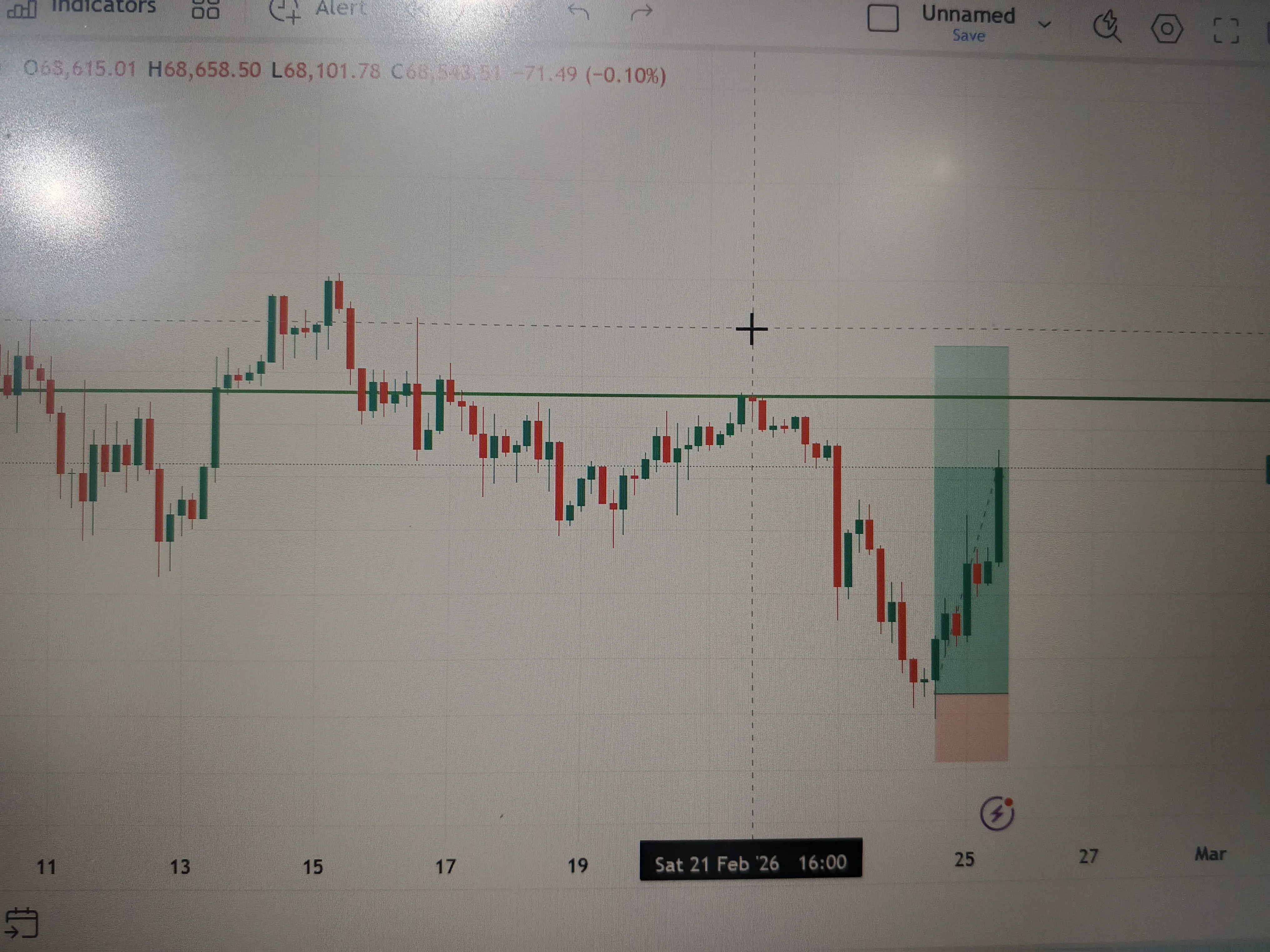
From a technical perspective, recent Bitcoin behavior suggests a consolidation phase following volatility expansion. Momentum indicators show that bearish pressure is gradually weakening, while buying interest is reappearing near key support zones. Psychological and structural support levels are currently forming in the mid-$60,000 range, with resistance near the $68,000–$70,000 region acting as a short-term supply barrier.
Institutional participation continues to play a dominant role in shaping market direction. Exchange-traded fund activity, particularly flows related to Bitcoin investment products, influences short-term sentiment. Periods of ETF outflows can temporarily pressure prices, while renewed inflows often coincide with recovery momentum.
Macro liquidity conditions remain a critical variable. Interest rate expectations, dollar index strength, and global risk appetite directly influence crypto capital rotation. Digital assets typically perform better when risk assets experience early expansion phases rather than during aggressive monetary tightening cycles.
Looking forward, the market appears to be transitioning from high-volatility uncertainty into a structure-driven accumulation environment. If liquidity stabilizes and institutional demand continues to normalize, Bitcoin could gradually test higher structural resistance zones during the next expansion phase.
The key takeaway is that modern crypto price movement is not driven by single actors but by the convergence of algorithmic trading systems, institutional capital management, and macroeconomic cycles.
repost-content-media
  • Reward
  • Comment
  • Repost
  • Share
#DeepCreationCamp
Crypto Market Rebounds: A Forward-Looking Structural Outlook for the Next Expansion Phase
The cryptocurrency market has entered a renewed recovery phase marked by improving liquidity conditions, strengthening institutional flows, and expanding ecosystem activity. After a prolonged consolidation period characterized by cautious capital allocation and risk reduction, digital assets are once again demonstrating resilience. However, the current rebound differs structurally from prior speculative rallies. It is increasingly driven by infrastructure maturity, regulatory clarity in
BTC-2.53%
ETH-4.98%
MrFlower_XingChenvip
#DeepCreationCamp
Crypto Market Rebounds: A Forward-Looking Structural Outlook for the Next Expansion Phase
The cryptocurrency market has entered a renewed recovery phase marked by improving liquidity conditions, strengthening institutional flows, and expanding ecosystem activity. After a prolonged consolidation period characterized by cautious capital allocation and risk reduction, digital assets are once again demonstrating resilience. However, the current rebound differs structurally from prior speculative rallies. It is increasingly driven by infrastructure maturity, regulatory clarity in key regions, and cross-sector integration with emerging technologies.
At the core of this recovery lies the leadership of Bitcoin and Ethereum, which continue to function as liquidity anchors for the broader market. Bitcoin’s dominance has stabilized while Ethereum’s ecosystem expansion in decentralized finance and staking participation reflects renewed network utilization. Rather than isolated price spikes, the current movement suggests coordinated capital rotation across high-quality digital assets.
Macroeconomic stabilization remains a central catalyst. Moderating inflation trends across major economies and reduced volatility in sovereign bond markets have eased systemic pressure on risk assets. As real yields stabilize and expectations of aggressive monetary tightening diminish, portfolio managers are gradually increasing exposure to alternative growth instruments. Digital assets, historically classified as high-beta macro-sensitive assets, tend to outperform during early risk-on transitions. The present rebound aligns with this macro rotation dynamic.
Institutional engagement has also evolved beyond passive accumulation. Spot market volumes are expanding alongside derivatives market depth, indicating more sophisticated positioning strategies. Open interest growth in perpetual and futures contracts reflects renewed participation, yet funding rates remain balanced—suggesting the absence of excessive speculative leverage. This equilibrium reduces the probability of cascade liquidations and supports structurally healthier upward price action.
On-chain fundamentals further validate the recovery narrative. Active wallet growth, cross-chain bridge activity, and total value locked in decentralized finance protocols are trending upward. Increased staking participation signals long-term conviction among holders, effectively reducing circulating supply pressure. Unlike prior cycles dominated by purely narrative-driven tokens, the current phase shows stronger alignment between price appreciation and network utilization metrics.
Sector rotation dynamics are becoming increasingly visible. In early recovery stages, large-cap assets typically outperform due to their liquidity and perceived safety. As confidence builds, capital flows toward infrastructure protocols, layer-two scalability solutions, and application-layer ecosystems. Emerging integration between blockchain infrastructure and artificial intelligence-based automation tools is also shaping new investment theses. Additionally, tokenization frameworks are expanding the real-world asset narrative, creating new bridges between traditional finance and decentralized systems.
Regulatory developments are contributing to improved market structure. Increased compliance frameworks and clearer digital asset classifications in major financial jurisdictions are reducing long-term uncertainty. Institutional custodial services, regulated trading venues, and enhanced reporting standards are strengthening market integrity. While regulatory shifts remain a variable risk factor, the broader trend suggests gradual normalization rather than systemic suppression.
Retail sentiment, while improving, has not yet reached euphoric extremes. Social metrics and search trends indicate cautious optimism rather than speculative mania. This measured participation often characterizes sustainable accumulation phases. Historically, durable bull cycles emerge when retail adoption expands alongside institutional capital rather than preceding it.
Looking forward, the sustainability of the rebound will depend on several structural pillars: continued macro stability, steady stablecoin supply growth, consistent developer activity, and ecosystem innovation. If venture capital deployment accelerates and technological advancements translate into real economic utility, the market could transition from recovery into a broader expansion cycle.
However, risks remain. Liquidity contraction, unexpected monetary tightening, or regulatory shocks could disrupt momentum. Digital assets remain inherently volatile, and risk management remains essential even during constructive phases.
In strategic terms, the current crypto market rebound reflects more than short-term relief. It represents a recalibration of capital flows within a maturing ecosystem. The interplay between macro conditions, institutional frameworks, derivatives balance, and network fundamentals suggests a structurally healthier environment compared to previous speculative surges.
As the digital asset landscape evolves, this phase may ultimately serve as a transitional foundation for the next innovation-driven cycle—one defined not solely by price expansion, but by deeper integration of blockchain infrastructure into global financial and technological systems.
#DeepDiveCreatorCamp
repost-content-media
  • Reward
  • Comment
  • Repost
  • Share
#DeepCreationCamp The convergence of Artificial Intelligence and blockchain infrastructure is rapidly transforming the digital asset ecosystem. What began as experimental AI trading bots and analytics dashboards has evolved into fully autonomous, agent-driven systems capable of interacting directly with smart contracts, decentralized finance protocols, NFT marketplaces, and social token economies. As Web4 concepts mature, AI is no longer just assisting users—it is becoming an active on-chain participant.
At the foundation of this movement are networks like Ethereum, which provide programmable
ETH-4.98%
ARB-0.02%
BTC-2.53%
DEFI5.65%
MrFlower_XingChenvip
#DeepCreationCamp The convergence of Artificial Intelligence and blockchain infrastructure is rapidly transforming the digital asset ecosystem. What began as experimental AI trading bots and analytics dashboards has evolved into fully autonomous, agent-driven systems capable of interacting directly with smart contracts, decentralized finance protocols, NFT marketplaces, and social token economies. As Web4 concepts mature, AI is no longer just assisting users—it is becoming an active on-chain participant.
At the foundation of this movement are networks like Ethereum, which provide programmable smart contract infrastructure, and scaling ecosystems such as Polygon and Arbitrum, enabling low-cost, high-frequency automation. These environments allow AI agents to execute complex workflows across multiple chains without centralized oversight.
1. Understanding AI Agents in Web4
AI agents are autonomous software programs capable of:
Monitoring blockchain data in real time
Executing smart contract functions
Managing digital assets based on predefined rules
Interacting with decentralized communities
Unlike traditional bots, Web4 AI agents integrate identity, financial logic, and social behavior. They operate using user-defined permissions while maintaining transparency through on-chain logging.
Web4 represents the next evolutionary layer of the internet—where decentralized infrastructure and intelligent automation merge. In this model, users own their data and assets, while AI acts as an operational extension of the user’s strategy.
2. Core Applications Driving Adoption
2.1 Autonomous Portfolio & Token Management
AI agents can monitor market conditions 24/7 and dynamically rebalance holdings between major assets like Bitcoin and Ethereum. Instead of reacting emotionally to volatility, AI systems follow structured strategies such as:
Volatility-adjusted allocation
Yield-optimized staking rotation
Risk-threshold-based rebalancing
Advanced agents integrate derivatives data, funding rates, and liquidity depth metrics to optimize execution timing.
2.2 AI-Driven DeFi Optimization
In decentralized finance, AI enhances efficiency by:
Identifying highest risk-adjusted yield pools
Automatically staking and unstaking liquidity
Harvesting and compounding rewards
Monitoring smart contract risk metrics
Because all interactions occur via smart contracts, users retain custody of assets. The AI simply executes within defined parameters.
2.3 Intelligent NFT & Digital Asset Discovery
AI models trained on on-chain activity and social engagement can:
Detect emerging NFT trends
Analyze mint velocity and holder distribution
Evaluate cross-chain arbitrage opportunities
Rather than speculative hype chasing, AI-driven NFT participation becomes data-informed and strategy-based.
2.4 Social + Financial Agent Participation
Web4 introduces the concept of agentic identity. AI agents can:
Vote in DAOs
Distribute micro-tips to creators
Engage with token-gated communities
Participate in governance discussions
On decentralized social networks such as Farcaster and Lens Protocol, AI agents are beginning to function as community representatives operating under user-defined logic.
3. Technical Infrastructure Behind AI + Crypto
Decentralized Architecture
AI logic may run off-chain for computation efficiency, but final actions are executed on-chain via smart contracts—ensuring transparency and immutability.
Multi-Chain Interoperability
Serious crypto users now operate across ecosystems. AI agents increasingly support multi-chain routing, bridging assets between Ethereum, Polygon, Arbitrum, and other Layer-2 networks without manual intervention.
Privacy & Zero-Knowledge Integration
Zero-knowledge proofs allow sensitive decision logic to remain private while still verifying correct execution on-chain. This strengthens both confidentiality and auditability.
Wallet-Native Integration
By 2026, several wallet providers are experimenting with embedded AI assistants that monitor transactions, flag risks, and suggest yield strategies automatically.
4. Practical User Workflow Example
Step 1: Risk Profile Setup
User defines volatility tolerance, preferred assets, and yield expectations.
Step 2: Continuous Monitoring
AI scans price data, liquidity metrics, and protocol security updates.
Step 3: Automated Execution
The agent reallocates assets, harvests staking rewards, and shifts liquidity pools when necessary.
Step 4: Transparent Reporting
All transactions are recorded on-chain, ensuring complete auditability.
This structure eliminates emotional trading errors while preserving ownership and security.
5. Market Trends Accelerating Growth (2026)
Rapid increase in AI-integrated DeFi dashboards
Institutional experimentation with on-chain automation
Growth of cross-chain asset management strategies
Expansion of AI-powered DAO governance tools
Early adopters report measurable efficiency improvements in yield optimization and portfolio responsiveness. Multi-chain automation is becoming a competitive advantage rather than a niche feature.
6. Benefits of AI + Web4 Integration
Efficiency: 24/7 automated management
Risk Structuring: Emotion-free execution
Accessibility: Lower learning curve for new participants
Transparency: Immutable on-chain tracking
Scalability: Multi-chain asset orchestration
7. Risks and Responsible Deployment
Despite strong potential, risks remain:
Smart contract vulnerabilities
Over-automation without human oversight
Market volatility beyond algorithmic prediction
Overreliance on unverified AI platforms
Best practice includes:
Using audited protocols
Setting strict execution limits
Monitoring AI performance periodically
Avoiding unrestricted wallet permissions
Automation should enhance decision-making—not replace accountability.
8. Strategic Outlook: 2026–2030
Looking ahead, AI agents are expected to become standard wallet features. Rather than manually interacting with DeFi, users may delegate structured tasks to autonomous systems.
Web4 ecosystems could allow AI entities to:
Earn revenue autonomously
Interact with other AI agents
Optimize cross-platform token economies
Participate in decentralized governance at scale
As interoperability frameworks mature and blockchain infrastructure scales further, AI-driven automation may become foundational to digital asset management.
Conclusion
The integration of AI, crypto, and Web4 is shifting blockchain from manual interaction toward intelligent automation. This transformation is not speculative—it is infrastructural. With programmable networks like Ethereum, scalable ecosystems such as Polygon and Arbitrum, and decentralized social layers like Farcaster and Lens, the environment for autonomous on-chain intelligence is already operational.
The next phase of crypto evolution will likely be defined not just by price cycles, but by how intelligently capital, identity, and automation interact across decentralized systems.
AI + Web4 is no longer experimental—it is becoming the operational backbone of next-generation blockchain participation.
repost-content-media
  • Reward
  • Comment
  • Repost
  • Share
#DeepCreationCamp Future Outlook 2026+ | Evolution of the Autonomous Data Economy
The global digital economy is entering a new phase where data is becoming the primary productive resource of civilization. Distributed storage networks such as Protocol Labs and the ecosystem of Filecoin Foundation are expected to play a central role in building the next-generation autonomous information layer of the internet. In 2026 and beyond, decentralized storage is no longer positioned only as a backup solution but as a strategic digital sovereignty infrastructure that supports enterprise intelligence, scie
FIL-3.85%
  • Reward
  • 1
  • Repost
  • Share
Yunnavip:
Ape In 🚀
#深度创作营 — Future Outlook 2026+ | Next Phase of Decentralized Storage Economy
The global decentralized storage landscape is entering a structural upgrade phase, and Filecoin is positioning itself as one of the core infrastructure assets of the Web3 data economy. Backed by the technological development of Protocol Labs and the distributed architecture of the IPFS storage framework, the network is gradually transitioning from early-stage storage mining incentives toward real commercial data service ecosystems. The long-term value of the network will increasingly depend on real enterprise usage, AI
FIL-3.85%
StylishKurivip
#深度创作营 — Future Outlook 2026+ | Next Phase of Decentralized Storage Economy
The global decentralized storage landscape is entering a structural upgrade phase, and Filecoin is positioning itself as one of the core infrastructure assets of the Web3 data economy. Backed by the technological development of Protocol Labs and the distributed architecture of the IPFS storage framework, the network is gradually transitioning from early-stage storage mining incentives toward real commercial data service ecosystems. The long-term value of the network will increasingly depend on real enterprise usage, AI data processing demand, and cross-border digital information circulation.
In the future, the explosion of artificial intelligence training models and autonomous decision systems will create unprecedented demand for high-security, low-cost distributed storage. Large-scale neural network training requires massive historical dataset archiving, model checkpoint storage, and high-speed retrieval architecture. Decentralized storage networks may become the foundational layer supporting global AI cognition infrastructure, especially as corporate digital transformation accelerates.
The 2026–2030 development trajectory of the storage economy is expected to shift toward “pay-for-utility” blockchain architecture. Enterprise clients will not only store data but also purchase programmable storage computation services, including encrypted data analytics, distributed backup recovery, and cross-network secure transmission. The expansion of on-chain commercial datasets and institutional research archives will further strengthen network demand circulation.
Deflationary tokenomics will play a crucial role in long-term asset valuation. As network usage increases, more tokens are expected to be burned through service settlement and storage payment mechanisms. Combined with rising storage utilization rates and growing active client participation, the circulating supply pressure may gradually decline under sustainable ecosystem expansion.
Cross-chain interoperability and decentralized cloud integration are becoming strategic technological directions. Future storage networks may function as global digital information highways connecting blockchain ecosystems, enterprise cloud systems, and AI computing clusters. This transformation will elevate decentralized storage from a niche technical concept to a fundamental pillar of the digital economic civilization.
From an investment perspective, market adjustments should be viewed as accumulation phases rather than bearish signals when fundamental adoption continues expanding. Historical valuation compression cycles in infrastructure assets often precede large-scale ecosystem adoption waves. Institutional capital is gradually increasing monitoring of Web3 storage networks as part of long-horizon technological portfolio strategies.
Looking forward, the decentralized storage sector could become a trillion-dollar economic segment as digital society continues generating exponential data volume. The convergence of artificial intelligence, blockchain settlement systems, and distributed cloud architecture may define the next major phase of global digital finance and information infrastructure evolution.
  • Reward
  • 1
  • Repost
  • Share
Yunnavip:
Ape In 🚀
#深度创作营 The 2026 financial environment is defined by selective capital allocation, liquidity sensitivity, and infrastructure-driven valuation models. Investors are no longer relying solely on momentum-based speculation; instead, they are integrating structured trade reviews, sector-level analysis, and disciplined investment frameworks. The evolution of digital assets alongside artificial intelligence and advanced computing sectors has made analytical depth more important than speed alone.
Trade Reviews have become performance diagnostics rather than simple profit summaries. Professional traders
StylishKurivip
#深度创作营 The 2026 financial environment is defined by selective capital allocation, liquidity sensitivity, and infrastructure-driven valuation models. Investors are no longer relying solely on momentum-based speculation; instead, they are integrating structured trade reviews, sector-level analysis, and disciplined investment frameworks. The evolution of digital assets alongside artificial intelligence and advanced computing sectors has made analytical depth more important than speed alone.
Trade Reviews have become performance diagnostics rather than simple profit summaries. Professional traders now evaluate entry timing, liquidity context, macro alignment, funding rate conditions, and risk-to-reward structure. Reviewing drawdown control, capital preservation efficiency, and emotional discipline provides insight into sustainable performance. The objective is not just identifying winning trades, but refining repeatable decision models.
Sector Deep Dives focus on identifying long-term capital rotation trends. In 2026, artificial intelligence infrastructure, semiconductor manufacturing, decentralized storage, blockchain settlement systems, and energy grid optimization are emerging as dominant themes. Sector analysis includes revenue scalability, regulatory positioning, technological moat strength, and global demand trajectory. Capital is increasingly concentrating in industries that combine productivity enhancement with structural necessity.
Project Research Reports go beyond token price movements. Comprehensive research evaluates leadership credibility, ecosystem expansion rate, on-chain activity metrics, tokenomics sustainability, competitive positioning, and real-world application integration. Institutional-style analysis emphasizes adoption metrics and revenue generation capacity over narrative momentum.
Market Logic Analysis integrates macroeconomics with liquidity behavior. Monetary policy expectations, interest rate trajectories, and global capital flow cycles strongly influence digital and technology markets. Liquidity expansion phases typically amplify growth sectors, while tightening cycles compress speculative excess. Understanding derivatives positioning, open interest concentration, and funding imbalances further refines short-term volatility expectations.
Finally, Investment Methodologies in this cycle prioritize layered capital deployment. A balanced model often combines long-term structural holdings with tactical volatility exposure. Risk management, position sizing discipline, and scenario planning are central pillars. Survivability and adaptability define professional capital growth.
In this structured capital era, success depends on research depth, strategic patience, and macro-aware execution.
repost-content-media
  • Reward
  • 1
  • Repost
  • Share
Yunnavip:
Ape In 🚀
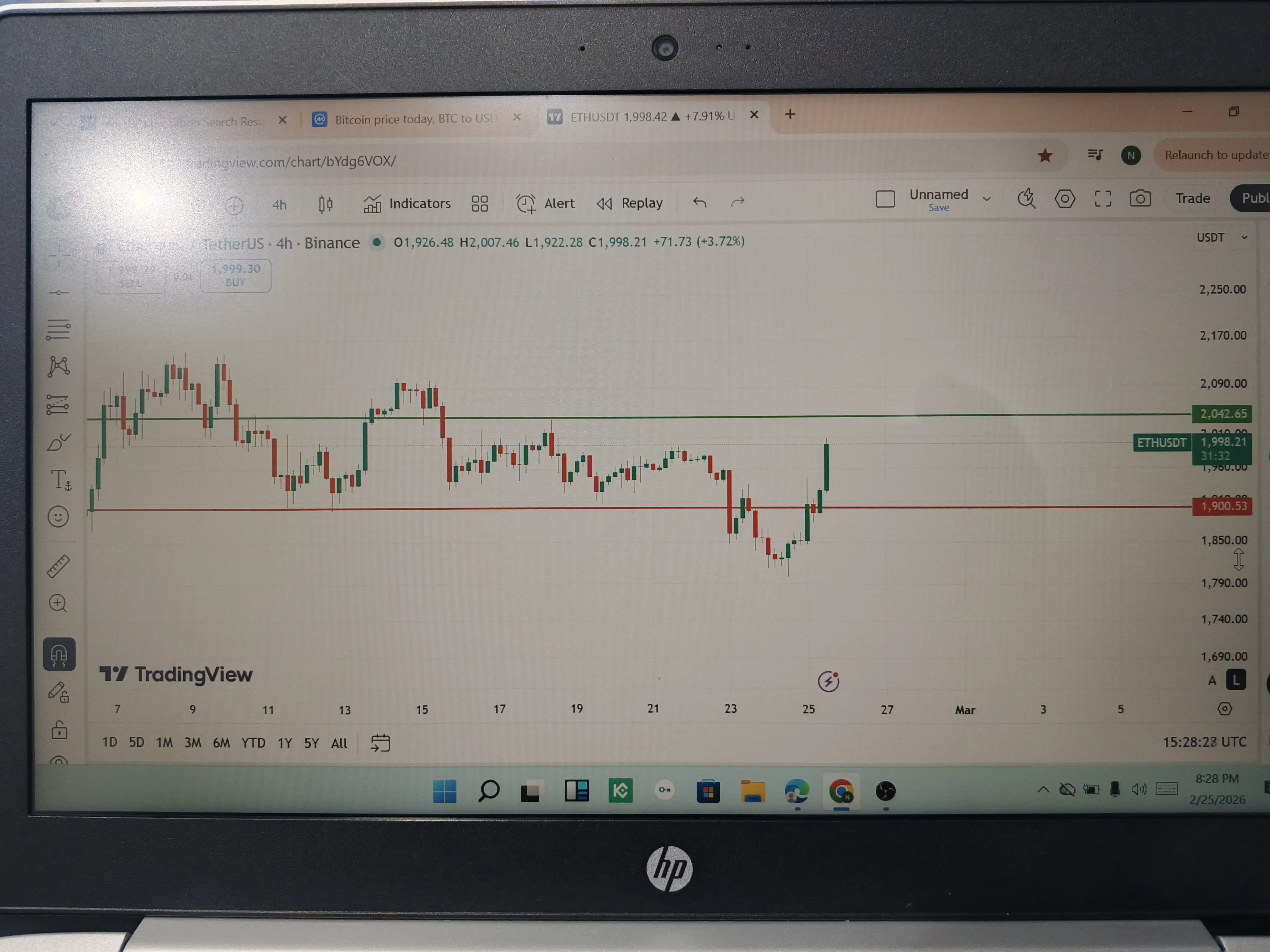
#ETHLongShortBattle The $2,000 Liquidity War: Expansion Phase Approaching?
Ethereum is once again compressing beneath the critical $2,000 threshold — a level that has evolved from psychological resistance into a structural liquidity battleground. With significant short positioning historically clustering around this zone, the market is entering a volatility decision phase where equilibrium rarely lasts long.
Structural Context: Why This Range Is Different in 2026
Unlike previous cycles driven mostly by retail speculation, the current environment includes higher institutional participation, st
ETH-4.98%
BTC-2.53%
StylishKurivip
#ETHLongShortBattle The $2,000 Liquidity War: Expansion Phase Approaching?
Ethereum is once again compressing beneath the critical $2,000 threshold — a level that has evolved from psychological resistance into a structural liquidity battleground. With significant short positioning historically clustering around this zone, the market is entering a volatility decision phase where equilibrium rarely lasts long.
Structural Context: Why This Range Is Different in 2026
Unlike previous cycles driven mostly by retail speculation, the current environment includes higher institutional participation, staking-based supply lockups, and stronger derivatives market influence. A large percentage of ETH remains staked, reducing immediately tradable supply. When liquid supply tightens during high open interest conditions, even moderate spot demand can trigger disproportionate price expansion.
At the same time, perpetual futures markets continue to dominate short-term price discovery. If funding rates remain neutral to negative while price grinds higher, it signals hidden absorption — often a precursor to squeeze setups.
Bullish Expansion Scenario: Liquidity Ignition
If ETH achieves a decisive 4H or daily close above $2,000 with strong spot volume confirmation:
Short liquidations could cascade rapidly
Momentum algorithms may flip long
Capital rotation from mid-cap altcoins could accelerate
Psychological resistance turns into structural support
In this scenario, price acceleration toward the $2,100–$2,300 region becomes technically feasible, especially if open interest expands alongside price rather than diverging.
Bearish Continuation Scenario: Rejection Dynamics
However, if ETH fails to sustain acceptance above resistance:
Long upper wicks signal distribution
Leveraged longs may unwind aggressively
Correlation pressure from Bitcoin could amplify downside
Support retests become likely
Failed breakouts in leveraged environments often move faster than successful rallies due to forced liquidations.
Macro Overlay & Forward Outlook
Global liquidity expectations remain the ultimate catalyst. If monetary conditions stabilize or shift toward easing, smart contract platforms typically outperform. Additionally, Layer-2 growth, tokenization trends, and institutional staking products are strengthening Ethereum’s long-term structural case.
This is not merely a price test — it is a liquidity event forming. Compression phases precede expansion. The direction will be decided by volume, open interest behavior, and whether $2,000 becomes acceptance… or rejection.
Pressure is elevated.
Liquidity is concentrated.
Volatility expansion is statistically approaching.
  • Reward
  • 1
  • Repost
  • Share
Yunnavip:
Ape In 🚀
#深度创作营 The 2026 global financial landscape is evolving into a highly structured capital environment where liquidity intelligence plays a more important role than simple market speculation. Investors are shifting from momentum chasing toward research-driven positioning and macro-aware portfolio construction. Risk markets are becoming selective, rewarding technological innovation, infrastructure dominance, and long-term utility economics rather than short-term narrative hype. This transformation is redefining how institutional and retail participants interact with modern financial ecosystems.
Mo
BTC-2.53%
ETH-4.98%
MrFlower_XingChenvip
#深度创作营 The 2026 global financial landscape is evolving into a highly structured capital environment where liquidity intelligence plays a more important role than simple market speculation. Investors are shifting from momentum chasing toward research-driven positioning and macro-aware portfolio construction. Risk markets are becoming selective, rewarding technological innovation, infrastructure dominance, and long-term utility economics rather than short-term narrative hype. This transformation is redefining how institutional and retail participants interact with modern financial ecosystems.
Monetary policy remains one of the strongest drivers of global capital flow. Decisions and forward guidance from Federal Reserve continue to influence international risk sentiment. When tightening pressure persists, high-leverage speculative assets tend to experience capital compression while technology infrastructure sectors attract defensive investment positioning. Market participants are now focusing more on policy expectation cycles rather than reacting only to executed policy changes.
The role of digital scarcity assets is also strengthening within institutional portfolios. Bitcoin is gradually being treated as a macro reserve-style asset rather than purely a speculative trading instrument. Accumulation behavior is often observed during low volatility phases when market sentiment is neutral. Large participants prefer building positions quietly inside liquidity zones rather than entering during public breakout excitement.
Artificial intelligence computing power is becoming the central battlefield of technological competition. Semiconductor innovation is driving global productivity transformation, and companies such as NVIDIA are maintaining leadership through advanced GPU architecture and machine learning acceleration hardware. Future economic dominance may depend on the ability to scale neural computation networks while optimizing energy consumption efficiency.
Enterprise-level artificial intelligence integration is expanding rapidly across productivity ecosystems. Platforms developed by Microsoft are demonstrating how AI automation can transform corporate workflow management, cloud intelligence services, and business analytics systems. The next productivity revolution is expected to emerge from cognitive software architecture rather than traditional industrial manufacturing models.
Blockchain network utility is gradually replacing pure speculative token valuation. The development of Ethereum reflects the transition toward application-driven decentralized finance, programmable digital settlement systems, and cross-chain interoperability expansion. Layer-2 scalability protocols are playing a critical role in improving transaction speed while reducing network congestion costs.
Stable digital liquidity channels are becoming the backbone of global crypto trading circulation. Ecosystems supported by Tether are expanding financial accessibility in emerging markets where traditional banking infrastructure is less efficient. Stablecoin liquidity pools also act as transitional risk buffers during high volatility trading periods, allowing capital to move dynamically between market conditions.
Derivative market structures are now dominating price discovery mechanisms in digital asset markets. Futures and options trading create reflexive feedback loops where leveraged positioning influences short-term volatility behavior. Monitoring open interest expansion, funding rate imbalance, and liquidation heatmap clusters has become essential for professional-level market analysis and strategic trade timing.
The rapid expansion of AI-driven computation is creating unprecedented demand for advanced energy infrastructure. Massive data centers require stable electricity supply, efficient cooling architecture, and sustainable power generation systems. Future investment opportunities may emerge in smart grid technology, high-density storage solutions, and renewable energy integration that supports large-scale digital computation.
Cross-border digital financial integration is accelerating global economic connectivity. Blockchain-based settlement channels are reducing remittance costs and transaction settlement delays across international markets. Digital liquidity networks are particularly important for developing economies seeking faster financial participation and improved trade efficiency.
Investor behavior in the current cycle is shifting toward disciplined capital layering strategies. Successful participants are combining long-term structural holdings with tactical volatility exposure rather than relying on aggressive leverage trading. Emotional decision-making is being replaced by research-based positioning models that prioritize survivability and portfolio stability.
Future market expansion could be triggered by global liquidity easing signals or rapid commercialization of artificial intelligence technologies. Regulatory clarity across major economic regions may also encourage institutional capital participation in digital asset ecosystems. The next financial supercycle is likely to emerge from the convergence of intelligent automation, technological infrastructure, and digital finance evolution.
#深度创作营
repost-content-media
  • Reward
  • 1
  • Repost
  • Share
Yunnavip:
Ape In 🚀
#深度创作营 The global financial system is entering a new generation of capital evolution where technology-driven productivity and liquidity intelligence are becoming the primary determinants of asset valuation. Markets are transitioning from speculation-centered trading behavior toward infrastructure-oriented investment models. In this environment, capital is flowing toward assets that demonstrate long-term utility, network dominance, and sustainable economic contribution rather than short-term narrative momentum.
Institutional participation continues to reshape digital asset markets. Major assets
BTC-2.53%
ETH-4.98%
MrFlower_XingChenvip
#深度创作营 The global financial system is entering a new generation of capital evolution where technology-driven productivity and liquidity intelligence are becoming the primary determinants of asset valuation. Markets are transitioning from speculation-centered trading behavior toward infrastructure-oriented investment models. In this environment, capital is flowing toward assets that demonstrate long-term utility, network dominance, and sustainable economic contribution rather than short-term narrative momentum.
Institutional participation continues to reshape digital asset markets. Major assets such as Bitcoin are increasingly viewed as strategic macro diversification instruments by financial institutions. Corporate treasury adoption and portfolio hedging integration are reducing extreme volatility patterns while creating compressed price structures. In such conditions, significant breakouts usually require strong liquidity expansion or major macroeconomic catalyst events.
Monetary policy dynamics remain a dominant force in global capital allocation. The forward guidance strategies of the Federal Reserve influence international investment sentiment through expectations about interest rate trajectory and monetary supply circulation. When policy signals lean toward tightening cycles, defensive capital typically migrates toward high-quality technological infrastructure and productivity-driven assets.
The semiconductor industry is becoming the strategic backbone of modern economic competition. Companies such as NVIDIA are not only technology manufacturers but also core enablers of global artificial intelligence computation. The explosive demand for machine learning training, autonomous systems, and large-scale neural architecture processing is driving unprecedented GPU supply chain expansion.
Artificial intelligence commercialization is moving beyond consumer applications into enterprise-scale operational intelligence systems. Platforms developed by Microsoft are leading the transformation of business productivity through generative AI integration, cloud automation, and knowledge processing algorithms. Future economic value creation is expected to emerge from cognitive infrastructure services rather than traditional software licensing models.
Blockchain technology is gradually evolving toward high-efficiency application ecosystems. The development trajectory of Ethereum demonstrates the shift from speculative token trading to functional programmable finance networks. Layer-2 scalability architecture and cross-chain interoperability protocols are expected to play a major role in reducing transaction latency and improving global decentralized application performance.
Stable digital liquidity circulation is becoming essential for international market connectivity. The ecosystem operated by Tether is expanding financial accessibility in regions where traditional banking infrastructure remains fragmented. Stablecoin settlement channels are increasingly used for remittance processing, e-commerce integration, and global trading liquidity movement.
Derivative market dominance is accelerating price discovery reflexivity. Open interest expansion in perpetual futures markets often acts as a precursor to volatility compression breakouts. Professional traders are now analyzing liquidation probability clusters, funding rate imbalance zones, and leveraged position concentration data to anticipate directional momentum shifts.
Energy technology is emerging as a hidden competitive factor in the AI computation revolution. Massive data center networks require advanced cooling systems, optimized electricity distribution, and sustainable power generation solutions. Future investment opportunities may arise in smart grid engineering, high-density energy storage, and low-loss transmission infrastructure.
Cross-border digital economic integration is becoming a major global trend. Blockchain settlement systems are reducing international transaction costs and improving financial transparency across supply chains. Developing economies may experience accelerated financial inclusion through digital payment network adoption and decentralized liquidity channels.
Investor psychology is also undergoing structural transformation. High-performance market participants are shifting from emotion-based trading toward research-driven capital deployment models. Portfolio strategies are increasingly emphasizing survivability, technological moat protection, and adaptive risk exposure management.
Looking forward, the next major market acceleration phase may occur if global liquidity policy transitions toward expansionary guidance or if artificial intelligence monetization reaches large-scale enterprise penetration. The convergence of digital finance, intelligent automation, and infrastructure technology will likely define the next global economic supercycle.
repost-content-media
  • Reward
  • 1
  • Repost
  • Share
Yunnavip:
Ape In 🚀
#DeepDiveCreatorCamp
Macro Compression, Institutional Strategy & the 2026 Digital Transition
Global markets are advancing further into a structurally tense macro phase. Liquidity tightening, elevated interest-rate expectations, and geopolitical instability are collectively shaping capital behavior. Rather than broad risk expansion, capital deployment is becoming increasingly selective and data-sensitive.
This environment is defined by cautious positioning, not aggressive trend commitment.
Bitcoin: Structural Range & Liquidity Defense
Bitcoin remains positioned within a wide accumulation–distri
BTC-2.53%
ETH-4.98%
StylishKurivip
#DeepDiveCreatorCamp
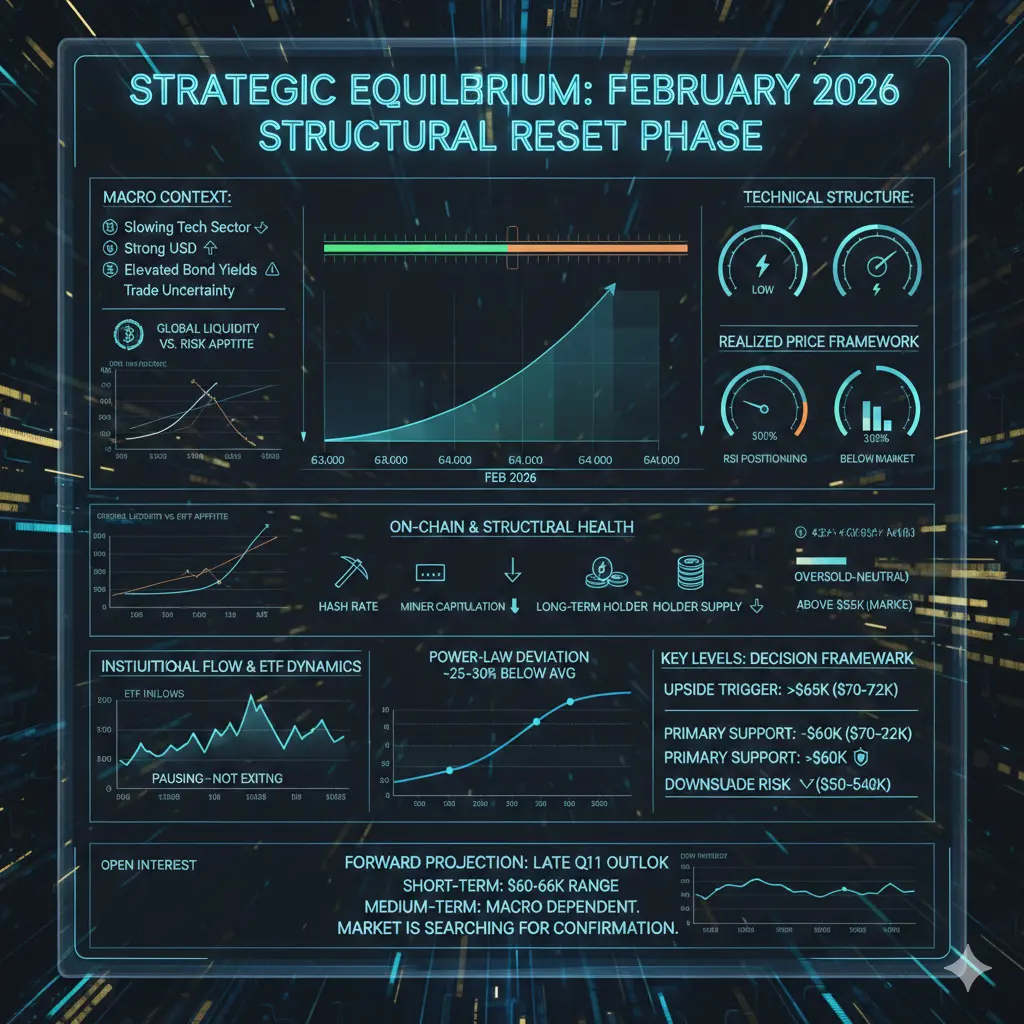
Global financial markets are moving deeper into a high-uncertainty macro cycle as liquidity tightening and geopolitical tension continue shaping risk assets. The cryptocurrency market remains particularly sensitive to institutional positioning and regulatory developments. Bitcoin is still trading inside a broad accumulation-distribution range rather than entering a strong bullish breakout phase. Analysts are watching whether buyers can defend the mid-range liquidity zones, as failure to hold these areas could trigger another wave of volatility similar to previous macro corrections.
Institutional technology sector performance is also playing an important role in risk sentiment. The earnings outlook of Nvidia Corporation continues to influence speculative AI-driven capital flows. The market is currently balancing between AI-sector growth optimism and valuation pressure caused by interest-rate expectations. If semiconductor demand tied to machine learning infrastructure remains strong, it could indirectly support risk-on sentiment across digital assets including Ethereum, which is gradually positioning itself as a programmable finance settlement layer.
From a sector research perspective, the dominant theme for 2026 is the competition between regulatory clarity and decentralized innovation. Governments are accelerating digital asset framework discussions while blockchain projects push for scalability and institutional adoption. Layer-2 expansion, real-time settlement protocols, and cross-chain liquidity infrastructure are expected to define the next phase of market evolution. Traders should monitor capital rotation patterns between high-beta speculative tokens and fundamentally anchored ecosystem assets.
Looking forward, the market may enter a catalyst-driven volatility window depending on macroeconomic announcements, global trade policy signals, and technology earnings cycles. Risk management remains critical because liquidity shocks can amplify both upside and downside moves in digital markets. Long-term positioning is likely to favor projects with strong network adoption, developer activity, and real-world financial integration rather than short-term narrative momentum.
Overall, the 2026 outlook suggests a transitional phase where markets are searching for directional conviction. Patience, data-driven entry logic, and multi-timeframe confirmation are becoming essential tools for professional participants navigating the evolving digital economy landscape.
#DeepDiveCreatorCamp
repost-content-media
  • Reward
  • 2
  • Repost
  • Share
StylishKurivip:
Good information
View More
#DeepDiveCreatorCamp
Selective Risk Regime & Structural Capital Rotation – 2026 Macro Intelligence Report
The 2026 global financial system is operating under controlled pressure. Growth expectations remain present, yet monetary conditions are still relatively restrictive. Central banks are attempting to suppress inflation without destabilizing credit markets—creating a fragmented capital environment rather than a synchronized expansion cycle.
Markets are currently functioning within what can be described as a selective risk regime. Liquidity is not dispersing evenly across sectors. Instead, it
BTC-2.53%
ETH-4.98%
StylishKurivip
#DeepDiveCreatorCamp Global Market Structure and Macroeconomic Pressure
The 2026 financial landscape is being shaped by persistent macroeconomic uncertainty, especially the tension between growth expectations and restrictive monetary conditions. Risk assets remain highly responsive to central bank policy signals, liquidity availability, and geopolitical developments. Markets are currently operating in what many analysts describe as a “selective risk environment,” where capital does not flow uniformly but instead concentrates into technology infrastructure, AI-driven productivity sectors, and high-quality blockchain ecosystems.
In the cryptocurrency space, Bitcoin continues to act as the primary risk sentiment indicator. Unlike earlier cycles driven purely by retail speculation, the current phase shows stronger institutional influence. Large-scale participants are accumulating during consolidation phases rather than chasing breakout rallies. Price action has been characterized by range-bound movement with occasional volatility spikes triggered by macro news, ETF flow adjustments, and derivative market positioning.
The behavior of Ethereum is evolving beyond simple price speculation. The network’s ecosystem is increasingly linked to decentralized financial infrastructure, smart contract settlement, and tokenized asset experimentation. Analysts are closely observing adoption metrics in Layer-2 scaling networks and institutional staking participation as potential long-term valuation drivers.
Artificial Intelligence Economy and Technology Sector Influence
The global investment narrative is strongly influenced by artificial intelligence infrastructure expansion. Semiconductor and GPU technology demand remains a core pillar of future productivity expectations. One of the most important market drivers is the performance outlook of Nvidia Corporation, whose hardware architecture is widely used in machine learning training clusters and cloud computing acceleration.
AI competition is intensifying across both private and public sectors. Companies are investing heavily in generative models, autonomous analytics, and automated decision systems. This technological arms race is creating a capital rotation effect where funds move from traditional manufacturing or low-growth sectors into high-innovation digital infrastructure.
The long-term implication is that AI productivity gains may redefine labor efficiency, corporate profit structures, and investment valuation models. However, market participants are also monitoring valuation sustainability risks, as rapid AI hype cycles have historically been followed by correction phases.
Regulatory Evolution and Digital Asset Governance
One of the most important structural developments in the digital economy is the global push toward regulatory clarity. Governments are attempting to balance innovation incentives with financial stability protection. Legislative proposals similar to the Digital Asset Market Structure frameworks are emerging in multiple jurisdictions.
In the United States, policy discussion around structured crypto regulation continues to influence institutional confidence. Clear classification rules between commodity-like tokens and security-like digital assets are expected to reduce compliance uncertainty for large capital allocators.
Meanwhile, some geopolitical actors are exploring sovereign digital currency models. Research into state-controlled or reserve-backed digital payment architecture is accelerating as countries aim to strengthen monetary sovereignty and reduce reliance on external settlement systems.
Market Liquidity Dynamics and Trading Behavior
Current market microstructure shows increasing participation of algorithmic trading and liquidity-sensitive positioning strategies. Derivatives markets play a major role in short-term price volatility. Funding rate compression during consolidation phases often signals crowded positioning.
Professional traders are paying attention to order-book liquidity depth rather than headline price movement. Whale accumulation zones, option open interest clusters, and liquidation cascade thresholds are becoming important predictive indicators.
Risk management philosophy is shifting toward probabilistic portfolio construction rather than directional speculation. Multi-asset diversification across digital, technological, and traditional financial instruments is becoming more common among institutional investors.
Future Outlook and Strategic Scenarios
The most likely market trajectory for the near term is a catalyst-dependent volatility expansion phase rather than a smooth bullish trend. Three primary scenarios are being monitored:
Bullish Expansion Scenario – Requires sustained institutional inflow, positive macro liquidity easing, and strong technology earnings performance.
Neutral Accumulation Scenario – Markets move sideways while large participants gradually build positions during low volatility periods.
Risk Correction Scenario – Triggered by unexpected policy tightening, geopolitical escalation, or liquidity shock events.
Long-term structural adoption of blockchain-based finance, AI-driven automation, and digital asset settlement networks is expected to continue despite short-term fluctuations.
Investment Philosophy for the Emerging Cycle
The evolving market cycle favors research-driven capital deployment over momentum chasing. Assets with strong developer ecosystems, real-world use cases, and institutional integration potential are expected to outperform speculative narratives.
Technological convergence between AI computation and decentralized finance may become one of the defining investment themes of the decade. Participants should maintain disciplined entry strategies, monitor macro signals, and avoid excessive leverage exposure in high-volatility zones.
#DeepDiveCreatorCamp
repost-content-media
  • Reward
  • 2
  • Repost
  • Share
StylishKurivip:
thanks for giving Information
View More
#DeepDiveCreatorCamp
Global Liquidity Realignment & The New Economic Architecture – 2026 Strategic Outlook
The 2026 macro environment is defined by controlled tension. Central banks are walking a narrow line—tight enough to suppress inflation, but cautious enough to avoid destabilizing credit systems. The result is not a uniform capital expansion cycle, but a selective liquidity regime where funds concentrate in innovation-heavy sectors while traditional industries experience slower momentum.
Markets are no longer reacting to broad optimism or fear alone. Instead, capital flows are increasingl
BTC-2.53%
ETH-4.98%
DEFI5.65%
MrFlower_XingChenvip
#DeepDiveCreatorCamp Macro Liquidity Transition and Global Economic Structure
The 2026 global economy is moving through a structural transition phase where monetary tightening, geopolitical uncertainty, and technological disruption are jointly shaping capital behavior. Central banks in major economies are maintaining cautious interest-rate policies to control inflation while avoiding systemic financial stress. This balancing act is creating a fragmented investment environment where capital does not flow evenly but instead concentrates into high-innovation sectors.
Risk assets remain highly sensitive to policy signals and global trade developments. Institutional investors are increasingly adopting adaptive allocation strategies that respond dynamically to macro data releases rather than maintaining fixed long-term exposure. The dominant market philosophy is shifting toward tactical positioning combined with long-term technological conviction.
Digital Asset Market Structure and Institutional Accumulation
The cryptocurrency ecosystem is entering a maturity phase where institutional participation is replacing purely speculative retail momentum. Bitcoin continues to serve as the primary global risk sentiment benchmark within digital finance markets.
Current price structure analysis suggests that Bitcoin is operating inside a large-scale liquidity compression zone. Historical cycle studies indicate that such consolidation phases often precede major directional expansion, although breakout timing depends heavily on macro liquidity conditions and derivative market positioning.
Exchange-traded investment products and corporate treasury allocations are playing an increasingly important role in demand stability. Large capital participants tend to accumulate gradually during low-volatility environments rather than executing aggressive market entries.
Meanwhile, Ethereum is progressing toward becoming a foundational programmable financial infrastructure rather than functioning purely as a digital store of speculative value. Network adoption metrics are being evaluated across multiple dimensions including smart contract deployment frequency, decentralized exchange settlement volume, and institutional staking participation.
Layer-2 scaling ecosystems are expected to dominate transaction throughput expansion. These networks aim to reduce congestion, lower transaction costs, and improve real-time settlement capability for decentralized financial applications.
Artificial Intelligence Capital Revolution
Artificial intelligence infrastructure is becoming the primary engine of technological economic growth.
The semiconductor supply chain is emerging as a strategic geopolitical asset because advanced computation hardware determines AI training capability and cloud intelligence performance. Nvidia Corporation remains one of the central companies driving this transformation due to its dominance in GPU-based parallel processing architecture.
Market analysts are closely monitoring enterprise AI adoption revenue conversion rates. While AI model development is accelerating rapidly, long-term valuation sustainability depends on whether businesses can translate computational intelligence into measurable productivity improvement.
The global competition between private technology corporations and national research programs is intensifying. Autonomous analytics systems, generative knowledge models, and decision-support algorithms are expected to reshape employment structures across finance, healthcare, logistics, and manufacturing.
Regulatory Competition and Digital Sovereignty
Governments are accelerating digital financial governance frameworks to maintain monetary stability in the era of decentralized innovation.
The primary challenge is balancing technological freedom with systemic risk control. Policy makers are studying classification frameworks that separate commodity-like digital assets from securities-like investment instruments.
Several countries are exploring sovereign digital payment architecture designed to enhance cross-border transaction efficiency and strengthen national monetary independence. State-backed digital currency experiments are becoming more common as global trade digitization expands.
Market Microstructure Intelligence and Professional Trading Behavior
Modern trading ecosystems are increasingly dominated by algorithmic execution systems and liquidity-aware strategies.
Derivatives markets play a crucial role in short-term price volatility amplification. Funding rate compression during sideways price movement often indicates overcrowded leverage positioning. When leverage concentration reaches critical thresholds, liquidation cascades can trigger rapid market expansion or contraction.
Professional market participants are now prioritizing order-book depth analysis rather than focusing only on visible price levels. Whale accumulation regions, options open interest clusters, and stop-loss liquidity pools are becoming important predictive signals.
Portfolio risk philosophy is also evolving toward statistical resilience rather than aggressive directional speculation. Institutional funds are diversifying across digital assets, technology equities, commodity exposure, and macro derivatives.
Emerging Technological Convergence: AI + Decentralized Finance
One of the most important long-term structural themes of the 2020s is the convergence of artificial intelligence computing and decentralized financial architecture.
Future financial systems may integrate autonomous trading agents, real-time compliance verification, and tokenized asset settlement layers. Blockchain-based infrastructure could enable programmable economic contracts that operate with minimal human intervention.
The combination of machine learning decision engines and distributed ledger settlement protocols may redefine how value transfer networks operate globally.
Scenario-Based Market Projection
The market outlook for the near term remains catalyst-dependent rather than trending smoothly.
Bullish Expansion Scenario:
This requires sustained institutional capital inflow, improving global liquidity conditions, and strong technology earnings cycles. Positive AI sector performance could indirectly strengthen innovation-driven risk appetite.
Neutral Accumulation Scenario:
Large investors may continue building long-term positions while volatility remains compressed. This phase is historically associated with infrastructure development and ecosystem strengthening.
Risk Correction Scenario:
Unexpected monetary tightening, geopolitical conflict escalation, or derivative market leverage imbalance could trigger sharp downside volatility.
Investment Strategy Framework for the New Cycle
The emerging market structure favors research-based capital deployment rather than momentum speculation.
Assets with strong developer ecosystems, real-world utility integration, and institutional compatibility are statistically more likely to sustain long-term growth.
High-leverage trading during volatility expansion phases is considered risky because liquidity shocks can produce rapid price displacement.
Disciplined multi-timeframe analysis, macro awareness, and probabilistic risk modeling are becoming essential skills for professional participants.
Long-Term Vision of the Digital Economy
The future global economy is likely to be defined by three interconnected forces:
Computational intelligence expansion
Decentralized financial infrastructure
Tokenized real-world economic representation
Market participants who focus on fundamental technological adoption rather than short-term narrative cycles are expected to gain stronger strategic positioning in the evolving 2026 investment landscape.
#DeepDiveCreatorCamp
repost-content-media
  • Reward
  • 2
  • Repost
  • Share
StylishKurivip:
To The Moon 🌕
View More
#DeepDiveCreatorCamp
Digital Capital Rotation & Structural Evolution – 2026 Market Intelligence Brief
The 2026 digital asset cycle is no longer retail-dominated. Market structure now reflects capital concentration from hedge funds, asset managers, sovereign allocators, and structured investment vehicles. Price discovery mechanisms are increasingly shaped by institutional liquidity flows rather than social-driven speculative waves.
Crypto markets are transitioning from narrative-driven volatility toward capital-efficiency evaluation. This marks a structural maturation phase.
Institutional Liqui
BTC-2.53%
ETH-4.98%
DEFI5.65%
MrFlower_XingChenvip
#DeepDiveCreatorCamp Digital Asset Capital Structure in the 2026 Cycle
The 2026 cryptocurrency market is entering a complex maturity phase where institutional participation is becoming the dominant force behind price discovery. Market liquidity is increasingly controlled by large-scale investment entities rather than retail speculative momentum. Bitcoin continues to function as the primary global risk sentiment barometer, reflecting broader macroeconomic confidence levels.
Current blockchain market behavior suggests that accumulation activity is occurring during extended consolidation zones. Historical liquidity cycle studies indicate that major bullish expansion phases often follow periods of low volatility compression rather than immediate breakout attempts. Traders are observing mid-range institutional liquidity zones as potential structural turning points rather than focusing on short-term price noise.
Meanwhile, Ethereum is strengthening its position as the core programmable settlement infrastructure of decentralized finance. The network’s strategic value is shifting from speculative price perception toward functional economic utility. Layer-2 rollup ecosystems are expected to dominate transaction scaling because they allow high-speed settlement while maintaining decentralized security architecture.
AI Economy Dominance and Hardware Infrastructure Competition
The global technology investment cycle is increasingly driven by artificial intelligence computation demand. Semiconductor supply capacity is becoming a strategic economic asset because modern AI models require massive parallel processing infrastructure.
The performance trajectory of Nvidia Corporation continues to influence global speculative capital rotation into high-growth technology sectors. GPU architecture is currently the backbone of large-scale neural network training, cloud intelligence processing, and automated decision engine development.
Market analysts are watching enterprise AI monetization efficiency rather than model development speed alone. The sustainability of AI-driven valuation depends on whether businesses can convert computational intelligence into measurable productivity and revenue expansion.
Global Regulatory Competition and Financial Sovereignty
Governments are accelerating digital asset governance frameworks as blockchain technology becomes more integrated into international financial systems.
Regulatory policy trends are moving toward structured classification systems that distinguish between utility-based digital tokens and investment-oriented securities instruments. This clarity is expected to attract pension funds, sovereign wealth capital, and long-term institutional investors into compliant digital markets.
At the same time, several geopolitical economies are researching sovereign digital payment architectures designed to reduce dependency on traditional correspondent banking systems and enhance cross-border trade settlement efficiency.
Market Microstructure Intelligence and Professional Positioning
Modern trading systems are increasingly dominated by quantitative execution algorithms. Order-flow analytics, liquidity heat mapping, and derivative positioning data are becoming essential professional tools.
Funding rate normalization during sideways market structure often indicates that leveraged speculative positioning is reaching equilibrium. When leverage concentration becomes excessive, even small macro triggers can generate cascading liquidation events across derivative platforms.
Professional capital allocators are shifting from aggressive directional speculation toward statistical risk-balanced portfolio engineering. Multi-asset exposure across digital finance, technology equities, and macro commodities is becoming a preferred institutional strategy.
Future Technological Economic Convergence
The long-term global investment narrative is centered on the fusion of artificial intelligence, decentralized finance, and autonomous digital settlement networks.
Future financial ecosystems may rely on machine-assisted economic coordination where intelligent algorithms optimize trading, compliance verification, and capital allocation processes in real time. Tokenized real-world assets are expected to play a significant role in bridging traditional finance with blockchain-based infrastructure.
Strategic Market Outlook
The most probable market environment for the near future is volatility-driven expansion rather than smooth trend continuation.
Three structural paths are being monitored:
Institutional Bull Expansion: Requires sustained liquidity injection and positive technology earnings cycles.
Sideways Accumulation Structure: Large investors gradually build long-term exposure under compressed volatility conditions.
Shock Risk Correction Phase: Triggered by unexpected policy tightening, geopolitical escalation, or derivative market leverage imbalance.
Investment Philosophy for the Emerging Digital Economy
The emerging cycle favors analytical discipline over emotional trading behavior.
Projects with strong developer ecosystems, real-world financial integration, and institutional compliance readiness are statistically more likely to survive long-term market competition.
Excessive leverage during uncertainty phases remains a major wealth destruction factor in high-volatility digital markets. Professional participants are advised to prioritize macro awareness, multi-timeframe confirmation, and probability-based risk management.
#DeepDiveCreatorCamp
repost-content-media
  • Reward
  • 2
  • Repost
  • Share
StylishKurivip:
To The Moon 🌕
View More
#TrumpAnnouncesNewTariffs Tariff Shockwave 2.0: Global Liquidity Repricing Enters a New Phase
The latest tariff announcement from Donald Trump has reactivated a powerful macro catalyst across global markets. Trade policy is no longer a background headline — it has moved to the center of liquidity repricing. While tariffs traditionally impact equities, commodities, and foreign exchange first, crypto markets now sit directly within the global liquidity transmission chain. This is not just a policy update. It is a volatility expansion trigger with cross-asset consequences.
Markets are entering a
BTC-2.53%
MrFlower_XingChenvip
#TrumpAnnouncesNewTariffs Tariff Shockwave 2.0: Global Liquidity Repricing Enters a New Phase
The latest tariff announcement from Donald Trump has reactivated a powerful macro catalyst across global markets. Trade policy is no longer a background headline — it has moved to the center of liquidity repricing. While tariffs traditionally impact equities, commodities, and foreign exchange first, crypto markets now sit directly within the global liquidity transmission chain. This is not just a policy update. It is a volatility expansion trigger with cross-asset consequences.
Markets are entering a phase where macro headlines override short-term technical structure. When geopolitical trade friction rises, capital does not immediately rotate into risk assets — it first contracts, consolidates, and then selectively reallocates.
The Updated Macro Transmission Channels
Tariffs now influence markets through broader and more interconnected pathways than in previous cycles.
1. Corporate Margin Compression & Earnings Risk
Higher import costs raise production expenses. Multinational firms face margin pressure, leading to downward earnings revisions. Equity markets typically price this risk rapidly, increasing volatility in major indices.
2. USD Liquidity Tightening
Trade tensions often create short-term demand for the U.S. dollar as a perceived safe currency. A stronger dollar tightens global financial conditions, especially in emerging markets with dollar-denominated debt. This indirectly impacts crypto liquidity because global risk appetite weakens.
3. Treasury Yield & Rate Expectations
If tariffs increase inflation expectations, bond markets may price prolonged higher rates. Elevated yields reduce speculative appetite and pressure high-beta assets, including altcoins.
4. Risk Correlation Recalibration
Crypto’s correlation with equities tends to spike during initial macro stress. Only later — if narrative strength builds — does decoupling emerge.
Historically, crypto does not immediately act as a safe haven. The first reaction is defensive liquidity behavior.
Immediate Crypto Reaction Model (Updated)
Short-Term Window: 0–72 Hours
BTC shows relative strength against altcoins
Stablecoin dominance increases
Derivatives funding rates become unstable
Open interest spikes without sustained trend
Liquidation clusters form around leveraged zones
Altcoins typically underperform in early macro shock phases because traders consolidate capital into deeper liquidity pools such as BTC and stablecoins.
On major exchanges, macro-driven repositioning often creates rapid OI expansion without price confirmation — a classic precursor to volatility spikes.
On-Chain Metrics to Watch
Beyond price action, on-chain signals now provide early macro stress indicators:
Exchange inflows increasing → potential sell pressure
Stablecoin minting acceleration → defensive positioning
Whale wallet inactivity → large players waiting for clarity
Derivatives long/short imbalance → crowd positioning risk
If stablecoin supply rises while BTC holds structure, it may signal capital preparing for redeployment rather than exit.
Liquidity Phases in a Tariff-Driven Cycle
Phase 1 — Defensive Liquidity (Current Risk Zone)
Spreads widen. Order books thin. Funding flips quickly. Wick-driven fake breakouts dominate. This stage is narrative-driven and unstable. Traders react emotionally to headlines.
Phase 2 — Structured Volatility
Volatility compresses after liquidation events. Arbitrage desks and institutional participants re-enter. Directional expansion begins with clearer trend formation.
Phase 3 — Macro Hedge Narrative (Conditional)
If trade tensions escalate meaningfully:
Equity volatility sustains
Gold strengthens
USD momentum slows after initial spike
BTC begins rising independently of equities
This is the stage where crypto can transition into a macro hedge cycle.
Cross-Market Correlation Monitoring
To assess sustainability, traders should monitor:
BTC vs Nasdaq futures
BTC vs U.S. Dollar Index (DXY)
Gold reaction to trade stress
Emerging market FX weakness
U.S. Treasury yield movements
If BTC falls alongside equities, the move reflects liquidity contraction.
If BTC rises while equities weaken, capital rotation into alternative assets may be forming.
Expanded Forward Scenarios
Scenario A: Escalation Cycle
If tariffs expand into broader retaliation: Global growth expectations decline.
Equity volatility persists.
Capital seeks non-sovereign alternatives.
Crypto liquidity inflows increase.
In this environment, BTC dominance rises first. Altcoin rotation follows only after macro stability forms.
Scenario B: Negotiation Leverage
If markets interpret tariffs as temporary pressure tactics: Equity markets stabilize.
USD momentum softens.
Crypto returns to technical-driven structure.
Altcoins gradually recover.
Strategic Positioning Framework
BTC before altcoins — liquidity concentrates in majors first.
Monitor open interest — rising OI without price continuation signals instability.
Avoid chasing headline spikes — tariff moves often retrace after liquidity normalization.
Track stablecoin flows — inflows signal defense, outflows signal redeployment.
Respect funding extremes — crowded positioning increases liquidation probability.
Volatility Forecast Window
Next 24–72 Hours:
Reactive volatility, funding instability, sharp wicks.
Next 1–3 Weeks:
Trend clarity depends on equity resilience, USD strength, and bond market reaction.
Next 1–2 Months (If Escalation Continues):
Potential transition into macro-driven crypto expansion cycle — but only if BTC decouples from equities and liquidity rotates rather than contracts.
Final Assessment
Tariff announcements shift markets from technical structure to macro narrative dominance. At present, this remains a volatility event — not yet a confirmed structural trend shift.
Confirmation requires:
Sustained BTC strength relative to equities
Stabilizing funding conditions
Liquidity redeployment from stablecoins into majors
Cross-market divergence
Until those signals appear, expect instability, false breakouts, and liquidity-driven price action.
Macro narratives begin with chaos — structure follows only after liquidation clears excess leverage.
repost-content-media
  • Reward
  • 4
  • Repost
  • Share
ybaservip:
2026 GOGOGO 👊
View More
#BitcoinMarketAnalysis Strategic Equilibrium: February 2026 Structural Reset Phase
As February 2026 enters its final stretch, Bitcoin remains locked in a strategic equilibrium zone between $63,000 and $64,000. This range is no longer just a price consolidation — it represents a macro-technical compression phase where liquidity, sentiment, and positioning are recalibrating after the 2025 expansion cycle.
Markets are no longer reacting purely to crypto-native catalysts. Instead, Bitcoin is being evaluated within a broader cross-asset framework shaped by shifting dollar strength, bond yield dynam
BTC-2.53%
ETH-4.98%
MrFlower_XingChenvip
#BitcoinMarketAnalysis Strategic Equilibrium: February 2026 Structural Reset Phase
As February 2026 enters its final stretch, Bitcoin remains locked in a strategic equilibrium zone between $63,000 and $64,000. This range is no longer just a price consolidation — it represents a macro-technical compression phase where liquidity, sentiment, and positioning are recalibrating after the 2025 expansion cycle.
Markets are no longer reacting purely to crypto-native catalysts. Instead, Bitcoin is being evaluated within a broader cross-asset framework shaped by shifting dollar strength, bond yield dynamics, and global growth expectations. The current structure reflects balance — not weakness — but balance under pressure.
Macroeconomic Context: Liquidity vs. Risk Appetite
Recent failures to sustain price above $64,000 are not purely technical rejections. They reflect macro headwinds:
Slowing technology sector momentum globally
Stronger short-term U.S. dollar positioning
Elevated bond yields limiting speculative capital
Ongoing trade policy uncertainty
When macro uncertainty rises, capital preservation becomes dominant. High-beta assets typically experience compression before renewed expansion. Bitcoin, while increasingly institutionalized, still reacts to global liquidity conditions before decoupling narratives can form.
The broader crypto market cap hovering near $2.2 trillion suggests valuation compression, but not structural breakdown. Meanwhile, Ethereum testing the $1,800 support level adds indirect pressure to overall sentiment, as ETH often serves as the risk barometer for the altcoin complex.
Historically, these contraction phases function as leverage-clearing events rather than trend-ending reversals.
Technical Structure: Compression Before Expansion?
Several technical signals suggest we are in late-stage consolidation rather than early-stage breakdown:
1. Volatility Compression
Realized volatility is near levels last observed during the late 2022 accumulation zone. Periods of extreme compression typically precede directional expansion. The market is storing energy.
2. RSI Positioning
Daily RSI remains in oversold-to-neutral territory despite sideways price action. This divergence indicates seller exhaustion rather than aggressive distribution.
3. Realized Price Framework
Bitcoin is currently trading:
Above a realized holder cost basis near $55,000
Below a broader market cost average around $79,000
This positioning suggests long-term holders remain profitable and structurally supportive, while shorter-term participants are cautious.
On-Chain & Structural Health
The divergence between price stagnation and network strength is one of the most notable features of this cycle:
Hash rate remains at record highs
Miner capitulation signals are minimal
Exchange balances continue trending structurally lower
Long-term holder supply remains elevated
Network fundamentals do not reflect distribution pressure. Instead, they reflect resilience beneath a cooling price surface.
Additionally, power-law deviation models tracking approximately 25–30% below historical cycle averages indicate valuation compression relative to prior speculative peaks. This gap often closes through gradual appreciation rather than vertical spikes.
Institutional Flow & ETF Dynamics
Spot ETF inflows have slowed compared to peak 2025 levels, but they have not reversed aggressively. This suggests:
Institutional participants are pausing — not exiting
Reallocation decisions are macro-driven
Liquidity timing is being optimized rather than abandoned
If macro conditions stabilize, ETF inflows could reaccelerate quickly due to reduced overhead supply.
Key Levels: Decision Framework
Primary Support: $60,000
This level serves as both psychological and structural defense. Holding above it preserves bullish medium-term structure.
Upside Trigger: Sustained Close Above $65,000
Would signal absorption of overhead liquidity and open a path toward $70,000–$72,000.
Downside Risk: Break Below $60,000
Could initiate a controlled retracement toward the $50,000–$54,000 liquidity pocket, where strong historical demand sits.
At present, there is no confirmed breakdown — only range-bound compression.
Liquidity & Derivatives Behavior
Open interest has shown expansion without sustained directional follow-through. This typically precedes one of two outcomes:
A liquidation sweep followed by trend continuation
A volatility breakout triggered by funding imbalance
Monitoring funding rate extremes and liquidation clusters near leveraged zones remains critical over the next 7–10 trading sessions.
Forward Projection: Late Q1 Outlook
Short-Term (1–2 Weeks):
Expect continued range-bound volatility between $60K–$66K with occasional liquidity wicks.
Medium-Term (1–2 Months):
Directional clarity will depend on:
U.S. dollar trajectory
Bond yield stability
Equity market resilience
ETF flow resumption
If macro stabilizes, Bitcoin’s structural underperformance relative to prior cycle averages may resolve through gradual upside expansion rather than explosive breakout.
Strategic Conclusion
The February 2026 market is not signaling collapse — it is signaling recalibration. Sentiment is subdued, volatility is compressed, and leverage has normalized. These conditions historically precede structural continuation phases rather than terminal tops.
For disciplined participants, this phase demands patience and data alignment rather than emotional reaction. Equilibrium zones test conviction — but they also build the foundation for the next expansionary leg.
The market is not searching for excitement.
It is searching for confirmation.
repost-content-media
  • Reward
  • 1
  • Repost
  • Share
Yunnavip:
Happy New Year 🧨
  • Pin

Trade Crypto Anywhere Anytime
qrCode
Scan to download Gate App
Community
English
  • 简体中文
  • English
  • Tiếng Việt
  • 繁體中文
  • Español
  • Русский
  • Français (Afrique)
  • Português (Portugal)
  • Bahasa Indonesia
  • 日本語
  • بالعربية
  • Українська
  • Português (Brasil)