Comprehensive Guide to Digital Art Creation for Beginners

Comprehensive Guide to Digital Art Creation for Beginners

This comprehensive guide explores innovative approaches for creating NFT digital art, serving artists at all skill levels. The article covers multiple digital art types including digital painting, AI image generation, 3D modeling, photobashing, and pixel art, providing software recommendations and learning resources for each. Beginners learn practical steps: selecting subjects, gathering inspiration, and sketching preliminary designs before digital execution. Seven actionable projects—fan art, personal logos, portraits, collages, movie posters, motion graphics, and animated GIFs—offer hands-on experience building portfolio-worthy work. The guide emphasizes that digital art requires no expensive equipment or traditional training, only dedication and practice. With free tools like GIMP and Krita available, creative expression is democratized and accessible to everyone ready to start their artistic journey.
2026-02-05 09:56:24
What Is a Physical Bitcoin and What Is Its Worth?

What Is a Physical Bitcoin and What Is Its Worth?

Physical Bitcoins represent tangible manifestations of digital cryptocurrency, securely storing actual BTC value through concealed private keys, most famously exemplified by Casascius coins from 2011-2013. These dual-purpose assets function simultaneously as cold storage devices and rare collectibles, with intact originals commanding premiums of 50% or more above their cryptocurrency content due to scarcity and historical significance. The market encompasses various producers including BitBills, Lealana, Denarium, and BTCC Mint, though regulatory pressures from FinCEN curtailed production of funded coins. Physical Bitcoin value derives from two components: intrinsic cryptocurrency content and numismatic collector premiums determined by rarity, condition, provenance, and grading. Buyers can acquire authentic pieces through Gate, specialized collector forums, auction houses, and private sales, though vigilance against counterfeits, key compromise, and tamper-evident hologram fraud remains essential for protecti
2026-02-05 09:40:48
How to Analyze On-Chain Data: Active Addresses, Transaction Volume, and Whale Distribution in 2026

How to Analyze On-Chain Data: Active Addresses, Transaction Volume, and Whale Distribution in 2026

Master on-chain data analysis to decode blockchain network health and market dynamics. This comprehensive guide explores three critical metrics: active addresses reveal genuine user engagement and adoption trends; transaction volume indicates market liquidity and real demand patterns; whale distribution exposes large holder concentration and market structure. By analyzing Bitcoin Cash's 2026 on-chain metrics—declining active addresses, $500 million daily volumes, and top 100 addresses controlling 39% supply—investors gain actionable intelligence beyond price action. Learn to identify whale movements, monitor fee dynamics during market weakness, and combine multiple indicators for accurate trend analysis. Discover how professional traders use Gate's real-time monitoring tools to distinguish market cycles from structural challenges, transform on-chain data into strategic trading signals, and optimize decision-making across cryptocurrency investments.
2026-02-05 09:36:24
Leading NFT Artists Worth Watching

Leading NFT Artists Worth Watching

2024 Top NFT Artworks: Complete Rankings & Expert Recommendations. Dive deep into the works of acclaimed NFT artists like Beeple and Trevor Jones—analyzing their defining features, market valuations, and investment prospects. Stay ahead of digital art collecting trends and gain actionable insights with this NFT art investment guide.
2026-02-05 09:34:18
What is token economics model: OKB's fixed supply, deflationary mechanism, and governance utility explained

What is token economics model: OKB's fixed supply, deflationary mechanism, and governance utility explained

This article comprehensively explains OKB's token economics model, detailing how the fixed supply of 21 million tokens creates permanent scarcity through a historic 65.26 million token burn in August 2025. OKB has evolved from a traditional exchange utility token into X Layer's native gas token, implementing a deflationary mechanism where transaction fees continuously remove tokens from circulation. The token now serves multi-scenario utility across gas fees, DeFi protocols, real-world asset tokenization, and staking rewards on Gate's Layer-2 ecosystem. Governance rights enable OKB holders to participate in protocol decisions affecting ecosystem development. This structural redesign—eliminating discretionary buybacks in favor of algorithmic scarcity—mirrors Bitcoin's mathematical finality and drives long-term value appreciation through sustainable demand destruction.
2026-02-05 09:32:51
What is WAR token fundamentals: whitepaper logic, use cases, and technology innovation analysis

What is WAR token fundamentals: whitepaper logic, use cases, and technology innovation analysis

WAR token represents a blockchain innovation leveraging Solana's high-performance architecture to deliver efficient smart contract execution and minimal gas costs for decentralized financial applications. The token's core strength lies in automating complex financial processes through transparent, security-focused smart contracts that eliminate intermediaries and reduce operational friction. WAR's cross-chain interoperability functionality expands utility across multiple DeFi protocols, enabling liquidity aggregation and enhanced trading pairs while reducing slippage through unified blockchain networks. The development roadmap demonstrates strategic evolution through 2026, with milestone targets emphasizing AI integration, enhanced interoperability protocols, and network scalability improvements. WAR's fair-launch mechanism on Solana features zero team allocation and community-driven distribution, supported by developers with proven cryptocurrency infrastructure expertise. Whether trading on Gate or leveragin
2026-02-05 09:29:40
How does OpenSea compare to Blur and Magic Eden: market share and valuation analysis in 2026

How does OpenSea compare to Blur and Magic Eden: market share and valuation analysis in 2026

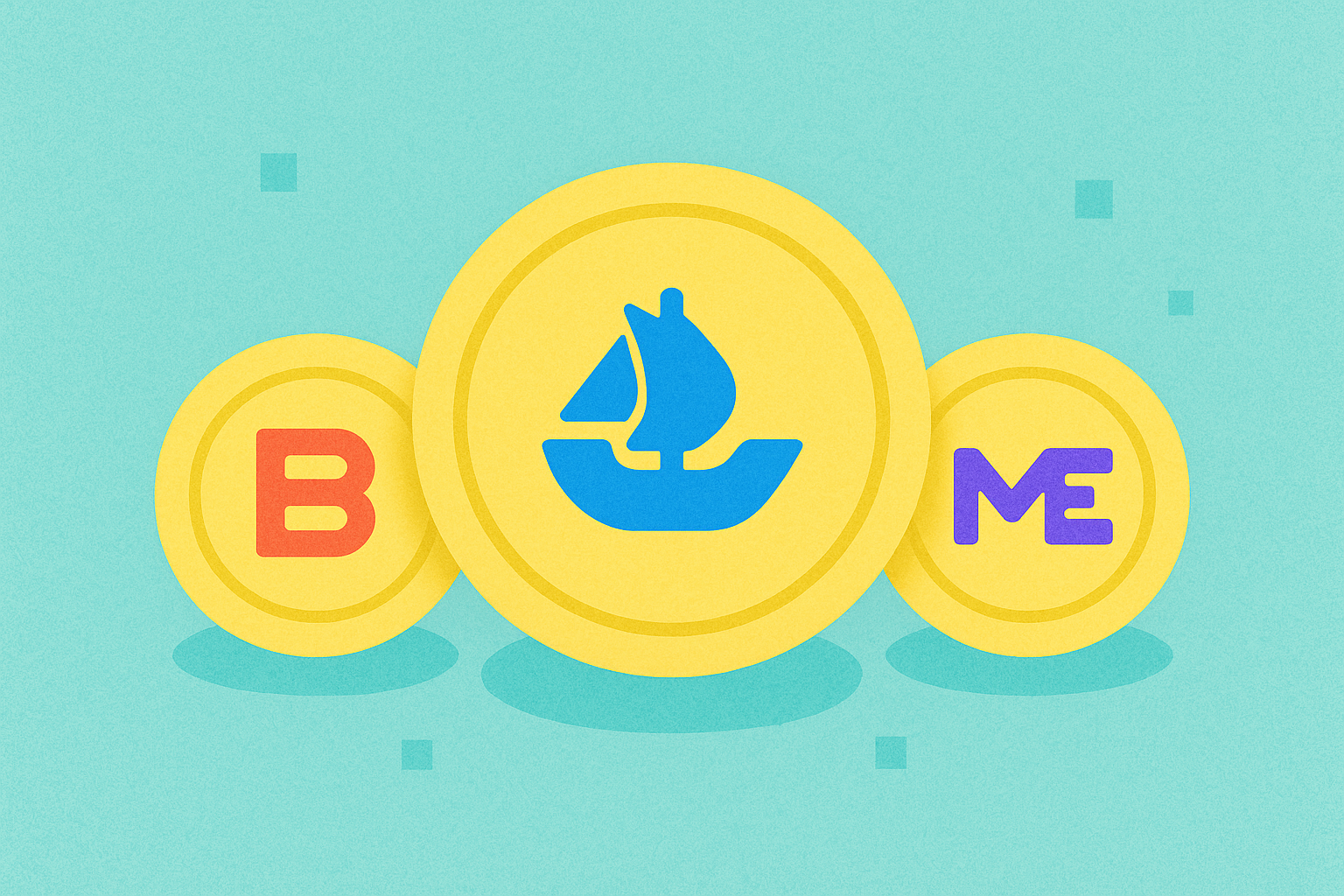
This comprehensive analysis examines OpenSea's commanding $3 billion valuation against Blur ($105M) and Magic Eden ($57M), revealing OpenSea's sustained dominance with 90% market share and $14.68 billion annual trading volume. While Blur captures 58% of Ethereum/EVM volume through zero-fee professional trading tools, and Magic Eden specializes in Solana-based assets, OpenSea maintains leadership via multi-chain breadth and 70% exclusive wallet engagement. The article explores OpenSea's transformative SEA token launch strategy for Q1 2026, allocating 50% supply to community and dedicating platform revenue to token buybacks. Ideal for crypto investors, traders, and NFT enthusiasts seeking strategic market insights on Gate exchange integration and competitive positioning in 2026's evolving digital asset trading landscape.
2026-02-05 09:19:11
How active is the MUon crypto community in 2025: Twitter followers, developer contributions, and DApp ecosystem analysis

How active is the MUon crypto community in 2025: Twitter followers, developer contributions, and DApp ecosystem analysis

This comprehensive analysis examines MUon's community vitality across three critical dimensions in 2025. First, the article evaluates social media engagement patterns, demonstrating strong activity on Twitter and LinkedIn where the community actively participates in project updates and technical discussions. Second, it assesses developer ecosystem growth, highlighting a 42% year-over-year expansion in multi-chain active developers and increased open-source contributions driving sustainable platform adoption. Finally, the piece analyzes DApp ecosystem expansion through transaction volume metrics showing 123% year-over-year growth in Q1 2025, with MuonDVN's expansion across ten chains exemplifying strengthened interoperability. The analysis reveals MUon maintains solid standing within the Layer2 landscape, supported by consistent technical momentum, ecosystem partnerships including AI model integration, and growing token holder liquidity throughout 2025.
2026-02-05 09:16:49
How does on-chain data analysis reveal crypto market trends: active addresses, whale movements, and transaction fees

How does on-chain data analysis reveal crypto market trends: active addresses, whale movements, and transaction fees

This article demonstrates how on-chain data analysis reveals authentic cryptocurrency market trends beyond price movements. It explores three critical metrics: active addresses measure genuine user participation and network health, with rising participation signals preceding volume and volatility increases; whale movements and exchange inflows decode institutional positioning, revealing how large holders strategically accumulate despite market volatility; transaction fees and network metrics, tracked through free tools like CryptoQuant and The Block, predict price reversals by establishing fair value zones. By correlating these metrics—active addresses, whale behavior, and fee patterns—traders construct predictive frameworks that outperform conventional technical analysis for identifying support levels and accumulation phases, offering sophisticated market participants a competitive advantage in interpreting real supply-demand dynamics.
2026-02-05 09:13:55
Are NFTs Obsolete? A Guide to NFT Use Cases

Are NFTs Obsolete? A Guide to NFT Use Cases

Is NFT art truly finished? This in-depth guide examines the reasons behind the market's decline and highlights practical use cases, from community building and local tax initiatives to NFT gaming. We also assess the future prospects of NFTs. If you're considering investing in NFTs on platforms like Gate, this article is a must-read.
2026-02-05 09:13:07
What is SUI token: A complete fundamental analysis of Mysten Labs' high-performance blockchain in 2026

What is SUI token: A complete fundamental analysis of Mysten Labs' high-performance blockchain in 2026

This comprehensive analysis examines SUI token, Mysten Labs' high-performance Layer 1 blockchain, through its technical innovations and market positioning in 2026. The article explores Sui's parallel execution engine achieving 297,000 TPS with sub-500ms confirmation, powered by its object-centric architecture and Move programming language. It covers the thriving ecosystem with $2 billion TVL across DeFi, gaming, and real-world asset tokenization sectors. The roadmap reveals strategic evolution toward a full-stack platform with native stablecoin integration and protocol-level privacy. Led by Meta veterans, Mysten Labs demonstrates institutional expertise in building production-ready infrastructure. Key insights address SUI tokenomics, acquisition methods, competitive advantages, and growth prospects for institutional adoption and mainstream accessibility in the evolving blockchain landscape.
2026-02-05 09:06:48
Who Are Cameron and Tyler Winklevoss? A Profile on the Twins

Who Are Cameron and Tyler Winklevoss? A Profile on the Twins

This comprehensive article explores the remarkable journey of Cameron and Tyler Winklevoss, from their privileged childhood in Connecticut to becoming influential figures in technology and cryptocurrency. The twins' story encompasses their elite education at Harvard, their co-founding of the social networking platform ConnectU, and their legal settlement with Mark Zuckerberg over Facebook's origins, receiving $65 million in compensation. Beyond their athletic achievements as Olympic rowers, the Winklevoss twins leveraged their Facebook settlement to pioneer cryptocurrency adoption, founding Gemini exchange in 2014 as a regulated digital asset platform prioritizing compliance and security. With a combined net worth of approximately $5.4 billion, primarily from Bitcoin investments, they have established themselves as major advocates shaping cryptocurrency policy and infrastructure. The article details their diverse business ventures through Winklevoss Capital Management, philanthropic contributions, and cultura
2026-02-05 08:54:52
What is Bitlayer BTR token: whitepaper logic, use cases, and technical innovation explained

What is Bitlayer BTR token: whitepaper logic, use cases, and technical innovation explained

This article provides a comprehensive analysis of Bitlayer's BTR token within the Bitcoin Layer 2 ecosystem. It explores Bitlayer's Bitcoin-native architecture featuring a trust-minimized BitVM Bridge and high-throughput rollup solutions that address Bitcoin's scalability limitations without introducing new trust assumptions. The BTR token launched at $0.35-$0.50 with an $8.81M market cap and 1 billion maximum supply, positioning Bitlayer as a differentiated Bitcoin DeFi infrastructure solution. Real-world use cases highlight YBTC yield-bearing assets enabling institutional Bitcoin participation, while the development roadmap emphasizes BitVM implementation for enhanced network performance and composability. The article covers token mechanics, governance functionality, and practical adoption pathways on Gate exchange, providing readers with essential insights into Bitlayer's technical innovations and ecosystem value proposition for Bitcoin DeFi advancement.
2026-02-05 08:50:23
What is tokenomics: How do token allocation, inflation mechanics, and governance rights work?

What is tokenomics: How do token allocation, inflation mechanics, and governance rights work?

This comprehensive guide explores tokenomics fundamentals through USDon's 10 billion fixed-supply model, demonstrating how token allocation, inflation mechanics, and governance rights create sustainable crypto ecosystems. The article examines fixed supply architecture across team, investors, and community stakeholders, explaining how predetermined caps prevent unlimited token expansion through collateralization and circuit breakers. It details how burn mechanisms create scarcity while governance voting empowers token holders to collectively oversee treasury management and protocol upgrades. By analyzing inflation-deflation balance and decentralized decision-making frameworks, this guide provides investors and participants with practical assessment criteria for identifying healthy tokenomics models on platforms like Gate. Whether you're evaluating long-term project viability or understanding token value dynamics, this resource clarifies how modern tokenomics design balances community interests with sustainable
2026-02-05 08:46:30
What is a token economics model: allocation mechanisms, inflation design, burn mechanics, and governance utility explained

What is a token economics model: allocation mechanisms, inflation design, burn mechanics, and governance utility explained

This comprehensive guide explores token economics models through four critical pillars illustrated by Aave's successful framework. Token allocation mechanisms prevent single-entity dominance through decentralized distribution—Aave's 16 million fixed supply with 13 million reserved for LEND-to-AAVE migration exemplifies this approach. Inflation design operates via Aave's $50 million annual buyback program, shifting from token emissions to stablecoin-based protocol spending for sustainable economics. Burn mechanics evolved through the Umbrella system, enabling users to stake yield-bearing assets like aUSDC while providing protocol security without continuous token emissions. Governance utility empowers token holders with voting rights and revenue-sharing mechanisms, creating alignment between protocol performance and holder value capture. These mechanisms work synergistically on platforms like Gate to create compelling incentive structures that balance decentralization, sustainability, and long-term token value
2026-02-05 08:43:48