What are the major smart contract vulnerabilities and network security risks in cryptocurrency?

What are the major smart contract vulnerabilities and network security risks in cryptocurrency?

This comprehensive guide examines critical vulnerabilities and security risks threatening cryptocurrency ecosystems. Smart contract vulnerabilities—including reentrancy attacks and logic flaws—represent the primary threat to DeFi platforms, enabling attackers to manipulate fund flows and bypass authorization controls. Network security risks manifest through exchange breaches, with threat actors stealing billions annually through phishing and credential compromise. Centralized custody models create systemic vulnerabilities through key concentration and single points of failure, as demonstrated by major exchange collapses. The article explores how hybrid custody solutions using multiparty computation (MPC) distribute risk across multiple parties, reducing counterparty exposure. Designed for developers, institutional investors, and cryptocurrency traders, this article provides essential security frameworks and best practices for protecting digital assets on Gate and across blockchain networks.
2026-01-09 09:29:47
What is token economics: Understanding distribution mechanisms, inflation design, and burn strategies in crypto tokenomics

What is token economics: Understanding distribution mechanisms, inflation design, and burn strategies in crypto tokenomics

This comprehensive guide explores token economics fundamentals by examining three critical pillars: token distribution architecture that balances team, investor, and community allocations to ensure decentralization and market stability; deflationary mechanisms like smart burn engines that systematically reduce supply and enhance scarcity value; and governance utility systems that transform passive staking into active protocol participation. The article demonstrates how projects like Sky Protocol implement these mechanisms on Gate exchange and beyond, illustrating how transparent vesting schedules, automated burn strategies, and community-driven voting align stakeholder incentives with sustainable long-term value creation. Perfect for investors, developers, and crypto enthusiasts seeking to understand modern tokenomics design principles and evaluate project viability through proven mechanisms that balance inflation control, ecosystem participation, and community trust.
2026-01-09 09:20:14
What is LMWR token and how does LimeWire's ecosystem utility drive its value in 2026?

What is LMWR token and how does LimeWire's ecosystem utility drive its value in 2026?

LMWR is LimeWire's fixed-supply ERC-20 utility token with 633 million maximum tokens, designed to power a comprehensive creator economy ecosystem. The token drives value through three core mechanisms: content access across LimeWire's AI Platform and GPU infrastructure, creator tips enabling direct fan rewards, and governance voting rights for community stakeholders. LMWR enables exclusive content monetization, transparent royalty distributions, and participatory platform decisions. Strategic initiatives including Blocknode's decentralized storage launch and aggressive token burn programs—reducing supply by approximately 18 percent—strengthen long-term scarcity and utility. Available on Gate exchange, LMWR transforms from transactional asset into infrastructure-critical technology anchoring sustainable creator economy growth through circular economic design and real-world ecosystem demand.
2026-01-09 09:02:34
What is token economics model: staking, governance, and burn mechanisms explained

What is token economics model: staking, governance, and burn mechanisms explained

This comprehensive guide explores token economics fundamentals through three interconnected mechanisms. Token distribution architecture balances team, investor, and community allocations to align incentives and ensure ecosystem sustainability. Inflation and deflation dynamics work together through controlled supply growth and token burning to preserve long-term value. Staking and governance frameworks enable participants to secure networks while exercising decision-making power proportional to their holdings. The article addresses critical questions about staking rewards, governance participation, burn mechanisms, and risk management, helping readers understand how these elements work synergistically to maintain network security, fairness, and economic sustainability across blockchain projects on Gate and beyond.
2026-01-09 09:00:32
How active is Taiko's community and ecosystem with over 1.07 million Discord members and strong developer contribution?

How active is Taiko's community and ecosystem with over 1.07 million Discord members and strong developer contribution?

Taiko establishes itself as a dominant force in the Layer 2 ecosystem through multiple community and development dimensions. The protocol boasts over 1.07 million Discord members, representing crypto's largest community hub facilitating rapid feedback loops between developers and users. Strategic airdrop and testnet participation programs drive sustained engagement, transforming community members into active contributors. With 145 monthly active developers, Taiko's innovative Based Rollup architecture and Ethereum-equivalent zkEVM attract technical talent seeking cutting-edge scaling solutions. The DApp ecosystem demonstrates remarkable momentum with TVL reaching $190 million peak and transaction speeds 20-30x faster than Layer 1, validating early adoption momentum. Supported by a $30 million grant program, Taiko successfully combines robust community engagement with genuine technical innovation, positioning itself as the premier destination for developers pursuing scalable blockchain infrastructure on Gate.
2026-01-09 08:58:28
What is crypto token economics model: distribution, inflation, and governance explained

What is crypto token economics model: distribution, inflation, and governance explained

This comprehensive guide explains cryptocurrency token economics models through three critical pillars: distribution, inflation, and governance. Learn how successful projects allocate tokens among team, investors, and community stakeholders—with frameworks like ISLM's 30-20-50 split emphasizing sustainable community engagement. Discover inflation and deflation mechanics, including controlled issuance schedules and fee-based token burning that preserve long-term value. Understand governance rights that empower token holders with voting power and participation incentives, creating authentic protocol participation beyond speculation. Whether you're evaluating tokenomics sustainability or designing a project's economic model, this article covers token supply management, vesting schedules, and mechanisms that balance scarcity with genuine ecosystem utility on Gate exchange and beyond.
2026-01-09 08:07:57
EasyA Hackathon in Hong Kong to Accelerate Blockchain Startups

EasyA Hackathon in Hong Kong to Accelerate Blockchain Startups

Explore the EasyA Hackathon in Hong Kong—the premier blockchain innovation competition for startups and developers. Network with leading Web3 investors, access funding, and build groundbreaking projects. Take advantage of pitching sessions, expert mentorship, and cash prizes for the top blockchain ideas in Asia in 2024.
2026-01-09 06:41:00
Effective TGE Launch Depends on Community and Product Readiness

Effective TGE Launch Depends on Community and Product Readiness

This strategic guide reveals the essential pillars for optimizing Token Generation Event (TGE) success in competitive cryptocurrency markets. Successful TGE launches depend on four interconnected elements: authentic community engagement, mature product demonstration, transparent tokenomics design, and strategic market timing. The article emphasizes building genuine communities over inflated metrics, ensuring working products with real token utility on launch day, and maintaining transparency in token distribution and operations. It explores critical risks of premature launches, including rapid market rejection and irreparable reputational damage, while advocating for patient preparation over rushing arbitrary deadlines. Whether you are a project founder planning your token launch, an investor evaluating TGE opportunities, or a crypto enthusiast understanding market mechanics, this comprehensive guide provides actionable insights to navigate TGE execution strategically and sustainably for long-term success.
2026-01-09 04:35:08
Web3 Projects Thriving Amid Market Downturn

Web3 Projects Thriving Amid Market Downturn

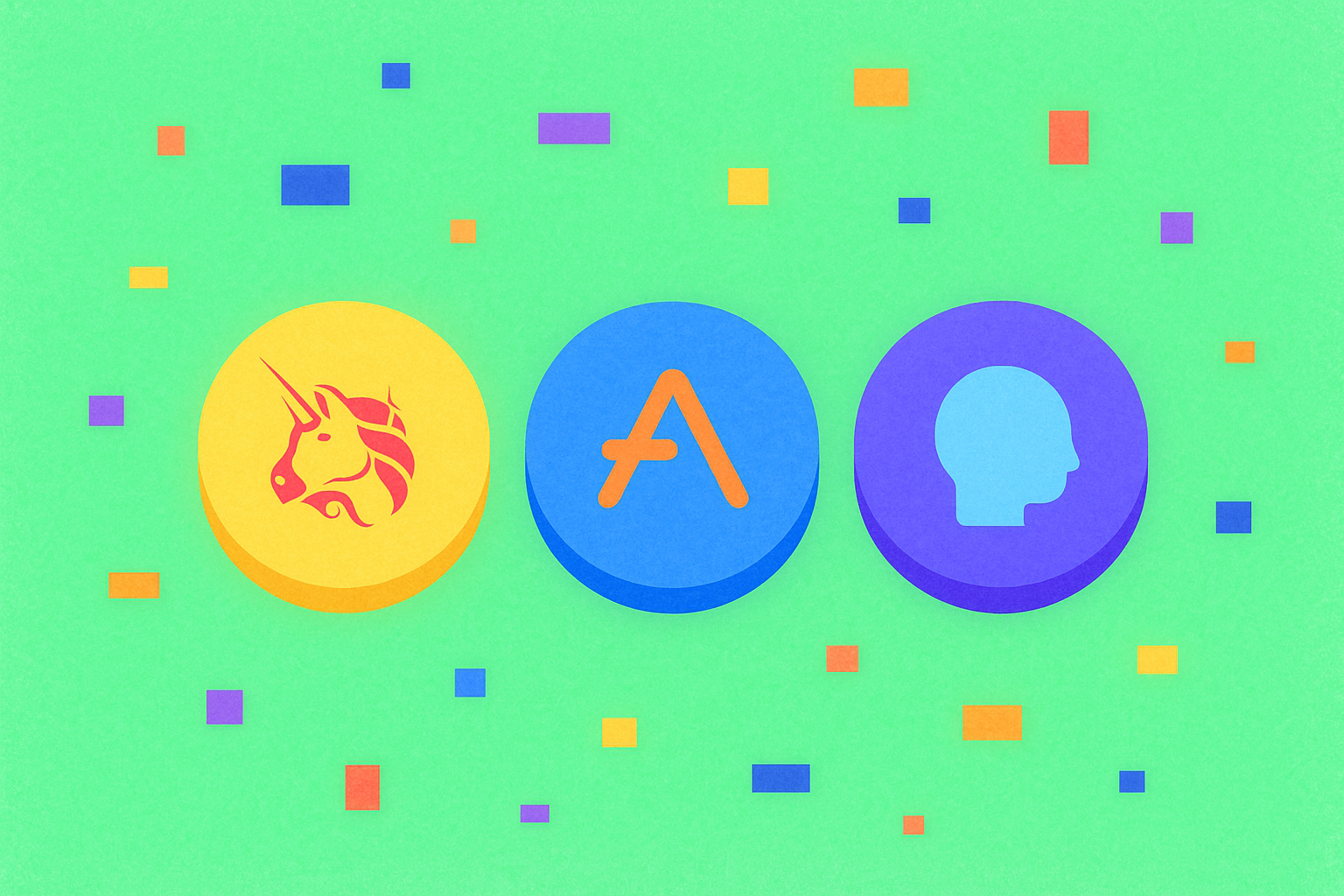
This article explores the growth of decentralized Web3 technologies amid market challenges, examining how certain crypto projects maintain resilience despite reduced liquidity and speculative interest. The analysis identifies three primary categories of thriving Web3 projects: trading platforms leveraging fee-based revenue models through sustained transaction activity; on-chain protocols including perpetual decentralized exchanges and stablecoin issuers that establish complete business cycles; and crypto KOL ecosystems monetizing attention through educational services and community engagement. Successful projects share common characteristics including stable revenue sources independent of token appreciation, reduced dependency on external narratives, strong organic user bases, and disciplined resource allocation. The article demonstrates that blockchain innovation and adoption continue accelerating during downturns, with projects like Uniswap and Aave expanding across multiple chains. By understanding these s
2026-01-09 02:43:59
Cardano Chang Hard Fork: In-Depth Analysis and Impact Assessment

Cardano Chang Hard Fork: In-Depth Analysis and Impact Assessment

A comprehensive look at the Cardano Chang hard fork: examine the fundamentals of hard forks, Cardano’s decentralized governance in the Voltaire era, major technical upgrades—such as boosting transaction speeds to over 1,000 TPS and strengthening security—the DRep (Delegated Representative) mechanism, historical price performance comparisons, and how the Chang hard fork will affect ADA holders and the Cardano ecosystem. Track real-time market trends on platforms like Gate.
2026-01-09 02:08:36
Vitalik Criticizes Web3 Apps Relying on Centralized Services Like Google Login

Vitalik Criticizes Web3 Apps Relying on Centralized Services Like Google Login

This article examines Vitalik Buterin's critical concerns about Web3 applications that contradict decentralization principles by relying on centralized authentication systems like Google login. The piece reveals how this paradox undermines blockchain's core values of user sovereignty and data ownership. It outlines the vulnerabilities introduced by centralized dependencies, including single points of failure and privacy compromises. The article then presents technical solutions for true decentralization, including blockchain-based identity mechanisms, Ethereum Name Service (ENS), and self-sovereign identity frameworks. Finally, it discusses implications for Web3 development, emphasizing the need for clearer standards and architectural alignment with decentralization principles. This guide serves developers, project teams, and crypto stakeholders seeking to build authentic decentralized applications on Gate and other platforms while maintaining ideological consistency with Web3's foundational values.
2026-01-08 21:57:54
Aster DEX Completes $28 Million Phase 4 $ASTER Token Buyback Program

Aster DEX Completes $28 Million Phase 4 $ASTER Token Buyback Program

Aster DEX successfully completed Phase 4 token buyback, acquiring 29.3 million $ASTER tokens for $28 million through protocol fee revenues. The buyback removes tokens from circulation at an average price of $0.95, creating upward supply-demand pressure while demonstrating platform financial health. All transactions are verifiable on-chain via designated wallet, reinforcing transparency and community trust. This initiative reduces circulating supply through burning and locked addresses, benefiting long-term token holders. As a leading decentralized exchange featuring perpetual contracts with up to 1001x leverage and 30%+ APY earning strategies, Aster DEX positions itself for sustained ecosystem growth. The Phase 4 buyback represents ongoing value creation mechanisms and reinforces the platform's commitment to sustainable token economics, though participants should carefully evaluate extreme volatility and high speculation risks associated with the platform.
2026-01-08 20:11:38
Around the Block #3: Analysis of the bZx Attack, DeFi Vulnerabilities, and the State of Crypto Debit Cards

Around the Block #3: Analysis of the bZx Attack, DeFi Vulnerabilities, and the State of Crypto Debit Cards

In-depth analysis of the bZx flash loan attack and its impact on DeFi. Discover how the exploit unfolded, the security weaknesses in decentralized protocols, and the critical lessons for safeguarding the crypto ecosystem against similar threats.
2026-01-08 19:50:42
What Is Stepn (GMT)?

What Is Stepn (GMT)?

STEPN (GMT) is a revolutionary Move-to-Earn mobile application that merges fitness activities with blockchain technology and Web3 innovation. Founded by Jerry Huang and Yawn Rong, the platform incentivizes users to earn Green Metaverse Tokens (GMT) through walking, jogging, and outdoor running while promoting healthy lifestyles. Backed by leading venture capital firms including Sequoia Capital, STEPN operates on an innovative model where users purchase NFT sneakers to participate in real-time activity tracking and reward distribution. The ecosystem features GMT governance tokens and GST utility tokens, enabling users to upgrade sneakers, access premium features, and trade on crypto exchanges including Gate. This comprehensive guide explores STEPN's core functionalities, earning mechanisms, token economics, and investment considerations for fitness-focused blockchain enthusiasts.
2026-01-08 17:57:41
XPLA Token Name Changed to CONX with Unanimous Community Approval

XPLA Token Name Changed to CONX with Unanimous Community Approval

XPLA token successfully rebranded to CONX following an unprecedented community-driven governance process that achieved 100% voter approval, marking a pivotal moment in decentralized decision-making. This rebranding reflects the community's unified vision for the Cultural Fintech Mainnet while maintaining complete technical stability—the blockchain infrastructure, token supply, contract addresses, and tokenomics remain entirely unchanged. Users will experience seamless transition across major exchanges and wallets through automatic backend updates, with no action required and holdings preserved at a 1:1 conversion ratio. The name change is purely cosmetic from an economic perspective, ensuring no dilution or market disruption while potentially strengthening project credibility and opening new partnership opportunities. Supported by Com2uS Holdings and powered by transparent on-chain governance, CONX continues its development roadmap unchanged, positioning the token for sustained growth and institutional adopti
2026-01-08 15:38:33