


What Does Stonks Mean? The Viral Meme From Stocks to Crypto
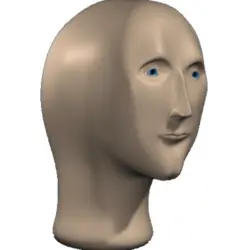
Stonks is an intentional misspelling of “stocks” created in 2017 featuring Meme Man before a growth chart. STONKS memecoin exploded during 2021’s GameStop squeeze when Elon Musk’s “Gamestonk!!” tweet triggered a 157% surge, now satirizing poor financial decisions across crypto and gaming.
What Does Stonks Mean?
Stonks is an Internet meme and humorous slang term for “stocks,” or shares of a company bought, sold, and traded as investments. It is used in several ways: to make fun of financial incompetence or ignorance, in reference to viral meme stocks, or to characterize misguided efforts or comical mistakes.
The term joins many cases of Internet slang (such as smol or thicc) where words are deliberately misspelled or modified for tone, irony, convenience, and group identification. Stonks may be specifically influenced by chonky, Internet slang for an adorably “chunky” animal. This linguistic pattern reflects Internet culture’s playful relationship with language, where intentional errors signal in-group membership and create humor through absurdity.
Stonks carries versatile meanings depending on context. In earnest usage, it simply means “stocks” with a playful tone. More commonly, Stonks appears in ironic jokes about financial losses, miscalculations, or other misdealing, and by extension, about amusing ineptitude or embarrassing failures more generally. In this way, it’s often found standalone or as part of memes in direct replies or comments online.
The Origins of Stonks: From Meme Man to Mainstream
The first usage of Meme Man as recurring character began on Special meme fresh’s Facebook page starting in 2014, soon spreading to become “one of the only consistent stylistic elements” of the surreal memes aesthetic. Meme Man, sometimes called Mr. Succ, is depicted as a 3D render of a smooth, bald, and often disembodied blue-eyed male head. He was popularized in the mid-2010s and became a common character in many surreal memes, a genre of internet humor inspired by surrealism.
On June 5, 2017, Special meme fresh uploaded the image that would define Stonks: Meme Man overlaid on top of a stock photo of a man in a business suit with arms crossed and a chart pointing upwards behind him, captioned “Stonks”—a deliberate misspelling of “stocks.” This image was first posted to Facebook receiving 3,700 reactions, then shared to r/Ooer, a shitposting subreddit, in July 2017. The meme went viral and became a common reaction image on Reddit and Twitter.
In 2018, Stonks made few appearances on YouTube, Imgur, and Reddit. Later in 2019, the meme grew popular on Reddit and started appearing on subreddits such as r/dankmemes and r/memes. It continued growing in popularity and became large mainstream phenomenon, spreading to other platforms like Instagram. The meme remained popular well into 2020, though by then many considered it to have become stale and overused—the inevitable fate of viral Internet phenomena.
Elon Musk and the Stonks Phenomenon
On February 1, 2019, Elon Musk bought the domain name “stankmemes.com” according to his tweet, demonstrating his early engagement with meme culture. In June 2020, when Tesla Inc. shares soared, he tweeted “stonks” and the website featured this meme, introducing Stonks to mainstream financial audiences beyond Internet subcultures.
Elon Musk has used both Meme Man and the Stonks meme as reactions on Twitter multiple times. On January 26, 2021, he tweeted the word “Gamestonk!!” with an attached link to r/wallstreetbets. Immediately afterwards, shares in GameStop rose 157 percent in extended-hours trading, which many linked directly with Musk’s tweet. This moment crystallized Stonks’ transformation from obscure Internet joke to market-moving cultural phenomenon.
On August 27, 2020, a tweet comparing Meme Man to Amazon founder Jeff Bezos went viral, accumulating over 400,000 likes as of July 30, 2021. This comparison elevated Meme Man’s status from anonymous meme character to recognizable icon comparable to actual billionaire entrepreneurs.
Stonks During the 2021 GameStop Short Squeeze
During the 2021 GameStop short squeeze, Meme Man was popularized by users of the subreddit r/wallstreetbets as the face of the Stonks meme. This roguish community of day traders became famous for instigating speculation on so-called meme stocks—stocks, especially of companies considered on the wane, that some traders bet against (sell short), while other traders try to manipulate that position, prompting sudden surges in stock popularity and price.
In January 2021, traders associated with r/wallstreetbets were credited with triggering a surge in GameStop shares’ value. Stonks gained mainstream attention during this viral financial episode, particularly after prominent figures like Elon Musk referenced the term in commentary. The meme became shorthand for the entire phenomenon, with financial news outlets using Stonks imagery in coverage of the short squeeze.
The GameStop event transformed Stonks from niche Internet humor into cultural touchstone recognized across demographics. Suddenly, grandparents asking about “the stonks thing” meant the meme had achieved true mainstream penetration—both a triumph and death sentence for its original counterculture appeal.
How Stonks Is Used in Different Contexts
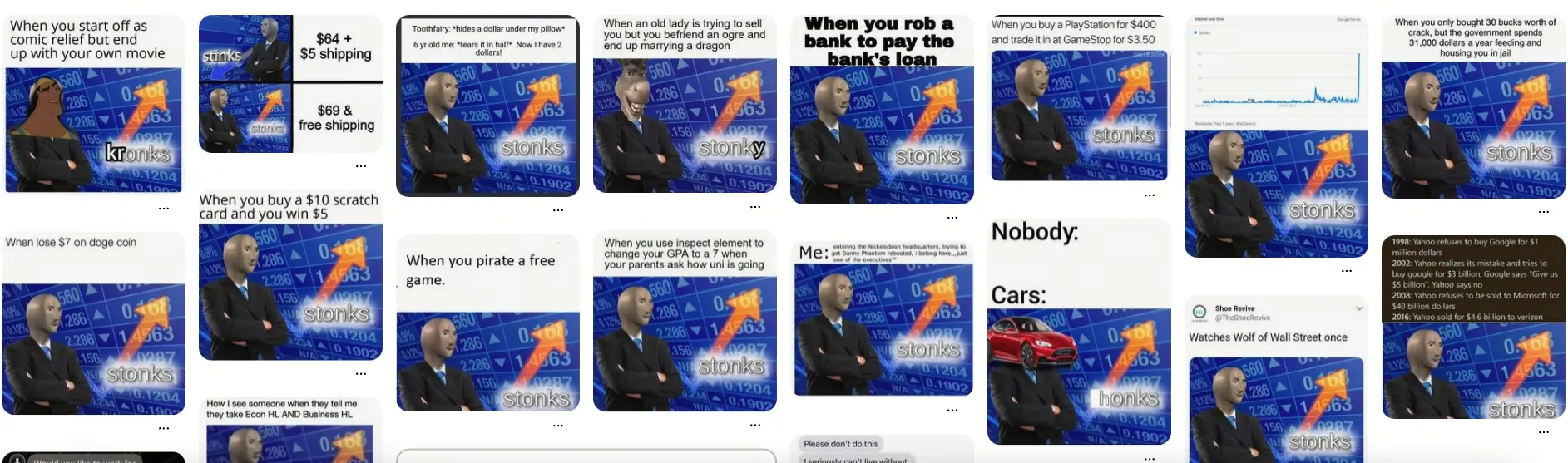
The singular of Stonks is stonk, although the term most commonly appears in plural form. Occasionally, it is used attributively, as in “stonk market.” Especially in informal finance contexts online, Stonks means “stocks,” and can be either earnest or flippant in tone and intent.
Common Stonks Usage Patterns
Making fun of financial incompetence: Posting Stonks memes when someone makes obviously bad investment decisions
Celebrating gains ironically: Using Stonks when small gains mask larger losses or when celebrating modest wins
Meme stock references: Discussing viral stocks like GameStop, AMC, or crypto pumps using Stonks terminology
General failure mockery: Applying Stonks to non-financial situations that go comically wrong
Common variations include “not stonks” (for losses, failures, etc.) and “stonks only go up” (mocking incomprehension of market volatility or the inevitability of downturns). Some uses of Stonks specifically critique capitalism or mock Internet day traders and their subculture, adding political or social commentary layers to ostensibly simple financial humor.
Stonks in Crypto Culture
Stonks transcended traditional stock markets to become crypto community staple. Crypto traders adapted the meme to mock poor trading decisions, celebrate gains (ironically or genuinely), and characterize the market’s absurd volatility. When Bitcoin crashes 30% overnight, crypto Twitter floods with “not stonks” memes. When obscure altcoins pump 1000%, traders spam “stonks only go up” before inevitable crashes.
The term fits crypto culture perfectly because cryptocurrency markets embody the chaos and irrationality Stonks satirizes. Traditional stocks follow some relationship to company fundamentals; crypto often moves on tweets, memes, and pure speculation. Stonks captures this absurdity while allowing participants to laugh at themselves and the ridiculous market they’ve chosen to trade.
Cultural Impact and Mainstream Recognition
In 2021, multiplayer video game Fortnite released a “Diamond Hanz” skin based on Meme Man’s design as an April Fools Day joke. This incorporation into one of the world’s most popular games demonstrated Stonks’ penetration into mainstream youth culture beyond finance-focused communities.
However, mainstream success brought controversy. Many in the Surreal Memes community regard Stonks as “the straw that broke the camel’s back” that finally made Meme Man a dead meme by making him mainstream and overused. For this reason, Stonks is unpopular with people who knew Meme Man before his viral fame—a common pattern where original communities resent mainstream appropriation of their subcultural artifacts.
When Stonks was popular, it became overused quickly. Many consider it a “normie meme,” largely because it’s a reaction image often used with Twitter screenshots. Stonks is now much more widely known than Meme Man or Surreal Memes, causing Meme Man to be called “Stonks Man” or similar variants—erasing his original identity in favor of his most famous appearance.
The Evolution of Financial Meme Language
Stonks represents broader trends in how Internet communities create language for discussing finance. Before Stonks, discussing investments online required either formal financial terminology or lengthy explanations. Stonks provided shorthand capturing entire concepts—foolish optimism, willful ignorance of risk, celebration despite losses—in a single word.
This linguistic efficiency makes memes powerful communication tools. Saying “stonks only go up” conveys more nuance than paragraphs could: it mocks those who don’t understand volatility, satirizes excessive optimism, and signals membership in communities aware of market realities. The irony layers make it sophisticated communication disguised as juvenile humor.
As of 2025, Stonks has evolved beyond its original meaning into versatile financial vocabulary. While some dismiss it as dated, the term persists because it fills linguistic gaps in discussing finance’s absurd aspects. No traditional word captures quite the same blend of optimism, delusion, and self-aware mockery that Stonks embodies.