


XRP triggers the rarest signal of 2022! Glassnode: The inversion of new and old buyer cost basis may trigger a sell-off
XRP On-Chain Structure Reflects 2022 Inversion
Although 71.5% of supply is in profit, realized gains and losses have surged from $5.15 million to $104.2 million, indicating selling at highs. Binance outflows exceed inflows, but selling pressure from top buyers may cause rebounds to stall for months.
XRP Age Layer Inversion Repeats 2022 Structural Trap
 (Source: Glassnode)
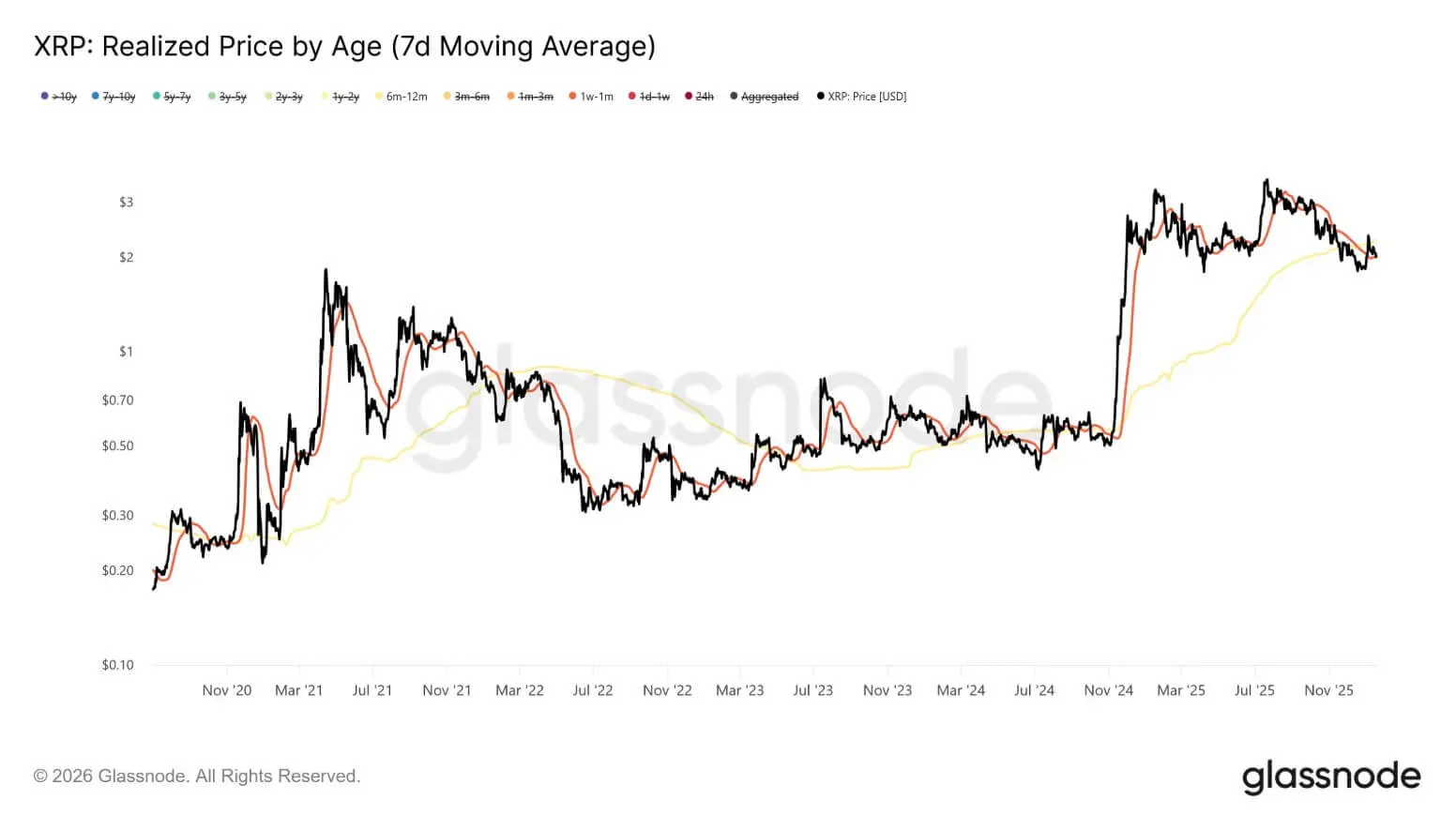
The current on-chain structure of XRP reflects the turbulent period at the beginning of 2022, when short-term accumulation was below long-term price basis, laying the foundation for sideways consolidation. Glassnode pointed out this pattern on January 19: active investors within a 1-week to 1-month window are buying at prices below the realized prices of those holding for 6 to 12 months.
This age layer inversion implies that new buyers’ average entry price is better than that of the “top buyers” before. As this structure persists, the psychological pressure on investors holding unrealized losses intensifies. The cost basis for the 6-12 month group of XRP is higher than the current spot price, creating upward resistance as new buyers accumulate at lower prices. Every rebound could become a fall-back point, turning support into resistance.
The issue isn’t whether pressure exists—pressure definitely exists. The question is whether this pressure translates into actual distribution and whether leverage is sufficient to amplify the next move. Binance reserves have reached July 2024 levels, but the last bottoming rebound experienced months of volatility beforehand. The latest data shows whether tight supply signals an upward trend or merely reduced liquidity during a pullback, which will test the above conclusions.
A similar situation in February 2022 took months to resolve. While XRP’s current structure appears healthy on the surface, it harbors underlying pressure. This indicates that patience will determine the next phase of development. Historical experience shows that once this age layer inversion forms, it often takes months to rebalance.
71% Profit Masking Top Buyer Pressure

(Source: Santiment)
Santiment data shows that as of January 19, 71.5% of XRP supply is in profit, with the token price at $2.01. This places the market in a range typically associated with healthier bull market structures, where most holders are in profit. However, the overall figure masks structural contradictions noted by Glassnode: participants holding for 6 to 12 months have a significantly higher cost basis than recent participants.
Market movements are not based on the overall average but on a multi-layered supply system with different cost bases. When short-term buyers absorb funds from long-term investors, rebounds encounter new selling pressure from those seeking to reduce risk or exit positions that have persisted for months with shaken confidence. When the overall market is already profit-driven, the impact of group reversals becomes more pronounced.
With over 70% of the price increase, upward trends are more likely to face profit-taking and additional selling from top buyers at break-even points. Dual pressures can prevent momentum from building. If major buyers waver, it manifests as realized losses in downtrends and realized gains in rebounds.
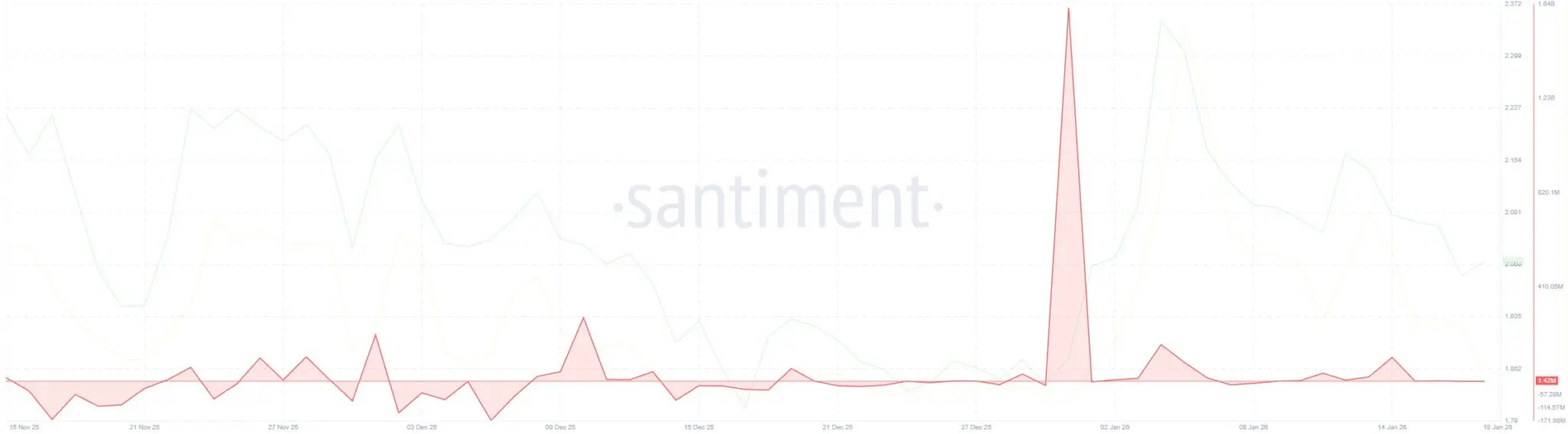
Santiment’s data also confirms this pattern: XRP’s realized profit and loss jumped from $5.15 million on January 12 to $104.2 million on January 14, then fell back to $1.42 million on January 16. This mid-week surge coincided with price fluctuations around $2, reflecting on-chain consumption behavior, as pressured groups transfer tokens to cope with short-term price swings.
Surge in Realized P&L Reveals Selling at Highs
(Source: Santiment)
When realized profits surge during an uptrend while the market structure remains inverted, it is often seen as selling at highs—top buyers exiting. Conversely, when realized losses spike but prices do not hit significant lows, it may indicate market capitulation—last desperate sellers leaving before sentiment shifts. This difference determines whether current prices reflect a bottom or are just a temporary pause before further decline.
Despite group pressure, trading flows confirm accumulated deviations. CryptoQuant data shows that as of January 17, Binance’s XRP exchange reserves stood at 5.55 billion tokens, with daily outflows of 1.1 million XRP, exceeding inflows of 629,500 XRP. Inflows and outflows surged in mid-December, with outflows remaining above inflows until mid-January, indicating net self-preservation flows.
Even with age layer inversion causing oversupply, this net outflow dynamic persists, suggesting new participants are absorbing tokens and transferring them to custody rather than leaving them on exchanges for short-term sale. If these tokens were being sold to clear stagnant supply, inflows would increase during periods of significant realized profits. The current trend of net capital outflows, despite high realized gains and losses, supports a market accumulation signal. Pressure exists but has not yet translated into sustained market sell-off.
Three Paths to Break Through Leverage Reset Limits
CoinGlass data shows that as of January 19, XRP’s open interest is $3.58 billion, with a funding rate of 0.0041%, and a liquidation amount of $42.44 million in the past 24 hours. This pattern indicates that market leverage has been significantly reduced from previous highs, removing speculative positions that drove the October rally. Lower open interest reduces chain liquidation risk, as underwater longs have been cleared. However, it also eliminates the leverage-driven buying that often pushes prices through resistance levels.
Currently, capital input is insufficient, and open interest is moderate, suggesting the market is more likely to oscillate in a sideways pattern dominated by spot trading with slow tug-of-war, with increasing pressure but limited forced liquidity. The next two to six weeks will clarify which scenario prevails.
Three Forward Paths
Constructive Absorption: Continued net outflows, stabilized realized gains/losses, mild financing will confirm absorption and constructive positioning
Selling at Highs: Increasing inflows, soaring realized profits, re-accelerating capital will validate age layer inversion turning into distribution
Capitulation Risk: Increasing inflows, surging realized losses, liquidation waves will signal capitulation-style sell-off risk
If heavily pressured holders see rebounds as their last chance to exit, the situation could change rapidly. XRP is quietly forming a “spring-like” supply structure, but frustrated retail traders are completely ignoring this.
Related Articles
Ripple CTO Emeritus Clarifies Only Way 'Valid' XRP Transaction Can Be Blocked - U.Today
Will XRP price enter the "fourth phase" of an upward structure? The target after the symmetrical triangle breakout directly points to the all-time high
Will XRP price rebound 20% in March? Double bottom pattern + whale return points to a key breakout at $1.70