


Trump's tariffs trigger market crash! Bitcoin plunges 7%, total crypto market cap drops 32% from its peak
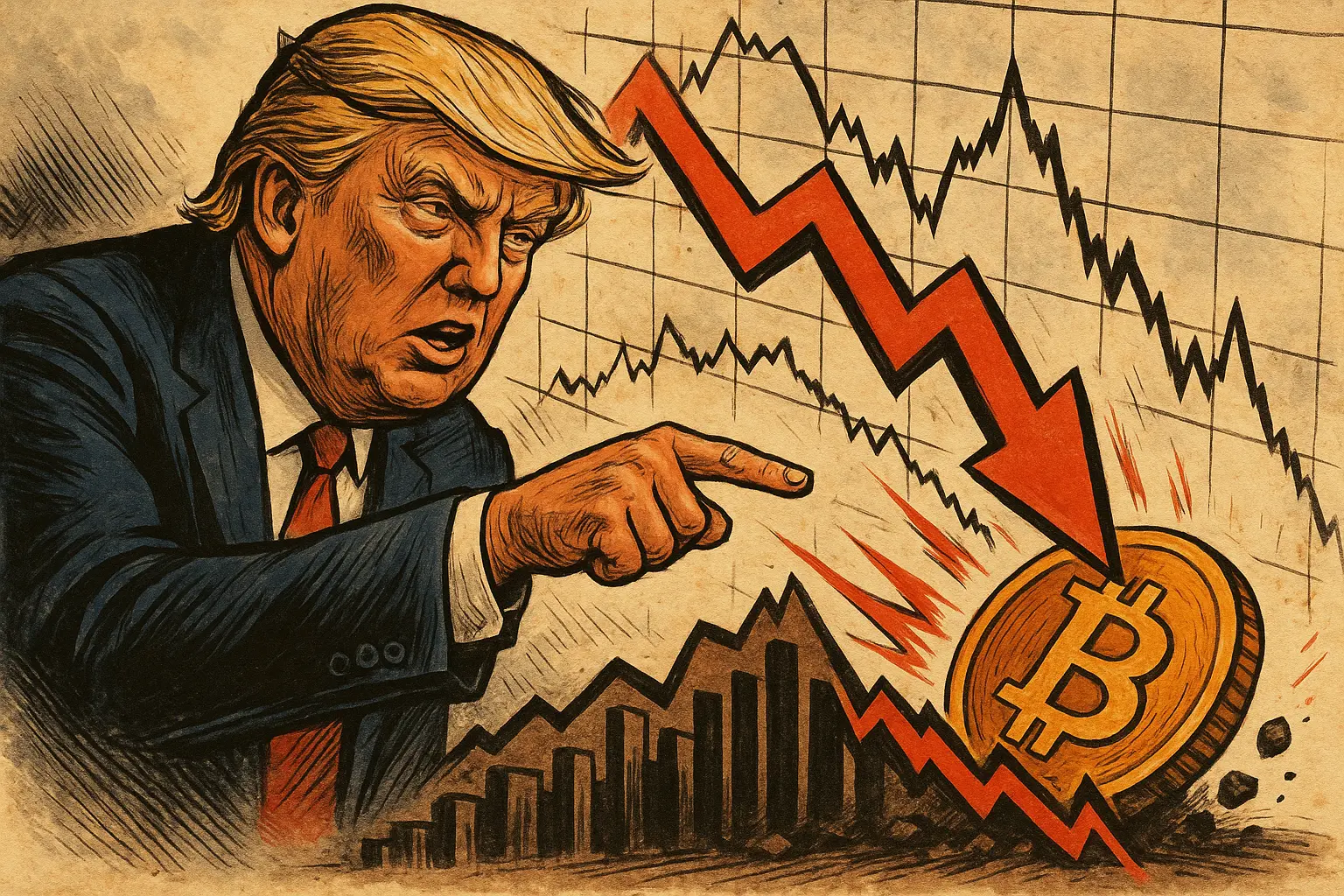
Trump Threatens Tariffs on Eight Countries, BTC Drops 7% to $89,128, ETH to $2,968. Total Crypto Market Cap Falls to $2.71 Trillion (Down 32% from Peak), S&P 500 Down 1.9%, Gold Hits New High. US and Japanese bond yields soar, Dalio warns global financial conflict entering “new phase”.
Trump’s Tariff Threat Sparks Global Market Collapse
After cryptocurrencies and stock markets digested US President Donald Trump’s new round of tariff threats, Bitcoin and Ethereum again fell to their lowest levels in over two weeks. This potential tariff measure is part of the US government’s attempt to persuade Denmark to reconsider control over Greenland. European countries showed little willingness to negotiate, prompting crypto and stock investors to adopt more risk-averse strategies.
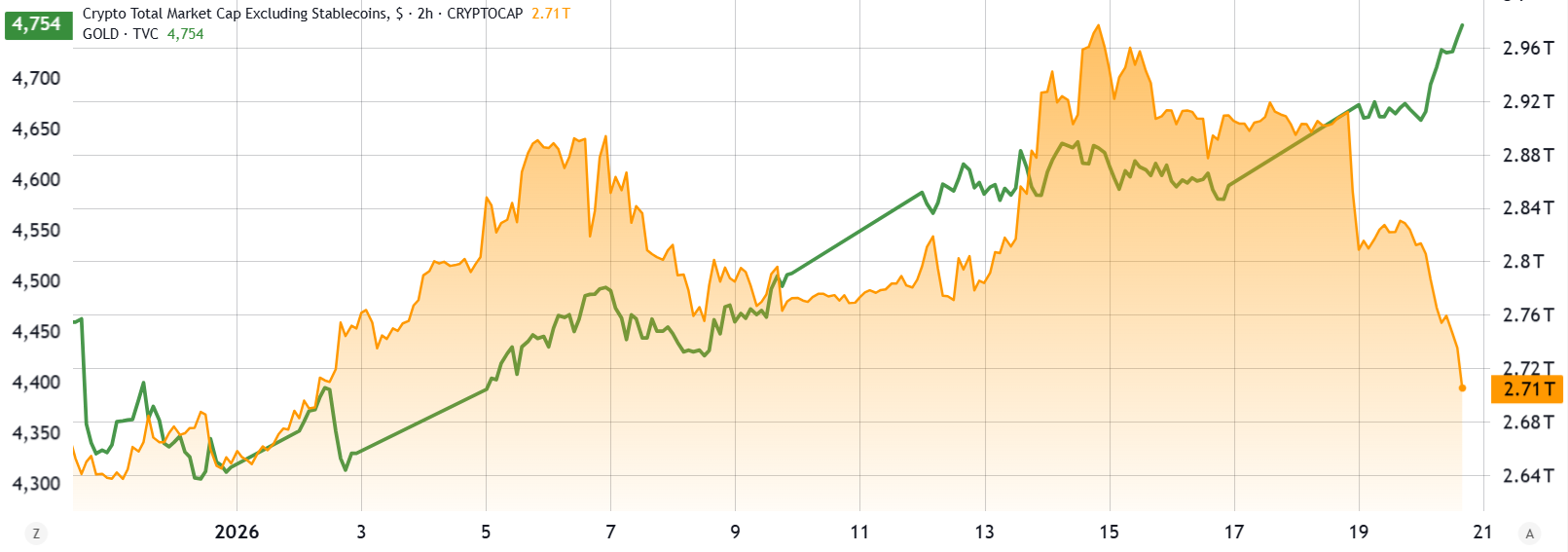
On Tuesday, the S&P 500 declined 1.9%, while gold prices surged to a record high. The total crypto market cap dropped to $2.71 trillion on Tuesday, below nearly $3 trillion last Wednesday. The breadth and depth of this market crash indicate that Trump’s tariff threats not only impacted the crypto market but also triggered a global sell-off of risk assets. The five-year US Treasury yield rose to its highest in nearly six months, a trend often associated with concerns over recession or rising inflation. Investors demand higher returns to hold US debt, signaling waning market confidence.
EU Commission President Ursula von der Leyen warned Tuesday that any response to US threats will be “steadfast, united, and moderate,” intensifying fears of negative sentiment spilling into the stock market. This escalation of geopolitical tensions further fuels panic during the market collapse.
Billionaire investor and hedge fund manager Ray Dalio told CNBC that as foreign governments reassess their risk exposure to US assets amid increasing uncertainty and economic pressure, global financial conflict may be entering a “new phase.” Dalio pointed out that history has seen multiple instances where economic disputes spread from trade to capital flows. He has previously expressed concerns over declining confidence in the dollar.
Gold and Silver Surge, Cryptocurrencies as Losers
(Source: Trading View)
While this backdrop seems favorable for those viewing cryptocurrencies as an alternative monetary system, so far silver has performed the best, rising 64% since December last year. The market value of this precious metal has climbed to $5.3 trillion. The total crypto market cap has fallen 32% from its all-time high in October 2025, performing far worse than traditional safe-haven assets.
Bitcoin, with a market cap of $1.8 trillion, ranks as the eighth-largest tradable asset globally, but competitors like TSMC (TSMC US) and Saudi Aramco (2222 SR) are rapidly closing the gap. Ethereum’s position appears more fragile, with a market cap of only $360 billion, ranked 42nd after being surpassed by Home Depot (HD US) and Netflix (NFLX). These shifts in market cap rankings show that during market crashes, funds tend to flow toward companies with actual earnings or traditional safe assets rather than digital assets.
Gold hit a historic high on Monday amid escalating geopolitical tensions, contrasting sharply with Bitcoin’s performance. Bitcoin has long been promoted as “digital gold,” theoretically providing a safe haven during geopolitical crises. However, market performance shows that during this Trump tariff-induced market collapse, Bitcoin behaved more like a risk asset than a safe haven. This divergence warrants investor reflection.
The astonishing 64% rise in silver further highlights the relative weakness of cryptocurrencies. Traditional precious metals remain the preferred safe-haven during turbulence, indicating that Bitcoin still has a long way to go before replacing gold and silver as the globally recognized safe assets. The $5.3 trillion silver market vastly exceeds Bitcoin’s $1.8 trillion, reflecting the acceptance gap between traditional and emerging safe assets.
Japanese Bond Contagion Triggers Global Bond Market Turmoil
(Source: Trading View)
As major central banks face rising debt issuance costs, investors’ focus shifts to macroeconomic risks. According to the Financial Times, Japan, the world’s fourth-largest economy, is expected to hold early elections, potentially empowering Prime Minister Fumio Kishida to accelerate stimulus measures. Japan’s public debt exceeds 200% of GDP.
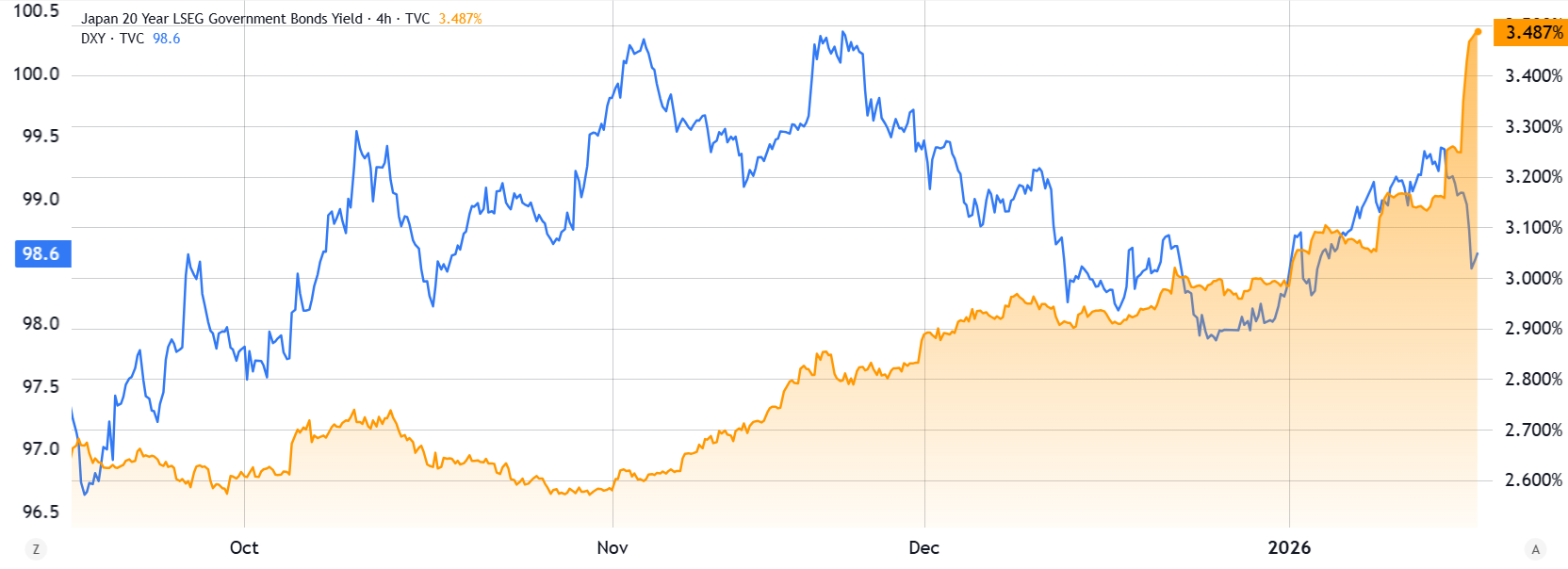
On Tuesday, the 20-year Japanese government bond yield soared to a record high. A report from TD Securities states that this wave has spread to the US, UK, Canada, and other markets, issuing a warning to heavily indebted countries: “If fiscal credibility is lost, bond markets could turn sharply.” This bond market turbulence has multi-layered impacts on the crypto market.
First, rising bond yields mean higher risk-free rates, reducing the relative attractiveness of risk assets. When investors can earn higher yields from US Treasuries, their motivation to allocate funds to volatile assets like Bitcoin diminishes. Second, bond market turmoil often signals liquidity tightening; as institutional investors face losses on bond holdings, they may be forced to sell other assets, including cryptocurrencies, to raise liquidity.
Deeper concerns are that if major countries’ bond markets spiral out of control, it could trigger a global credit crunch similar to the 2008 financial crisis. In such extreme scenarios, all risk assets could face indiscriminate sell-offs, and Bitcoin would not be immune. TD Securities’ warning that “if fiscal credibility is lost, bond markets could turn sharply” points to this tail risk.
Market Collapse: Survival and Opportunities
How should investors respond to the market collapse triggered by Trump’s tariffs? Based on smart money behavior, they are buying against the panic. Data from Santiment shows that smart money accumulated $3.2 billion worth of Bitcoin over 9 days, indicating professional investors see this market crash as a buying opportunity rather than a signal to exit.
However, ordinary investors should recognize that smart money has greater risk tolerance and longer investment horizons. For retail investors with limited capital, maintaining liquidity, avoiding over-leverage, is more important than blindly bottom-fishing. The Fear & Greed Index reading of 32 indicates extreme fear, but this does not necessarily mean prices have bottomed.
From a macro perspective, the uncertainty around Trump’s tariff policies could persist for months. Dalio’s “new phase” of global financial conflict suggests markets may experience prolonged volatility and adjustments before finding a new equilibrium. In such an environment, staggered position building, strict stop-losses, and patience are wiser strategies than chasing short-term rebounds.
While the current market collapse is painful, it also offers long-term investors a rare opportunity. Bitcoin has fallen from above $100,000 to $89,000, providing a better entry point for those who missed earlier gains. The key is to judge whether this is a temporary correction or a trend reversal.