


Philippine crypto kidnapping case! $400,000 forcibly transferred, threats to harvest organs and sell in Cambodia
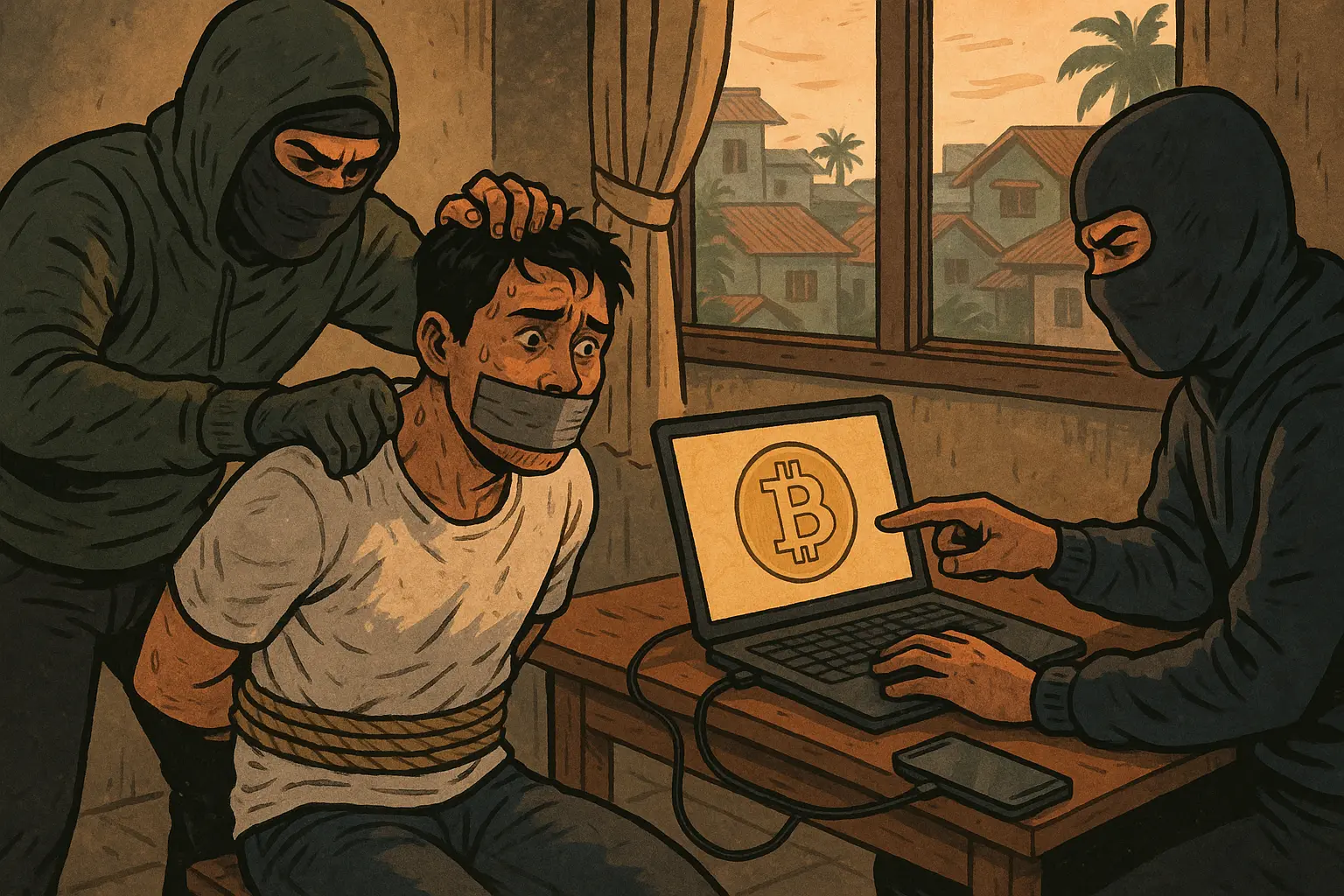
January 16, the Philippine police rescued a kidnapped Chinese citizen. Four Chinese criminals broke into his apartment with knives, claiming the victim owed “1 million USD,” forcing him to transfer about 400,000 USD worth of cryptocurrency and handing over 14,000 USD in cash, threatening to remove organs or sell him to Cambodia if he did not cooperate. This is the standard pattern of “cryptocurrency kidnapping” that has been frequently occurring in Southeast Asia over the past two years, targeting Chinese crypto professionals, OTC traders, and capital intermediaries.
Knives drawn, apartment invaded, 400,000 USD crypto forcibly transferred
On January 20, according to ChainThink citing ABS-CBN News, Philippine Pasay City police rescued a kidnapped Chinese citizen on January 16. This is a typical “cryptocurrency kidnapping case.” The victim lived near R. Hidalgo Street in Manila. On that day, four Chinese criminals broke into his apartment, used knives to control him, claiming he owed “1 million USD,” and forced him to transfer about 400,000 USD in cryptocurrency and hand over 14,000 USD in cash.
Even more shocking are the kidnappers’ threats. The kidnappers explicitly stated: if he did not cooperate, they would remove his organs or sell him to Cambodia. This is no longer ordinary extortion but a standard transnational organized crime pattern. Organ removal threats are not empty talk in Southeast Asia’s underground crime networks; black market organ trading has long existed in the region, and Cambodia is notorious for scam zones and human trafficking.
Fortunately, during detention, the victim took advantage of guard laxity to send a distress message to friends. The police quickly intervened and successfully rescued him. However, whether the 400,000 USD in cryptocurrency can be recovered and whether all four kidnappers will be caught remain unclear. The case is still under further investigation, but it once again exposes the severe security risks faced by cryptocurrency holders in Southeast Asia.
The characteristics of cryptocurrency make it an ideal target for kidnapping crimes. Once transferred, transactions are irreversible, difficult to trace through mixing services or multiple transfers. Compared to traditional ransom cash payments, cryptocurrency can be transferred across borders within minutes, allowing kidnappers to obtain funds without face-to-face contact, greatly reducing the risk of arrest.
Standard Southeast Asian crypto kidnapping pattern, Chinese people as primary targets
Over the past two years, similar kidnapping cases have frequently appeared in Southeast Asia, with highly consistent targets: Chinese, especially crypto professionals, OTC traders, capital intermediaries, and those who have disclosed asset scales or transaction records on social media or within industry circles. These individuals often hold large amounts of cryptocurrency, operate in legal gray areas, are reluctant to report crimes, and thus become ideal targets for criminal groups.
OTC (over-the-counter) traders are especially at risk. They provide crypto-to-fiat exchange services for clients, handle large transaction volumes, and often hold substantial funds. To build trust and attract clients, some OTC traders display transaction records or asset scales on social media, which is essentially an invitation to criminals. Once targeted, criminal groups will investigate the target’s activity patterns, residence, and social circle in detail, planning kidnapping operations meticulously.
Five standardized steps in the modus operandi
Targeting: Investigate the asset scale and activity patterns of Chinese crypto professionals, OTC traders, and capital intermediaries.
Approach: Pretend to be business partners or creditors to arrange meetings under the guise of debt repayment or cooperation discussions.
Control: Use knives or violence to restrict personal freedom, usually at the victim’s residence or control zone.
Forcing transfer: Coerce the victim to open crypto wallets and transfer funds, often accompanied by beating or extreme threats.
Threatening to kill: Detain for several days to ensure the safe transfer of funds, threaten organ removal or selling to Cambodia to prevent reporting.
Countries like the Philippines, Thailand, Cambodia, and Malaysia, due to lax regulation and uneven law enforcement, have become hotspots for such crimes. Especially in major cities like Manila and Bangkok, large Chinese communities and active crypto activities provide abundant targets for criminal groups.
The three key features of cryptocurrency as perfect tools for kidnapping crimes
Cryptocurrency happens to be the most “convenient” tool for kidnapping—irreversible, hard to trace, and fast across borders. Once transferred, it is nearly impossible to recover. These three features make it far superior to traditional cash or bank transfers in the eyes of criminals.
Irreversibility is the biggest advantage. Traditional bank transfers can be frozen or reversed upon detection of anomalies, but blockchain transactions are permanently recorded once confirmed and cannot be reversed. Even if victims report immediately after release, the stolen funds have often been transferred multiple times, washed through mixing services, decentralized exchanges, or cross-chain bridges.
Difficulty in tracing further reduces the difficulty of solving cases. Although blockchain transactions are transparent, wallet addresses are not forcibly linked to real identities. Criminals can use multiple anonymous wallets for layered transfers or use privacy coins like Monero to obscure fund flows. Even law enforcement tracking some addresses still requires significant technical resources and international cooperation to connect them to specific individuals.
Cross-border transfer speed is the third major advantage. In traditional kidnapping cases, ransom delivery is the most dangerous link, often targeted by police traps. But with cryptocurrency, funds can be transferred from Manila to Dubai or from Thailand to Russia within minutes, without the kidnappers needing to appear at the transaction scene. This contactless transaction greatly reduces risk and makes such cases much harder to solve than traditional kidnappings.
Worse, some Southeast Asian law enforcement agencies have limited capacity to handle crypto crimes. Many police are unfamiliar with blockchain technology and cannot effectively trace fund flows. Even if suspects are caught, stolen funds are often already converted into other assets or withdrawn, making recovery difficult for victims.
Crypto industry survival tips: stay low-profile, avoid exposure, don’t trust easily
A simple reminder to everyone in the industry: in the crypto world, owning assets also means bearing all risks alone. Don’t show off wealth, don’t expose addresses, don’t trust “familiar partners” easily; being overseas, safety always outweighs gains. Because once targeted, what you lose may be more than just money.
The primary principle is discretion. Avoid flaunting transaction records, holdings, or profit screenshots on social media. Even within industry groups, refrain from revealing specific asset scales. Some practitioners display large transactions to build reputation or attract clients, which is essentially inviting trouble. Remember, in crypto, anonymity is your best protection.
Physical security is equally important. In high-risk regions like Southeast Asia, avoid fixed routines and activity routes, and do not easily disclose residence addresses. When meeting strangers for business, choose public places and inform trusted friends. Some practitioners hire private security or live in gated communities; these measures, though costly, can significantly enhance safety.
Technical protection cannot be overlooked. Use multi-signature wallets, hardware wallets, or disperse large assets across multiple wallets to prevent complete control by a single entity. Set daily transfer limits to restrict losses if threatened. Regularly change wallet addresses to avoid long-term use of the same address for large transactions. Some professionals also use “decoy wallets” holding small amounts, with main assets stored in hidden wallets.
Be vigilant against social engineering attacks. Criminal groups often impersonate business partners, old clients, or investors to approach targets. Be suspicious of any invitations involving large transactions, verify identities through multiple channels. Pay special attention to proposals emphasizing “urgent time” or “limited opportunity,” as these are often signs of scams or kidnapping plots.