Oops Panda and the Rise of "Living Memes": Why the Next Generation Web3 IP is Not "Issued" but "Cultivated"
Web3 Project Oops Panda proposes an innovative IP development model, advocating that Meme should be “cultivated” like living beings rather than traditionally “issued.”
(Background: Oops Panda: From a crash to a “living Meme”—building a growing Meme life form on-chain)
(Additional context: CZ loudly warns “Don’t blindly buy memes with the same name as my tweets,” which is likely to result in losses!)
(This article is a promotional piece provided by Oops Panda and does not represent the stance of Dongqu, nor is it investment, purchase, or sale advice. Please see the disclaimer at the end of the article.)
In consumer culture, truly long-lasting IPs often do not start with technology but from a sense of “anticipation.”
The reason why blind boxes and designer toys remain popular is based on a simple yet powerful logic: people are not just buying an object, but a moment of discovering the unknown, and a process where characters gradually become meaningful over time.
Oops Panda is exactly bringing this logic into the Web3 space.
It is not just a gimmick, nor a superficial layer added on top of blockchain, but a foundational design philosophy.
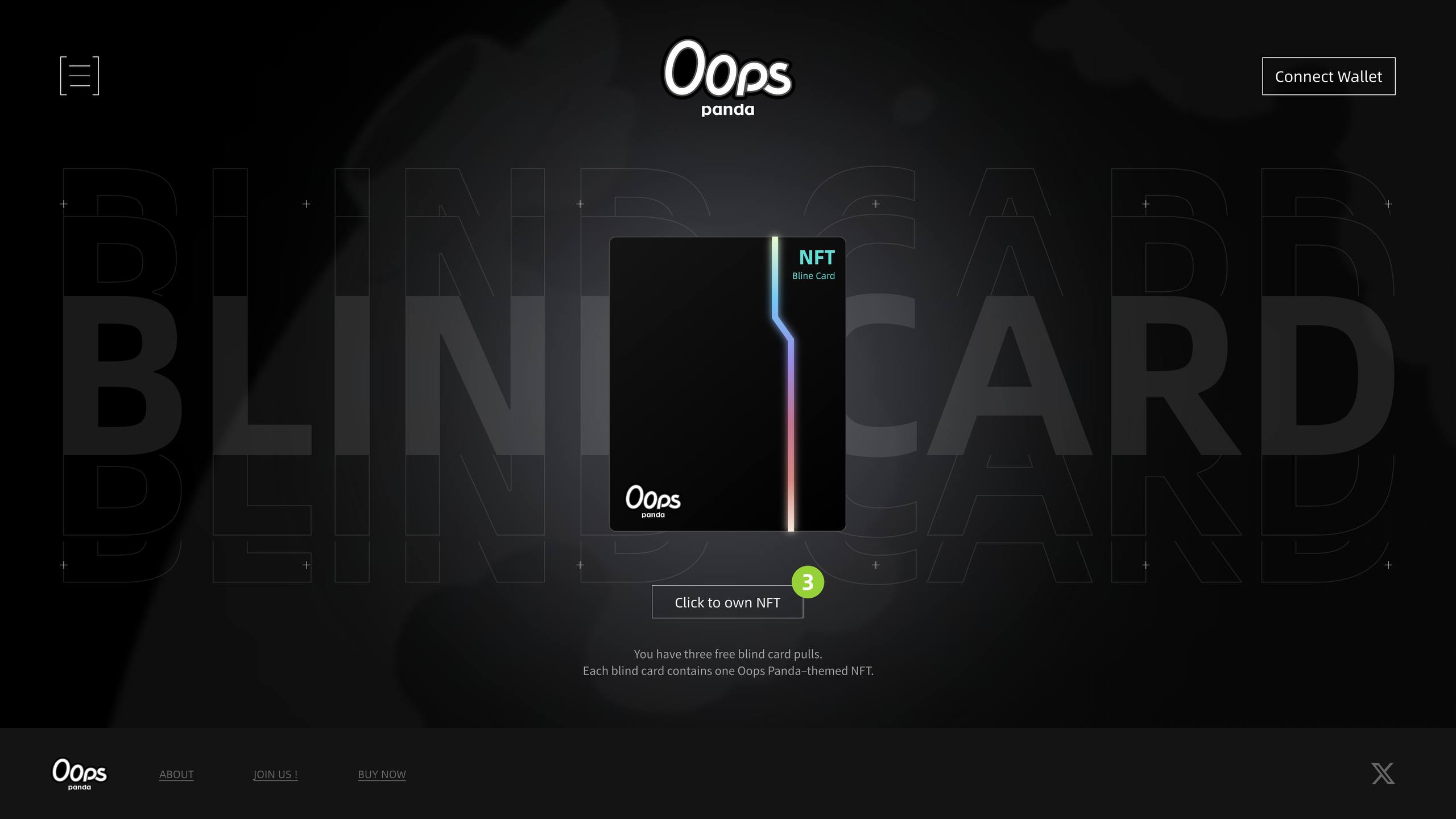
At first glance, Oops Panda appears in a familiar and friendly way: a world view centered around characters, gradually unfolding. Like opening a blind box, the initial interaction is not about “collecting,” but about curiosity.
But Oops Panda does not stop at collection.
Unlike traditional blind boxes that emphasize “ownership,” Oops Panda focuses more on “what continues to happen.” Characters are not fixed images but will grow through ongoing interactions, changing in emotional, narrative, and symbolic meanings.
Therefore, Oops Panda is not about “what you got,” but about “what you are participating in.”
Essentially, Oops Panda is more like a designer toy ecosystem for the Web3 era. Just as Pop Mart developed physical toys into long-term operating character IPs, Oops Panda explores: when ownership, participation, and storytelling can all be programmed, how will characters grow?
The project deliberately does not define a complete answer from the start. Characters enter the world in an unfinished state, stories are broken into segments, and meanings are layered. This is not poor planning but an invitation.
The emotional connection between participants and characters does not come from instant satisfaction but from long-term accumulation. Over time, the depth of characters depends on how the community interacts with them and co-shapes their trajectory.
Oops Panda is more like an ongoing process rather than a one-time release. New content is not unlocked through passive consumption but gradually revealed through collective participation.
Here, opening a blind box is no longer the climax but the beginning of a relationship.
At the same time, Oops Panda avoids many common issues of Web3 collectibles. It does not rely on artificially created scarcity, nor does it maintain hype through frequent releases, but emphasizes “anticipation” and “continuity.”
Its value is primarily emotional, followed by asset value. Ownership means there is still the unknown in the future; participation means influence can be exerted.
This is the common trait of successful contemporary IPs: they make people look forward to them.
Oops Panda is attempting to rebuild this sense of anticipation on-chain.
By embedding character growth, narrative progression, and participation signals into the system architecture, the project leaves traces of every interaction. Characters will “remember,” the world will change, and meanings will accumulate.
If blind box culture represents character experiences in the offline consumption era, then what Oops Panda explores is the next step of blind box logic in the Web3 context.
The box has been opened.
But the story has just begun.
Promotional disclaimer: This content is a promotional article provided by the contributor, with no relation to Dongqu, and does not represent Dongqu’s position. This is not intended to provide any investment, asset, or legal advice, nor should it be considered an offer to buy, sell, or hold assets. Any services, plans, or tools mentioned in this promotional content are for reference only, and the actual content or rules are subject to the issuer’s announcements or explanations. Dongqu is not responsible for any potential risks or losses, and readers are advised to conduct careful due diligence before making any decisions or actions.