


Kingdom of Bhutan deploys Sei validators! Holding $1 billion BTC embraces tokenization
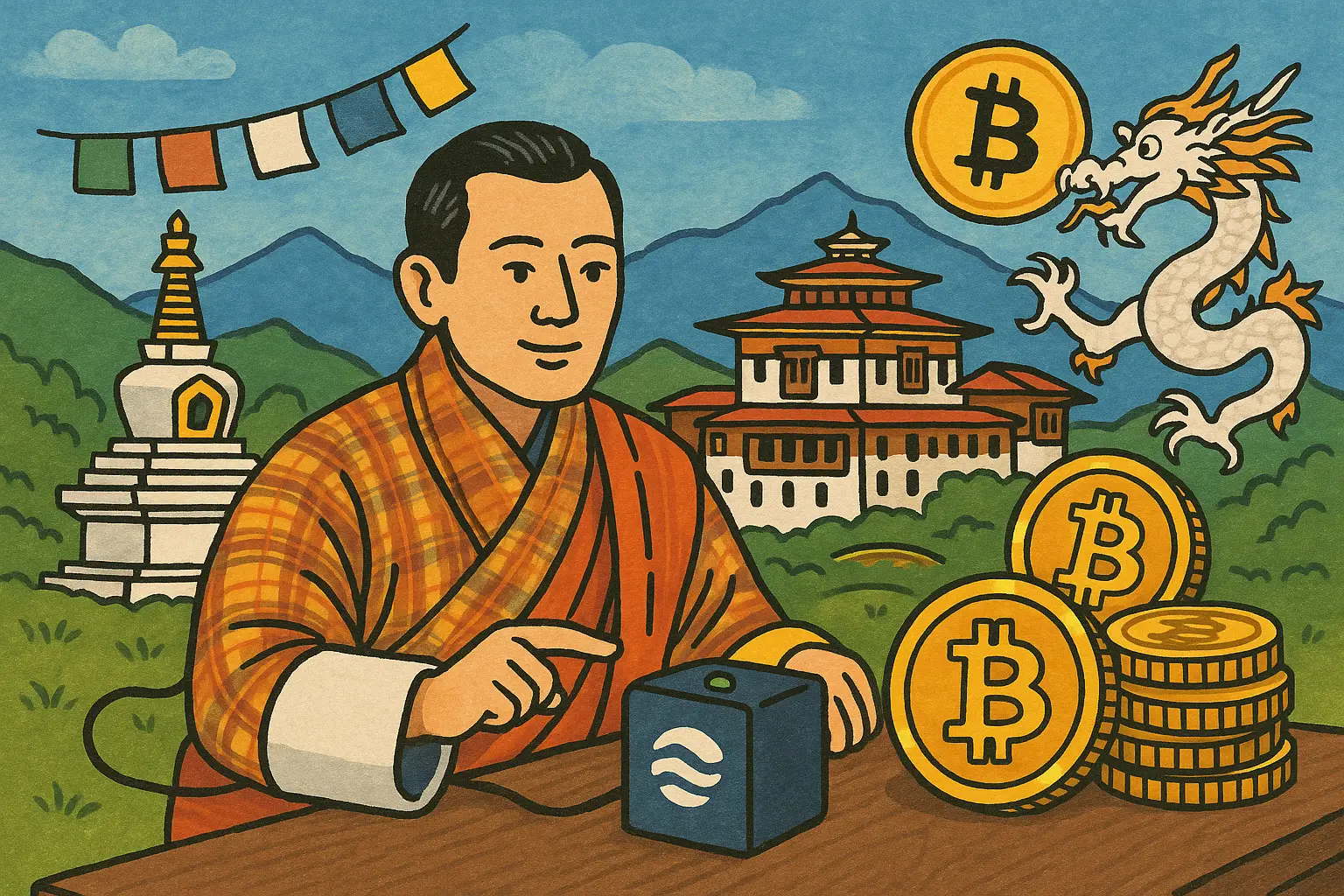
Bhutan’s first season deployment of Sei validators, in collaboration with the sovereign wealth fund DHI and the Sei Foundation, will explore tokenization. Holding 11,286 BTC (worth over $1 billion), Bhutan is the fifth-largest reserve holder globally, with some used to build the Glep Meditation City. The country has operated mining businesses and launched Ethereum-based identity services for 800,000 residents.
Bhutan Sovereign Wealth Fund DHI Launches Sei Validator
The Kingdom of Bhutan plans to deploy and operate Sei Network validators in the first quarter, marking the latest initiative in the country’s digital transformation. The validators will be launched through a partnership between the Sei Development Foundation and Druk Holding and Investments (DHI) technical department—DHI is Bhutan’s main sovereign wealth fund and holding company. Such a national-level sovereign fund directly participating in blockchain infrastructure development is extremely rare worldwide.
Phuntsho Namgay, head of the Innovation and Technology Department at DHI, stated that as part of its digital transformation goals, the fund plans to continue exploring other collaboration opportunities with the Sei Foundation. “This partnership marks an exciting step for Bhutan in strengthening its role in global blockchain innovation, while also opening new avenues for data valuation, scientific progress, and fintech.”
Validators are a key component of proof-of-stake networks; they help secure the network, validate transactions and blocks, and can vote on protocol upgrades. By running a Sei validator, Bhutan not only participates in blockchain network governance but also earns staking rewards as a continuous income source. For a small country with a population of only 800,000, this passive income is modest but symbolically significant—it represents Bhutan’s strategic attempt to gain influence in the global digital economy.
Eleanor Davies, head of Science and Innovation at the Sei Foundation, said that future projects and collaborations with Bhutan may include tokenization. She stated, “Our partnership is a significant investment in national blockchain applications, further expanding Sei’s global validator influence and laying the groundwork for future collaborations in payments, tokenization, and personal identity verification.” This multi-dimensional cooperation framework shows that Sei validators are just the beginning; tokenization remains the core goal of Bhutan’s digital strategy.
Cryptocurrency Ambitions of the Fifth Largest Bitcoin Reserve Country
In recent years, Bhutan has quietly become a leader in cryptocurrency applications. The country also holds the fifth-largest Bitcoin reserve globally, mostly from mining. Bitbo estimates that Bhutan holds about 11,286 BTC, valued at over $1 billion, with some allocated for building its special administrative region—Glep Meditation City. The United States holds the largest Bitcoin reserves, with Bhutan ranking fifth.
This ranking is extremely rare among national Bitcoin holdings. Countries ahead of Bhutan include the US, China (seized but not sold Bitcoin), the UK, and Ukraine—large economies far surpassing Bhutan. Bhutan’s ability to rank in the top five is mainly due to its unique strategy of using abundant hydropower resources for green Bitcoin mining. Located in the Himalayas, Bhutan has plentiful hydropower, resulting in very low electricity costs and 100% renewable energy.
As part of its blockchain-based initiatives, nearly 800,000 Bhutanese residents can verify their identities and access government services through an Ethereum-driven autonomous identity system. This nationwide blockchain identity system is also a leading practice globally. Traditional identity verification relies on centralized databases, which pose single points of failure and privacy risks. The Ethereum-based autonomous identity system allows residents to truly own and control their identity data, with government and enterprises needing authorization to access it.
The Glep Meditation City project further exemplifies Bhutan’s ambition to combine crypto assets with the real economy. This special administrative region will use blockchain technology for city management, digitizing everything from land registration to public services. Some Bitcoin reserves are allocated for this project, demonstrating that Bhutan does not merely hoard coins but views crypto assets as strategic resources for national development.
Tokenization Collaboration Opens New Paths in Payments and Fintech
Projects in payments and tokenization may be the next development focus. Eleanor Davies, head of Science and Innovation at the Sei Foundation, said that future collaborations with Bhutan could include tokenization. “Our partnership is a significant investment in national blockchain applications, further expanding Sei’s global validator influence and laying the groundwork for future collaborations in payments, tokenization, and personal identity verification.”
Tokenization has broad application scenarios in Bhutan. As a country that relies heavily on tourism, Bhutan could tokenize travel quotas, cultural heritage, or even carbon emission allowances for trading. The country’s “high-value, low-impact” tourism policy requires visitors to pay high sustainable development fees. Tokenizing these quotas could create a transparent and efficient global trading market.
Fintech collaborations are also strategically important. Bhutan’s banking penetration is relatively low, but smartphone adoption is high. Blockchain-based payment systems can bypass traditional banking infrastructure to directly provide financial services to residents. Sei Network, known for its speed and low costs, is well-suited for small-value payments. If successfully deployed, Bhutan could become one of the first countries to fully adopt blockchain payments.
Bhutan is not the only country or institution eager to become a validator. Increasingly, companies are also running validators. Deutsche Telekom, a partially state-owned enterprise, has launched validators on multiple blockchains, including Injective in February 2022, Polygon in June 2023, and Celo in June 2021. Meanwhile, Google Cloud became a core validator on the Cronos blockchain in November.
This trend indicates that running blockchain validators is shifting from hobbyist activity to institutional-level strategic deployment. For enterprises and countries, operating a validator not only yields staking rewards but also allows participation in emerging digital infrastructure, protocol governance, and influencing technological development. As a small country, Bhutan is seeking its unique position in the global digital economy through validator operation and tokenization development.