


Bank of Italy Governor: Commercial bank money will be digitized, but stablecoins will not replace traditional currency
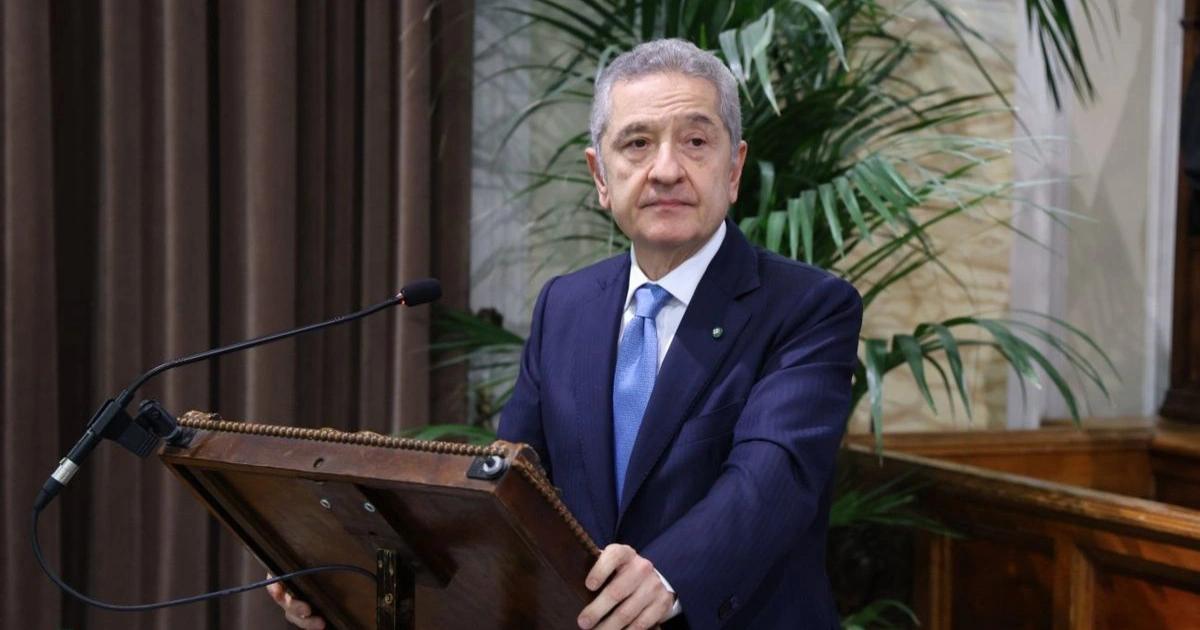
The European Central Bank senior officials have explicitly stated that commercial bank money will be fully digitalized, co-constructing a two-tier system alongside central bank currency. Stablecoins will only serve a supplementary role, with the digital euro targeted for launch in 2029.
Commercial bank money will be fully digitalized, supporting the system together with central bank currency
Senior officials in European monetary policy have once again signaled a clear stance on “the future of digital currency.” Fabio Panetta, President of the Bank of Italy and one of the core policymakers of the European Central Bank, recently stated during an executive committee meeting of the Italian Banking Association that commercial bank money is destined to become fully digital in the future and will serve as a stable pillar alongside central bank currency within the monetary system.
According to Reuters, Panetta said that “as cash usage gradually declines, whether it is currency issued by the central bank or deposit-type money provided by commercial banks, both must exist in digital form to ensure consistency in reliability, security, and convertibility of the financial system.” He emphasized that this “two-tier monetary system” will remain the core design of Europe’s financial order, rather than being dominated by privately issued cryptocurrencies.
Stablecoins only play a supporting role, their value still constrained by traditional currencies
Regarding the development of stablecoins, which has attracted market attention, Panetta’s stance is relatively conservative. He straightforwardly stated that while stablecoins will continue to grow, they are unlikely to become the mainstay of the financial system. The fundamental reason is that the value of stablecoins ultimately depends heavily on the fiat currency they are anchored to. In other words, stablecoins themselves do not possess the capacity to independently support the entire economy and can only serve as a supplementary tool to the existing monetary system.
This view also echoes Italy’s central bank’s consistent cautious attitude. In September 2025, Chiara Scotti, Vice Governor of the Bank of Italy, warned that “multi-issued stablecoins” issued across multiple jurisdictions but linked under the same brand could pose systemic risks to the European Union in terms of legal, operational, and financial stability.
She believes that “without regulation and strict reserve and redemption requirements equivalent to EU standards, cross-border stablecoins could weaken the existing supervisory framework.” Nonetheless, officials acknowledge that stablecoins do have practical value in reducing transaction costs and improving payment efficiency.
Payments and digital finance become strategic core, Europe accelerates digital euro progress
Panetta also pointed out that, against the backdrop of escalating geopolitical and technological competition, payment systems have evolved from simple financial services to strategic battlegrounds for the banking industry.
He observed that traditional economic variables such as investment, trade, and interest rates are increasingly influenced by political decision-making rather than solely by market forces. This makes digital financial infrastructure a critical line of defense for Europe in the global economic competition.
To ensure monetary sovereignty and the central role of central bank currency, the European Central Bank is pushing forward the digital euro project, aiming for an official launch in 2029. The plan seeks to make the digital euro possess attributes similar to cash, including free usage, broad inclusiveness, and high privacy protection. Panetta also admitted that some banks are concerned about the impact on existing payment businesses, but he challenged the industry by asking whether it is better to worry about losing a small market share or to recognize the current dominance of non-European payment giants over most transaction flows.
Overall, the latest statements from European Central Bank officials clearly outline a policy direction: the digitization of currency will be led by the central bank and commercial banks, while stablecoins and other private sector digital assets will only serve as auxiliary roles within the existing system, not replacing it.
This article is compiled by Crypto Agent from various sources, reviewed and edited by “Crypto City.” It is still in the training phase and may contain logical biases or informational errors. The content is for reference only and should not be considered investment advice.