Author: Climber, CryptoPulse Labs
The New York Stock Exchange (NYSE) headquarters is located at 18 Broad Street, New York City, New York, on the south side of the Wall Street bend.
It is also the center of global financial trading, having birthed countless talented traders. It has also inspired many films and TV series, such as “Wall Street,” “The Big Short,” “The Wolf of Wall Street,” “Barbarians at the Gate”…
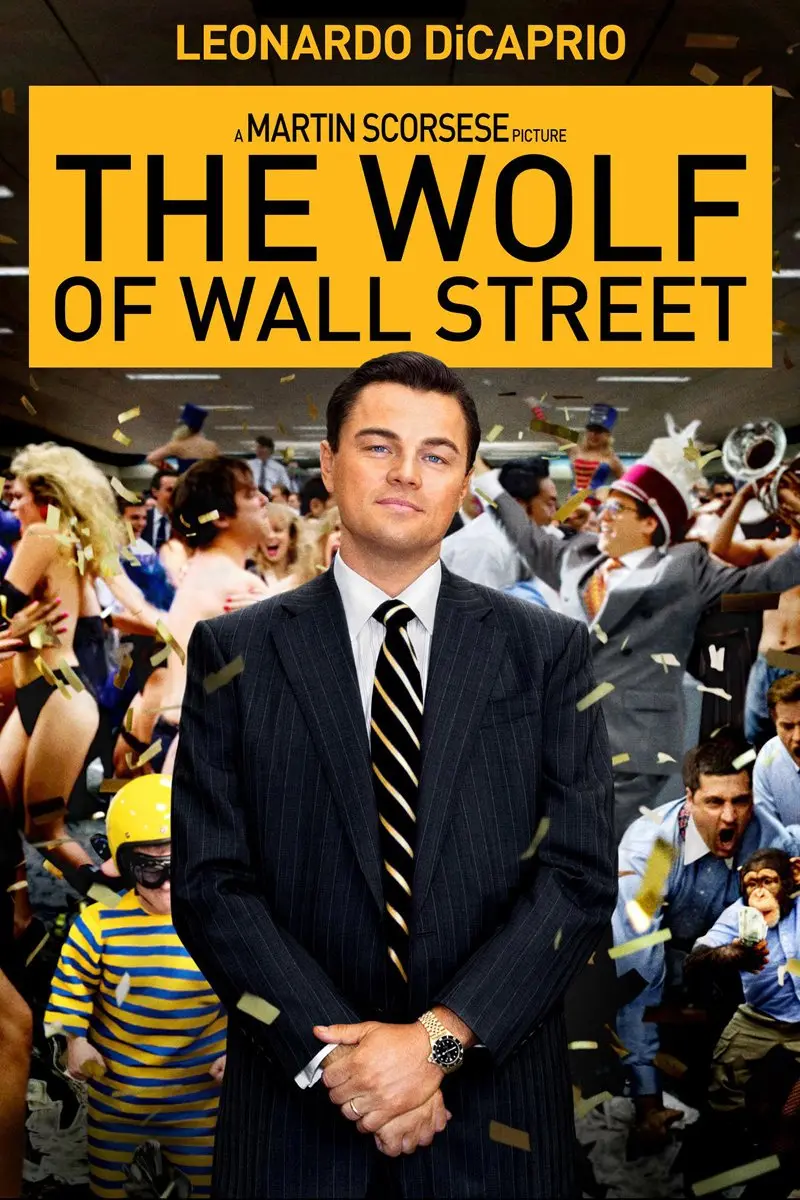
Founded in 1792, NYSE has grown to become the world’s largest stock exchange. Aside from weekends and regular market holidays, NYSE’s trading hours are from 9:30 AM to 4:00 PM. This has led many traders and investors to wonder why the exchange can’t open a few more hours to earn more money.
But it is precisely the strict regulation and system of the exchange that has allowed around 2,400 companies worldwide to list here, maintaining its position as the largest stock exchange globally for many years.
By the end of last year, the total market capitalization of the entire U.S. stock market was estimated at about $67.8 trillion, but the total market cap of companies listed on NYSE alone was about $44.7 trillion, accounting for over 65%!
Additionally, out of 30 companies in the Dow Jones Industrial Average, 24 are listed on NYSE. This highlights its long history and importance.
Today, NYSE’s parent company is attempting to launch a brand-new digital trading platform: allowing tokenized securities, 24/7 on-chain settlement trading, and stablecoin deposits and withdrawals, pending regulatory approval.
Why is NYSE doing this? Is it just a gimmick or a new blueprint? Let’s open its 230-plus-year history and perhaps find some inspiration for the next wave of transformation.
1. Origins: From Street Trading to Systematic Foundations
Going back to 1792, just 16 years after the Declaration of Independence was issued.
At that time, 24 stockbrokers gathered under a sycamore tree on Wall Street in New York and signed the “Buttonwood Agreement.”
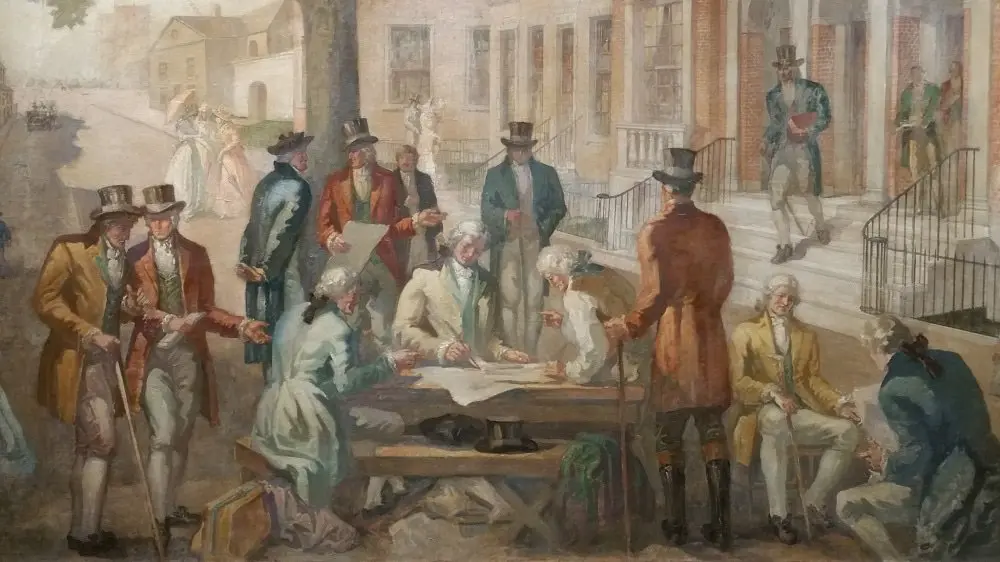
The core of the agreement was not to establish a stock exchange but to set up a league trading rules. For example, prioritizing mutual trading among brokers, standardizing commissions, avoiding vicious competition, and expulsion for breach of rules.
Its essence is somewhat like a monopoly and self-regulating credit union, very similar to today’s DeFi whitelist and node consensus logic.
So, this was an early private matchmaking trading method, and signing the agreement under the sycamore tree was not for ceremonial purposes but mainly because they lacked the funds to rent a fixed trading venue.
At that time, trading usually took place in cafes, on the streets, or under trees. When the weather in New York was bad, trading would halt, so traders, like farmers, had to “read the sky” — trading volume would drop significantly on rainy days.
This private club-style trading method became the starting point of the world’s most powerful stock exchange system today.
2. The Industrial Wave: Rapid Capital Growth
With the advent of the industrial age, NYSE gradually became the hub of American capital.
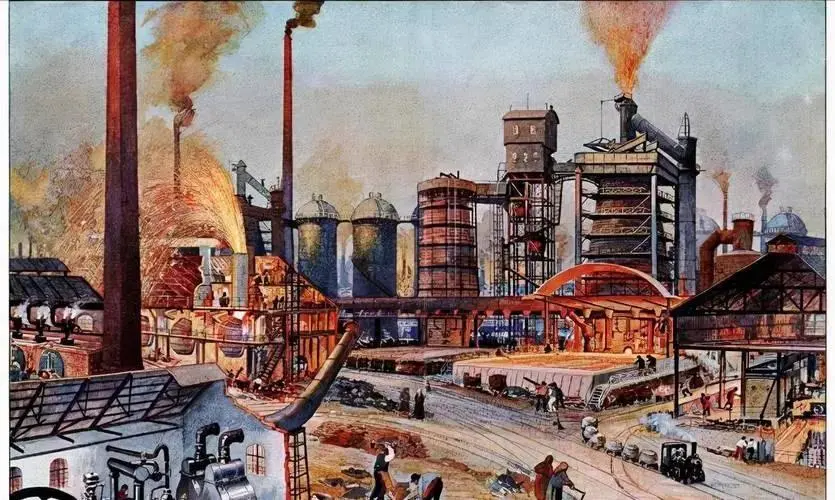
This period roughly spans from 1860 to 1914, just before World War I.
The Industrial Revolution directly fueled the wave of companies going public, with industries like railroads, steel, oil, and electricity generating massive financing needs. Iconic companies founded during this time include Standard Oil, U.S. Steel, General Electric, and others.
However, during this period, the exchange also underwent institutional reforms, such as introducing fixed trading hours, clarifying listing rules, and establishing the “Open Outcry” trading system.
But this made the trading floor resemble a “fight scene,” and before electronic trading, NYSE was mainly a market relying on loud voices.
Brokers shouted prices, gestures were more important than words, pushing and shouting were routine, and some even damaged their voices permanently. There were rumors that some brokers ate raw eggs in advance to protect their voices.
Thus, during this period, although trading methods were still relatively “primitive,” NYSE played the role of the “heart” of American industrial capital, continuously fueling the progress of industrial civilization and modern society.
At the same time, the prosperity brought by the industrial revolution also established NYSE’s position as a world financial center, where countless wealth myths unfolded and ordinary investors realized their wealth dreams. Everything seemed to be heading toward a bright future, with paradise just ahead.
3. The Great Depression: NYSE is “Rebuilt”
After World War I, the U.S. became the world’s factory and financial center. Rapid economic growth led the public into the stock trading era, with stocks becoming common in middle-class families. Newspapers, cafes, barbershops all recommended stocks, and stocks were seen as a safe savings instrument.
During this period, leverage was rampant; investors could buy large amounts of stocks with only 10% margin. Banks, brokerages, and trust institutions also lowered barriers, providing funding support.
The U.S. experienced the so-called “Roaring Twenties,” with Irving Fisher even claiming “stock prices have established themselves on eternal high ground,” which was a typical “financial bubble illusion.”
In 1929, the Great Depression struck, marking the most severe global economic downturn before World War II.
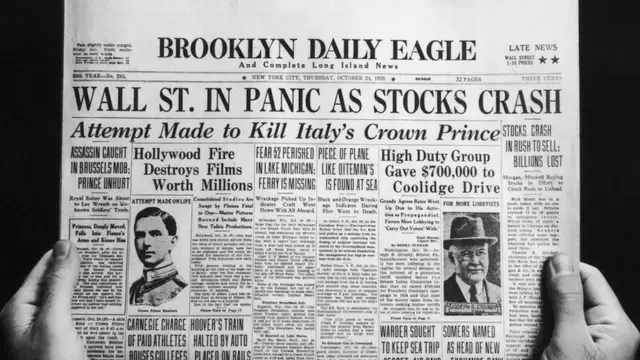
That year also saw the most serious stock market crash in U.S. history, giving rise to painful Wall Street terms like “Black Thursday,” “Black Friday,” “Black Monday,” and “Black Tuesday.”
NYSE became the central stage for the bursting of the financial bubble and panic amplification. On the day of the crash, some people jumped out of buildings, and NYSE subsequently installed protective barriers.
The crash exposed issues like insider trading and market manipulation, severely damaging NYSE’s credibility.
U.S. regulators had to undertake structural reforms of the financial system, such as the 1933 Securities Act requiring mandatory disclosure, the establishment of the SEC in 1934 to regulate NYSE, and the separation of commercial banks and investment banks.
As a result, NYSE truly transformed from a “casino” into a “regulated capital market,” becoming a national-level financial infrastructure.
4. The Information Revolution: Digital Technology in the Global Era
Entering the 1980s, rapid development of electronic information technology and the intensifying wave of globalization.
At this time, NYSE still adhered to the manual market maker system, but the increasing trading volume and scale could no longer keep up with the old system.
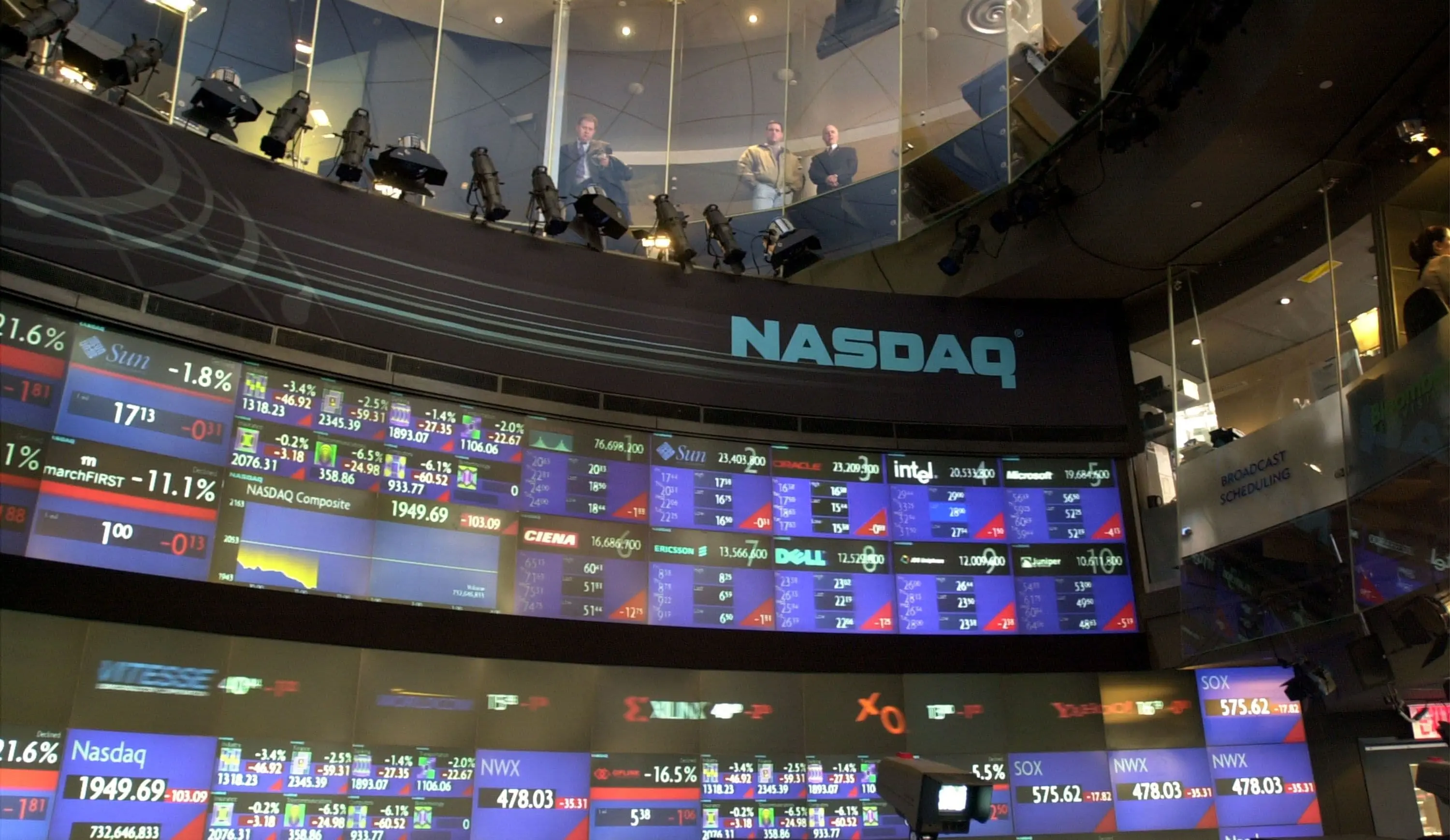
Slow trading speeds, high costs, and incompatibility with high-frequency and algorithmic trading created opportunities for NASDAQ’s rise. NYSE first felt the threat of being “disrupted.”
With the influx of international capital and more foreign companies seeking U.S. listings, NYSE urgently needed to transform and find new breakthroughs.
Soon after, NYSE began implementing electronic trading services comprehensively and transformed from a member-based system into a joint-stock company, eventually becoming part of many listed companies.
Later, to better develop, NYSE merged with Euronext and moved toward internationalization.
In 2013, NYSE was acquired by Intercontinental Exchange (ICE), becoming a core asset under ICE.
Despite multiple ownership changes, NYSE’s technology, derivatives, and clearing capabilities were significantly enhanced. It no longer is just a stock trading hall but a comprehensive platform integrating financial infrastructure, data, clearing, and regulatory compliance.
5. Digital Transformation: On-Chain Finance and Tokenization
The 2008 subprime mortgage crisis swept the globe, shaking trust in sovereign currencies and governments, leading to the emergence of Bitcoin.
Over the following decades, blockchain technology rapidly developed, and the crypto industry flourished. Despite facing various suppressions, mainstream finance increasingly accepted this emerging market.

Today, the rise of crypto assets, stablecoins, and RWA (Real World Assets on-chain) continues to challenge traditional financial systems and trading methods. Traditional financial institutions are gradually realizing that blockchain industry should not be completely abandoned or eliminated but tamed and integrated.
With a history of over 230 years, NYSE has repeatedly embraced technological waves—be it the Industrial Revolution, the Tech Revolution, the Digital Revolution, or the AI Revolution—never choosing to ignore or withdraw. The current crypto era is no different.
Therefore, NYSE has chosen a strategic shift, actively exploring new trading systems like stock tokenization, on-chain settlement, and 24/7 trading, with closer and more compliant ties to regulatory authorities.
Conclusion
The NYSE’s development into the world’s largest exchange is not solely a result of financial market evolution but a synthesis of American national strength, industrial expansion, regulatory capacity, and technological progress.
Every upgrade of NYSE is driven by a survival crisis. Each upgrade also makes it more competitive, solidifying its dominance among global exchanges.
This time, NYSE is determined to turn blockchain into Wall Street’s new underlying clearing technology. The goal remains the same: to reconstruct the traditional stock model and keep the global capital order firmly in its hands.


