
MicroStrategy announced its Q4 earnings on February 5, marking $76,000 as a pivotal point on its balance sheet. The company holds 713,502 BTC, with an average cost of $76,052 per Bitcoin, which previously resulted in a paper loss exceeding $1 billion during the Bitcoin crash. Jim Cramer has urged the company to issue bonds to stabilize the market, while Michael Burry, the archetype of “The Big Short,” warned of a wave of bankruptcies.
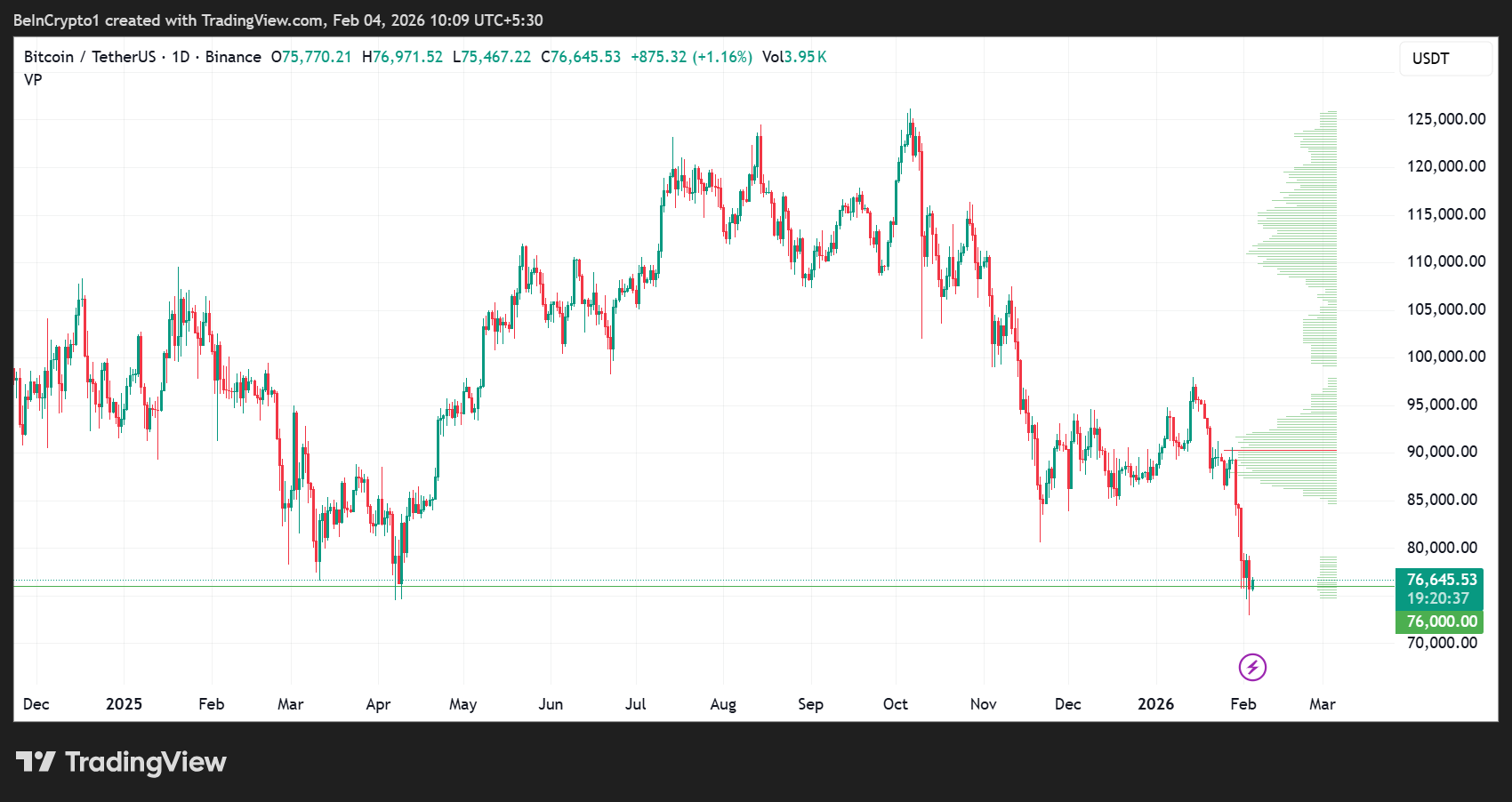
$76,052 shifts from a technical level to a balance sheet turning point
(Source: TradingView)
MicroStrategy will release its Q4 2025 financial report after the market closes on February 5, making it difficult for Bitcoin to stay above the $76,000 level. This is not just a technical battle. The price of Bitcoin now directly influences the company’s profit expectations, investor sentiment, and the credibility of its leveraged Bitcoin treasury model.
As of February 4, the Bitcoin price was $76,645, after briefly dropping to an intraday low of $72,945 the previous trading day. This movement has brought Bitcoin’s price close to the average purchase cost of the 713,502 BTC held by MicroStrategy at $76,052. Therefore, $76,000 has become a balance sheet turning point, not merely another price level on a chart.
Under the fair value accounting standards adopted in 2025, MicroStrategy must value its Bitcoin holdings quarterly at market value, with unrealized gains and losses recognized directly in earnings. Although the Q4 results will reflect higher Bitcoin prices in December (when Bitcoin traded above $80,000 most of the quarter), ongoing weak profitability may dominate the discussion.
At current levels, MicroStrategy’s Bitcoin holdings are essentially at breakeven. However, if Bitcoin prices continue to fall below $76,000, the company will face significant unrealized losses. Recently, when Bitcoin briefly touched around $74,500, MicroStrategy’s paper loss approached $1 billion. While these are unrealized losses, they will directly impact quarterly net income, causing substantial effects on the stock price and investor confidence.
Although these losses do not directly alter the Q4 data, they significantly influence earnings calls and Michael Saylor’s commentary. Analysts and investors will closely watch how Saylor explains the recent high-cost purchases and the current paper losses. Without a convincing long-term narrative, skepticism about MicroStrategy’s business model could intensify.
$87,974 high buy-in again sparks “top-timing” criticism
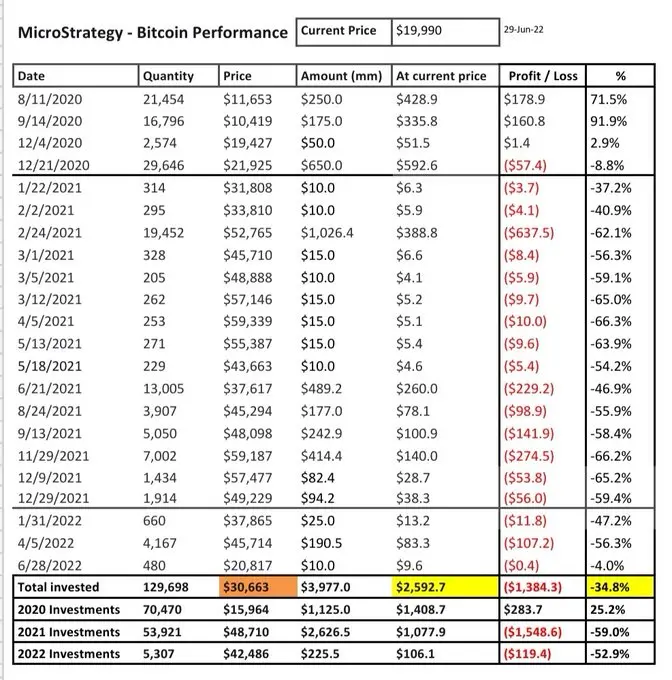
Adding complexity is MicroStrategy’s recent buying behavior. In late January and early February, the company purchased Bitcoin at prices far above the current market price. The latest transaction bought 855 BTC at an average price of about $87,974, followed by a sharp sell-off over the weekend, causing Bitcoin to fall below $75,000. Earlier January purchases had even higher average prices, with some close to $90,000 and others over $95,000.
This pattern is not new. Historically, MicroStrategy has increased its buying during strong market rallies, relying on issuing stock and zero-coupon convertible bonds to raise funds. While this approach has been successful over the cycle, it also exposes the company to risks of sharp short-term declines, fueling criticism that MicroStrategy often “buys at the top” before corrections.
Recent events recall MicroStrategy’s aggressive buying in 2021. At that time, the company purchased tens of thousands of BTC near the cycle high. However, Bitcoin then plunged over 70% in 2022, resulting in billions of dollars in unrealized losses and an over 80% drop in its stock price. Although the company survived without forced sales and later benefited from the 2024-2025 bull market, this episode highlights the volatility and dilution risks inherent in its strategy.
Recent MicroStrategy purchase timeline
(Source: WallStreetPro)
Early February: 855 BTC purchased at $87,974 (about 15% above current price)
Late January: Several thousand BTC at $90,000 (about 18% above current price)
Early January: Several thousand BTC at $95,000 (about 24% above current price)
This continuous pattern of high-level buying has steadily increased MicroStrategy’s average cost, making it more vulnerable financially. When Bitcoin falls below the average purchase price, not only does the paper loss increase, but the company’s ability to raise capital through issuing new shares is also constrained. A declining stock price due to unrealized losses would lead to significant dilution of existing shareholders, causing dissatisfaction.
“Among all publicly listed companies, MicroStrategy holds the most Bitcoin. Due to the crypto crash, the company just announced a $299 million loss. That’s the consequence of investing in highly volatile and essentially valueless assets. Even a small piece of news can lead to huge losses,” said economist Steve Hanke. While this critique is sharp, it underscores the core risk of MicroStrategy’s approach: over-concentration in a single high-volatility asset.
Jim Cramer’s pressure and market expectations
Jim Cramer publicly urged Saylor to intervene again, claiming that $73,802 is the “bottom,” which has intensified debate. He argued that MicroStrategy should issue another zero-coupon convertible bond or conduct a secondary offering to prevent Bitcoin from falling further before the earnings report. “MicroStrategy’s fortunes depend on this,” Cramer wrote, questioning what Saylor will say on the earnings call if Bitcoin fails to rebound.
A few hours later, Cramer doubled down, portraying MicroStrategy as the actual defender of Bitcoin’s price—a stance that conflicts with Saylor’s long-standing position of refusing to manage short-term price levels. Saylor’s consistent view is “HODL forever,” believing Bitcoin is the ultimate store of value, and short-term fluctuations are irrelevant. But Cramer’s pressure reveals a harsh reality: when a company owns 3.57% of the total Bitcoin supply, its actions inevitably influence the market, turning “passive holding” into “market influence.”
Criticism is mounting, raising systemic concerns. Long-time Bitcoin skeptics like analyst Michael Burry warn that continued declines could lead to the bankruptcy of companies holding large amounts of Bitcoin. Some more aggressive critics even suggest that MicroStrategy’s strategy is structurally flawed, warning that prolonged market weakness, leverage, and equity dilution could ultimately cause the model to collapse.
Despite market volatility, the goal remains clear. Maintaining Bitcoin above $76,000 is crucial for MicroStrategy to build profit expectations based on resilience, long-term conviction, and steady accumulation amid volatility. Falling below this level would cause a sharp shift, turning focus to unrealized losses, dilution from past stock issuances, and doubts about MicroStrategy’s financial flexibility.


