


Hal Finney: The Man Who Received First Bitcoin Transaction From Satoshi
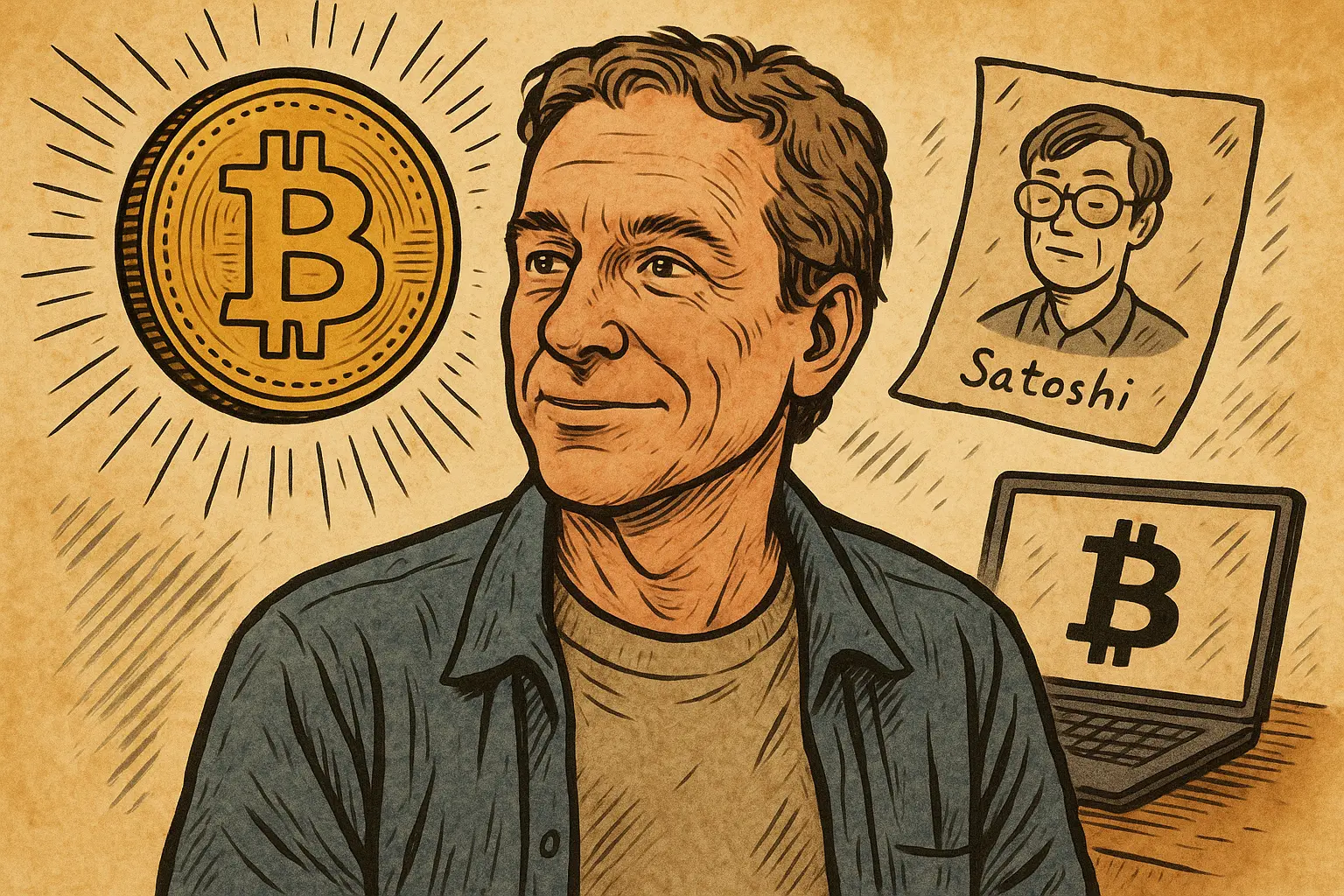
Hal Finney received first Bitcoin transaction from Satoshi Nakamoto on January 12, 2009—10 BTC launching crypto history. Born 1956, Hal Finney created reusable proof-of-work in 2004. Despite living blocks from Dorian Nakamoto and writing similarities, Hal Finney denied being Satoshi. Diagnosed with ALS in 2009, he coded until death in 2014 and was cryogenically preserved. His Bitcoin holdings could exceed $1 billion today.
Who Was Hal Finney?
Hal Finney (Harold Thomas Finney II) was born on May 4, 1956, in Coalinga, California. After earning degree in electrical engineering from Caltech in 1979, he launched career in software development spanning from video games to cutting-edge cryptography. In early years, Hal Finney worked on classic Atari 2600 titles like Astrosmash and Adventures of Tron. While many remember him for later cryptographic work, this early period reflected his love of tinkering and pushing hardware limits.
By 1990s, Hal Finney’s interests shifted toward privacy and digital security. He joined PGP Corporation, working alongside Phil Zimmermann on Pretty Good Privacy encryption, project that gave ordinary people access to powerful cryptographic tools for first time. This wasn’t just coding work—it was part of broader fight for digital privacy in era when governments tried regulating or restricting use of strong encryption.
At same time, Hal Finney became active in cypherpunk community, informal group of programmers and thinkers believing in using cryptography to promote personal freedom. He ran one of first anonymous remailers, fought against use of “weakened” export-grade encryption, and contributed to countless mailing list discussions. To peers, Hal Finney wasn’t just coder—he was true believer in cypherpunk vision of internet.
Hal Finney’s Early Career Timeline
1979: Graduated Caltech with electrical engineering degree
Early 1980s: Developed Atari 2600 games including Astrosmash and Adventures of Tron
1990s: Joined PGP Corporation working on encryption with Phil Zimmermann
1992: Ran anonymous remailers as cryptographic activist
2004: Created reusable proof-of-work system, Bitcoin precursor
The First Bitcoin Transaction: January 12, 2009
So when Satoshi Nakamoto released Bitcoin whitepaper in late 2008, Hal Finney was ready. He quickly downloaded and ran software, becoming first person other than Satoshi himself to operate Bitcoin network. On January 12, 2009, Satoshi sent him 10 BTC in first-ever Bitcoin transaction, cementing Hal Finney’s place in cryptocurrency history.
Hal Finney wasn’t just passive recipient. He provided feedback, helped test software, and debugged early problems. While many dismissed Bitcoin as quirky idea, Hal Finney saw its potential. In posts from 2009, he described excitement at watching blockchain grow block by block. He believed Bitcoin could evolve into revolutionary system for digital money, though admitted at time it was still risky experiment.
His famous tweet from January 11, 2009—“Running bitcoin”—became one of most valuable social media posts in history. This simple two-word announcement documented Bitcoin’s earliest days when only handful of people worldwide understood what Satoshi Nakamoto had created. That tweet now serves as artifact from cryptocurrency’s genesis moment.
The 10 BTC Satoshi Nakamoto sent Hal Finney would be worth over $1 million at current prices. While exact fate of those specific coins remains unclear, Hal Finney later stated he mined hundreds of additional bitcoins in Bitcoin’s early days when mining was possible on regular computers. If he retained substantial portion until death, his estate could hold fortune worth hundreds of millions or potentially over $1 billion.
Did Hal Finney Invent Bitcoin? The Satoshi Question
Was Hal Finney actually Satoshi Nakamoto? Several reasons fuel this speculation. First, Hal Finney had technical expertise and motivation. He had already created reusable proof-of-work, concept overlapping heavily with Bitcoin’s design. Second, he was first person besides Satoshi to run software and transact on blockchain. Third, his writing style and philosophical outlook were very similar to Nakamoto’s.
But Hal Finney himself always denied being Satoshi. He stated clearly he was simply early adopter who admired Nakamoto’s work. Investigators who examined writing samples concluded that while Hal Finney’s style was similar, it wasn’t close enough to prove they were same person. Forbes journalist Andy Greenberg had Juola & Associates analyze Finney’s writing, finding it closest resemblance to Nakamoto’s compared to other candidates, but still distinct enough to suggest different authors.
Journalists who met Hal Finney in person noted how open he was about involvement and how he could produce genuine email exchanges with Satoshi supporting his story. These emails showed clear distinction between Hal Finney seeking clarification on technical issues and Satoshi providing explanations—a pattern inconsistent with single person writing both sides.
Evidence Against Hal Finney Being Satoshi
Distinct Writing Styles: Forensic analysis showed similarities but definitive differences
Documented Communications: Genuine email exchanges between Hal and Satoshi suggest two different people
Technical Questions: Hal asked Satoshi questions about implementation details creator should have known
Personal Denials: Consistently denied being Satoshi until death with no deathbed confession
The geographic coincidence adds intrigue. Hal Finney lived in Temple City, California—same town as Dorian Satoshi Nakamoto, the Japanese-American man falsely identified by Newsweek as Bitcoin creator in 2014. This proximity for 10 years led to speculation Satoshi’s pseudonym might have been inspired by Dorian Nakamoto’s real name, with Hal Finney potentially using his neighbor as cover. However, no evidence supports this theory beyond geographic coincidence.
Coding Through ALS: Hal Finney’s Final Years
Even after ALS diagnosis in 2009, Hal Finney remained engaged with Bitcoin development. The disease quickly robbed him of muscle control, but he continued coding with help of assistive technologies. His resilience became legendary in community. At time when body was failing, his mind was still contributing to one of most important financial technologies of 21st century.
In March 2013, Hal Finney posted on BitcoinTalk forum publication called “Bitcoin and Me (Hal Finney)” stating he was essentially paralyzed. He recalled finding out Bitcoin had gained monetary value in late 2010 and mentioned that despite ALS slowing his ability to code, he still loved programming and goals it provided. He continued programming until death, working on experimental software called bcflick, which used Trusted Computing to strengthen Bitcoin wallets.
During last year of his life, the Finneys received anonymous calls demanding extortion fee of 1,000 bitcoin. They became victims of swatting—hoax where perpetrator calls emergency dispatch using spoofed telephone number pretending to have committed heinous crime, provoking armed police response to victim’s home. Extortionists demanded more bitcoins than Hal Finney had left after using most to cover medical expenses in 2013.
In October 2009 essay on blog Less Wrong, Hal Finney announced ALS diagnosis, writing: “I hope to be able to read, browse net, and even participate in conversations by email and messaging… I may even still be able to write code, and my dream is to contribute to open source software projects even from within immobile body. That will be life very much worth living.” He fulfilled this dream, continuing contributions despite complete paralysis.
Hal Finney’s Lasting Bitcoin Legacy
Hal Finney’s legacy in Bitcoin is enormous. He wasn’t just early tester—he was validator of entire concept. In time when others were skeptical, Hal Finney provided encouragement and technical help that gave Bitcoin its first push forward. Without his early involvement, Bitcoin might have faded into obscurity before anyone else noticed.
Beyond Bitcoin, Hal Finney is remembered for optimism and perseverance. Even as ALS left him paralyzed, he continued engaging with community, writing posts, and encouraging developers to keep building. His contributions to cryptography extended beyond Bitcoin itself—his 2004 reusable proof-of-work system demonstrated how proof-of-work could be applied to digital money long before Satoshi Nakamoto’s implementation.
Hal Finney passed away on August 28, 2014, at age 58. True to his forward-looking nature, his body was cryonically preserved by Alcor Life Extension Foundation. Whether or not science of cryonics ever proves viable, it was fitting symbol for someone who always believed in pushing beyond limits of what seemed possible. He was active member of Extropians, movement of technologists and futurists focused on transhumanism and life extension.
Today, Hal Finney is remembered not as mysterious Satoshi Nakamoto, but as one of Bitcoin’s most important pioneers, and man whose early faith and technical contributions helped turn radical idea into global movement. His widow and family remain respected figures in Bitcoin community, and memorial for Hal Finney has been permanently embedded into Bitcoin’s blockchain—testament to his lasting impact.
The cryptocurrency community honors Hal Finney’s memory through various tributes. At 2011 Black Hat Briefings, security researcher Dan Kaminsky revealed testimonial in honor of Hal Finney had been permanently embedded into Bitcoin’s blockchain. This digital memorial ensures Hal Finney’s contributions remain part of Bitcoin’s permanent record, accessible to anyone examining blockchain history.
The Man Behind the Code: Personal Life and Philosophy
Prior to illness, Hal Finney was active runner, participating in marathons including Santa Barbara International Marathon. He and his wife raised money for ALS research through these events, turning personal tragedy into opportunity for advancing medical science. This altruistic approach extended throughout his life—using technology to empower individuals, fighting for privacy rights, and contributing to open source projects without seeking personal profit.
Hal Finney wrote on Cypherpunks Mailing List in 1992: “It seemed so obvious to me: ‘Here we are faced with problems of loss of privacy, creeping computerization, massive databases, more centralization—and [David] Chaum offers completely different direction to go in, one which puts power into hands of individuals rather than governments and corporations. The computer can be used as tool to liberate and protect people, rather than to control them.’”
This philosophy guided Hal Finney’s entire career from PGP encryption to anonymous remailers to Bitcoin. He believed technology should empower individuals against surveillance and centralized control, making him ideological fit for Bitcoin’s cypherpunk origins. Whether or not Hal Finney was Satoshi Nakamoto, he certainly shared the creator’s vision for financial sovereignty and digital freedom.
FAQ
Who was Hal Finney?
Hal Finney was cryptographer, software developer, and cypherpunk activist who received first Bitcoin transaction from Satoshi Nakamoto on January 12, 2009. He created reusable proof-of-work in 2004 and contributed to PGP encryption before Bitcoin.
Did Hal Finney invent Bitcoin?
No, Hal Finney consistently denied being Satoshi Nakamoto. While his writing style was similar and he had necessary technical expertise, forensic analysis and documented email exchanges with Satoshi suggest they were different people. Hal Finney was early supporter, not inventor.
How much Bitcoin did Hal Finney own?
Exact amount unknown, but Hal Finney mined hundreds of bitcoins in Bitcoin’s early days and received 10 BTC in first transaction. He used most to cover ALS medical expenses in 2013. Remaining holdings controlled by his estate could be worth hundreds of millions.
Why is Hal Finney cryogenically preserved?
Hal Finney was cryopreserved by Alcor Life Extension Foundation after death on August 28, 2014. As active member of Extropians transhumanist movement, he believed in life extension and possibility future technology could revive preserved individuals.
Did Hal Finney live near Dorian Nakamoto?
Yes, Hal Finney lived in Temple City, California—same town as Dorian Satoshi Nakamoto (the man falsely identified as Bitcoin creator) for 10 years. This geographic coincidence fueled speculation but no evidence suggests connection beyond proximity.
How did Hal Finney contribute to Bitcoin while paralyzed?
Despite ALS leaving him essentially paralyzed, Hal Finney continued coding using assistive technologies until death. He worked on experimental software bcflick using Trusted Computing to strengthen Bitcoin wallets, demonstrating extraordinary perseverance and commitment to Bitcoin’s development.
Related Articles
Bloomberg: AI boom prompts Bitcoin mining companies with over $8 billion in holdings to pivot, sparking market sell-off concerns
Data: 802.15 BTC transferred from an anonymous address, then relayed to another anonymous address
American Bitcoin Bitcoin holdings surpass 6,500 coins, increasing by over 500 coins in the past 21 days
Michael Saylor, Strategy Bitcoin purchase potential exceeds the amount available for sale in the market