


Economist: The Federal Reserve is gradually printing money! Bitwise says the Bitcoin plunge presents a good opportunity for institutions to enter

Economist Lyn Alden points out that the Federal Reserve is entering a phase of gradual money printing, which mildly stimulates asset prices. Although Bitcoin recently fell below $70,000, Bitwise believes this presents a good entry point for institutions, with capital inflows indicating that the market still has long-term confidence.
Lyn Alden: The Federal Reserve is entering a gradual money printing phase
Renowned economist and Bitcoin supporter Lyn Alden stated in her February 8 investment strategy newsletter that the U.S. Federal Reserve is entering a “gradual money printing” stage.
She believes that the future expansion rate of the Fed’s balance sheet will roughly align with the growth of bank total assets or nominal Gross Domestic Product (GDP). This strategy is expected to gently stimulate asset prices, but not to the dramatic, large-scale money printing that the Bitcoin community previously anticipated.
She further analyzed that regardless of the form of quantitative easing the Fed adopts, it will ultimately lead to currency depreciation.
Based on the Fed’s current projected path, she recommends investors hold high-quality, scarce assets, adjust their portfolios, steer clear of overly euphoric market sectors, and focus on undervalued targets.
Recently, after U.S. President Trump nominated Kevin Warsh to be the next Federal Reserve Chair, the market generally believes this appointment will influence future monetary policy directions.
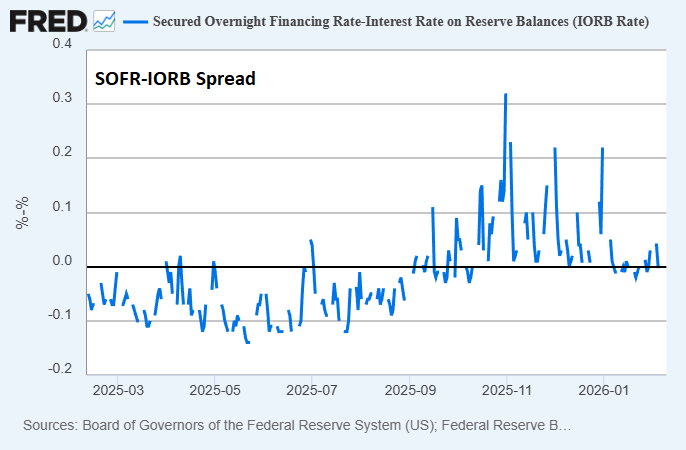
Image source: FRED Federal Reserve Money Supply Indicator M2 continues to grow
Hawkish Fed Nominee Sparks Rate Cut Expectations Fluctuations
Data from the CME FedWatch tool shows that traders currently predict only a 17.9% chance of a rate cut at the March FOMC meeting, reflecting concerns that Kevin Warsh might succeed Jerome Powell as Fed Chair.
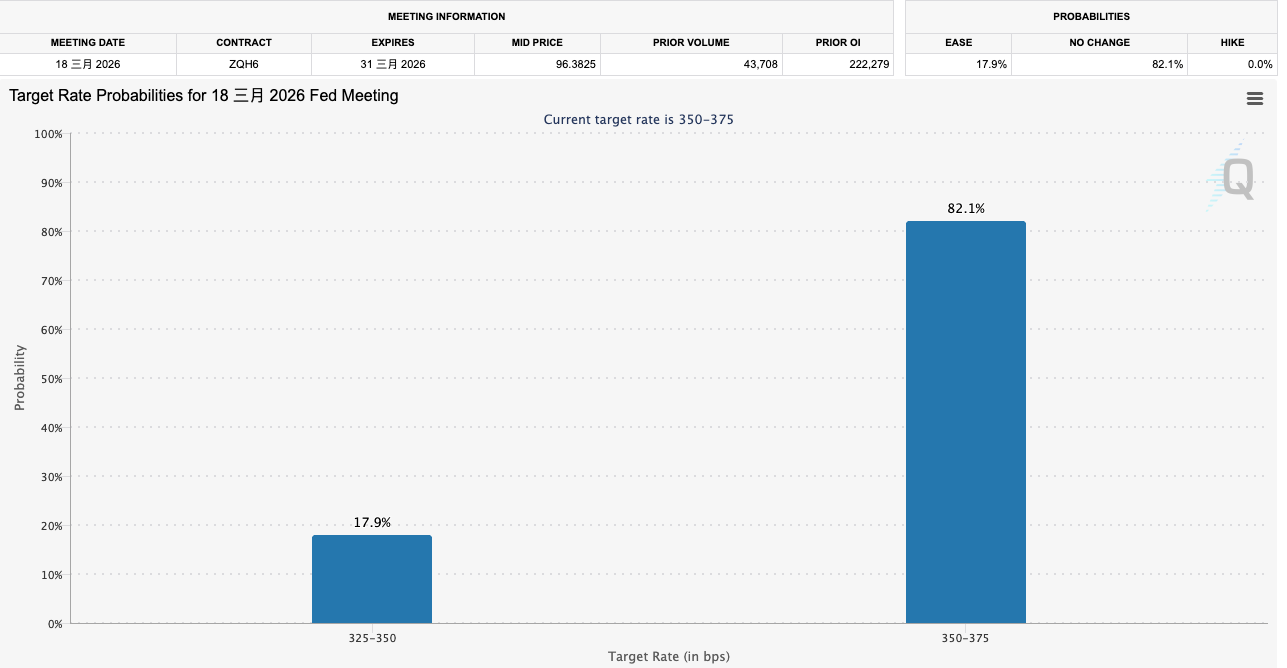
Image source: FedWatch
Current Fed Chair Jerome Powell’s term will expire in May 2025, and Kevin Warsh is viewed as a hawkish candidate, inclined to maintain higher interest rates to control inflation.
Crypto analyst Nic Puckrin believes that if Kevin Warsh adopts a balance sheet reduction policy upon taking office, the market will face liquidity tightening; Kraken global economist Thomas Perfumo also pointed out that Trump’s nomination sends mixed signals, suggesting that future liquidity and credit environments may stabilize rather than continue expanding as previously expected.
Further reading:
Trump nominates Kevin Warsh to replace Powell! What variables could change in the crypto world after the Fed change?
Bitwise: Institutional investors see decline as a good entry point
Despite the overall environment being uncertain, Bitwise CEO Hunter Horsley told CNBC that after Bitcoin ($BTC) fell below $70,000, although long-term holders are uneasy about the recent decline, this provides a good opportunity for institutional investors to re-enter. Institutional buyers are seizing this chance to build positions at prices they once thought impossible to see again.
According to CoinMarketCap data, Bitcoin has fallen over 22% in the past 30 days. Horsley admitted that Bitcoin is in a bear market and is being sold off along with other assets, mainly due to panic over liquidity tightening, leading investors to sell all liquid assets.
However, Bitwise claims that institutional demand remains strong, managing over $15 billion in institutional funds, and saw over $100 million in capital inflows when Bitcoin dropped to $77,000; BlackRock’s Bitcoin spot ETF also experienced volatility but saw a single-day inflow of $231.6 million, indicating that institutions still have confidence in Bitcoin’s long-term value.
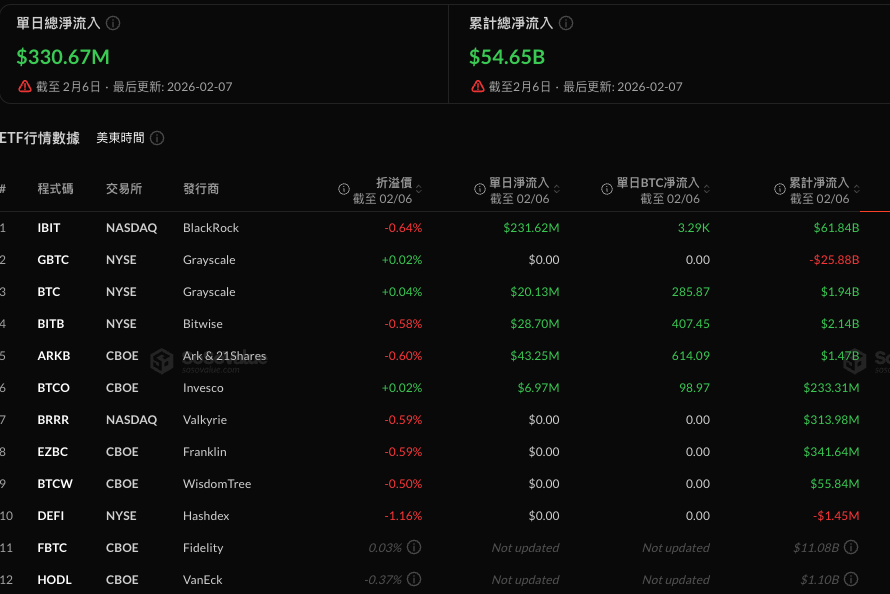
Image source: SoSoValue Capital inflow and outflow for US Bitcoin spot ETF on 2/6