


Binance Launches Tesla Perpetual Contracts: Is This a Compromise or a Bold Move? Recently, Binance announced the launch of Tesla perpetual contracts on its platform. This move has sparked widespread discussion among traders and industry experts. Some see it as a strategic partnership that could benefit both parties, while others view it as a bold step into new territory that might challenge traditional financial boundaries.  The introduction of Tesla contracts allows traders to speculate on the company's stock price without owning the actual shares. This innovation provides more flexibility and new opportunities for investors. However, it also raises questions about market regulation and the potential risks involved. ### Key Features of Tesla Perpetual Contracts - No expiry date, allowing indefinite trading - Leverage options up to 10x for experienced traders - Real-time price tracking aligned with Tesla's stock Some industry insiders believe this move could set a precedent for other tech giants to enter the crypto and derivatives markets. Others caution that such products require careful oversight to prevent market manipulation. In conclusion, Binance's launch of Tesla perpetual contracts represents a significant development in the intersection of traditional stocks and digital assets. Whether it is a strategic compromise or a pioneering attack, it undoubtedly marks a new chapter in financial innovation.
Original Author: Lawyer Zhao Xuan
Recently, I noticed two interesting Web3 news stories that I want to discuss with everyone.
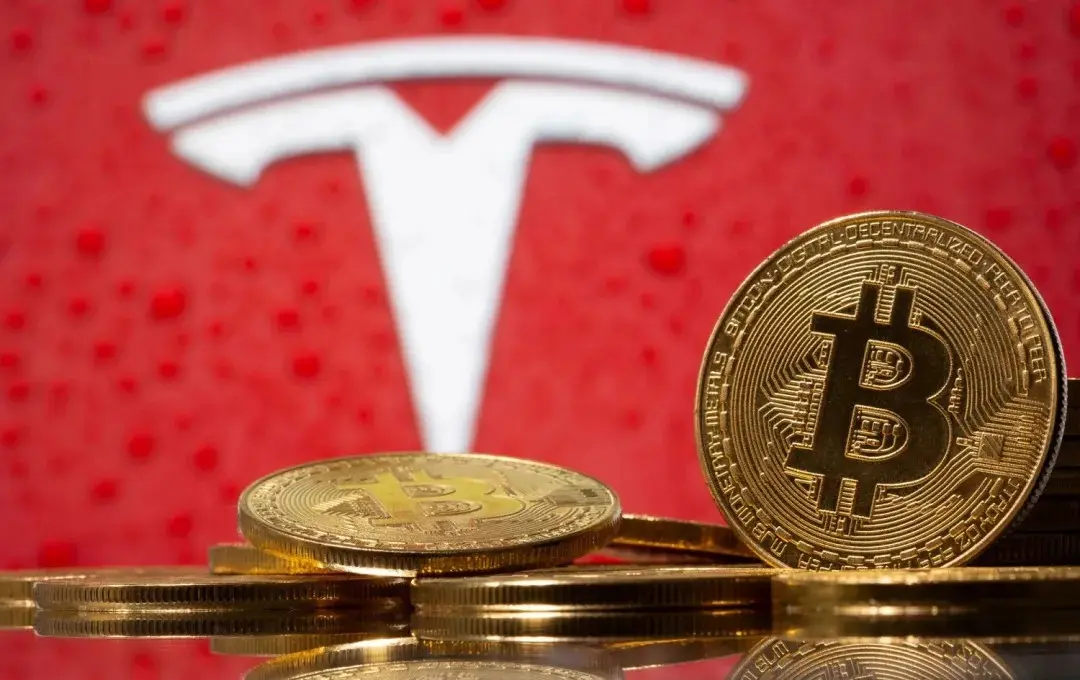
First, Binance quietly launched a Tesla (TSLA)-related product, not RWA (Real World Assets), but Perpetual Contracts.
Second, the Chair of the U.S. Securities and Exchange Commission (SEC), Paul Atkins, recently made multiple public statements indicating that the U.S. financial markets might be fully migrated onto the blockchain within two years.
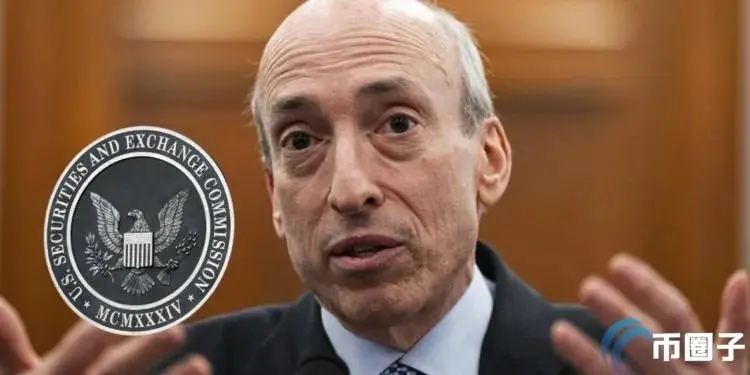
(Source: Crypto Circle)
These two news stories are inherently connected, relating to the next direction of global asset liquidity. They involve both economic issues and some interesting legal questions.
Let’s first talk about Binance’s attempt: from “hard push” to “stealth”
This is not Binance’s first attempt targeting Tesla.
Looking back to 2021, Binance launched a high-profile “stock token,” attempting to peg it 1:1 to physical stocks, allowing users to hold shares on-chain and receive dividends. However, this product was strongly opposed by regulators in Germany, the UK, and other jurisdictions for suspected illegal securities issuance, and was ultimately taken down.
At that time, Binance’s strategy was a “hard push”—directly transplanting equity onto the blockchain—but underestimated the power of traditional financial regulations. Now, its approach has shifted to “stealth.”
The Tesla Perpetual Contract launched in 2026 no longer links to stock ownership, only tracking price movements; it does not promise dividends, only provides a betting on price fluctuations. Users are not buying Tesla equity but engaging in a pure price speculation game.
From “buying ownership” to “buying volatility,” this shift may seem like a retreat, but in fact, it is a strategic detour by crypto giants within the existing legal framework, exploring the equity trading market indirectly.
On-chain Tesla: Are you buying “notes” or “goods”?
Many users wonder when trading Tesla on Binance: is on-chain Tesla equivalent to U.S. stock Tesla? To answer this, we must clarify the legal boundaries:
-
Perpetual Contracts (Perp): You are buying “notes”. You purchase a contract, betting on the price. The logic is simple; the underlying asset has high liquidity, but its legal nature is a “derivative.” If liquidation risks occur on the platform, you have no physical assets to recover.
-
RWA (Tokenized Assets): You are buying “goods”. There is a token on-chain backed by a physical asset, such as a gold bar or a stock. Its core is “rights confirmation.” This involves complex cross-border legal adaptation, asset custody, and physical asset penetration.
Currently, in the short term, Perpetual Contracts will attract speculative enthusiasm; but in the long run, U.S. stock RWAs are the ultimate solution to reshape global financial liquidity.
Backed by giants: SEC Chairman Paul Atkins’s two-year plan
If Binance’s moves are a “private sector” “rushing ahead,” then the multiple official statements from regulators are the “formal troops” entering the field.
The current SEC Chairman, Paul Atkins, publicly stated twice—once in December 2025 and again in January this year—that the U.S. financial markets might fully migrate onto the blockchain within two years.
Note this timeline: two years. In his “Project Crypto” blueprint, blockchain is no longer the regulatory adversary but the underlying operating system to improve transparency and achieve T+0 settlement.
Currently, major assets like gold and silver have achieved mature on-chain ownership trading (RWA). Bringing U.S. stocks on-chain is no longer a “technology feasibility” issue but a “when to move” procedural question. And with the roadmap already outlined, this procedural issue is merely about properly handling compliance details.
Exploring dispute resolution clauses
In the context of traditional finance being continuously reconstructed by Web3 technology, with capital flooding in and rules still unclear, another key issue I focus on is:
How can we achieve efficient and fair dispute resolution when conflicts arise?
On-chain transactions have the characteristic of “settlement as final,” but cross-chain investments often involve legal rules from multiple jurisdictions. If disputes such as defaults or contractual loopholes occur, traditional court litigation can fall into prolonged jurisdictional disputes.
Compared to resorting to courts afterward, pre-agreed reliable arbitration jurisdiction has become an industry consensus. Recently, I have engaged in multiple in-depth exchanges with professionals from major arbitration institutions like the Singapore International Arbitration Centre (SIAC) and the Shanghai International Arbitration Center (SHIAC), exploring how to combine large-scale on-chain dispute resolution with the fairness and enforceability of international commercial arbitration.
We look forward to further dialogue with more experts in arbitration worldwide. As assets increasingly flow across borders, we urgently need to establish a compliance arbitration pathway that deeply understands the underlying technology and is recognized by mainstream legal jurisdictions.
Conclusion
What exactly does Web3 bring us?
Despite occasional regulatory tightening and growing pains in development, I firmly believe that the core of Web3 is freedom. It will reshape the entire financial system; the only uncertainty is how long this process will take—whether the SEC’s predicted two years or a bit longer.
On-chain freedom means assets are no longer constrained by physical borders, and ordinary people can share in the dividends of global liquidity. The liberation of global asset liquidity is a clear and foreseeable future, and it is a key battlefield that our generation of legal professionals should actively engage in.
—Deconstructing the SEC’s “two-year on-chain” plan: moving toward Web3 freedom and further liberating global asset flows.