


How Altcoin Liquidation Risks Reveal a Deeper Market Structure Shift
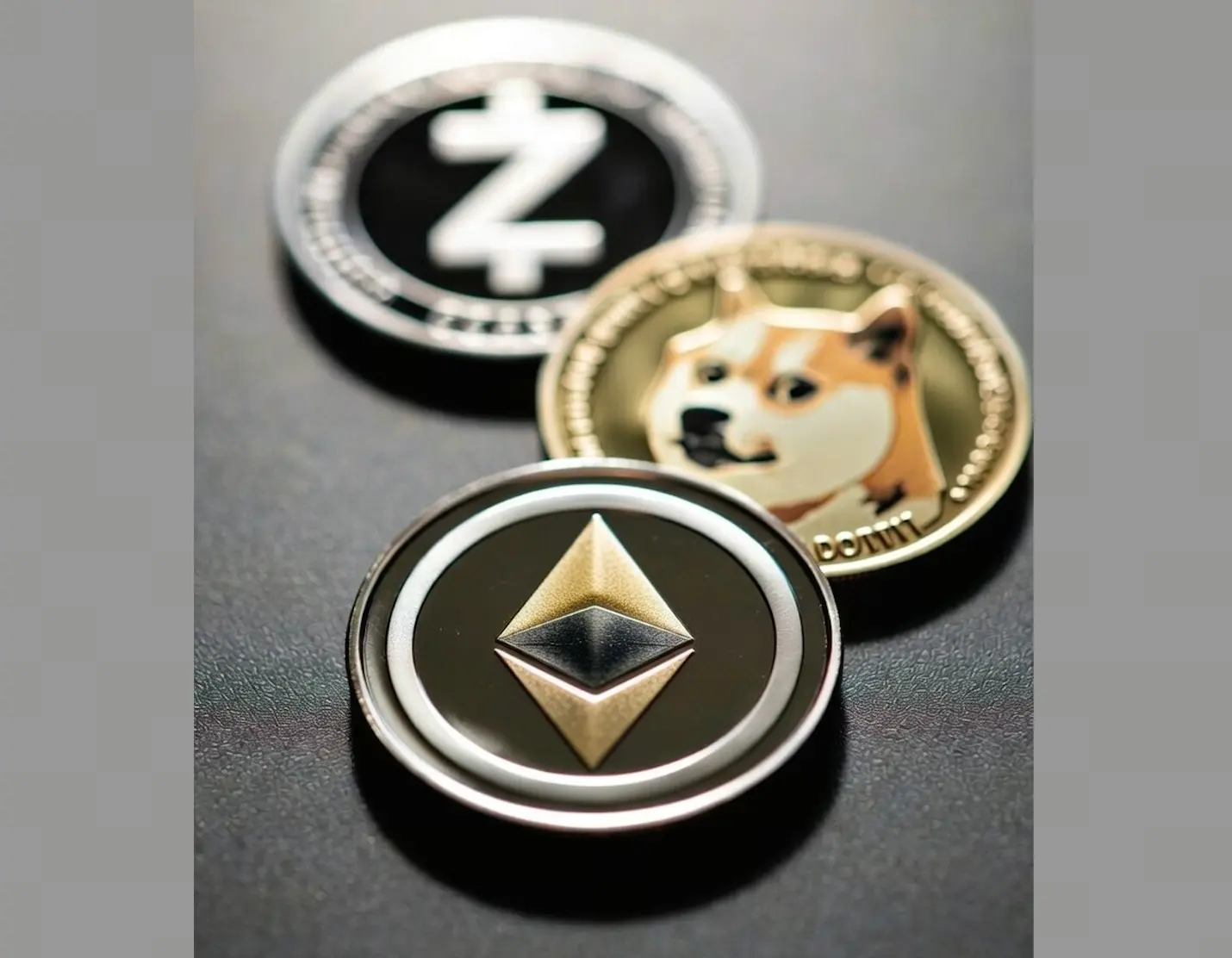
As of February 10, 2026, Ethereum (ETH), Dogecoin (DOGE), and Zcash (ZEC) are flashing warnings of over $3.1 billion in potential short liquidations amid a fragile market recovery.
This is not merely a technical trading signal; it signifies a pivotal stress test for the altcoin market’s evolving structure. The importance lies in the specific catalysts for each asset—from supply scarcity to shifting sentiment—which expose the growing divergence between short-term speculative positioning and longer-term fundamental trends. For the broader crypto industry, this dynamic highlights the maturation of market forces where on-chain data, developer narratives, and structural supply shocks are beginning to overpower sentiment-driven leveraged bets.
A Fragile Rebound Meets Crowded Shorts
The altcoin market is exhibiting a classic, yet precarious, recovery pattern in the second week of February 2026. Following three consecutive weeks of aggressive selling that erased hundreds of billions in value, buying pressure has tentatively returned. However, this nascent rebound exists within a cloud of deep-seated investor skepticism. This sentiment dichotomy has created a dangerous setup: while prices have fallen enough to lure in cautious value buyers, they have also attracted a significant cohort of traders betting on further declines.
This is where the liquidation risk crystallizes. Leveraged derivatives markets are currently populated with a high concentration of short positions—bets that prices will continue to fall—across several major altcoins. These positions are not distributed evenly; they are clustered around specific price levels that traders psychologically deem as resistance or continuation points.
The critical change occurring now is that the fundamental and technical catalysts underpinning assets like Ethereum, Dogecoin, and Zcash are aligning in a manner that could defy this pessimistic consensus. The “why now” is twofold: first, the sharp sell-off has itself created conditions of oversupply exhaustion and undervaluation; second, independent positive developments are emerging for each asset precisely as the market’s technical structure is most vulnerable to a short squeeze. This confluence sets the stage for a violent repricing that could catch leveraged traders on the wrong side of the market.
The Mechanics of a Modern Short Squeeze
Understanding the potential liquidation cascade requires moving beyond simple charts of open interest. Today’s crypto market squeezes are driven by a more complex interplay of on-chain fundamentals, narrative shifts, and structural supply constraints. These factors create a feedback loop that can amplify price moves far beyond what traditional leverage metrics alone would suggest.
The mechanism begins with a catalyst that triggers initial buying. This could be a macro shift, a pivotal piece of news, or, as is often the case in efficient crypto markets, the simple realization that prices have fallen too far relative to underlying network health. This initial price rise starts to liquidate the most leveraged short positions at the nearest price thresholds. Each liquidation is a forced market buy order, adding immediate fuel to the upward price movement.
This, in turn, triggers the next wave of liquidations at slightly higher price points. However, the new critical element is the role of illiquid supply. When a significant portion of an asset’s circulating supply is locked in staking contracts, held in long-term custody, or, in the case of privacy coins, shielded from the market, the available sell-side liquidity on exchanges is thin.
A wave of forced buying into this thin order book can cause parabolic price spikes, as there are simply not enough sellers available to meet the surge of buy-side demand without dramatically moving the price. This is the core dynamic at play: derivatives-driven buying pressure meeting a structurally constrained spot supply.
In this scenario, the beneficiaries are not just opportunistic long traders. The primary winners are long-term holders and the protocols themselves. A violent short squeeze can rapidly repair damaged sentiment, attract fresh capital and developer attention, and validate the underlying network’s value proposition.
The entities under pressure are the over-leveraged short-term speculators and, potentially, derivative exchanges that must manage the risk of cascading failures. The broader market impact is a rapid transfer of wealth from impatient capital to patient capital, reinforcing the economic security of networks that demonstrate resilient fundamentals during stress.
The Three Catalysts: Anatomy of an Asymmetric Risk
Ethereum (ETH): The Supply Shock Squeeze
- Catalyst: Exchange reserves have plummeted to ~16 million ETH, a multi-year low, while over 4 million ETH sit in the staking queue.
- Mechanism: This creates a profound supply-demand imbalance. Any significant buy-side pressure, whether from ETF flows, institutional reallocation, or liquidations themselves, must compete for a drastically reduced pool of immediately sellable ETH on centralized venues.
- Liquidation Trigger: A move to approximately $2,370 could trigger ~$3 billion in short liquidations, but the thin spot market could propel the price much higher once the squeeze begins.
Dogecoin (DOGE): The Narrative & Memetic Momentum Squeeze
- Catalyst: Price revisits a key historical support level ($0.10), coinciding with renewed social chatter and bullish technical patterns identified by community analysts.
- Mechanism: DOGE’s value is intrinsically linked to retail sentiment and viral attention. A breakout above a psychologically important level like $0.109 can quickly reactivate the “FOMO” (Fear Of Missing Out) engine of its massive, engaged community, leading to explosive, liquidity-consuming buys.
- Liquidation Trigger: A rally to $0.109 could liquidate ~$98 million in shorts, but the ensuing social momentum could easily drive the price to the next technical target of $0.12.
Zcash (ZEC): The Fundamental Validation Squeeze
- Catalyst: Vitalik Buterin’s public endorsement and donation to Zcash development, framing privacy as essential infrastructure, counteracts negative news about developer departures.
- Mechanism: This action validates Zcash’s core technological thesis for a broad segment of the crypto community that respects Buterin’s perspective. It shifts the narrative from “abandoned project” to “essential protocol undergoing transition,” encouraging fundamental buyers to step in.
- Liquidation Trigger: Positive sentiment revival, combined with the notable fact that over 5 million ZEC remain locked in shielded pools despite the price drop, could spark a rally that traps pessimistic shorts expecting continued decline.
Industry Implications: The Rise of On-Chain Fundamental Analysis
The specific liquidation risks outlined for ETH,DOGE, and ZEC are symptoms of a broader, industry-wide shift: the growing primacy of on-chain fundamental analysis over pure price chart speculation. Traders who positioned shorts based solely on downward price momentum and negative headlines are now at risk precisely because they ignored deeper blockchain datasets.
The market is increasingly rewarding—and punishing—based on verifiable chain activity. Ethereum’s soaring exchange outflow is a bullish on-chain signal that directly contradicts bearish price action. Zcash’s shielded pool activity demonstrates unwavering user commitment to its core privacy feature, a fundamental strength overlooked in a panic sell-off. Even Dogecoin’s analysis now incorporates social sentiment data and holder distribution charts as core metrics. This evolution means that successful trading and investing in the 2026 crypto market requires a dual lens: one eye on the derivatives order book, and the other on a dashboard of network health indicators. The days when price was the sole leading indicator are fading; now, on-chain data often leads, and price follows, creating massive dislocation opportunities (and risks) for those who fail to adapt.
Paths Forward: Three Scenarios for Resolution
The market is at an inflection point, and the resolution of these concentrated liquidation risks will set the tone for the broader altcoin recovery. We can envision several plausible paths forward over the coming weeks.
Scenario 1: The Full Squeeze (High Probability, High Impact)
A coordinated or sequential triggering of short liquidations occurs, likely starting with Ethereum due to its systemic importance. The ETH squeeze provides a bullish macro tailwind, lifting the entire market and subsequently triggering the DOGE and ZEC squeezes. This results in a violent, V-shaped recovery for altcoins, potentially adding hundreds of billions back to market capitalization rapidly. The aftermath sees a reset of leverage levels, a surge in funding rates as longs pay shorts, and a likely period of consolidation as the market absorbs the rapid price discovery.
Scenario 2: The Slow Grind (Medium Probability, Medium Impact)
Buying pressure remains measured and organic, allowing shorts to cover their positions gradually without triggering a cascade. Prices rise steadily, liquidating shorts in a controlled, piecemeal fashion rather than in a single explosive event. This path is healthier for long-term market structure as it doesn’t rely on a derivatives-driven explosion, but it does little to repair damaged sentiment quickly. It would be characterized by declining open interest and a steady migration of assets off exchanges.
Scenario 3: The Failed Break (Lower Probability, Severe Impact)
The rebound attempt fails, and prices reject from the key liquidation levels. This would validate the short thesis, leading to a new wave of selling as stop-losses on long positions are hit and renewed short entries are made at higher prices. This could catalyze a deeper capitulation event, pushing total market capitalization well below recent lows and significantly delaying any sustained recovery. This path would be confirmed by a failure of ETH to hold above $2,200, DOGE below $0.095, and ZEC below its recent lows.
Practical Impact on Traders and Long-Term Investors
For different market participants, the implications of this setup vary dramatically. Active traders and leverage users must immediately assess their position sizing and proximity to liquidation prices. For those short, it is a critical moment to evaluate whether the trade thesis is based on price action alone or incorporates the strengthening on-chain and fundamental narratives. Hedging or partial covering may be prudent. For those considering long positions, understanding that the initial move could be exponentially amplified by liquidations is key; entry points and profit targets must account for this potential volatility.
Long-term investors and holders should view this period differently. The threat of liquidations is a market microstructure event, often noisy and short-term. Their focus should remain on the fundamental catalysts themselves: Is Ethereum’s declining exchange supply a sign of strong conviction? Does Vitalik’s endorsement change the long-term viability of privacy tech like Zcash?
For these investors, price volatility induced by derivatives is a potential opportunity to accumulate assets whose fundamental stories they believe in, provided they have the risk tolerance and time horizon to withstand the turbulence. The key takeaway is that the market is presenting a clear divergence between short-term trader sentiment (bearish) and long-term holder action (accumulative), and such divergences often resolve in favor of the latter.
What Are the Projects at the Center of the Storm?
What is Ethereum (ETH)?
Ethereum is the leading programmable blockchain, functioning as a decentralized global settlement layer and the primary platform for decentralized applications (dApps), smart contracts, and, increasingly, real-world asset (RWA) tokenization. Its transition to a proof-of-stake consensus mechanism in 2022 fundamentally altered its economic model.
Ethereum Tokenomics and Positioning:
ETH serves as the base currency for transaction fees (“gas”) and as the staking asset that secures the network. Its monetary policy is currently mildly inflationary, but the burn mechanism from transaction fees can make it deflationary during periods of high network usage. Ethereum’s positioning is that of digital infrastructure—the “world computer.” Its primary challenge is scaling via Layer 2 networks while maintaining security and decentralization. The current low exchange supply highlights its evolution into a staked and locked foundational asset, similar to digital gold but with cash-flow potential from staking yields.
What is Dogecoin (DOGE)?
Originally created as a joke in 2013, Dogecoin is a proof-of-work cryptocurrency that has evolved into a persistent cultural and memetic phenomenon. It boasts one of the most recognizable brands and passionate retail communities in crypto.
Dogecoin Tokenomics and Positioning:
DOGE has an inflationary annual supply issuance, which contrasts with Bitcoin’s fixed cap. This design was intended to encourage spending rather than hoarding. Its positioning is unique: it is the premier “meme coin” and a gateway asset for millions into cryptocurrency. Its value is driven almost entirely by community sentiment, celebrity endorsements (notably from Elon Musk), and its utility as a fast, low-cost payment method for tipping and small transactions online. Its current price action tests the resilience of its cultural status.
What is Zcash (ZEC)?
Zcash is a privacy-focused cryptocurrency launched in 2016. It uses advanced zero-knowledge proofs (zk-SNARKs) to enable shielded transactions where sender, receiver, and amount are fully encrypted on the blockchain, while still allowing for network consensus.
Zcash Tokenomics and Positioning:
ZEC has a fixed total supply of 21 million coins, similar to Bitcoin. Its governance and development were historically led by the Electric Coin Company (ECC). Its positioning is as a tool for financial privacy, appealing to users who require fungibility and transaction confidentiality. The recent departure of the ECC team marks a pivotal transition towards a more community-led development model. Vitalik Buterin’s intervention validates the critical need for privacy-preserving technology within the broader blockchain ecosystem, potentially repositioning ZEC from a niche anonymity tool to a core component of the future financial stack.
A Market Maturing Through Stress
The concentrated liquidation risks facing Ethereum, Dogecoin, and Zcash in February 2026 are not random. They are the direct result of a market that is maturing through a painful stress test. This episode signals that the altcoin landscape is developing layers of complexity where leverage, narrative, and fundamentals interact in powerful, sometimes unpredictable, ways.
The overarching trend this reveals is the market’s gradual transition from a purely sentiment-driven casino to a multifaceted financial ecosystem where different asset classes—store-of-value infrastructure (ETH), cultural meme assets (DOGE), and privacy technology (ZEC)—are judged by increasingly sophisticated metrics. Short sellers betting on uniform decline are being punished for failing to differentiate. The coming resolution, whether via violent squeeze or slow grind, will further cement the importance of deep, fundamental research and a nuanced understanding of market microstructure. For the observant, this period of high risk is also one of high informational clarity, revealing where true conviction lies when the speculative froth is washed away.