


Bitcoin mining difficulty drops by 11%! Daily output slashed by 60%, triggering a mass exodus of miners
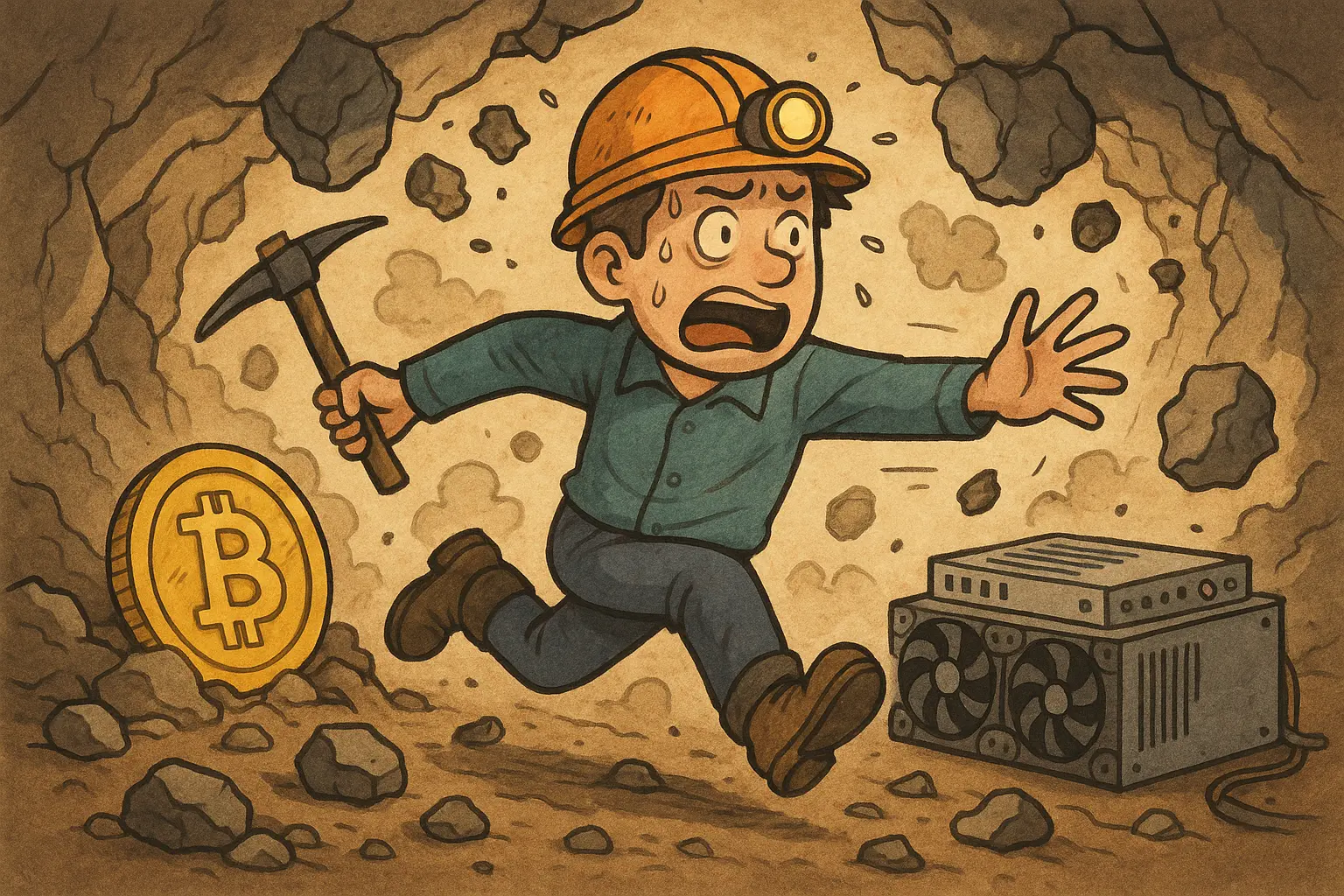
Bitcoin mining difficulty drops 11%, marking the largest decline in five years, from 141.6 trillion down to 125.86 trillion. The reward per P hash (Petahash) has been halved from $70 to $35. Power outages caused by a snowstorm in Texas led to a more than 60% drop in daily production for listed miners, while companies like Bitfarms shifted to AI data centers, causing their stock prices to soar.
The Survival Crisis Behind the Bitcoin Mining Difficulty Plunge
Bitcoin mining difficulty is a core indicator of the network’s automatic adjustment mechanism. It functions like a “difficulty adjustment knob,” aiming to keep the time to mine a new block at approximately 10 minutes, neither too fast nor too slow. This knob adjusts roughly every two weeks (specifically every 2,016 blocks), based on the total network hash rate. When hash rate increases, difficulty rises; when it decreases, difficulty lowers.
According to the latest data from blockchain analytics platforms, Bitcoin mining difficulty in this adjustment fell directly from 141.6 trillion to 125.86 trillion, an 11% decrease. This is the largest single drop since China’s large-scale crackdown on mining in July 2021, which caused over 50% of the network’s hash rate to vanish within weeks, leading to a historic plunge in difficulty. The current double-digit decline indicates that many mining machines have been shut down.
The implication is straightforward: many miners have stopped operations. It’s like having 100 machines working before, but now only 70 are active, significantly shrinking the total network hash rate. From an economic perspective, miners’ shutdown decisions are rational cost-benefit calculations. When mining rewards fall below electricity and operational costs, continuing to mine only increases losses, so the rational choice is to shut down immediately to cut losses.
The revenue per P hash (Petahash/sec) has been cut in half from a peak of $70 to $35, clearly illustrating the collapse of miners’ profitability. For miners using older hardware (like S9, S17 series), $35 per P may just cover electricity costs, and after deducting rent, labor, and depreciation, actual profit may already be negative. This explains why many miners are actively exiting the market.
Three Main Causes Behind the Bitcoin Mining Difficulty Drop
Price Collapse Compresses Profits: BTC price fell from $126,000 to $60,000, halving miners’ revenue
Texas Snowstorm Power Outages: Power grid operators prioritized residential electricity, forcing miners offline
Obsolescence of Old Equipment: Inefficient miners become unprofitable at low coin prices and are forced into permanent retirement
This large-scale shutdown has limited impact on Bitcoin network security. Even with reduced hash rate, the network still maintains sufficient decentralized nodes to ensure security. However, for individual miners, it’s a brutal survival elimination race.
Texas Snowstorm: The Final Straw That Broke the Camel’s Back
Besides the structural factor of Bitcoin’s price collapse, a severe winter storm in the U.S. worsened the situation. Texas, home to the largest Bitcoin mining industry in the U.S., accounts for about 30% of the country’s hash rate. Texas became a mining haven due to its unique electricity market structure: relatively low electricity prices and the ability for large consumers to sign flexible demand response agreements with utilities.
However, the intense winter storm in February 2026 drastically disrupted this balance. Extreme cold caused a surge in residential electricity demand, while some power plants froze and shut down, putting unprecedented stress on the grid. ERCOT (Electric Reliability Council of Texas) issued emergency power reduction requests, requiring industrial and commercial users to cut consumption to prioritize residential heating.
Bitcoin mining farms, as some of the largest industrial electricity consumers, were among the first to be curtailed. Under demand response agreements, miners had to cooperate with shutdowns during emergencies to receive discounted electricity rates. While this mechanism benefits miners when power is abundant, it becomes a lethal blow during extreme weather. Listed miners like Riot Platforms and Marathon Digital had to significantly cut capacity, with some seeing daily Bitcoin production drop over 60%.
What does a 60% reduction mean? For example, a miner producing 10 BTC daily now only produces 4 BTC. At $60,000 per BTC, daily revenue drops from $600,000 to $240,000—a loss of $360,000. Fixed costs like electricity, labor, and rent remain unchanged, so losses rapidly escalate. During the storm, miners not only couldn’t produce Bitcoin but also had to bear standby energy and maintenance costs.
This Texas storm exposes the geographic concentration risk of Bitcoin mining. When a large portion of hash rate is centralized in one region, natural disasters, policy changes, or grid failures can cause systemic impacts on the entire network. Post-event, more miners are likely to reassess and diversify geographically, spreading hash rate across multiple countries and regions to reduce single-point failure risks.
Mining Transition to AI: Bitfarms as a Success Model
Faced with declining difficulty and collapsing profitability, some quick-thinking miners are strategically transforming: converting mining infrastructure into AI data centers. This shift is feasible because Bitcoin mining and AI computation share high infrastructure overlap—both require massive power, cooling systems, and high-performance hardware.
Bitfarms is among the most successful examples of this trend. The company announced it would cease focusing solely on Bitcoin mining and instead operate AI data centers. The news caused its stock price to surge over 40% in a single day, with market capitalization increasing by hundreds of millions. This market reaction clearly indicates investor optimism about AI data center prospects surpassing Bitcoin mining.
Why switch to AI? Major tech giants are competing fiercely for AI compute power—OpenAI, Google, Meta, and others need vast GPU resources for training large language models and running inference services. These companies prefer long-term contracts with stable, high-margin prices. In contrast, Bitcoin mining profits depend heavily on coin prices, which can lead to months of losses in bear markets. Renting AI compute offers predictable cash flow and better financial reporting for public companies.
From a technical standpoint, Bitcoin’s ASIC miners cannot be directly used for AI workloads. However, the underlying infrastructure—power supply, cooling, networking, and space—can be repurposed. Miners can replace ASICs with GPU servers, upgrading their facilities into AI data centers at a fraction of the cost of building new facilities from scratch.
Not all miners can successfully transition, though. Operating AI data centers requires different technical expertise, customer relationships, and business models. Bitcoin mining is essentially commodity production, while AI compute leasing is a service industry that demands close customer engagement, technical support, and service guarantees. Miners lacking these capabilities may struggle to compete even after hardware upgrades.
Miner Selling Pressure and Bitcoin Bottoming
Historical experience shows that each significant drop in mining difficulty generally coincides with a large-scale miner exit. Before shutting down, miners need to sell their accumulated Bitcoin to cover operational costs like electricity and maintenance. This passive selling exerts short-term market pressure but can also signal a market bottom.
Logically, miner selling represents the last group of “must-sell” sellers. Unlike investors, miners don’t hold long-term positions waiting for a rebound—they have daily operational costs. When profitability drops below costs, miners shut down and liquidate holdings, creating forced selling pressure that peaks. Once this supply is absorbed, new selling diminishes, and the market can more easily form a bottom and rebound.
On-chain data offers clues: monitoring Bitcoin outflows from mining pools indicates the scale of miner selling. If outflows remain high after difficulty drops, selling persists, and the bottom is not yet in. Conversely, if outflows decline over weeks along with decreasing exchange reserves, it suggests selling pressure has eased and a bottom may be near.
Additionally, the Miner Capitulation Index (a composite indicator of miner distress) often peaks during large difficulty drops. When reaching historical extremes—like in December 2018 and November 2022—it typically signals the final phase of a bear market, followed by months of price stabilization and rebound.
However, investors should not interpret difficulty drops alone as buy signals. The time from difficulty adjustment to actual price bottom can span weeks or months, during which continued miner selling, deteriorating market sentiment, and macroeconomic shocks may push prices lower. Only when multiple bottom indicators align can a relatively confirmed bottom be identified.
Related Articles
Institutions Double Down: Anchorage Adds STRC as BTC Strategy Expands
Vì sao Ethereum khó tái hiện mức tăng trưởng quý II/2025 so với Bitcoin
Gold ETF Assets Reach $407B While Hedge Funds Cut Bitcoin ETF Holdings by 28% in Q4 2025
Caixin: Chinese victims of the 60,000 Bitcoin money laundering case need to provide additional financial details by June 18.