


Seedance 2.0 Revolutionizes the Film and Television Industry! Bytedance AI completes special effects team’s hundreds of hours of work in just a few minutes
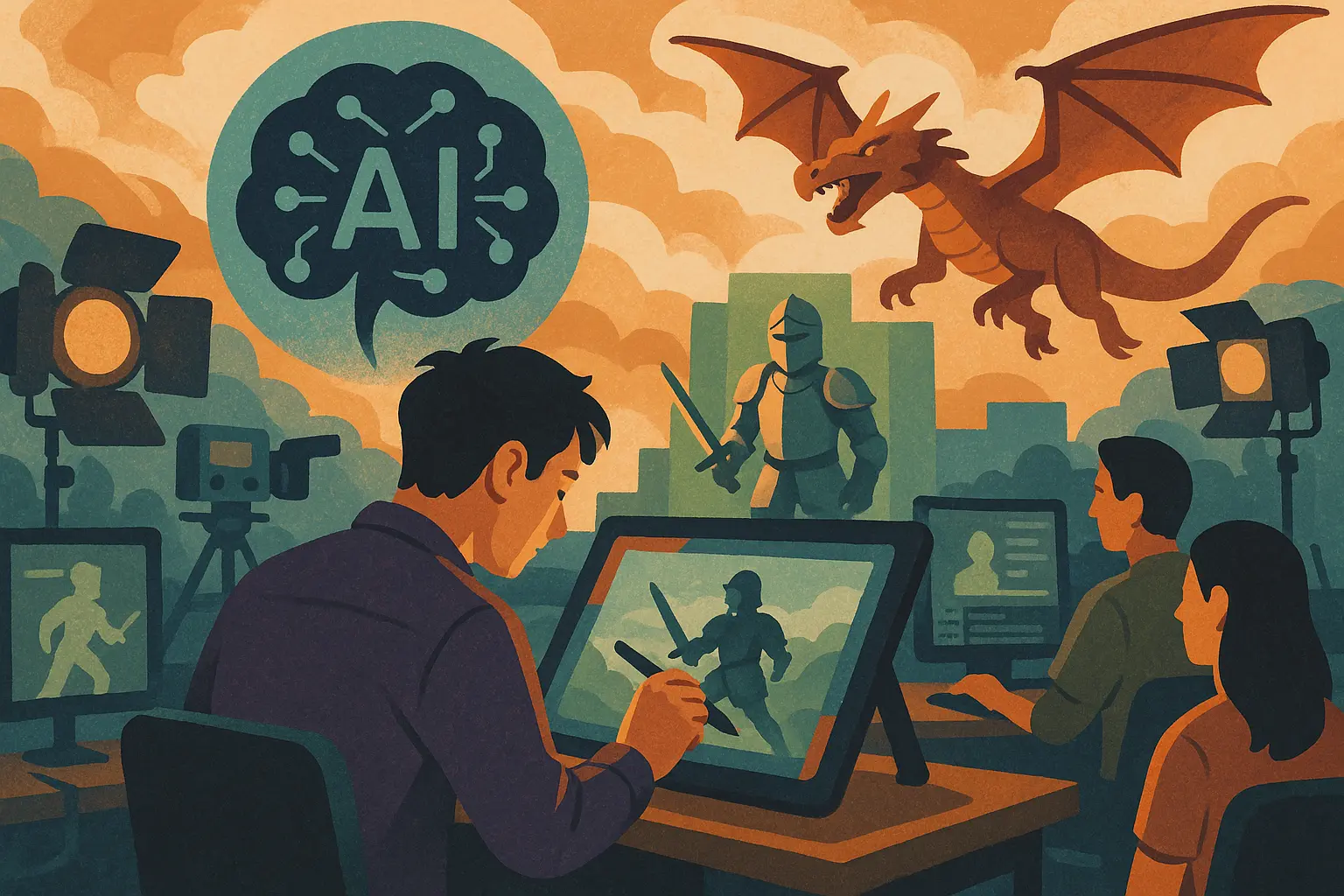
ByteDance releases Seedance 2.0 AI video model; film industry expert Tim reviews it, highlighting major breakthroughs in camera movement, storyboarding, and audio-visual synchronization. However, Tim discovered that the model automatically and unauthorizedly matched his voice without any licensing agreement. The film industry is concerned that AI could perfectly mimic digital doubles that are indistinguishable from real persons. The slicing project predicts that movies will diverge into two paths: gamified immersive experiences or a return to social functions.
Seedance 2.0 Technical Breakthroughs: From Stiffness to Fluidity
ByteDance’s latest AI video model, Seedance 2.0, quietly debuted, receiving high praise from renowned tech channel “Film & TV Storm” founder Tim in his latest video. Unlike previous AI camera movement issues, Tim believes Seedance 2.0 can handle large-scale, smooth camera motions—a significant breakthrough in AI-generated videos.
Earlier AI video tools like Runway and Pika could generate visuals, but their camera movements often appeared mechanical and unnatural. Common problems included sudden changes in tracking speed, jerky camera shakes, and a lack of the “breathing” feel that professional cinematographers provide. These flaws made AI-generated videos easily recognizable and unable to meet professional film standards. Seedance 2.0’s breakthrough lies in its ability to simulate real cinematographer logic, including easing curves, natural focus transitions, and aesthetic composition considerations.
The improvement in storyboarding capabilities is even more revolutionary. Tim notes that AI demonstrates director-like logical intent, switching perspectives for narrative flow while maintaining character consistency. In traditional filmmaking, storyboarding is a core task for directors and cinematographers, involving narrative pacing, emotional delivery, and visual coherence. Seedance 2.0 can understand script logic and automatically design reasonable shot transitions, transforming AI from mere image generators into creative assistants with directorial thinking.
The progress in audio-visual harmony is equally impressive. Seedance 2.0 can generate natural voice whispers and environmental sound mixes with a single click, greatly simplifying time-consuming post-production workflows. In traditional film post-production, sound design is highly specialized and time-consuming—what might take days for a professional sound designer to clean dialogue, record ambient sounds, create Foley, and mix can now be compressed into minutes with Seedance 2.0, boosting efficiency by over a thousand times.
Three Major Technical Breakthroughs of Seedance 2.0
Fluid Camera Movement: Mimics real cinematographer easing curves and composition logic, eliminating AI stiffness
Director-level Storyboarding: Understands narrative logic to automatically design shot transitions, maintaining character consistency
One-Click Sound Effects: Automatically generates voice and environmental sound mixes, streamlining post-production
From a technical perspective, these breakthroughs likely stem from larger training datasets and more advanced temporal models. Seedance 2.0 probably employs a variant of Transformer architecture, combined with diffusion models and GANs (Generative Adversarial Networks), trained on vast amounts of professional film and TV content. ByteDance’s TikTok and Douyin possess the world’s largest short-video databases, providing unparalleled training resources for Seedance 2.0.
Unauthorized Digital Cloning: A Pandora’s Box of Copyright and Ethics
While Seedance 2.0 is powerful, “Film & TV Storm” also uncovered potential risks during testing. Tim found that uploading only his photo without any voice data allowed the model to identify him and automatically match his voice. Even more startling, after uploading a front photo of the “Film & TV Storm” building, AI could accurately compute details of the building’s back side outside the camera’s view.
Tim states he has never received licensing fees from ByteDance nor been contacted by them. This suggests Seedance 2.0 may have ingested large amounts of visual and audio data from countless film and TV creators without their knowledge or consent. Such practices raise serious copyright concerns. In most jurisdictions, personal likeness and voice rights are protected by law; using someone’s audiovisual data for commercial training without permission could constitute infringement.
Tim worries that if AI masters an individual’s complete audiovisual data, it could create indistinguishable digital doubles, making it difficult even for close family members to tell real from fake—posing huge copyright and ethical risks. This concern is not unfounded. With the rise of Deepfake technology, there have been multiple cases of AI-synthesized celebrity videos used for scams. If Seedance 2.0’s capabilities are abused, it could lead to identity theft, fake news, and financial fraud.
Deeper ethical issues concern transparency of data training. ByteDance has never disclosed Seedance 2.0’s training data sources. If the model indeed used large amounts of publicly available creator content, did those creators know or consent? Should they be compensated? These questions lack clear legal frameworks worldwide. The EU’s AI Act and various US proposals are attempting to regulate this, but enforcement and effectiveness remain uncertain.
From an industry perspective, if Seedance 2.0 can replicate any creator’s style, voice, and appearance without authorization, the value system of content creation could collapse. Creators’ years of building personal brands and unique styles might be copied perfectly in minutes. This is not only an economic loss but also a fundamental threat to individual identity and creative integrity.
What’s Left for Filmmakers? The Irreplaceability of Experience and Flesh
Tim believes that although Seedance 2.0 is not yet perfect, future versions will likely revolutionize the industry. Tasks that once took hundreds of hours—such as creating complex shots—can now be done in minutes, rapidly devaluing professional skills. When human effort and AI output become hard to compete with, Tim questions at the end of his video: AI is dismantling the traditional barriers of film production, but is this good or bad for humanity?
In “Film & TV Storm,” the conclusion is “Experience.” Experience shapes each person’s unique soul. When you see your mother’s white hair, walk into your old school, smell the classroom, AI might not fully grasp your feelings. Steam trains are too slow and primitive for AI, but for humans, they carry countless memories of farewells and hopes of reunion.
Popular Chinese film critic “Slice Project,” with nearly 2 million followers on Bilibili, believes that AI may have unlimited data, but only humans possess fragile, imperfect, yet authentic flesh and blood. She points out that modern people are immersed in images from a young age, even before truly living, experiencing, questioning, and losing. As a result, much of creation is driven by form rather than meaning, making these images more like imitations of dreams rather than dreams themselves.
Two Diverging Paths for the Future of Film
Path 1: Highly gamified and immersive—AI-driven interactive storytelling where viewers become co-creators, with each viewing offering different endings
Path 2: Return to authentic social functions—reconnecting with the oldest social essence, gathering around screens to re-experience the world, like ancestors sharing stories around a campfire
Renowned director Ang Lee once said, “I’m not worried about AI replacing us; I’m more concerned that our thinking might become AI-like.” This highlights a deeper anxiety. Technological progress itself isn’t scary; what’s frightening is losing independent thought and genuine feeling, turning creation into mere imitation of AI-generated content.
Apple founder Steve Jobs once said: “All technology is for storytelling, for the creative people. I believe that 60 years from now, people will still watch Toy Story—not because of computer graphics, but because of the story about friendship.” This remains true today, 30 years later. No matter how powerful Seedance 2.0 becomes, it is ultimately just a tool. What truly moves people is still the story itself.