


Seedance fake videos are spreading wildly, even affecting Sanae Takashi, leading Disney and Hollywood to crack down.
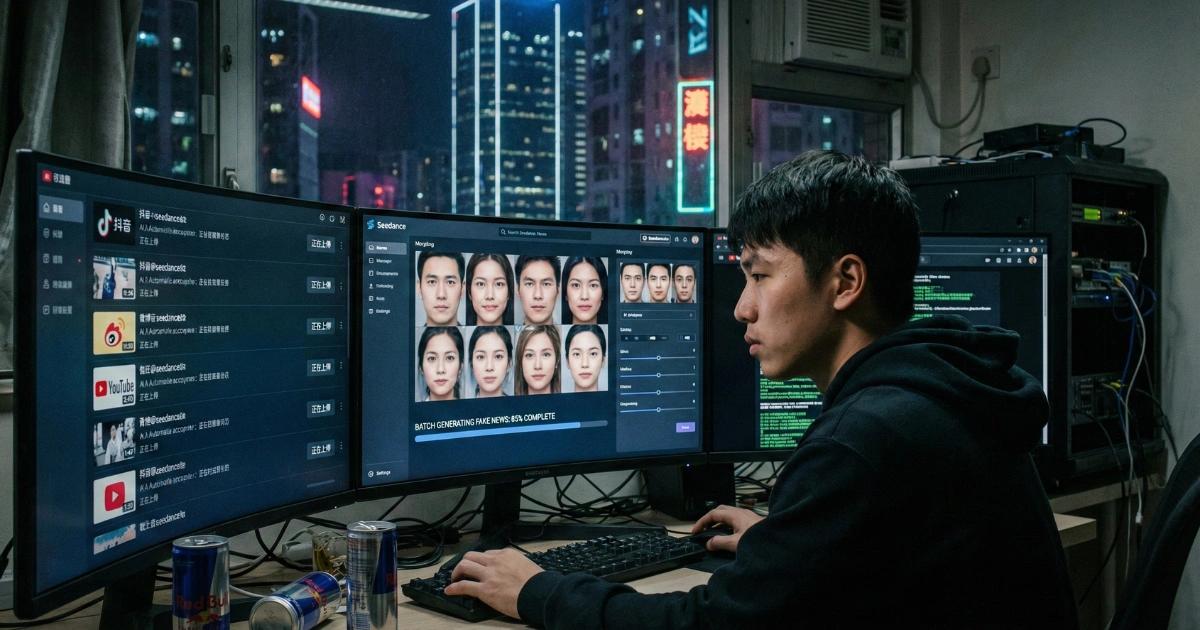
Disney Accuses Seedance 2.0 of Creating a Pirated Content Library, Infringing Rights; Hollywood and the Japanese Government Voice Concerns, AI Video War Escalates.
Disney Strikes Back with Legal Action, Accusing ByteDance of Building a “Pirated Content Library”
Shortly after the launch of ByteDance’s generative AI video tool Seedance 2.0, it became embroiled in intense legal disputes. According to Axios, global entertainment giant Disney officially sent a cease-and-desist letter to ByteDance on February 14, accusing the tool of large-scale copyright infringement during its training process.
Disney appointed Jenner & Block partner David Singer to handle the case. In the letter, he sharply condemned ByteDance’s actions as a “virtual smash-and-grab,” asserting that such intellectual property (IP) violations are deliberate and widespread, and completely unacceptable.
The core issue Disney highlights is that Seedance 2.0 appears to contain a fully functional “pirated library,” which includes well-known media assets such as Star Wars and Marvel superhero series, treating these valuable copyrighted characters as public domain materials that users can freely invoke.
According to a letter addressed to ByteDance’s General Counsel John Rogovin, Disney emphasized that just days after the tool’s launch, signs of out-of-control infringement had already appeared. In fact, this is not Disney’s first action against tech giants; in December 2025, the company also issued similar legal warnings to Google’s Veo, Meta, and Character.AI, accusing them of commercial use of Disney copyrighted images, and has joined related lawsuits against Midjourney and MiniMax.
Read More
Powerful Legal Moves! Disney Sends Cease-and-Desist to Google, Then Signs Licensing Deal with OpenAI
Hollywood’s Top Legal Teams Strike Back! Disney and Universal Sue Midjourney: Openly Copying
Film and TV unions and industry alliances jointly condemn, Hollywood stars become major infringement victims
Beyond the major studios, the American Actors Guild SAG-AFTRA and the Motion Picture Association (MPA) quickly joined the condemnation.
SAG-AFTRA stated that unauthorized content generated by Seedance 2.0 has seriously threatened the livelihoods of human actors. Union President Sean Astin is himself a victim; circulating online are AI-generated videos where his character Samwise Gamgee from The Lord of the Rings discusses why they don’t just send eagles to Mount Doom.
Additionally, false images have appeared on social media showing Brad Pitt and Tom Cruise fighting on rooftops, prompting the union to criticize the tool for ignoring legal, ethical, and basic informed consent principles.
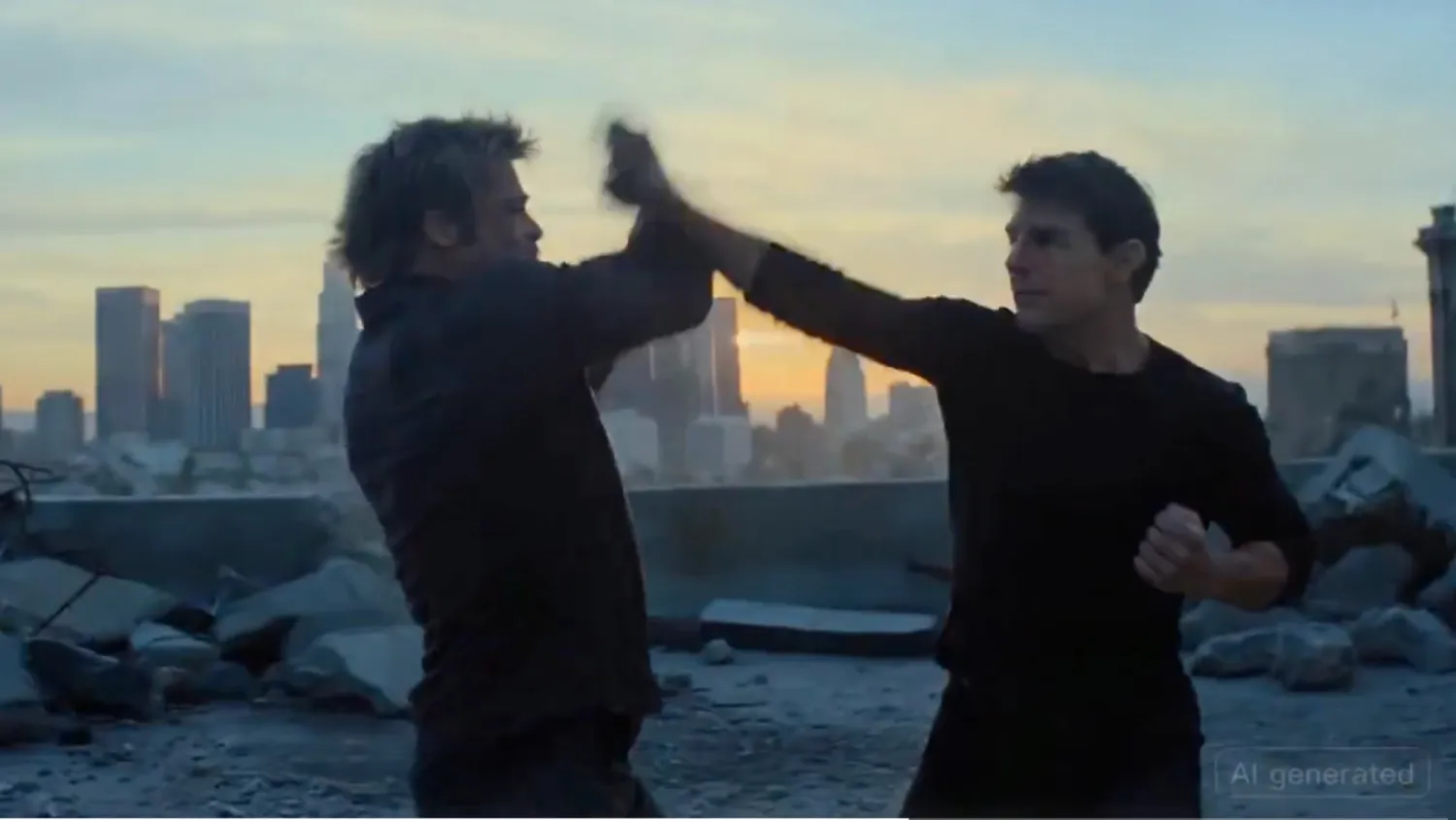
Image source: The Hollywood Reporter
Unauthorized use of Seedance 2.0 to create images of Brad Pitt and Tom Cruise fighting on rooftops
In response to these phenomena, the Human Artistry Campaign, an organization protecting artists’ rights, directly condemned Seedance 2.0’s release as an attack on creators worldwide, dismissing these unlicensed deepfake and voice cloning works as destructive to culture.
MPA President Charles Rivkin stated in a release that ByteDance launched the service without any substantial security measures, openly disregarding copyright laws that support millions of American jobs.
Subsequently, Paramount also sent a legal letter to ByteDance, indicating that Hollywood is forming a united front to curb this uncontrolled wave of infringement through legal means.
Japanese Government Expresses Deep Concern: No Tolerance Without Authorization
The AI controversy sparked by Seedance 2.0 has crossed the Pacific, drawing the attention of the Japanese government. On February 13, 2026, Japanese Minister of Economy, Trade and Industry and AI Strategy Minister Noriaki Onoda made comments on the risks of the tool during a press conference after a cabinet meeting.
Minister Onoda mentioned that there are already infringing videos involving well-known Japanese IPs online, such as Ultraman and Detective Conan, depicting characters fighting or committing violence against Japan’s Prime Minister.
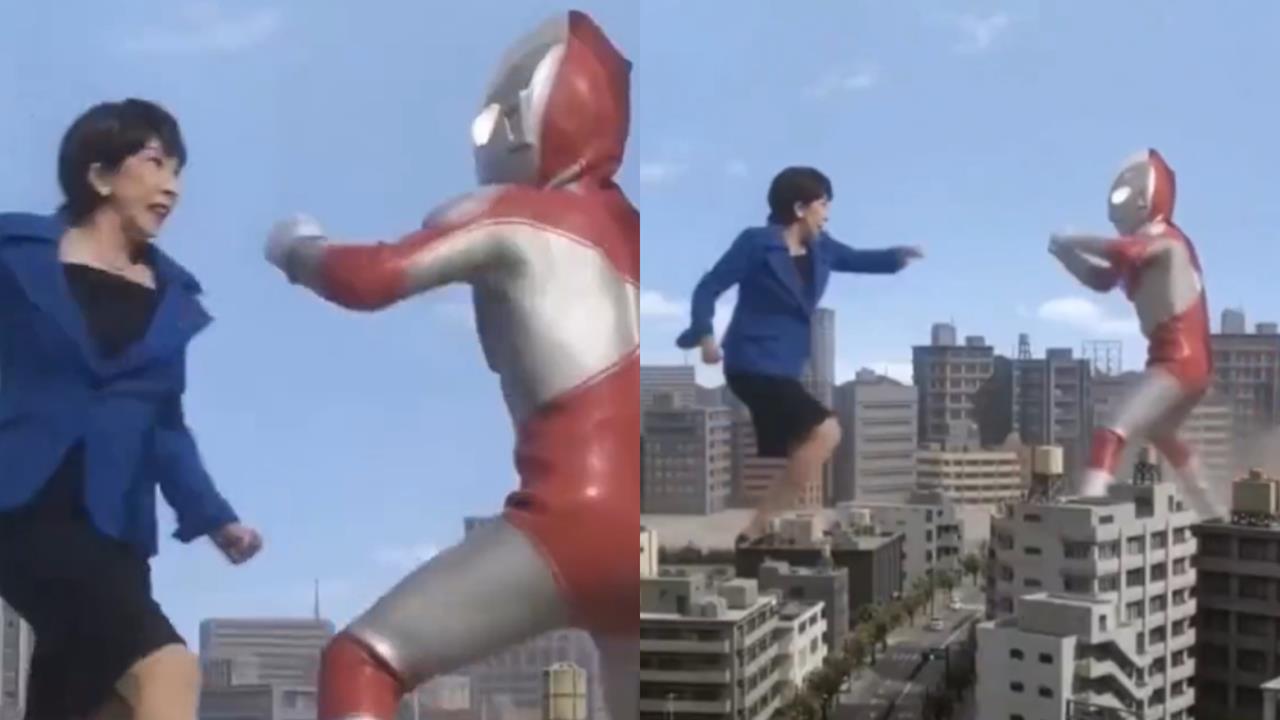
Image source: X (Chinese social media)
Chinese netizens created controversial content of Ultraman fighting the Japanese Prime Minister
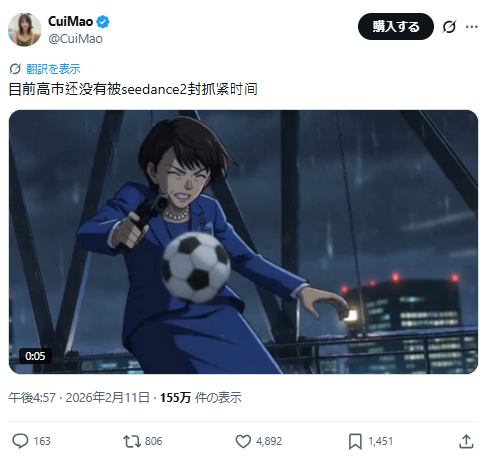
Image source: X / CuiMao (Chinese social media)
Chinese netizens created controversial content of Detective Conan characters fighting or attacking the Japanese Prime Minister
He emphasized that although the tool has not yet been officially released in Japan, if it is confirmed to have trained or generated content using copyrighted works without permission, the Japanese government will not stand idly by.
The Japanese government has instructed relevant agencies to communicate with ByteDance and is collecting information to determine whether to take guidance or advisory measures under the AI Law. Onoda also reminded users that, despite the convenience brought by AI technology, they must possess proper literacy; careless use of copyrighted or privacy-sensitive materials could lead to legal penalties.
Japan’s current strategy for AI industry development involves a balanced approach of “stable utilization” and “risk prevention,” aiming to promote technological innovation while establishing effective regulation to protect domestic creators.
Legal Strategies and Industry Alliances at a Crossroads as AI Video Industry Enters a Strategic Turning Point
While legal battles intensify, the industry’s competitive landscape appears highly contradictory. Although Disney has taken a tough stance against ByteDance and Google, it has shown a very different attitude toward another AI leader, OpenAI.
Recently, Disney announced a $1 billion investment in OpenAI and plans to license its copyrighted characters to the Sora video platform and ChatGPT’s image generation tools. This indicates that major content holders are attempting to steer AI development through strategic licensing, ensuring that copyright content generated by Sora can be streamed on Disney+ and turning technological threats into commercial opportunities.
Read More
Disney Signs Licensing Deal with OpenAI! Invests $1 Billion to Acquire Equity, Mice to Legally Land on Sora
Compared to OpenAI and other competitors, Seedance 2.0 demonstrates significant technological progress in audiovisual integration and cinematic quality, with generated images considered more fluid than many existing models. However, if such technological leadership is built on ignoring legal regulations, it will inevitably trigger deeper industry conflicts. As AI video generation technology accelerates in 2026, balancing technological innovation, commercial licensing, and creator rights has become a critical challenge for ByteDance and the global entertainment industry. In response to widespread legal threats, ByteDance has also announced plans to implement safety mechanisms for Seedance 2.0 to help quell this copyright storm.