


Is the end of antivirus software? Claude AI uncovers 500 zero-day vulnerabilities, frightening Wall Street, CrowdStrike plummets 18%
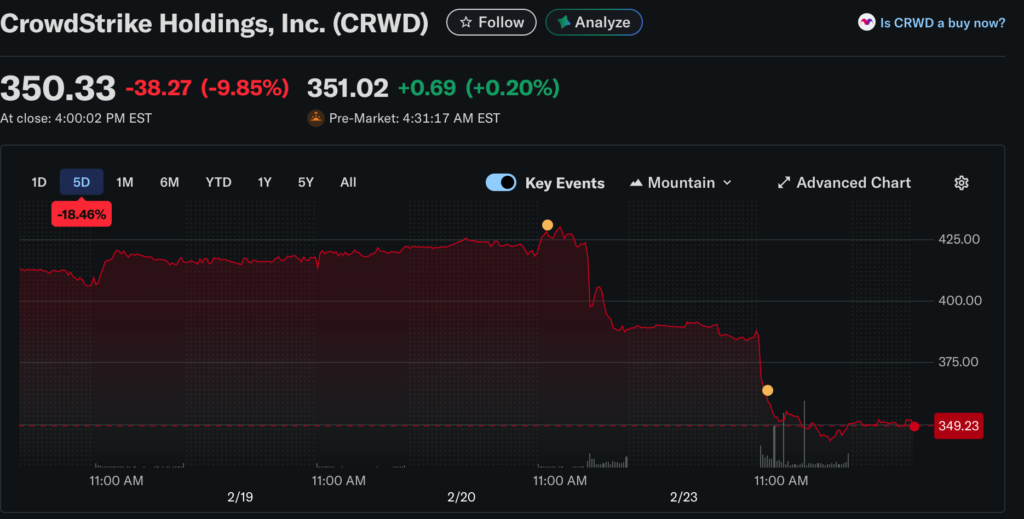
Anthropic launched its AI-powered vulnerability detection system “Claude Code Security” last Friday, claiming to have uncovered over 500 high-severity zero-day vulnerabilities that remained undetected even after decades of expert review. This caused a panic sell-off in cybersecurity stocks. CrowdStrike plummeted 18% in a single day, losing $20 billion in market value. Palo Alto Networks and Fortinet each dropped about 9%, spreading market fear.
(Background recap: Claude Opus 4.6 arrives: writes its own compiler, creates PowerPoint presentations, casually finds 500 zero-day vulnerabilities—your job, it wants to try it out.)
(Additional context: The Pentagon is confronting Anthropic! Fully opening up Claude for military use—“or else cancel contracts and fire.”)
Table of Contents
Toggle
- Claude Opus 4.6 uncovers 500+ zero-day vulnerabilities, shocking the industry
- Cybersecurity stocks wiped out: CrowdStrike drops 18%, $20 billion market cap evaporates
- Is AI stealing cybersecurity professionals’ jobs?
- The impact of AI security tools may just be beginning
On February 20, Anthropic released “Claude Code Security” in limited research preview. This AI-driven code vulnerability detection system can automatically scan entire codebases, verify findings to reduce false positives, and suggest patches for developers.
Unlike traditional static analysis tools, Claude Code Security can “understand code context like a skilled security researcher,” track data flow patterns, and identify vulnerabilities that typical pattern-matching tools often overlook.
Claude Opus 4.6 uncovers 500+ zero-day vulnerabilities, shocking the industry
According to VentureBeat, Anthropic directed its most advanced model, Claude Opus 4.6, at open-source code repositories across multiple production environments, discovering over 500 high-severity vulnerabilities—still undetected after decades of expert review and millions of hours of fuzz testing.
Notably, OpenAI also released a benchmark on February 19 to evaluate AI models’ performance in detecting, patching, and exploiting smart contract security flaws. Claude Opus 4.6 ranked the highest in this test.
Cybersecurity stocks wiped out: CrowdStrike drops 18%, $20 billion market cap evaporates
The launch of Claude Code Security triggered a broad collapse in cybersecurity stocks:
- CrowdStrike: down 18%, losing about $20 billion in market value, the biggest drop
- Palo Alto Networks (PANW): down about 9%, market cap around $116 billion
- Fortinet (FTNT): down about 9%
- Cloudflare, Zscaler: also declined
Robert W. Baird security and infrastructure analyst Shrenik Kothari described this sell-off as “panic-driven, narrative-led.”
Is AI stealing cybersecurity professionals’ jobs?
Noted market analyst account The Kobeissi Letter pointed out that these market reactions reflect a reasonable concern that “AI will replace IT personnel.” When AI can replicate the work of human security experts, pricing power shifts from sellers (security vendors) to buyers (corporate clients), posing a serious threat to the traditional cybersecurity moat.
Wedbush analyst attributes this decline to “AI ghost trade fears,” believing Anthropic’s entry has reinforced the market’s perception that “the cybersecurity industry will be fundamentally reshaped by AI.”
The impact of AI security tools may just be beginning
Currently, Claude Code Security still operates in a “human-in-the-loop” mode—AI identifies issues and suggests solutions, but final decisions remain with developers. However, just speeding up the “vulnerability discovery” process with AI is enough to shake the valuation logic of the entire cybersecurity industry.
When an AI model can complete in hours what human security researchers have taken decades to do, the market can’t help but ask: Are the billions of dollars in annual subscription fees for traditional cybersecurity vendors still justified?