


CJNG Leader 'El Mencho' Killed in Military Operation, Spotlighting Cartel's Crypto Use for Drug Trafficking
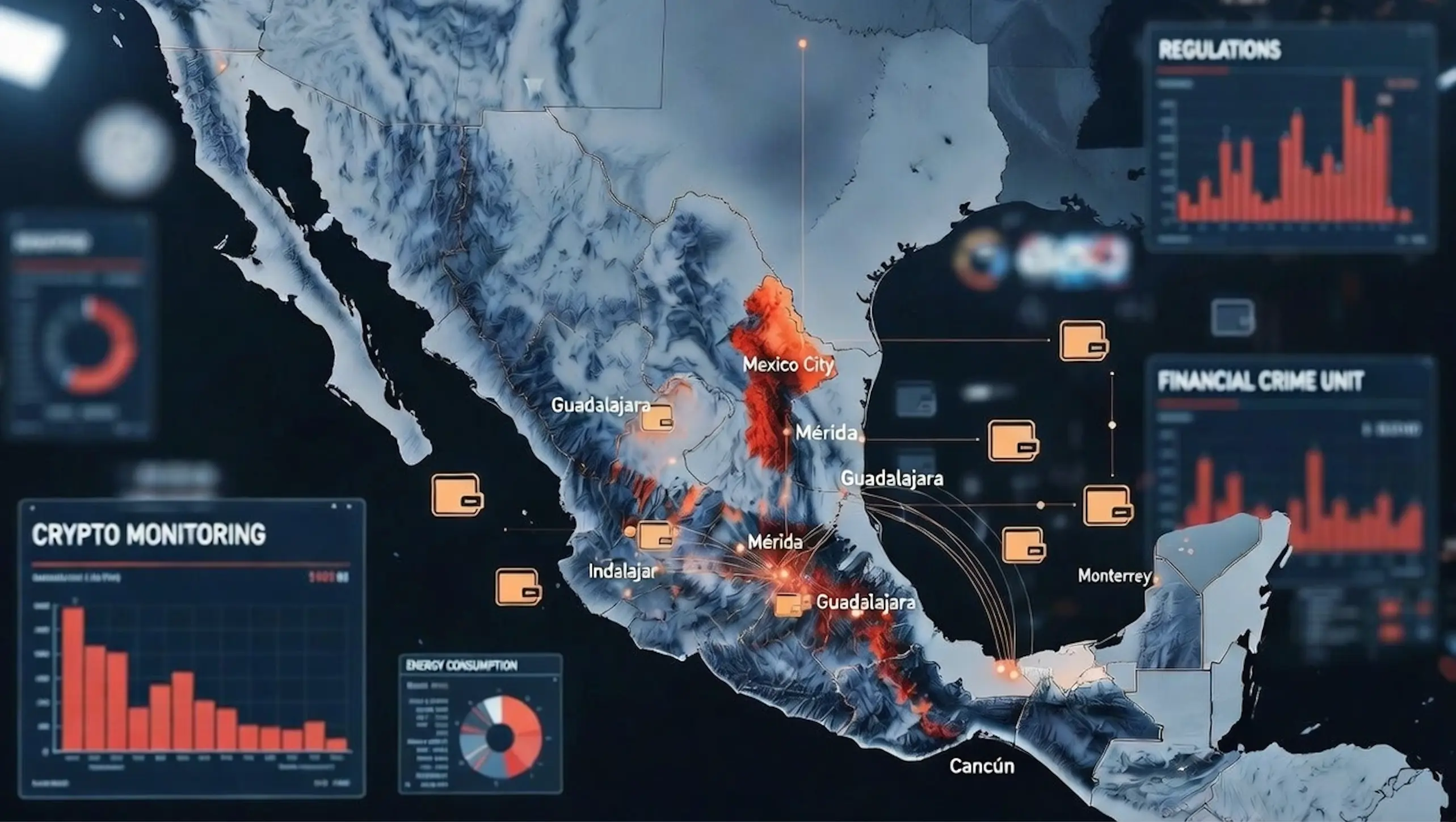
Nemesio Rubén Oseguera Cervantes, known as “El Mencho,” the leader of the Jalisco New Generation Cartel (CJNG)—a US-designated Foreign Terrorist Organization—was killed on February 22, 2026, during a military operation, triggering widespread violence across at least 20 Mexican states. The incident has renewed regulatory focus on Mexican cartels’ sophisticated use of cryptocurrencies, including Bitcoin (BTC) and Tether (USDT), to launder proceeds, purchase fentanyl precursors from China, and circumvent traditional banking oversight.
Leadership Elimination and Resulting Violence
Mexican law enforcement conducted an operation on February 22, 2026, resulting in the death of CJNG leader Nemesio Rubén Oseguera Cervantes, one of the world’s most wanted fugitives. The US Department of State had previously offered a $15 million reward for information leading to his capture or conviction.
Following the operation, cartel members initiated coordinated disturbances across multiple states. According to reports, at least 20 Mexican states experienced roadblocks, vehicle torching, and attacks on businesses. The National Guard reported approximately 25 personnel killed in subsequent clashes with cartel elements.
CJNG was formally designated as a Foreign Terrorist Organization by the United States on February 20, 2025, pursuant to Section 219 of the Immigration and Nationality Act. The US State Department has characterized the organization as having “the highest cocaine, heroin, and methamphetamine trafficking capacity in Mexico,” with increasing involvement in fentanyl trafficking into the United States.
Cartel Cryptocurrency Financial Infrastructure
Regulatory and investigative bodies have documented extensive cryptocurrency utilization by Mexican cartels, with CJNG identified as a pioneer in adopting digital assets for financial operations.
Precursor Chemical Procurement via Cryptocurrency
A March 2025 Chainalysis report identified that suspected China-based chemical traders received more than $37.8 million in cryptocurrency between 2018 and 2023, with Mexican cartels including CJNG as primary buyers. These transactions funded the purchase of fentanyl precursor chemicals and manufacturing equipment from Chinese suppliers.
The US Treasury’s Financial Crimes Enforcement Network (FinCEN) confirmed in 2024 that Mexico-based transnational criminal organizations were using virtual currencies—including Bitcoin, Ethereum, Monero, and Tether—specifically to acquire fentanyl precursor chemicals from China.
TRM Labs investigations revealed that precursor chemical suppliers actively advertise on darknet markets and messaging applications, accepting digital assets for chemicals shipped to Mexico. Once payment is completed, funds are laundered through complex transaction patterns including peel chains, layering, and cross-chain swaps, with eventual cash-out through Chinese exchanges or international money mules.
Money Laundering Through Chinese Networks
FinCEN highlighted in August 2025 that CJNG, the Sinaloa Cartel, the Gulf Cartel, and other Mexico-based organizations were increasingly relying on Chinese Money Laundering Networks (CMLNs) to process illicit proceeds.
Chainalysis reported that CMLNs now dominate cryptocurrency-related money laundering, accounting for approximately 20% of known cryptocurrency money laundering activity in 2025. These networks provide cartels with sophisticated layering capabilities that obscure fund origins and ultimate recipients.
Specific Enforcement Actions
The US Attorney’s Office for the Southern District of New York indicted Paul Campo, a former DEA official, and Robert Sensi for conspiring to provide material support to CJNG. According to the indictment, Campo and Sensi agreed to launder approximately $12 million of CJNG narcotics proceeds, successfully laundering $750,000 by converting cash into cryptocurrency.
The scheme also involved facilitating payment for approximately 220 kilograms of cocaine, with the defendants receiving direct profit shares from narcotics proceeds and additional commissions for laundering the balance.
In a separate 2023 enforcement action, authorities uncovered a broker operation that converted and cashed out cartel funds using cryptocurrency tools. The operation employed a combination of cash transactions, exchangers, and digital assets to disguise money origins. More than $600,000 in cash was found in the broker’s vehicle during arrest.
Historical Context of Cartel Cryptocurrency Adoption
As early as 2020, Reuters reported that US and Mexican authorities observed increasing Bitcoin usage among major drug trafficking groups, including CJNG and the Sinaloa Cartel, for money laundering operations.
By 2022, US authorities documented CJNG transactions totaling tens of millions of dollars routed through cryptocurrency services, including major platforms. Investigators noted that funds were frequently directed through chains of intermediaries, making source and recipient identification increasingly difficult.
Analysts indicate that cryptocurrencies enabled CJNG to accelerate international settlements and reduce dependence on traditional banking infrastructure subject to regulatory scrutiny and transaction reporting requirements.
FAQ: Understanding Cartel Cryptocurrency Operations
Q: How do Mexican cartels like CJNG use cryptocurrency?
Mexican cartels utilize cryptocurrencies including Bitcoin, Ethereum, Monero, and Tether for multiple purposes: purchasing fentanyl precursor chemicals and manufacturing equipment from Chinese suppliers, laundering drug proceeds through Chinese Money Laundering Networks, facilitating cross-border transfers without banking oversight, and settling payments with intermediaries in the drug supply chain.
Q: What regulatory actions have been taken against cartel cryptocurrency use?
FinCEN has issued multiple advisories highlighting cartel cryptocurrency usage and Chinese Money Laundering Networks. The US Department of Justice has prosecuted individuals for providing material support to cartels through cryptocurrency laundering schemes. Additionally, blockchain analytics firms including Chainalysis and TRM Labs work with law enforcement to trace cartel-related transactions.
Q: What is the scale of cartel cryptocurrency money laundering?
Chainalysis reported that Chinese Money Laundering Networks alone accounted for approximately 20% of known cryptocurrency money laundering activity in 2025. Suspected China-based chemical traders received over $37.8 million in cryptocurrency between 2018 and 2023, with Mexican cartels as primary buyers. Individual cases have documented laundering amounts ranging from $750,000 to $12 million in specific schemes.
Q: Which cryptocurrencies are most commonly used by cartels?
Investigators have documented usage of Bitcoin for general laundering operations, Tether (USDT) for stable value transfers, Ethereum for smart contract-based transactions, and Monero for privacy-enhanced transfers where anonymity is prioritized. The selection depends on specific operational requirements including transaction speed, traceability concerns, and counterparty preferences.
Broader Implications for Financial Regulation
El Mencho’s death represents a significant tactical victory in Mexico’s campaign against organized crime. However, financial intelligence indicates that the infrastructure supporting cartel operations—including cryptocurrency-based money laundering networks, precursor chemical supply chains, and international money movement systems—extends beyond individual leadership.
Regulatory agencies continue developing analytical capabilities to identify and disrupt cryptocurrency transactions associated with transnational criminal organizations. The Financial Crimes Enforcement Network has emphasized collaboration with Mexican authorities and blockchain analytics firms to trace funds moving through increasingly complex layering techniques.
As cartels demonstrate technological adaptability in financial operations, regulatory frameworks continue evolving to address the intersection of digital assets and organized crime financing.