


Pokémon Card Sells for $16.5M: Scaramucci Calls Collectibles Investment Assets
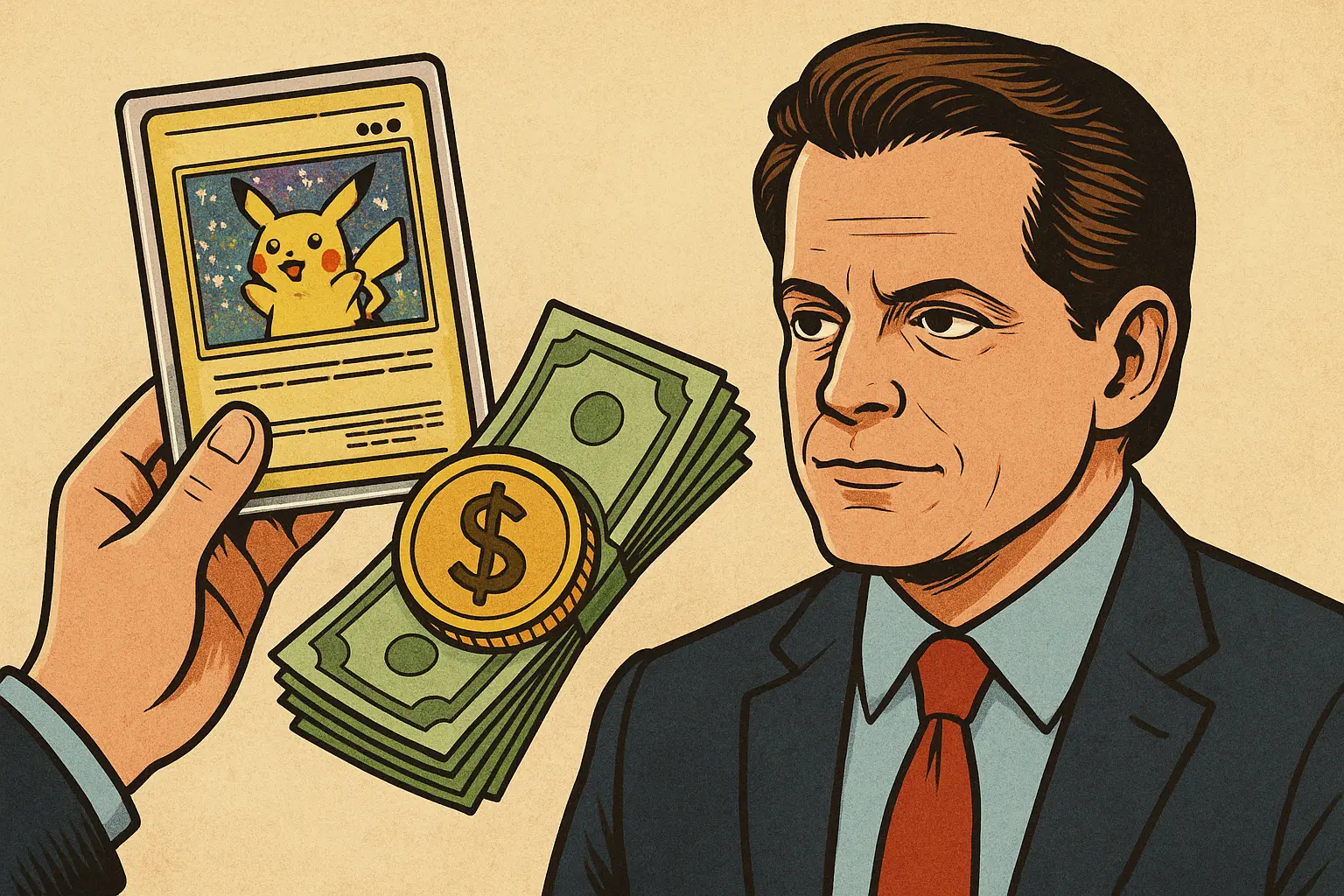
A Pokémon card sold for world record $16.5M as AJ Scaramucci won 1998 Pikachu Illustrator. Logan Paul gained 200%+ return. Scaramucci, Solari Capital founder, views the Pokémon card as investment, with Card Ladder showing Pokémon index up 145% versus S&P 500’s 15.2%.
Logan Paul’s Record-Breaking Pokémon Card Sale
Social media influencer and wrestler Logan Paul made history last week when he auctioned and sold a rare Pokémon card for $16.5 million, a world record price for an auctioned trading card. The winner views it as investment rather than mere collectible, signaling broader shift in how rare items are valued by wealthy individuals and institutional investors.
The “Pikachu Illustrator” card was made in 1998 and represents one of only an estimated few dozen to exist. Its extreme rarity stems from limited distribution—the cards were awarded as prizes in illustration contests held by CoroCoro Comic magazine in Japan, never sold through retail channels. This provenance creates verifiable scarcity that collectors prize above mass-produced cards.
Paul himself bought the Illustrator Pokémon card in 2021 for nearly $5.3 million, indicating he sold with more than 200% return over approximately four years. This annualized return significantly exceeds traditional asset performance during the same period. Card Ladder’s “Pokémon index” has grown 145% in the past year alone, demonstrating accelerating appreciation rates.
Compare those gains to S&P 500, which is up 15.2% in past year. Or compare it to “Magnificent Seven” darling Alphabet, which is up 73.4% in past year. By these metrics, the Pokémon card market has dramatically outperformed both broad market indices and high-performing technology stocks, validating investment thesis that rare collectibles can generate superior risk-adjusted returns.
AJ Scaramucci’s Investment Thesis
AJ Scaramucci—son of investor and former White House communications director Anthony Scaramucci—won the bidding war for the Pikachu Illustrator Pokémon card. It’s the crowning achievement in the Solari Capital founder’s short collecting career, which started with trading cards during the COVID-19 pandemic.
“I mean, Picassos are great,” he said in interview, explaining the Illustrator card’s importance. “But Pokémon means way more than just a Picasso painting to people.” This cultural significance argument positions Pokémon card collectibles as having emotional value that traditional fine art lacks for younger generations who grew up with the franchise.
After winning, Scaramucci said the Pokémon card purchase was first action in what will be, as he dubbed, a “planetary treasure hunt.” He said the goal, which he is embarking on with his younger brother, is to collect number of real-world, scarce assets across varying categories. This strategy diversifies across collectible types rather than concentrating in single category.
“The compounded annual growth rate of these cards is out of control,” Scaramucci stated. “And they should be treated as investments because that’s what they are. It’s just obvious.” Scaramucci added the cards are way to play “debasement trade,” where investors fearful of countries devaluing currencies move money into hard assets with provable scarcity.
Scaramucci will embark on his treasure hunt through new company called Treasure Trove. However, he did not disclose details about what that company will be nor how it will operate, beyond that it will receive funding from Solari Capital. Scaramucci also didn’t disclose if he plans to sell the Illustrator Pokémon card, or any other collectibles, if they grow more in value.
The Explosive Growth of Trading Card Markets
Trading card markets have exploded in recent years. According to data from Card Ladder, an analytics firm that tracks trading card prices and sales, monthly sales volume in secondary trading has nearly doubled in last two years. This growth encompasses multiple categories including sports cards, gaming cards, and entertainment memorabilia.
eBay CEO Jamie Iannone in the company’s earnings call last week detailed that largest contributor to gross merchandise volume growth in fourth-quarter were collectibles, particularly “driven by continued strength in trading cards.” This statement from major e-commerce platform CEO validates that Pokémon card and broader trading card markets represent significant economic activity rather than niche hobby spending.
“Especially in 2025, the growth has been astronomical,” said Ken Goldin, founder and CEO of Goldin Auctions, which is owned by eBay. Goldin ran the auction for the Illustrator Pokémon card last week. “We have people who are buying solely either because they absolutely love it or they firmly believe that trading cards and collectibles are legitimate alternative asset class.”
The data supports Goldin’s observation. Card Ladder tracking shows certain rare Pokémon card values have appreciated faster than virtually any traditional asset class. Blue-chip cards—those with established rarity and cultural significance—have demonstrated consistent appreciation with occasional explosive growth during market manias.
Collectibles as Alternative Investment Assets
Viewing collectibles as alternative asset is not new, even if unorthodox. Other collectibles like wine and art have been used in past for portfolio diversification by ultra-high-net-worth individuals and family offices. However, the Pokémon card market represents newer phenomenon where mass-market childhood items transform into serious investment vehicles.
Paul Karger, co-founder and managing partner at wealth advisory firm TwinFocus, said he works with clients who collect art, wine, watches and even guitars. But while some view these items as investments, Karger wouldn’t advise clients to get into that mentality exclusively.
“Think of it as passion first, and kind of investment second,” he said. “You hope they go up over time, but they’re absolutely not replacement to financial assets, it’s just maybe complement at the margin.” This balanced perspective acknowledges upside potential while warning against overconcentration in illiquid assets.
Risks of Pokémon Card Investing
Illiquidity: Finding buyers for multi-million dollar cards requires specialized auctions and can take months
Subjective Valuation: Worth depends on others determining value via auctions rather than objective pricing
Tax Disadvantages: Capital gains on collectibles taxed at 28% versus 15-20% for stocks
Authentication Risk: Counterfeit concerns require professional grading and verification
Market Concentration: Narrow buyer pool for ultra-high-end cards creates exit risk
Cultural Shifts: Future generations may not value current franchises similarly
Kaycee LeCong, managing director of family office at Brighton Jones Wealth Management, noted risk is that capital gains on collectibles are taxed at 28%, higher than capital gains taxes on stocks around 15% and 20%. This tax disadvantage means Pokémon card investments must outperform stocks by 13 percentage points annually just to match after-tax returns.
Why Scaramucci Believes in Pokémon Card Investment
Despite risks, Goldin projects more people will view collectibles, particularly trading cards, as alternative assets. He said as more headlines detail major sales—like Paul’s $16.5 million transaction—and price discovery becomes easier with more data, it will only attract more participants. This network effect creates self-reinforcing appreciation as growing buyer pools increase liquidity and validate valuations.
Scaramucci’s thesis centers on cultural significance and demographic trends. Pokémon launched in 1996 and became global phenomenon during late 1990s and early 2000s. The generation that grew up with Pokémon is now entering peak earning years, with disposable income to pursue nostalgic collectibles. This demographic wave creates sustained demand that traditional art markets don’t necessarily benefit from.
“Pokémon means way more than just Picasso painting to people,” Scaramucci emphasized. This cultural resonance argument positions Pokémon card collecting as capturing intangible value that traditional valuation frameworks miss. For millennials and Gen Z, Pikachu represents childhood memories and cultural touchstones that Renaissance paintings simply cannot replicate.
The debasement trade rationale provides macroeconomic justification. As central banks globally maintain expansionary monetary policies and inflation erodes fiat currency purchasing power, scarce physical assets with verifiable provenance become attractive stores of value. Pokémon card with provable authenticity and fixed supply offers inflation hedge similar to gold or real estate but with potentially higher appreciation rates.
The Future of Trading Cards as Investments
Goldin Auctions’ Ken Goldin believes trading card markets will continue maturing into legitimate alternative asset class. Several developments support this trajectory. Professional grading services like PSA and BGS provide standardized authentication and condition assessment, creating objective quality metrics that enable price discovery.
Data platforms like Card Ladder aggregate transaction history, creating transparent price indices similar to stock market indexes. This transparency reduces information asymmetry between buyers and sellers, improving market efficiency. Insurance products specifically for high-value collectibles have emerged, allowing owners to protect investments against physical damage or theft.
Fractional ownership platforms are also emerging, allowing multiple investors to own shares in single high-value Pokémon card. This democratizes access similar to how REITs enable real estate investment without purchasing entire properties. If fractional ownership scales, it could dramatically increase liquidity and broaden the investor base for rare cards currently accessible only to ultra-wealthy individuals.
However, skeptics argue Pokémon card valuations represent speculative bubble driven by nostalgia and cheap money rather than fundamental value. They point to historical collectibles manias—from Beanie Babies to baseball cards—that eventually crashed as hype faded. Whether Pokémon cards avoid similar fate depends on sustained cultural relevance and continued demographic demand.
Treasure Trove: Scaramucci’s Broader Vision
While Scaramucci didn’t disclose if he plans to sell the Illustrator Pokémon card or other collectibles if they grow more in value, he emphasized broader strategy through Treasure Trove company. This venture will systematically acquire scarce real-world assets across multiple categories, not just trading cards.
Scaramucci acknowledged to CNBC that obtaining Declaration of Independence—which he mentioned as goal after winning Illustrator card—is ambitious target requiring substantial work without addressing concrete plan. But at the moment, lack of clarity in future plans is the point.
“For now, if you think I’m just crazy person buying up real-world, scarce assets,” he said, “that’s all you need to know.” This deliberately mysterious positioning generates publicity while maintaining strategic flexibility as Treasure Trove’s business model develops.
FAQ
Why did the Pikachu Illustrator Pokémon card sell for $16.5 million?
The card is one of only few dozen ever made, awarded as prizes in 1998 Japanese illustration contests and never sold retail. This extreme rarity combined with Pokémon’s cultural significance to millennials drove record-breaking auction price.
How much did Logan Paul profit from the Pokémon card sale?
Logan Paul bought the Illustrator card in 2021 for $5.3 million and sold for $16.5 million, representing over 200% return in approximately four years—far exceeding S&P 500 performance during same period.
Are Pokémon cards good investments?
Historical data shows rare Pokémon cards appreciated 145% in past year. However, financial advisors warn about illiquidity, subjective valuations, 28% capital gains tax rate, and authentication risks. Treat as passion first, investment second.
Who is AJ Scaramucci?
AJ Scaramucci is founder of Solari Capital and son of investor Anthony Scaramucci (former White House communications director). He started collecting trading cards during COVID-19 pandemic and now positions himself as alternative asset investor.
What is Treasure Trove?
Treasure Trove is new company AJ Scaramucci is launching to systematically acquire scarce real-world assets across multiple categories. Details remain undisclosed beyond receiving funding from Solari Capital.
How are trading cards taxed compared to stocks?
Collectibles face 28% capital gains tax versus 15-20% for stocks, meaning Pokémon card investments must outperform stocks by 13 percentage points annually just to match after-tax returns.