![]() Trusted Editorial content, reviewed by leading industry experts and seasoned editors. Ad Disclosure
A battle over energy cost is brewing in the crypto space, as a new report from technical analyst Bullrunners pits Bitcoin’s (BTC) energy-hungry Proof of Work (PoW) system against XRP’s comparatively lightweight network. The new analysis has thrown fresh fuel on one of crypto’s oldest rivals, sparking intense debate among crypto community members as they attempt to defend their preferred blockchain network
Trusted Editorial content, reviewed by leading industry experts and seasoned editors. Ad Disclosure
A battle over energy cost is brewing in the crypto space, as a new report from technical analyst Bullrunners pits Bitcoin’s (BTC) energy-hungry Proof of Work (PoW) system against XRP’s comparatively lightweight network. The new analysis has thrown fresh fuel on one of crypto’s oldest rivals, sparking intense debate among crypto community members as they attempt to defend their preferred blockchain network
XRP Vs. Bitcoin’s Energy Cost
A new report from Bullrunners has reignited the long-standing debate between Bitcoin and XRP, this time over a striking difference in energy consumption between the two networks. According to the report, posted on X this Tuesday, XRP consumed just $73,000 worth of electricity to run its entire network over the course of a full year. Bitcoin, by contrast, used over $10 billion in electricity during the same period
Related Reading: XRP Has Toppled Ethereum In This Category And Is Now Gunning For BitcoinBreaking that down further, Bullrunners shared an image which showed that a single Bitcoin transaction carries an energy cost equivalent to powering an average American household for 38 to 49 days, consuming between 1,100 and 1,400 kilowatt-hours (kWh). Meanwhile, a single XRP transaction uses approximately 0.0079 kilowatt-hours (kWh), roughly the amount of energy needed to power a light bulb for a few seconds
Based on this sheer difference in energy consumption, Bullrunners concluded that the XRP network uses up to 99.999% less energy than Bitcoin
Notably, a major reason for this extraordinary energy gap is how each blockchain network validates transactions. Bitcoin’s PoW system requires miners worldwide to continuously compete by solving complex mathematical puzzles using energy-intensive hardware that consumes vast amounts of electricity
On the other hand, XRP relies on a special XRP Ledger (XRPL) Protocol Consensus algorithm. Instead of mining, a group of trusted nodes communicates and votes across several rounds until they reach an agreement on which transactions are valid. With no competition and no energy-intensive mining hardware, the XRP network can settle transactions at a fraction of Bitcoin’s energy cost
Bitcoin And XRP Rivalry Spark Intense Community Debate
Bullrunners’ energy report quickly drew sharp reactions from members of the crypto community, with supporters of each blockchain network offering different interpretations of what Bitcoin and XRP’s energy numbers really mean
Related Reading: XRP Is About To Create History With This Latest MoveOne supporter argued that Bitcoin’s energy consumption is not wasteful, but essential to its security. He described the network’s PoW mechanism as a process that converts real-world energy into a form of unforgeable digital scarcity. He went on to challenge XRP’s decentralization, pointing out that Ripple holds billions of the token and could influence supply without the constraints of a hard cap
XRP supporters fired back with their own case, advocating that the XRP Ledger’s energy efficiency places it ahead of not just Bitcoin but also Ethereum, even after it transitioned to a Proof of Stake (PoS) consensus in 2022. They maintained that XRP is much more energy-efficient than Ethereum on both a per-transaction and network-wide basis.
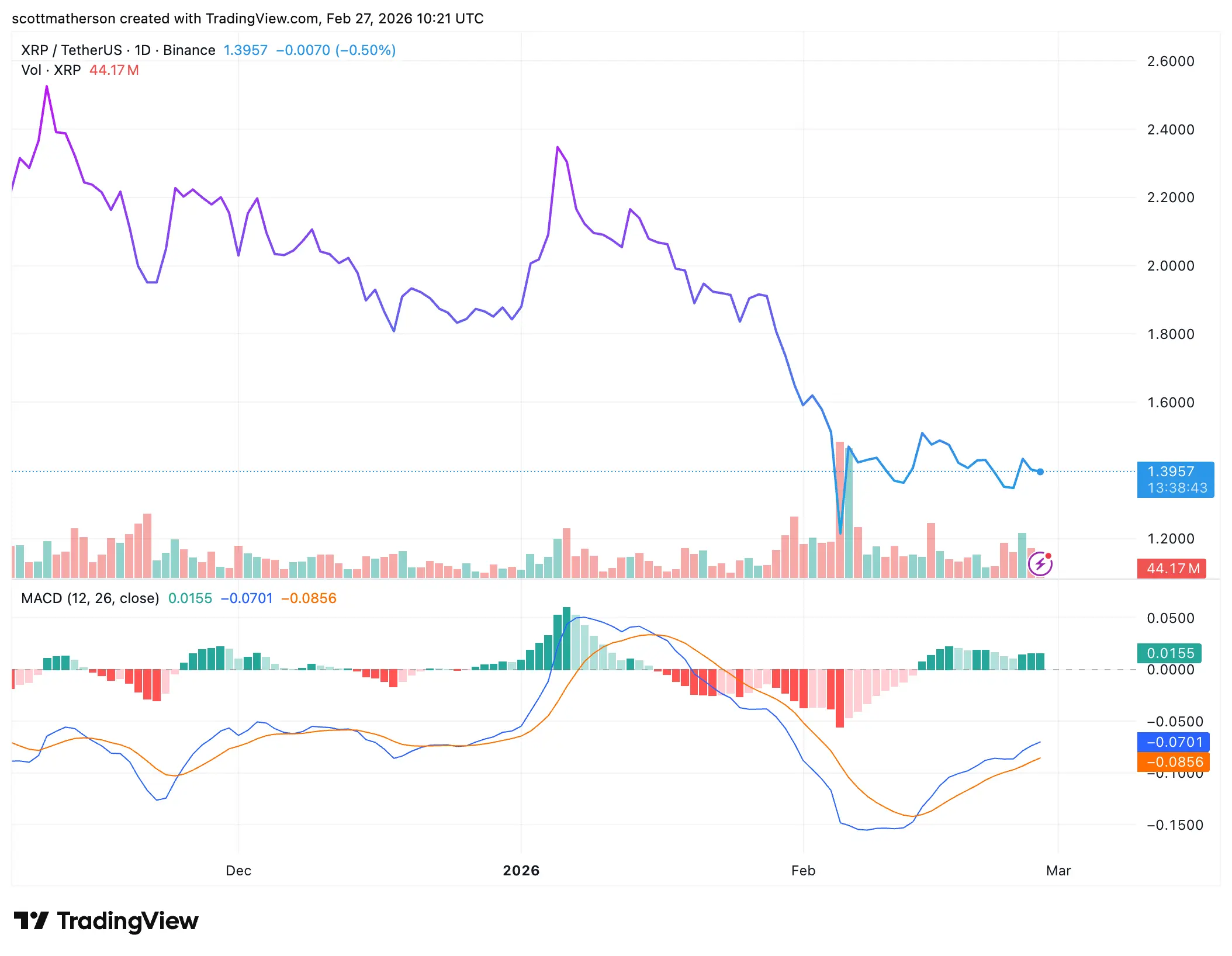 XRP trading at $1.39 on the 1D chart | Source: XRPUSDT on Tradingview.comFeatured image from iStock, chart from Tradingview.com
![]() Editorial Process for bitcoinist is centered on delivering thoroughly researched, accurate, and unbiased content. We uphold strict sourcing standards, and each page undergoes diligent review by our team of top technology experts and seasoned editors. This process ensures the integrity, relevance, and value of our content for our readers.
Editorial Process for bitcoinist is centered on delivering thoroughly researched, accurate, and unbiased content. We uphold strict sourcing standards, and each page undergoes diligent review by our team of top technology experts and seasoned editors. This process ensures the integrity, relevance, and value of our content for our readers.
Disclaimer: The information on this page may come from third parties and does not represent the views or opinions of Gate. The content displayed on this page is for reference only and does not constitute any financial, investment, or legal advice. Gate does not guarantee the accuracy or completeness of the information and shall not be liable for any losses arising from the use of this information. Virtual asset investments carry high risks and are subject to significant price volatility. You may lose all of your invested principal. Please fully understand the relevant risks and make prudent decisions based on your own financial situation and risk tolerance. For details, please refer to
Disclaimer.


