


Pi Network March technical deterioration, is the historical curse repeating?
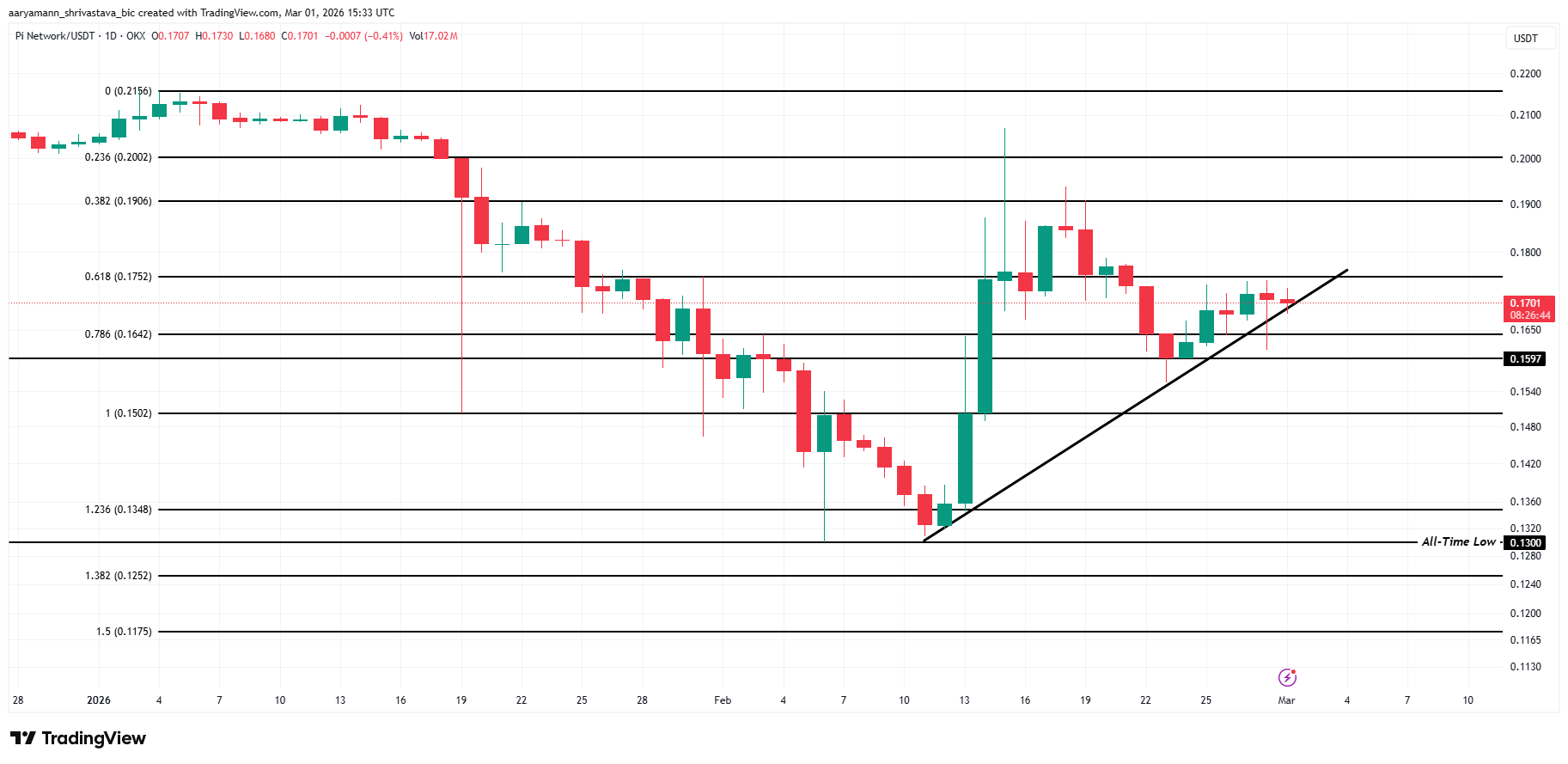
Pi Network experienced a new low in early February and has held the upward trend support line at $0.1701, showing signs of a mild rebound. However, the Money Flow Index (MFI) and Chaikin Money Flow (CMF), two key technical indicators, both indicate ongoing capital outflows, suggesting that this rebound lacks effective funding support. Immediate resistance is at $0.1752. If the bears intensify, the critical support at $0.1597 will determine the future direction.
Technical Analysis: Dual Capital Outflow Warnings from MFI and CMF
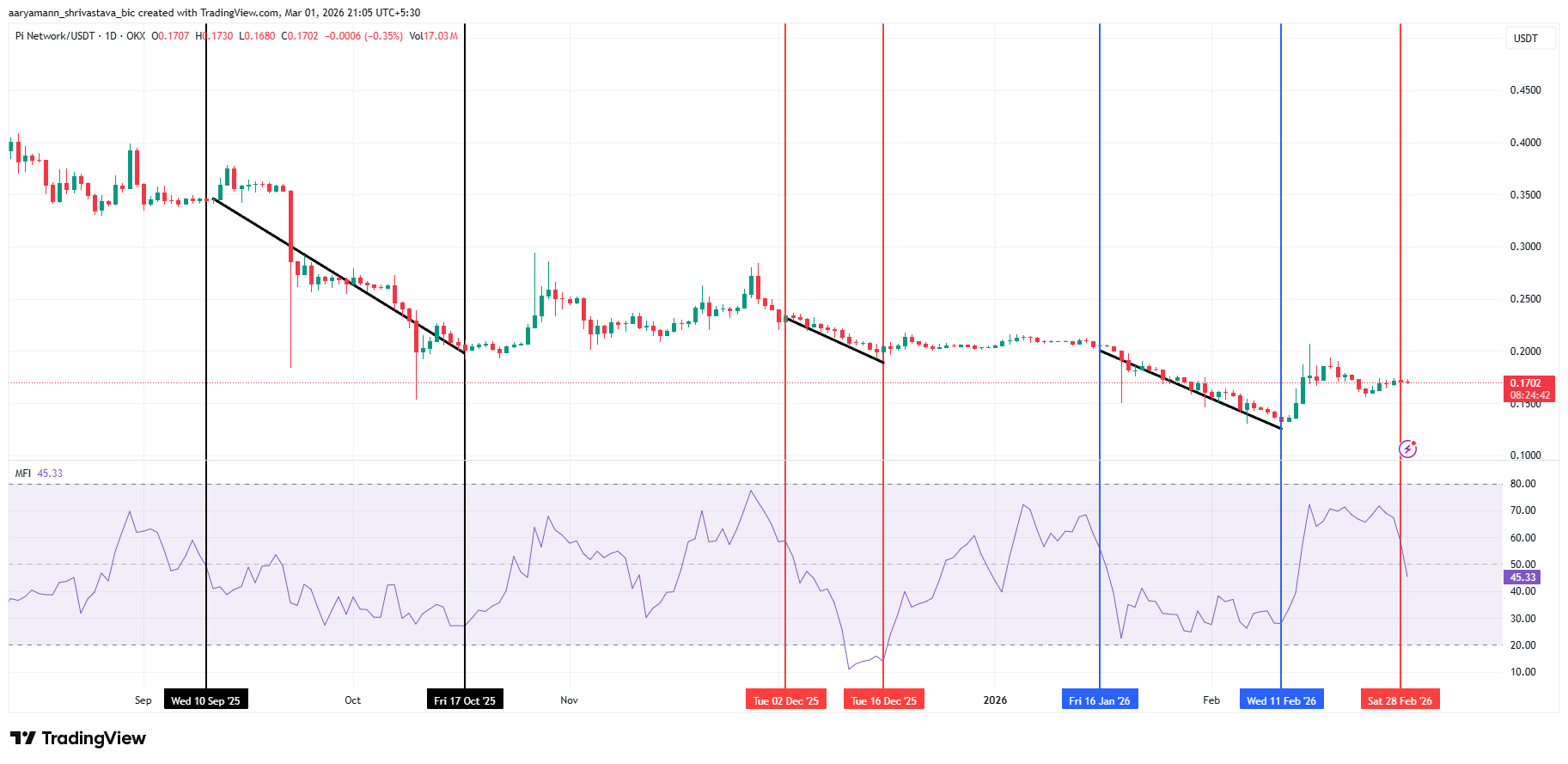 (Source: TradingView)
The Money Flow Index (MFI) has now fallen below the neutral 50 line, reflecting net capital outflow rather than continuous inflow, a typical sign of weakening buyer confidence. Historically, whenever the MFI drops below the neutral line, the price of Pi Network tends to continue downward until buying momentum recovers. If the MFI cannot rebound above 50, downward pressure will likely persist beyond short-term rebounds.
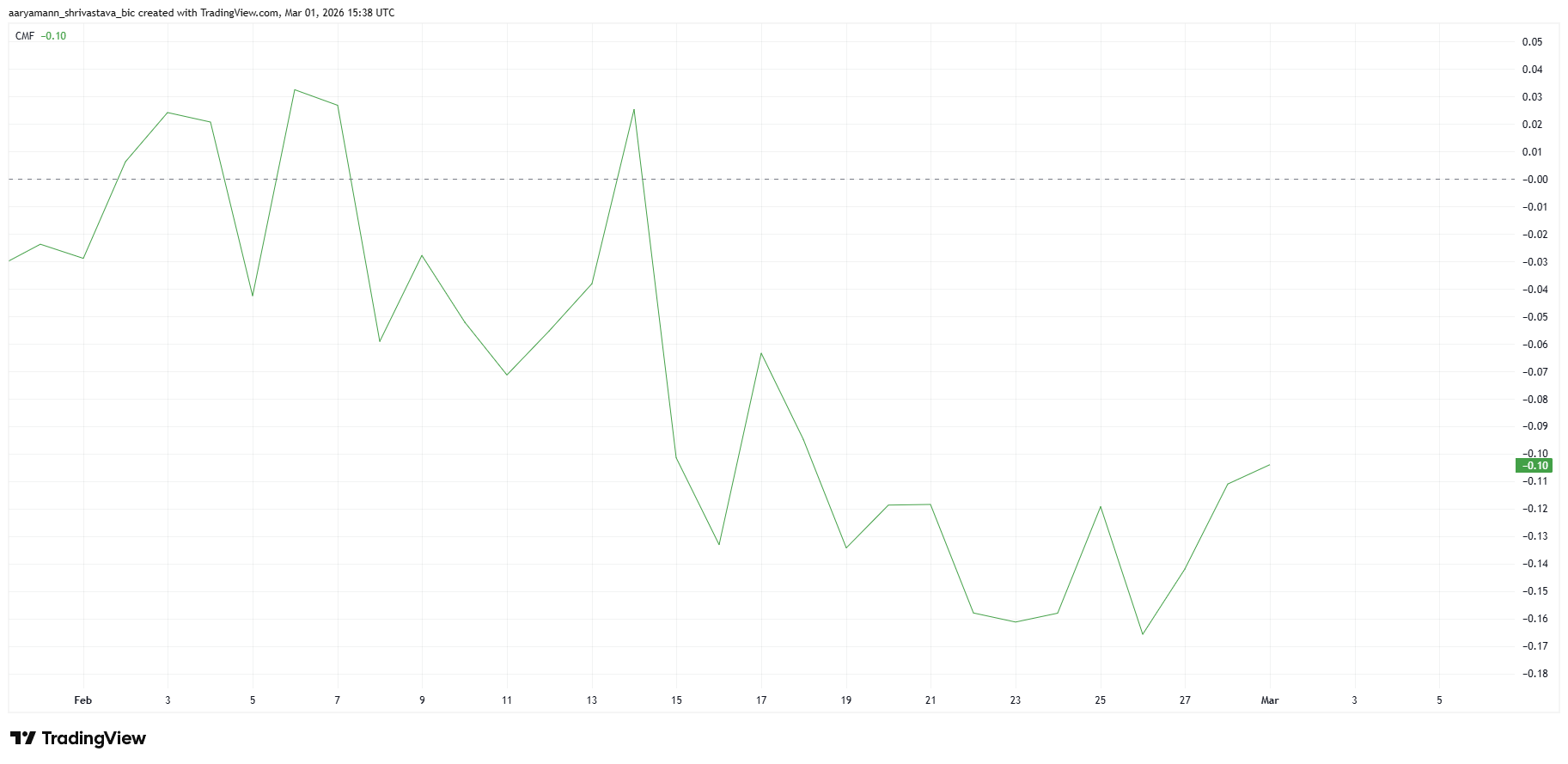 (Source: TradingView)
Similarly, the Chaikin Money Flow (CMF) has remained below zero for nearly three consecutive weeks. The sustained negative value confirms a net capital outflow from Pi Network, indicating that new market participants remain scarce, and the current upward attempt lacks sustainable momentum.
Pi Network Key Technical Levels for March
Current Support: $0.1701 (uptrend line), recently holding firm
Immediate Resistance: $0.1752, a breakout here signals a bullish first sign
Key Support: $0.1597, a break below would significantly increase downward pressure
Second Support: $0.1502 (target after losing $0.1597)
Historical Low: $0.1300 (continued weakness may approach this level)
Confirmation of Reversal: $0.2002 turning into support is needed to confirm bullish momentum recovery
Historical Patterns and Seasonal Risks: March’s Two Major Risks
 (Source: TradingView)
Beyond technical pressures, Pi Network also faces warnings from historical data. In March 2024, Pi dropped 66.5%, marking its worst single-month performance ever, mainly triggered by large-scale sell-offs by early miners and holders after launch. Although the current market environment differs, the psychological impact of that crash still influences some investors’ cautious attitude in March.
Quarterly performance data is also bleak. After mixed results in January and February 2026, analysts estimate Pi Coin could incur an overall loss of about 16% in the first quarter of 2026. If the quarter ends in negative territory, it could further dampen investor confidence for Q2, especially amid a generally cautious crypto market sentiment.
Frequently Asked Questions
What are the main technical risks for Pi Network in March?
MFI has fallen below the neutral 50 line, and CMF has been below zero for nearly three weeks, both indicating ongoing capital outflows. Technically, $0.1597 is the most critical support level; if broken, the downside could extend to $0.1502 and the historical low of $0.1300.
Can Pi Network reverse in March?
A reversal requires two conditions: first, the price must break above and hold at $0.1752; second, the MFI must rebound above 50. A higher confirmation would be $0.2002 turning into support, signaling a true bullish momentum recovery. Without sustained capital inflows, any upward movement risks being suppressed by selling pressure.
Is Pi Network’s March historical performance a useful reference?
In March 2024, Pi Coin fell 66.5%, its worst single-month performance, mainly due to large-scale sell-offs by early holders. While this historical data serves as a risk warning, the current market environment differs from 2024, so real-time technical indicators should be considered for comprehensive judgment.
Related Articles
Pi Network Price Faces Technical Resistance in March 2026 as GCV Narrative Divides Community
Pi Network Completes March Upgrade With 421K Active Nodes
Pi Network’s SECRET March Explosion – You’re NOT Ready
Pi Network Urges Mainnet Node Operators to Upgrade Before Key Deadline
Pi Network Celebrates One Year of Open Network: A Look at the 2026 Key Metrics
Pi Network Rolls Out Phase 2 Protocol Upgrades With Mandatory Node Deadline
