


Trump informs Congress that the "scope and duration" of Iran airstrikes are still uncertain, as war powers dispute heats up
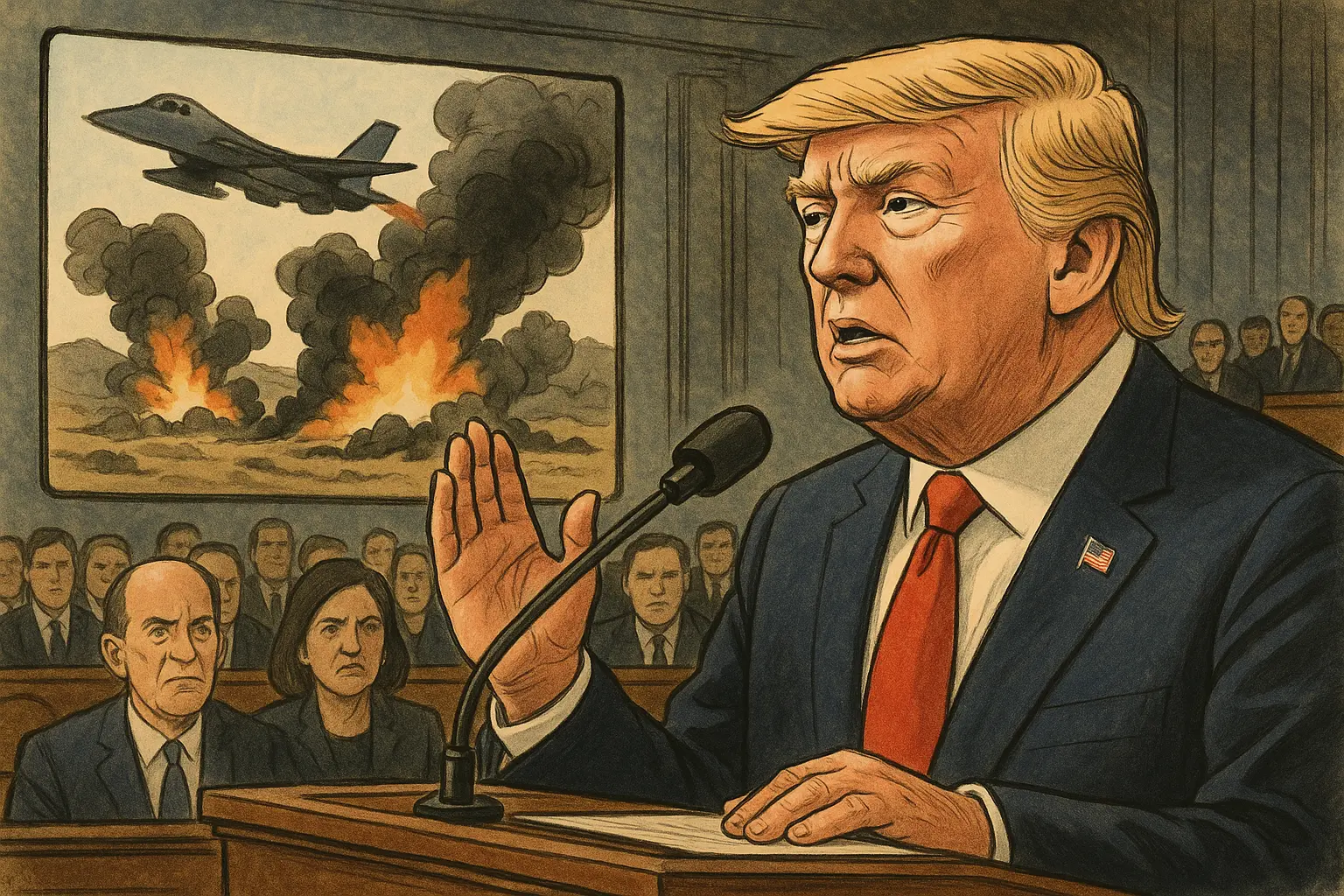
U.S. President Trump sent a letter to Congress stating that it is currently impossible to know the “full scope and duration” of the U.S.-Israel air strikes on Iran, and that the threat from Iran is “unbearable”; at the same time, after listening to a confidential briefing, several lawmakers said they remain unclear about the objectives and scope of the military operation, and votes on war authorization in both the Senate and House are expected to take place this week.
Trump’s letter to Congress: The nuclear threat is “unbearable” and the scope of the action remains unclear
In a letter to Senate President Pro Tempore Chuck Grassley, Trump stated that Iran “remains one of the world’s largest state sponsors of terrorism, and may even be the largest,” noting that Iran “is still seeking the means to possess and use nuclear weapons.” The letter mentioned that despite efforts by all parties to seek a diplomatic solution, Iran’s threat remains “unbearable,” and its ballistic missiles, cruise missiles, and anti-ship missiles pose a direct threat to U.S. military forces, commercial ships, civilians, and allies.
Trump emphasized that U.S. ground forces were not involved in the operation and that the operation was designed to minimize civilian casualties. The U.S. and Israeli airstrikes began on Saturday, and Iran subsequently retaliated with missile and drone attacks against Israel and U.S. Gulf allies.
Congressional disagreements: war authorization controversy and lawmakers’ confusion
On Tuesday, Secretary of State Marco Rubio and Secretary of Defense Pete Hegseth hosted a bipartisan confidential briefing for lawmakers, but several members afterward expressed continued confusion about the scale, objectives, and duration of the operation.
House Speaker Mike Johnson said the Trump administration had notified the “Gang of Eight”—the bipartisan leadership—before the airstrikes, and stated that Trump’s actions were “completely within his legal authority.” Rubio said, “We are 100% compliant with the law.” He also argued that successive administrations have not recognized the War Powers Resolution as constitutionally binding.
However, several Democratic lawmakers expressed strong concerns. Chris Murphy said after the briefing, “They told us in that room that more Americans would die. We need to debate the authorization of force in the Senate.” Richard Blumenthal expressed greater concern about possible ground troop involvement. Brian Schatz bluntly stated, “We are just as confused as the American people.”
Key congressional actions scheduled for this week
- Tuesday: Secretary of State Rubio and Secretary of Defense Hegseth host bipartisan confidential briefings.
- Trump’s letter: Notifies Grassley that the “full scope and duration” of the operation are difficult to determine, emphasizing Iran’s nuclear threat as “unbearable.”
- Senate vote: A vote on the war powers resolution is expected Wednesday; results are close, with some Republican lawmakers undecided.
- House vote: Expected Thursday; support is broad across parties, but the Republican majority is narrow.
Frequently Asked Questions
Q: What are the legal requirements for the president to use force under the U.S. War Powers Act?
Under the War Powers Resolution, the president must notify Congress within 48 hours of hostilities beginning and obtain congressional authorization within 60 days. The Trump administration stated it notified congressional leaders within the required timeframe but also argued that successive administrations—including Republican and Democratic ones—have not recognized the War Powers Act as constitutionally binding.
Q: What is the direct connection between the airstrikes on Iran and Iran’s nuclear program?
In his letter to Congress, Trump explicitly stated that Iran “is still seeking the means to possess and use nuclear weapons,” which is one of the core reasons for this military action. The airstrikes were jointly launched by the U.S. and Israel. The Trump administration has not fully disclosed all targets, and several lawmakers after the confidential briefing said they still do not have a complete picture of the objectives.
Q: If Congress passes a war authorization resolution to limit Trump’s actions against Iran, what would be the actual effect?
If Congress passes such a resolution, Trump would technically be required to cease further unauthorized military actions. However, in the event of a veto by the White House, Congress would need a two-thirds majority to override. Additionally, the Trump administration’s controversial stance on the constitutionality of the War Powers Act introduces significant legal uncertainty regarding the actual enforceability of such restrictions.