


PYUSD solves the trucking invoice financing problem, reducing settlement costs by 90%
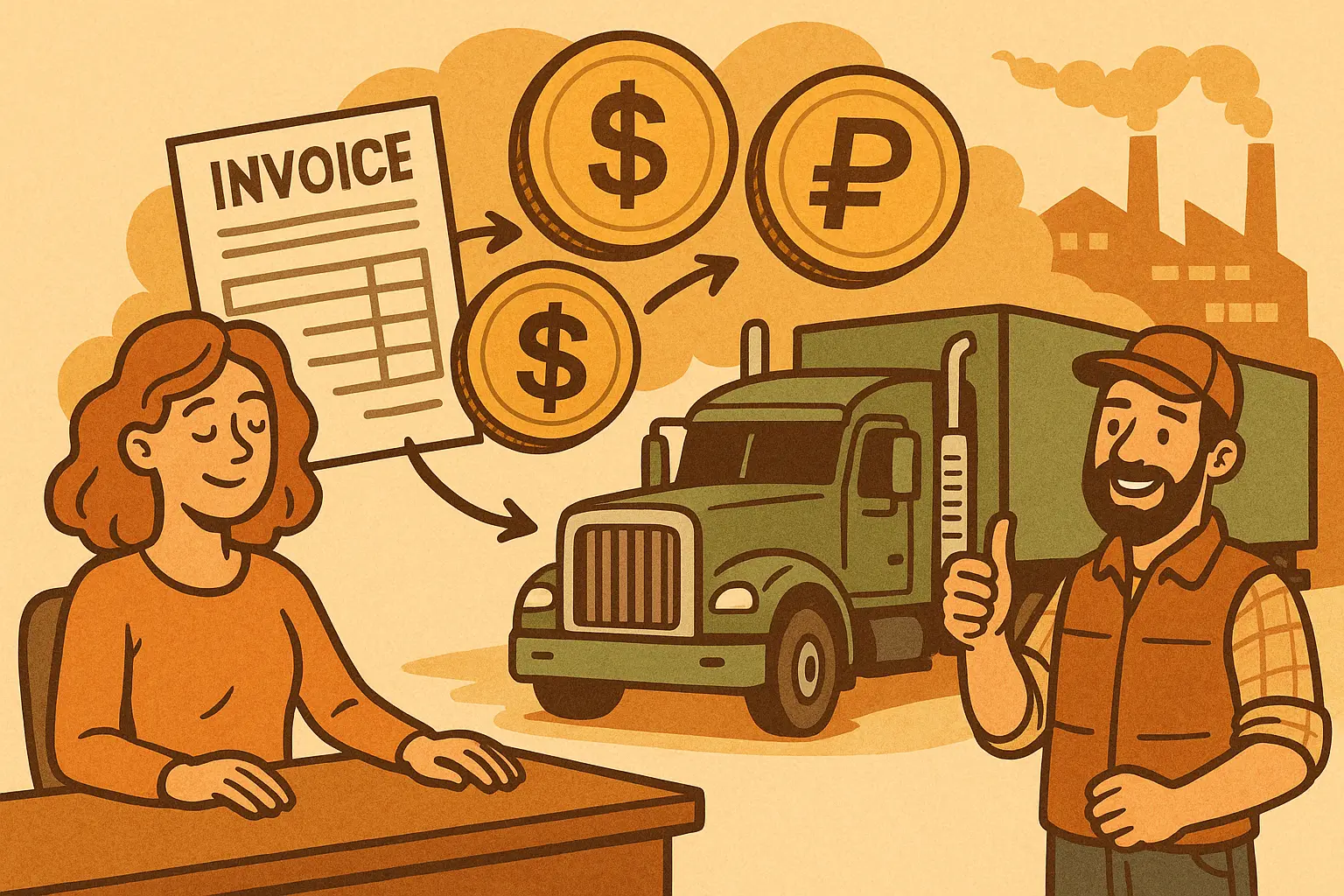
PayPal’s stablecoin PYUSD is being integrated into North American trucking trade finance, helping carriers settle invoices on the same day through integration with TCS Blockchain. TCS Blockchain states that compared to traditional invoicing processes, this solution can reduce settlement costs by up to 90% and significantly shorten payment wait times.
How PYUSD is Changing Invoice Financing in Trucking
The trucking industry has long faced severe cash flow challenges: carriers often wait 30 to 180 days after completing a shipment and issuing an invoice to receive payment. To cope with this financial pressure, many carriers are forced to sell their invoices to factoring companies (financial intermediaries) for immediate cash, often sacrificing 30% or more of their net income.
TCS Blockchain’s solution breaks this deadlock. Carriers can exchange invoice rights for TCS utility tokens, which can be traded on INX-Republic exchange for PYUSD, allowing them to receive funds on the same day. Meanwhile, TCS will collect actual USD payments from shippers or freight brokers at maturity. The entire cash flow route is: Carrier Invoice → TCS Tokens (INX-Republic exchange) → PYUSD stablecoin.
In 2022, TCS Blockchain completed its first on-chain freight invoice settlement, and since then has used 30 million TCS tokens in B2B settlements. Todd Ziegler states, “With PayPal USD, TCS can offer carriers greater invoice settlement discounts and the best fuel cards on the market. This partnership is a huge win for truck drivers, freight brokers, and large carriers.”
Core Process and Advantages of PYUSD Truck Financing
Traditional Issue: Carriers wait 30–180 days for payment; selling invoices to factoring companies results in losing 30%+ of net income
TCS Solution: Carriers exchange invoices for TCS tokens, trade on INX-Republic for PYUSD, and receive funds on the same day
Cost Savings: Up to 90% reduction in settlement costs compared to traditional invoicing
Integration Benefits: PYUSD offers larger settlement discounts and fuel card benefits
Historical Record: Since the first on-chain settlement in 2022, 30 million TCS tokens have been settled in B2B transactions
2026 Goal: Annual freight invoice transaction volume to exceed $1 billion
Broader Deployment of PYUSD and Market Context
PYUSD is a stablecoin launched by PayPal in 2023, supported by Paxos, currently ranked seventh among all stablecoins by market cap. Besides trucking financing, PYUSD can also be used for peer-to-peer transfers on PayPal and Venmo, merchant payments supported by PayPal, and cross-border international remittances via Xoom.
This integration by TCS marks an important expansion of PYUSD from consumer payments to enterprise-level B2B trade finance. The large scale of trucking invoices and the strong demand for liquidity make it a prime testing ground for stablecoin “enterprise applications.”
Notably, this partnership occurs amid pressure on PayPal’s stock. Bloomberg recently reported that Stripe is considering acquiring all or part of PayPal’s business, and PayPal’s stock has fallen over 40% in the past year. Establishing real use cases for PYUSD in B2B scenarios is strategically important for enhancing its ecosystem competitiveness.
Frequently Asked Questions
How does PYUSD help truck drivers?
PYUSD, via the TCS Blockchain platform, allows carriers to receive funds on the same day after completing shipments, instead of waiting 30–180 days. Carriers exchange invoices for TCS tokens, then trade on INX-Republic for PYUSD, reducing costs by about 90% compared to traditional factoring.
What are TCS Blockchain’s 2026 goals?
TCS Blockchain aims to achieve over $1 billion in annual freight invoice transactions by 2026. Since the first on-chain settlement in 2022, 30 million TCS tokens have been settled in B2B transactions, demonstrating a solid foundation for commercial scale.
In what scenarios can PYUSD be used?
Supported by Paxos, PYUSD is PayPal’s stablecoin launched in 2023, currently ranked seventh by market cap. Besides trucking financing, it can be used for peer-to-peer transfers on PayPal and Venmo, merchant payments supported by PayPal, and cross-border international remittances via Xoom.
Related Articles
When AI starts paying for itself: a 34-year dormant code is triggering the machine economy
Strike launches "Bitcoin Collateral Credit Line," allowing you to spend without selling coins, starting from $1 borrowed
Jiuzi Holdings reaches a strategic agreement to acquire 10,000 Bitcoins transfer from a certain strategic investor
Collably Network Taps Samurai Warlords to Connect Web3 Innovation and Web2 Tradition
Polygon Enables Stablecoin Payments at 150M Visa Merchants Worldwide