


Pi Network price hits two-week high, protocol upgrade drives 8.5% increase

Pi Network (PI) native tokens increased by approximately 8.5% on March 4, with the trading price rising to nearly $0.185, reaching the highest level in almost two weeks. The primary catalyst for this surge was the core team announcing the successful migration of protocol v19.9 and confirming that the next version, v20.2, is targeted for deployment before Pi Day (March 14, 2026).
Protocol v19.9 Upgrade Completed: A Milestone in the Pi Network Roadmap
Pi Network’s official X account announced on Wednesday that the v19.9 protocol migration has been successfully completed. This marks the third step in the upgrade roadmap from v19 to v23, with only a few weeks passing since the previous v19.6 upgrade.
The Pi protocol was initially developed based on the Stellar framework. Version 19.9 is built on Stellar Protocol 23, introducing new features and control capabilities to provide a solid technical foundation for long-term scalability. The core team emphasized that ongoing protocol upgrades aim to enhance network capabilities and improve the long-term stability of the Pi Network ecosystem.
Key Points of the Protocol Upgrade Roadmap
- Current version completed: v19.9, the third step in the v19 to v23 transition roadmap
- Next target version: v20.2, scheduled for deployment before Pi Day 2026 (March 14)
- Node operator requirements: Must upgrade to the latest protocol version using a desktop or laptop (mobile devices are not supported). Failure to upgrade may risk disconnection from the network.
Pi Foundation Token Transfers: Potential Short-Term Supply Pressure Risks
(Source: PiScan)
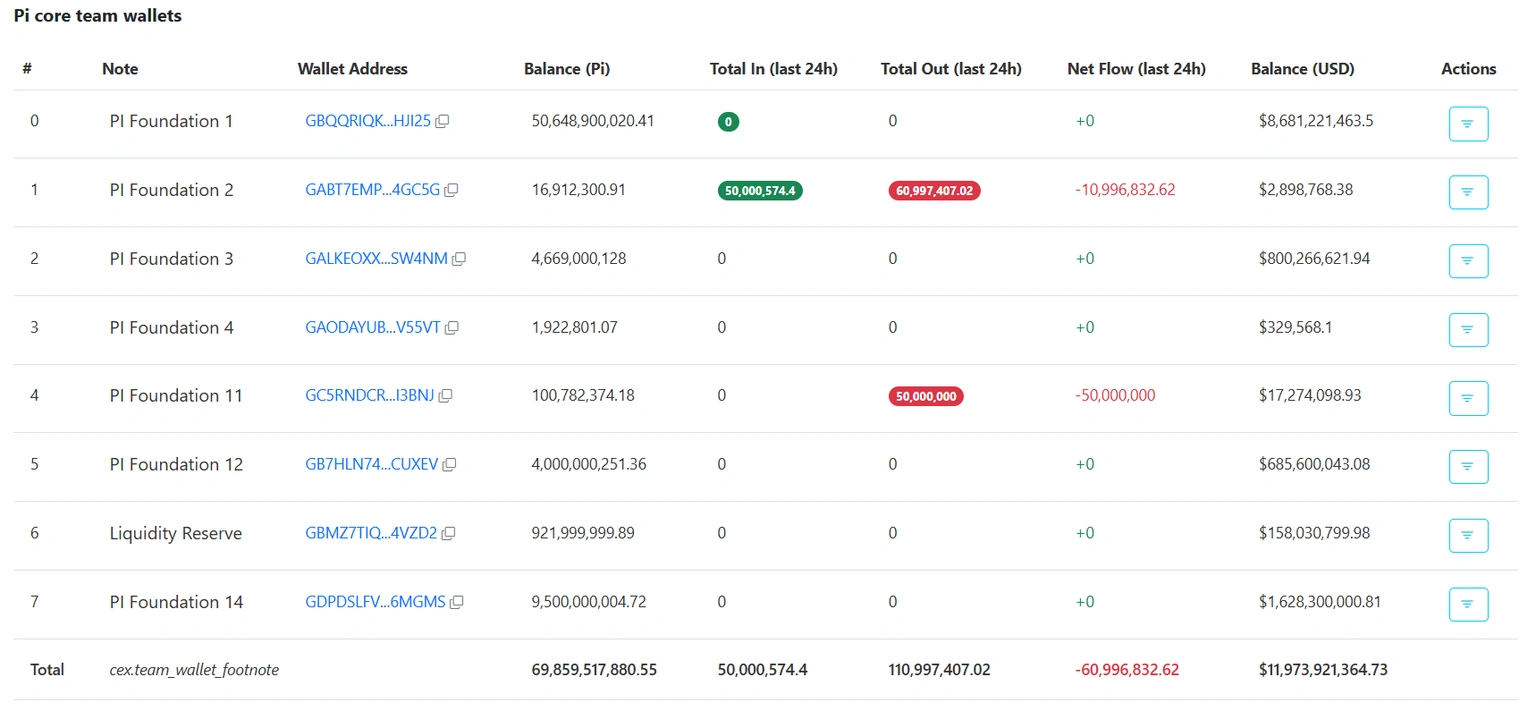
Although the protocol upgrade has provided short-term upward momentum for PI, structural supply pressures also exist. According to PiScan data, the Pi Foundation transferred 60.99 million PI tokens in the past 24 hours, with some tokens transferred to the public market the day before. These tokens have not yet been listed on exchanges, but if they flow into trading platforms later, it could significantly increase circulating supply and create short-term selling pressure.
Token unlock schedules are also noteworthy. PiScan data shows an average daily unlock of about 6.8 million PI, with some days exceeding 11 million. Continuous release pressure makes the supply-demand balance in the coming weeks a key market focus.
Technical Analysis: $0.173 is the Current Key Battle Level for Bulls and Bears
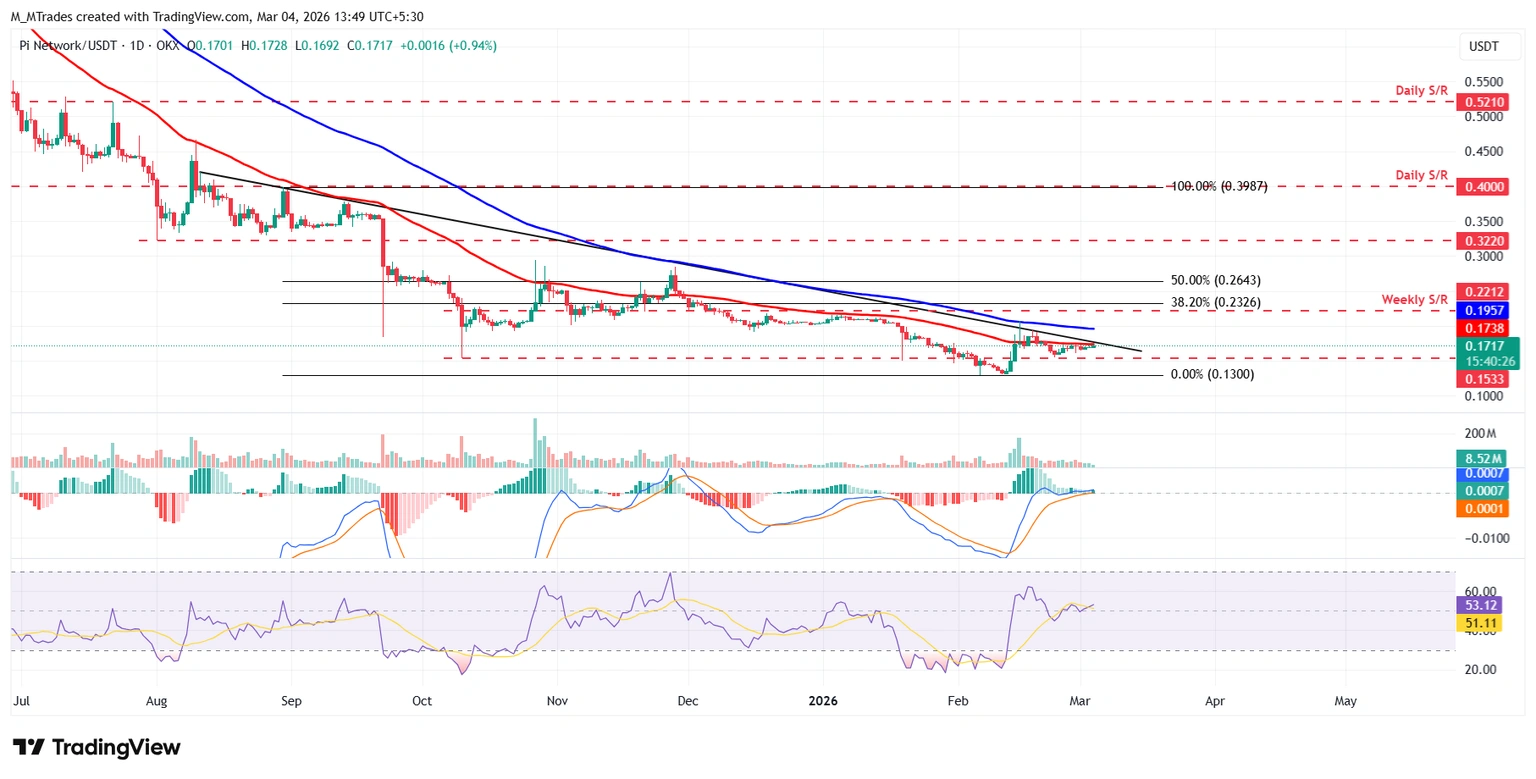
(Source: TradingView)
Over the past month, Pi Network has gained over 14%, while BTC, ETH, SOL, and XRP have all declined during the same period, with BNB, XRP, and SOL experiencing double-digit monthly drops. Pi Network’s relative strength stands out among similar assets.
On the technical side, PI is approaching the 50-day exponential moving average (EMA) near $0.173, which coincides with a descending trendline connecting multiple highs since mid-August 2025, forming a critical resistance zone.
If PI can break above this resistance on the daily chart, the next targets are the 100-day moving average (around $0.195) and the weekly resistance at $0.221. If resistance reasserts, support is expected near the daily support level of $0.153. The daily RSI is currently at 53, above the neutral 50, and continues to rise; MACD has maintained a bullish crossover since February 13, indicating ongoing short-term bullish momentum.
Frequently Asked Questions
What is the significance of the Pi Network protocol v19.9 upgrade?
v19.9 is the third milestone in Pi’s long-term upgrade roadmap from v19 to v23, built on Stellar Protocol 23, adding new features and control capabilities to strengthen network infrastructure. The next version, v20.2, is expected to be deployed before Pi Day 2026 (March 14).
Does the transfer of 60 million PI tokens by the Pi Foundation mean an imminent sell-off?
The 60.99 million PI tokens transferred by the Pi Foundation have not yet been listed on any exchanges. If they flow into trading platforms later, it could increase market supply and create short-term selling pressure. Market participants should continue to monitor the tokens’ subsequent movements.
Where are the current technical resistance and support levels for PI?
Key resistance is at $0.173 (coinciding with the 50-day EMA and descending trendline). A breakout above this level targets $0.195 (100-day EMA) and $0.221 (weekly resistance). If resistance holds and causes a pullback, the main support is near $0.153.
Related Articles
Pi Network Confirms March 12 DEX Launch, Pi Coin Rallies Over 8% Amid Protocol Upgrades
PI (Pi) increased by 7.51% in the past 24 hours
Pi Network’s v19.9 Mainnet Upgrade Just Changed Everything
Pi Coin Price Prediction As Pi Network Prepares Major Upgrade Ahead Of Pi Day
Pi Network v19.9 Upgrade Clears Path for Pi DEX Launch