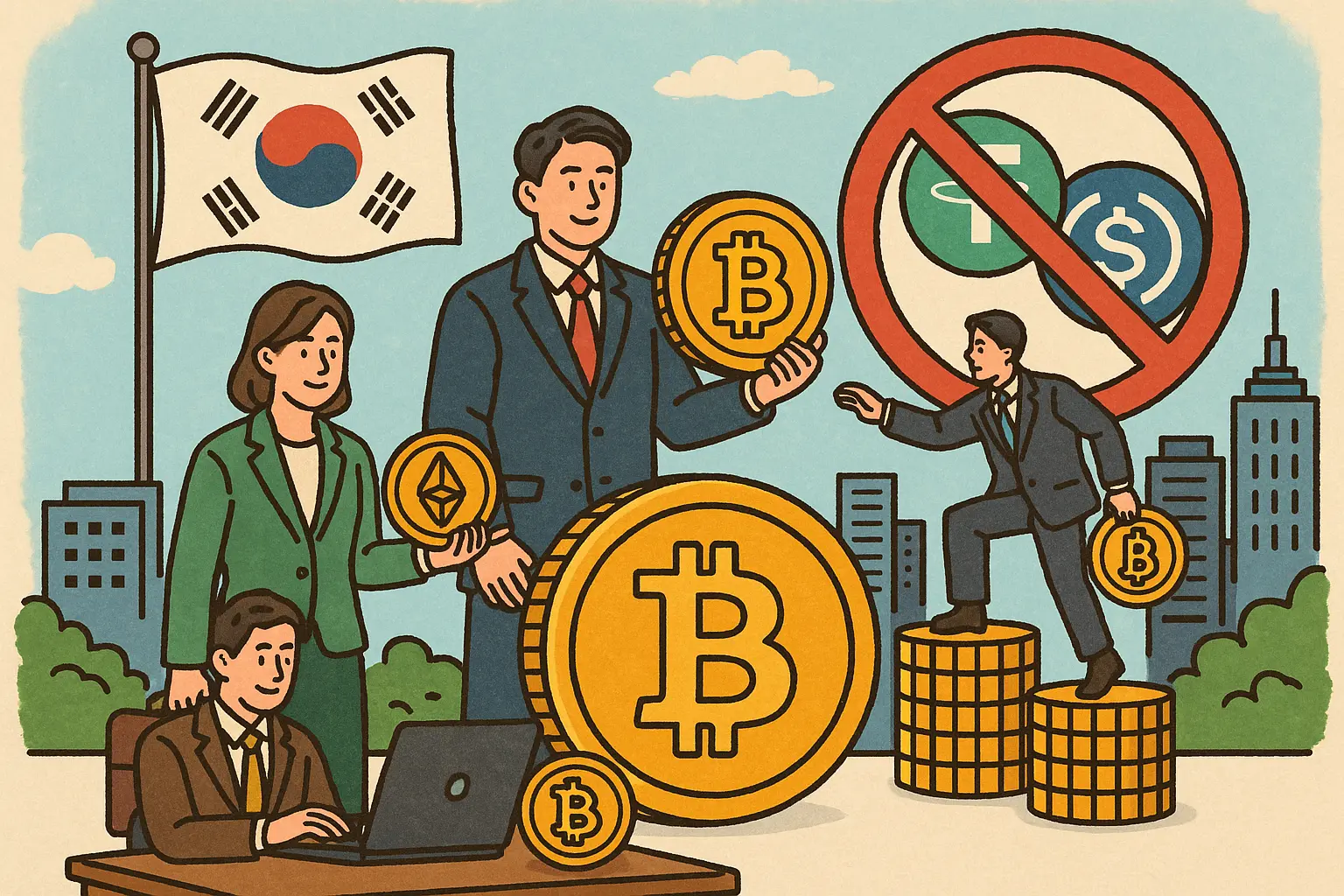
The Financial Services Commission (FSC) of South Korea is currently drafting the “Corporate Virtual Asset Trading Guidelines,” planning to allow listed companies and certified professional institutional investors to participate in cryptocurrency trading for the first time after nearly nine years of bans. In the upcoming regulatory framework, mainstream cryptocurrencies such as Bitcoin and Ethereum will be permitted as investment targets, but stablecoins pegged to the US dollar, like USDT and USDC, may be excluded primarily due to conflicts with the existing Foreign Exchange Transactions Act.
Corporate Cryptocurrency Investment System: Scope of Opening and Clear Boundaries
The corporate cryptocurrency investment guidelines led by the FSC are primarily designed to permit companies to hold digital assets for investment or financial management purposes. The eligible investment targets mainly include liquid mainstream cryptocurrencies, such as Bitcoin (BTC) and Ethereum (ETH).
However, stablecoins pegged to the US dollar—including Tether (USDT) and USD Coin (USDC)—have largely been excluded during policy discussions. This design implies that even if South Korean companies can legally participate in the crypto market, they still cannot hold the most commonly used crypto-denominated tools within the official framework, creating significant functional restrictions.
Core Logic Behind the Exclusion of Stablecoins: Conflicts in the Three-Tier Foreign Exchange Regulation System
The fundamental reason for excluding stablecoins is not a conservative stance by regulators towards crypto assets but rather systemic conflicts arising from the current legal framework:
Restrictions under the Foreign Exchange Transactions Act: The current regulations require all cross-border fund flows to be processed through licensed foreign exchange banks. Stablecoins are not recognized as legal tools for external payments. Companies holding stablecoins are prohibited from using them for cross-border payments, resulting in a legal contradiction.
Concerns over Capital Outflows: Regulators worry that if companies are allowed to hold stablecoins legally, they might use “digital dollars” for overseas payments directly, effectively bypassing existing foreign exchange controls and weakening regulatory effectiveness.
Pending Legal Revisions: The South Korean National Assembly is currently reviewing amendments to the Foreign Exchange Transactions Act, which propose to include stablecoins as legitimate payment tools. Until the bill is passed, the government prefers to maintain a conservative stance to avoid conflicts between new policies and existing laws.
Corporate Demand, Gray Areas, and Policy Directions for Korean Won Stablecoins
Despite the conservative attitude of regulators, there remains strong demand from South Korean businesses for stablecoins. Listed companies engaged in extensive import-export activities believe that features such as real-time settlement, low-cost cross-border transfers, and 24/7 liquidity can effectively help reduce the impact of won exchange rate fluctuations on financial statements and serve as a supplementary tool for foreign exchange risk management.
However, these demands are not yet incorporated into the new guidelines. Regulators have indicated that allowing large-scale use of stablecoins during the initial phase could increase market speculation risks and trigger capital outflows. Notably, South Korea has not completely banned stablecoin trading; companies can still hold stablecoins through overseas exchanges, OTC platforms, or personal wallets (such as MetaMask), but cannot operate through official corporate accounts, creating a regulatory gray area.
In the longer-term policy trajectory, the South Korean government is advancing the second phase of legislation for the “Digital Asset Basic Act” and exploring the stablecoin ecosystem for the Korean won. Some proposals suggest that stablecoin issuers should have at least 5 billion KRW in capital and require banks to hold over 50% of the shares to ensure financial system stability.
Frequently Asked Questions
Q: Why does South Korea exclude USDT and USDC from the corporate crypto investment system?
A: The primary reason is the conflict with the current Foreign Exchange Transactions Act. The law requires cross-border fund flows to be processed through licensed foreign exchange banks, and stablecoins are not recognized as legal external payment tools. Allowing companies to hold stablecoins without legal revisions could enable them to bypass foreign exchange controls for overseas payments, increasing capital outflow risks.
Q: What cryptocurrencies can South Korean companies invest in in the future?
A: According to the guidelines being developed by the FSC, listed companies and professional institutional investors will be permitted to hold mainstream cryptocurrencies such as Bitcoin (BTC) and Ethereum (ETH) for investment or financial management. USDT, USDC, and similar dollar-pegged stablecoins are currently likely to be excluded, but the final scope remains to be confirmed in the definitive guidelines.
Q: Can South Korean companies hold stablecoins through other means currently?
A: Yes. Companies can still hold stablecoins via overseas exchanges, OTC platforms, or personal wallets (like MetaMask), but not through official corporate accounts. This creates a gray area: companies can still access stable coins, but such activities are not protected or regulated under the official legal framework.
Disclaimer: The information on this page may come from third parties and does not represent the views or opinions of Gate. The content displayed on this page is for reference only and does not constitute any financial, investment, or legal advice. Gate does not guarantee the accuracy or completeness of the information and shall not be liable for any losses arising from the use of this information. Virtual asset investments carry high risks and are subject to significant price volatility. You may lose all of your invested principal. Please fully understand the relevant risks and make prudent decisions based on your own financial situation and risk tolerance. For details, please refer to
Disclaimer.


