The National Bank of Rwanda (NBR) has warned the public that paying with and trading crypto using the local currency remains illegal in the country after Bybit added support for the Rwanda franc to its peer-to-peer trading platform on Friday.
“Crypto-assets are NOT authorized for payments, FRW conversion, or P2P trading involving FRW under the current framework,” the central bank said on X on Sunday, urging people to avoid crypto because of “serious financial risks and no recourse in case of loss.”
The central bank’s response was intended to address a post on X by Bybit on Friday, which said the Rwanda franc (FRW) could be used to buy and sell crypto via its Bybit P2P service.
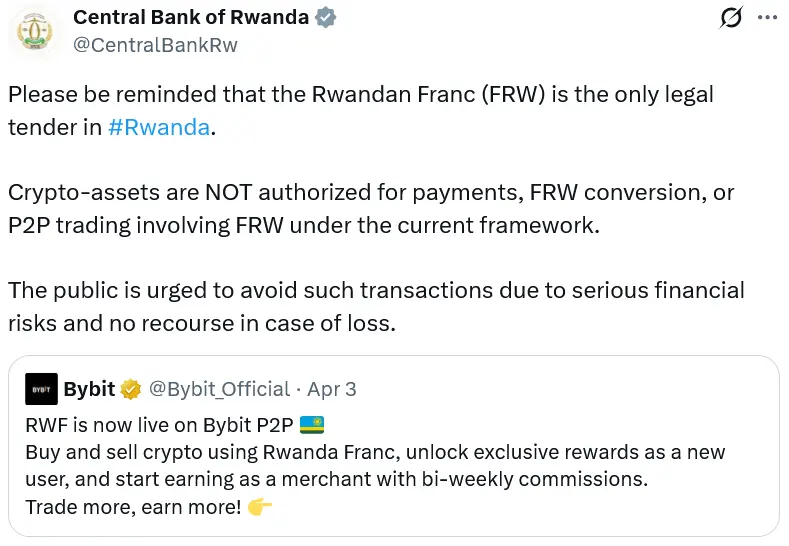
In a separate post on X, the NBR noted that FRW “remains the only legal tender in Rwanda” and “NBR-licensed financial institutions are prohibited from converting FRW into crypto-assets or vice versa.”
Cointelegraph reached out to Bybit for comment but has not received an immediate response.
Rwanda is looking to strengthen the presence of FRW domestically with a central bank digital currency, the e-franc rwandais, which is currently in the proof-of-concept stage and could move on to a pilot phase.
Rwanda is one of several countries that has responded strongly to crypto services to protect monetary sovereignty and gain greater control over its financial system, while curbing crypto use since 2018.
Upcoming crypto regulations to further tighten crypto
However, in March, Rwanda’s Capital Markets Authority announced a draft regulatory framework to govern virtual asset service providers—a move the authority said would promote “responsible innovation.”
The law, which is currently being put through Rwanda’s legislative body, aims to ban crypto from becoming legal tender while banning crypto mining activities, mixer services, and FRW-pegged tokens.
The law also looks to create a roadmap so that crypto service providers can operate under licensing and oversight.
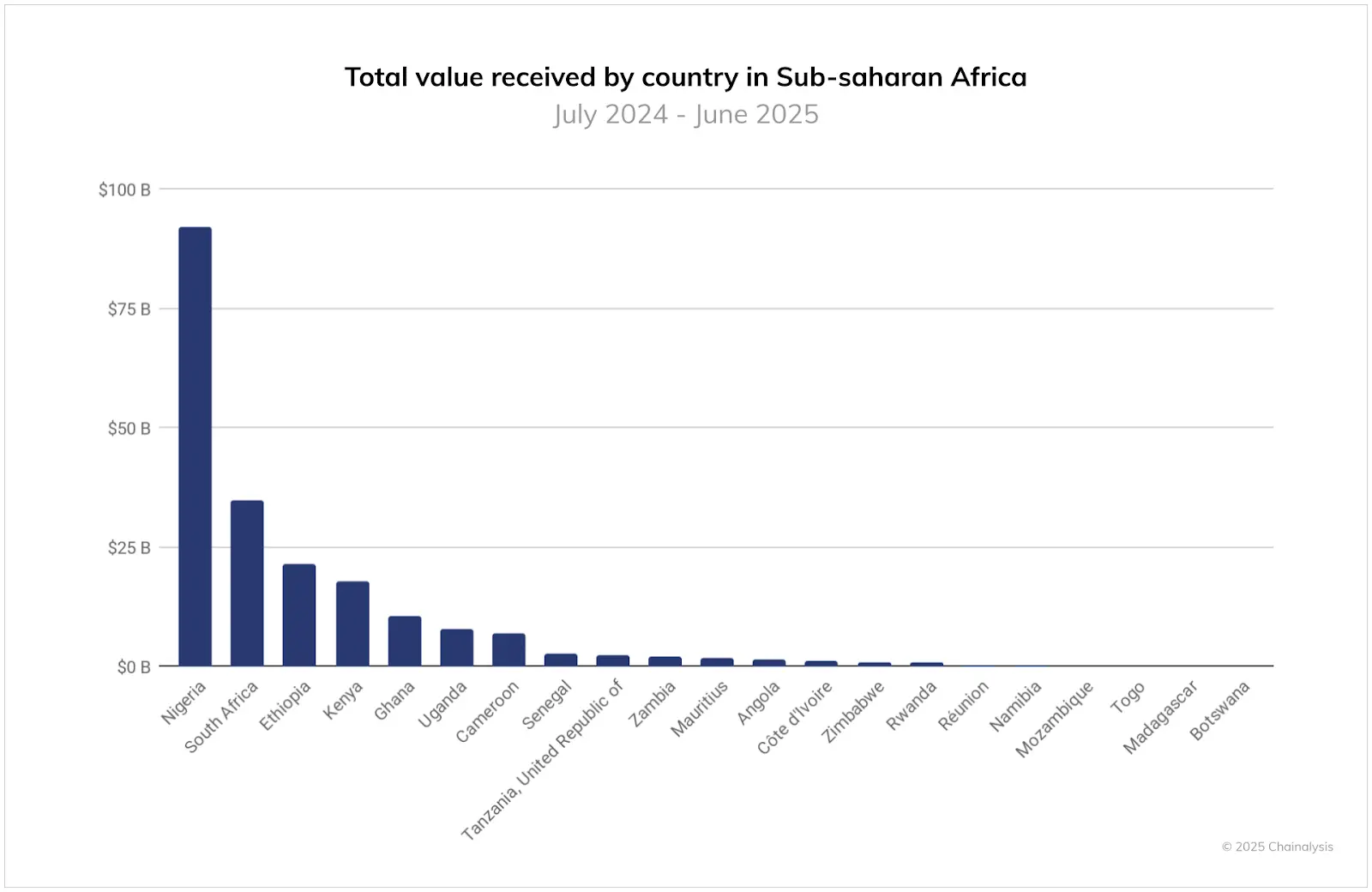
Data from blockchain analytics firm Chainalysis shows that Rwanda ranks low in crypto adoption levels during 2024 and 2025, with the amount of crypto received by local people being only a small fraction compared with the recorded value in higher-adoption African countries such as Nigeria and South Africa.
Disclaimer: The information on this page may come from third parties and does not represent the views or opinions of Gate. The content displayed on this page is for reference only and does not constitute any financial, investment, or legal advice. Gate does not guarantee the accuracy or completeness of the information and shall not be liable for any losses arising from the use of this information. Virtual asset investments carry high risks and are subject to significant price volatility. You may lose all of your invested principal. Please fully understand the relevant risks and make prudent decisions based on your own financial situation and risk tolerance. For details, please refer to
Disclaimer.


