Pump.fun has spent $350 million to buy back the PUMP token since July 2025. However, despite this significant level of intervention, the PUMP price is still down 81% from its all-time high set in September, and has even recently fallen to a record low.
The Solana meme coin launch platform is currently facing an increasingly harsh wave of criticism from the community, with many arguing that the project’s tokenomics structure is more about “extracting value” than building a foundation for sustainable growth.
Why a $350 million buyback still isn’t enough to move the needle
According to data from the official dashboard, Pump.fun has used $350 million to buy back PUMP, removing about 116 billion tokens from the circulating supply—equivalent to 32.9%.
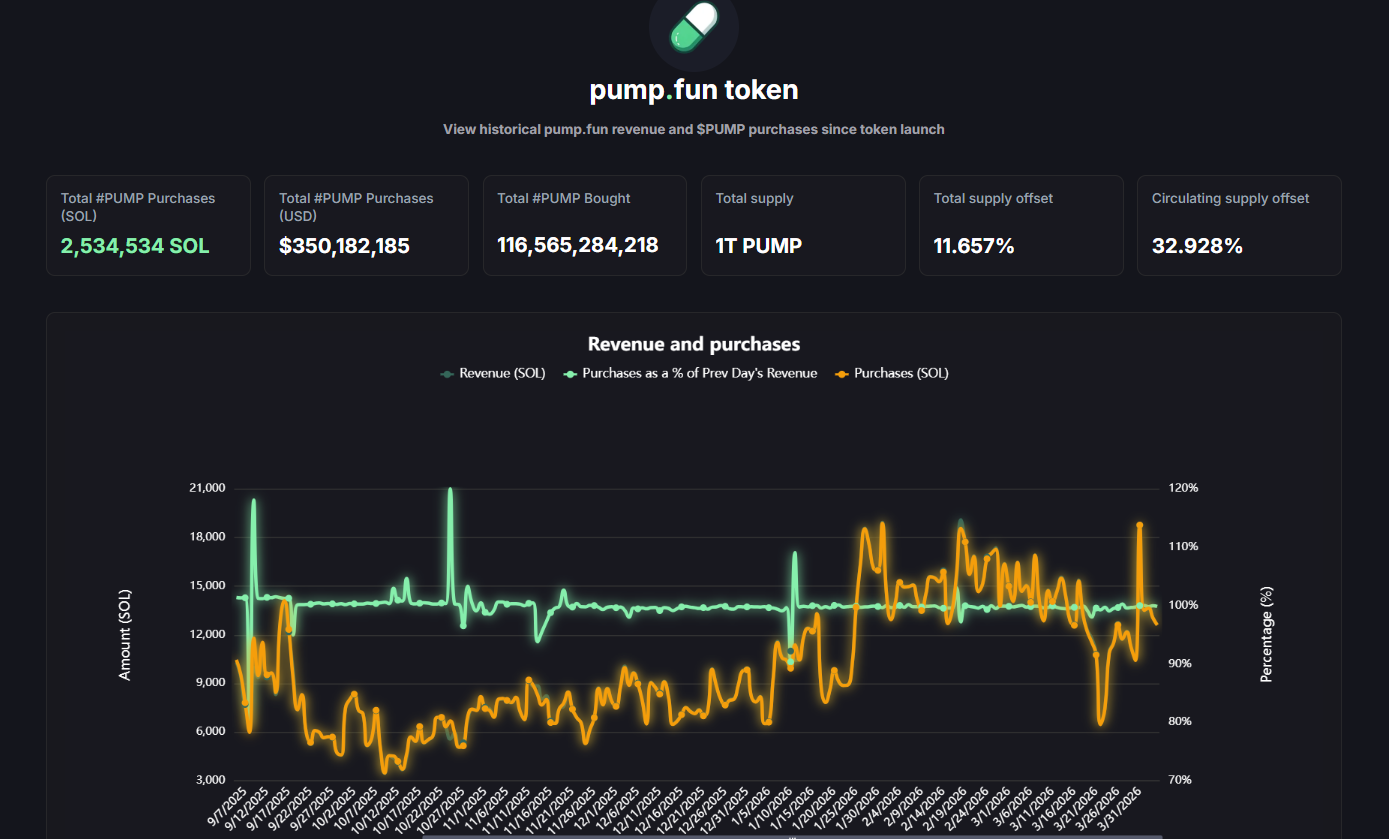 Revenue and the number of PUMP tokens bought from Pump.fun since launch | Source: Pump.funNotably, the allocation protocol directs nearly all daily revenue to buyback activity, averaging about $1 million per day. However, this strategy has not created a positive impact on the price. PUMP is currently trading around $0.00165, significantly lower than the $0.004 level at the ICO, and far from the $0.0088 all-time high.
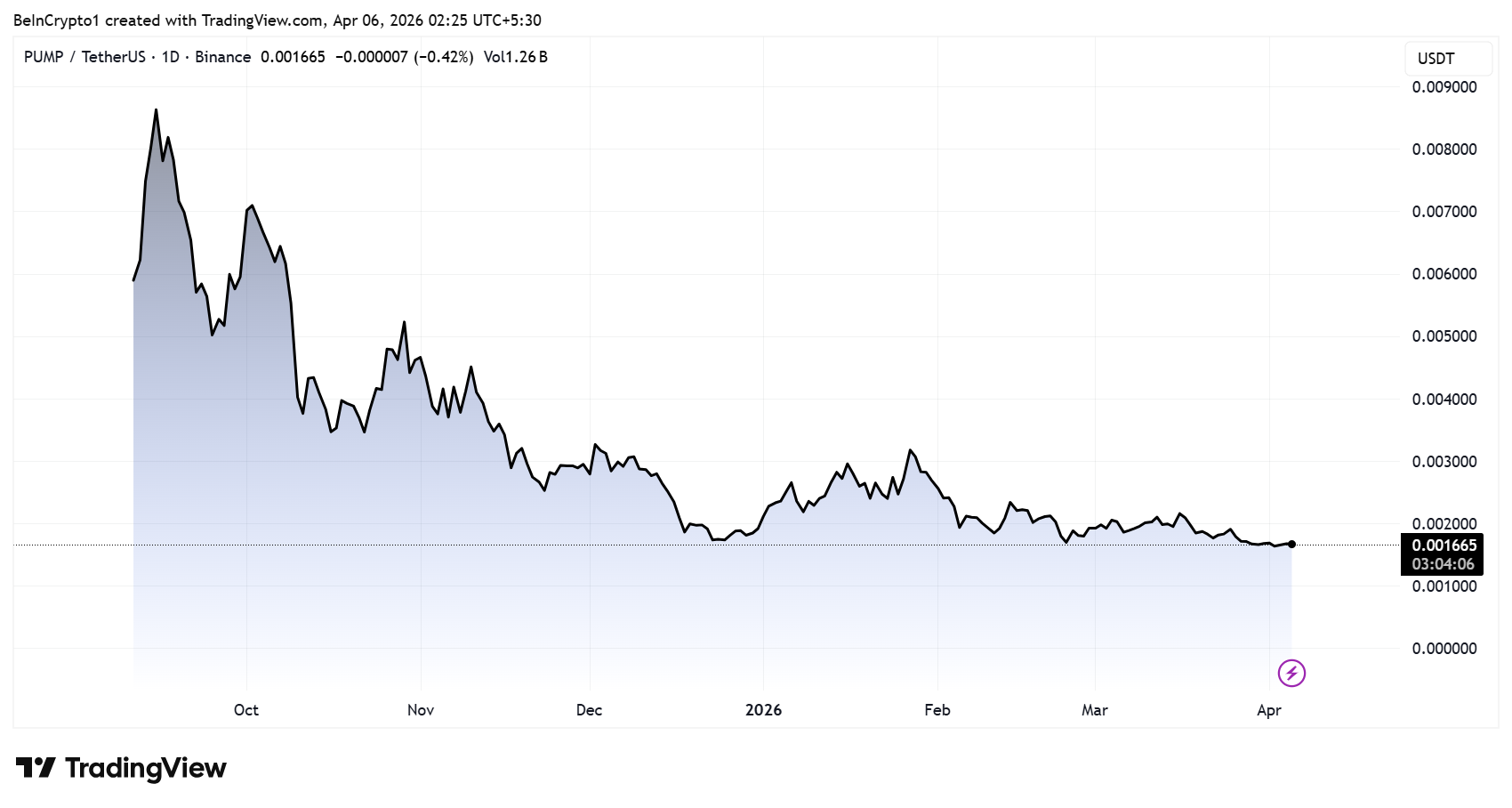 PUMP price action | Source: TradingViewOne of the biggest criticisms comes from the assumption that insiders hold about 50% of the supply, and use the buyback rounds themselves to provide liquidity and exit their positions. This has led to doubts that the buyback mechanism genuinely supports the price, and instead inadvertently becomes a “liquidity backstop” for selling pressure.
Supply pressure and the July unlock “shock”
At present, only about 59% of the total 1 trillion PUMP supply is circulating. The remaining portion—accounting for 41%—is expected to be unlocked on 12/7/2026, creating a potential “supply cliff.”
Notably, most of these tokens belong to the founding team and early investors, who joined at costs that were nearly zero. This has raised concerns about the likelihood of large-scale selling pressure when the token becomes freely tradable.
Previously, on-chain data also recorded a wallet linked to the team transferring 1.75 billion PUMP to the Bitget exchange, further reinforcing suspicions of distribution.
Meanwhile, according to DefiLlama, the protocol’s total accumulated revenue has surpassed the $1 billion mark—a striking figure. However, this stream of funds has not yet been reflected in token value in a sustainable way.
Against that backdrop, the key question is: does Pump.fun’s buyback program genuinely deliver value to investors, or is it only acting as an output-liquidity mechanism for insiders? The answer is likely to become clear as the major unlock event approaches in this summer season.
Disclaimer: The information on this page may come from third parties and does not represent the views or opinions of Gate. The content displayed on this page is for reference only and does not constitute any financial, investment, or legal advice. Gate does not guarantee the accuracy or completeness of the information and shall not be liable for any losses arising from the use of this information. Virtual asset investments carry high risks and are subject to significant price volatility. You may lose all of your invested principal. Please fully understand the relevant risks and make prudent decisions based on your own financial situation and risk tolerance. For details, please refer to
Disclaimer.


