

Trade
Basic
Futures
Futures
Hundreds of contracts settled in USDT or BTC
Options
HOT
Trade European-style vanilla options
Unified Account
Maximize your capital efficiency
Demo Trading
Futures Kickoff
Get prepared for your futures trading
Futures Events
Participate in events to win generous rewards
Demo Trading
Use virtual funds to experience risk-free trading
Earn
Launch
CandyDrop
Collect candies to earn airdrops
Launchpool
Quick staking, earn potential new tokens
HODLer Airdrop
Hold GT and get massive airdrops for free
Launchpad
Be early to the next big token project
Alpha Points
NEW
Trade on-chain assets and enjoy airdrop rewards!
Futures Points
NEW
Earn futures points and claim airdrop rewards
Investment
Simple Earn
Earn interests with idle tokens
Auto-Invest
Auto-invest on a regular basis
Dual Investment
Buy low and sell high to take profits from price fluctuations
Soft Staking
Earn rewards with flexible staking
Crypto Loan
0 Fees
Pledge one crypto to borrow another
Lending Center
One-stop lending hub
VIP Wealth Hub
Customized wealth management empowers your assets growth
Private Wealth Management
Customized asset management to grow your digital assets
Quant Fund
Top asset management team helps you profit without hassle
Staking
Stake cryptos to earn in PoS products
Smart Leverage
NEW
No forced liquidation before maturity, worry-free leveraged gains
GUSD Minting
Use USDT/USDC to mint GUSD for treasury-level yields

More




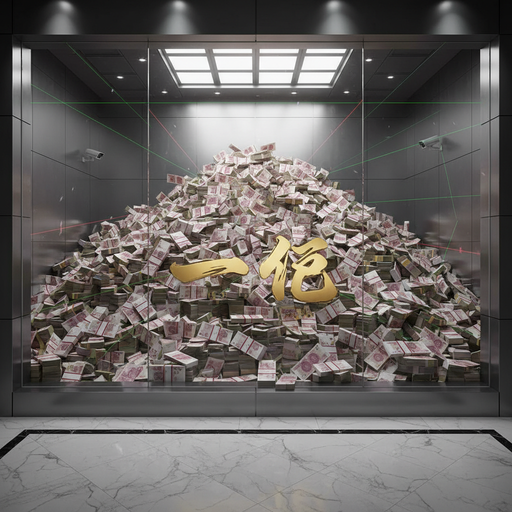


How Peter Thiel's Hedge Fund Background Shaped the Most Successful Venture Capital Empire
From a $50 million side project to a multi-billion dollar powerhouse, Founders Fund has revolutionized Silicon Valley’s venture capital landscape. At its core lies Peter Thiel’s unique philosophical approach and hedge fund mindset—a combination that fundamentally changed how the industry operates. Unlike traditional VCs, Thiel brought macro-investing expertise to early-stage ventures, enabling Founders Fund to identify breakthrough opportunities when competitors were skeptical.
The foundation of Founders Fund’s success rests on a deceptively simple yet radical principle: companies achieve exceptional value by pursuing differentiation, not by competing in crowded markets. This philosophy directly reflects Thiel’s background as both a hedge fund operator and strategic thinker. While mainstream venture capital chased consensus opportunities, Thiel looked for monopolistic advantages—businesses solving unique problems that competitors couldn’t replicate. This contrarian approach, combined with his macroeconomic foresight, gave Founders Fund an edge that has proven unmatched across decades.
The Unconventional Trinity: Assembling a Visionary Team
Founders Fund’s origin story begins not with a formal founding announcement, but with intellectual kinship. Peter Thiel, Ken Howery, and Luke Nosek formed the fund’s core after meeting at a Stanford speech in mid-1998, though their formal journey together started earlier through Thiel’s hedge fund operations. Howery, a Stanford graduate and Stanford Review contributor, was Thiel’s first recruit for hedge fund investments. After a four-hour conversation at a Palo Alto steakhouse, Howery abandoned a lucrative banking offer to join what seemed like an unlikely venture—managing less than $4 million in assets.
Nosek, an entrepreneur with a failed startup and unconventional thinking, embodied Thiel’s ideal of “talented and independent minds willing to explore conclusions ordinary people fear to pursue.” The three brought complementary skills: Thiel provided strategic vision and macroeconomic insight, Howery focused on operational execution and financial analysis, and Nosek contributed creative problem-solving and deep founder understanding. Seven years after their Stanford meeting, they formally established Founders Fund in 2004 with $50 million in initial capital—a modest figure in venture investing that would soon prove transformative.
The Facebook Breakthrough: Seeing What Others Missed
Before founding Founders Fund, Thiel made two personal investments that would define the fund’s trajectory. The first tested his conviction in a then-unknown 19-year-old named Mark Zuckerberg. In summer 2004, when Facebook was still largely unknown outside Stanford’s campus, Thiel invested $500,000 in convertible bonds—betting that user growth would signal explosive potential. The terms were aggressive: conversion required 1.5 million users by December 2004. Though the target was missed, Thiel converted anyway, securing roughly 10% of the company.
This decision proved transformative. Facebook ultimately generated over $1 billion in personal returns for Thiel, and subsequent Founders Fund investments in the platform created $365 million in LP returns—a stunning 46.6x multiple on total fund investments. Notably, Founders Fund didn’t participate in Series A, yet Thiel’s personal conviction in the founder and product demonstrated the fund’s philosophy: back talented founders solving unique problems, even against conventional wisdom.
Thiel later reflected on Facebook’s explosive Series B valuation jump—from $5 million to $85 million in eight months—realizing he’d underestimated acceleration. “When smart investors lead valuation surges, they are often still underestimating acceleration,” he observed. This insight shaped the fund’s subsequent conviction in betting larger, earlier, and deeper in transformational companies.
Palantir: Building Intelligence Infrastructure
Thiel’s second pre-fund investment reflected his hedge fund background’s influence: seeing macro trends others missed. Palantir, co-founded by Thiel with Nathan Gettings, Joe Lunsdale, and Stephen Cohen, applied PayPal’s anti-fraud technology to government data challenges. After 9/11, Thiel saw an opportunity to help counter-terrorism while building an enduring business—a combination of idealism and pragmatism typical of his hedge fund thinking.
Sequoia Capital partners, including rival Michael Moritz, rejected Palantir as unviable due to slow government procurement. But Thiel’s macro perspective recognized structural opportunity: government and intelligence agencies desperately needed integrated data analysis. In-Q-Tel, the CIA’s investment arm, became Palantir’s first external investor with just $2 million—a validation other VCs dismissed.
Founders Fund subsequently invested $165 million, eventually valuing its holdings at $3.05 billion by December 2024, achieving an 18.5x return. Palantir demonstrated Founders Fund’s distinctive edge: combining macro-level government insight with founder-centric support, the fund identified and backed companies in unsexy sectors competitors avoided.
Clarium Capital: The Hedge Fund Heritage
The missing piece of Founders Fund’s origin is Peter Thiel’s hedge fund experience. After PayPal’s $1.5 billion eBay acquisition in 2001, Thiel and Howery expanded Thiel Capital International—their part-time investment operation—into Clarium Capital, a formal macro hedge fund pursuing “systemic worldview” principles. By 2003, Clarium achieved 65.6% returns through US dollar short positions. In 2005, it posted 57.1% gains. This hedge fund success provided crucial insights: macro positioning, contrarian conviction, and pattern recognition across economic cycles.
Clarium’s stellar performance gave Thiel and Howery confidence that their venture portfolio—initially assembled through casual, part-time investing—could deliver exceptional returns if professionalized. “When we reviewed the portfolio, internal rates of return reached 60-70%,” Howery explained. This hedge fund experience fundamentally shaped Founders Fund’s thesis: apply macro-investing discipline and contrarian positioning to venture capital, backing founders solving unique problems while industry consensus focused elsewhere.
The Sequoia Rivalry: Differentiation Through Opposition
Founders Fund’s identity crystallized partly through contrast with Sequoia Capital, particularly legendary partner Michael Moritz. The conflict originated at PayPal’s board table in 2000, when Thiel proposed short-selling the market after securing $100 million in Series C funding—his foresight that the dot-com crash was imminent. Moritz threatened to resign if the board approved, fundamentally misunderstanding Thiel’s macro-investing perspective.
When Founders Fund began fundraising for its second $120-150 million fund in 2006, Moritz reportedly warned LPs at Sequoia’s annual meeting: “Stay away from Founders Fund.” He threatened that LPs backing the rival fund would lose Sequoia’s future allocation rights. But this opposition backfired. Curious LPs questioned why Sequoia opposed the fund so vigorously, ultimately signaling Founders Fund’s contrarian positioning. The fund successfully raised $227 million, with Stanford University’s endowment leading the institutional investment round.
This rivalry pushed Founders Fund toward sharper differentiation. While Sequoia believed in “professional managers” replacing founders—the Silicon Valley standard since the 1970s—Founders Fund pioneered “founder-first” principles. As Stripe co-founder John Collison noted, the venture industry operated for 50 years on an “investor-led model” where VCs actively interfered in operations. Founders Fund inverted this hierarchy, trusting founders’ judgment and autonomy.
The SpaceX Gamble: When Conviction Meets Scale
By 2008, while venture capital remained fixated on social media replication, Thiel spotted a contrarian opportunity: hard technology companies building physical infrastructure, not digital platforms. His macro hedge fund background emphasized macroeconomic trends—and the ultimate trend was space commercialization.
At a friend’s wedding, Thiel reunited with Elon Musk, his former PayPal rival turned aerospace entrepreneur. SpaceX had endured three launch failures and faced imminent financial collapse. An accidentally forwarded email revealed industry pessimism. Yet Nosek pushed for a $20 million investment—then a record for Founders Fund, representing nearly 10% of the fund’s second phase. Colleagues hesitated; many LPs thought the fund had lost its mind.
“It was highly controversial,” Howery admitted. But the team’s conviction proved prescient. By December 2024, Founders Fund’s $671 million in total SpaceX investments—accumulated across multiple funding rounds—reached $18.2 billion in valuation following the company’s internal share repurchase at $350 billion valuation. That represented a stunning 27.1x return, transforming SpaceX into Founders Fund’s crown jewel and vindicating the macro-investing perspective that saw beyond immediate market skepticism.
This decision cost Founders Fund an LP relationship—an investor who abandoned the fund specifically over the SpaceX bet. But that partner’s exit freed Founders Fund from cautious voices, enabling deeper commitment to transformational companies competitors were ignoring.
The Philosopher’s Framework: Differentiation as Monopoly
Thiel’s hedge fund background infused Founders Fund with intellectual rigor absent from most venture firms. During his Stanford years, Thiel immersed himself in French philosopher René Girard’s “mimetic desire” theory—the insight that human preferences emerge through imitation rather than intrinsic value. This framework became Founders Fund’s strategic foundation.
After Facebook’s success, venture capital collectively chased social product clones. Yet Thiel synthesized Girard’s theory into investment logic: all successful companies differentiate themselves by solving unique problems and achieving de facto monopoly positions; all failed companies suffer alike by competing in commoditized markets. This principle, articulated in Thiel’s book Zero to One, directly reflected his hedge fund thinking—seeking asymmetric opportunities where conviction could compound over years.
Founders Fund thus pursued companies building unique technological advantages: Palantir’s government data integration, SpaceX’s vertical rocket integration, Stripe’s payments infrastructure, Anduril’s autonomous defense systems. While competitors chased consensus bets like Twitter, Instagram, and Snapchat, Founders Fund accepted those misses to maintain conviction in monopolistic innovation.
Sean Parker and the Product Dimension
In 2005, Sean Parker—the controversial Napster founder and former Facebook president—joined as a general partner after departing Plaxo under contentious circumstances involving Michael Moritz and investor disputes. Parker’s arrival completed Founders Fund’s capability set. While Thiel provided macro-strategy and Howery managed operations, Parker brought deep consumer internet product expertise and relentless deal-closing ability.
Parker’s personal vendetta against Moritz and Sequoia also reinforced Founders Fund’s contrarian positioning. When Facebook’s user base exceeded one million in late 2004, Sequoia sought investment conversations. Parker and Zuckerberg staged a deliberate rejection, arriving late in pajamas with a presentation titled “Ten Reasons You Should Not Invest in Wirehog”—slides including “We have no income” and “Sean Parker was involved.” This theatrical rebuke cost Sequoia what would become one of history’s greatest investment opportunities.
Beyond Facebook: Palantir, Stripe, and Anduril
While Founders Fund missed some high-profile exits—YouTube (sold to Google for $1.65 billion), WhatsApp, Instagram, and Snap among them—this reflected intentional strategy rather than oversight. Sequoia’s Roelof Botha captured YouTube specifically because the founders came from PayPal, yet Founders Fund declined, preferring companies with unique technological or structural moats.
Stripe, founded by Patrick and John Collison, exemplified Founders Fund’s targeting: a global payments infrastructure solving unique problems traditional payment processors couldn’t address. Similarly, Anduril—focused on autonomous defense systems—represented the “hard tech” thesis that separated Founders Fund from consensus-driven competitors pursuing incremental consumer applications.
The Legacy: Reshaping Venture Capital Through Founder Autonomy
From its 2005 inception through today, Founders Fund transformed venture capital’s fundamental operating model. The “founder-friendly” concept—now industry standard—originated as radical heresy. Traditional VCs viewed themselves as board rulers replacing inadequate founders with professional managers. Founders Fund’s contrary belief: founders possessing authentic conviction and unique vision should be supported, not replaced.
This philosophy created measurable advantages. Founders Fund’s top three funds—established in 2005, 2006, and 2007 with principals of $50 million, $227 million, and $625 million respectively—generated returns of 26.5x, 15.2x, and 15x. These remain among venture capital’s best-performing funds, directly validating the founder-first model that competitors eventually adopted.
Peter Thiel’s hedge fund background proved decisive. Rather than applying traditional venture capital templates, Thiel brought macro-investing discipline, contrarian conviction, and systematic pattern recognition. He applied hedge fund rigor to venture scale, backing founders solving unique problems while the industry collectively pursued consensus opportunities. This combination—philosophical sophistication, strategic patience, and founder-centric operations—transformed Founders Fund from a $50 million side project into a Silicon Valley institution that reshaping how capital evaluates, supports, and profits from innovation.