

Trade
Basic
Futures
Futures
Hundreds of contracts settled in USDT or BTC
Options
HOT
Trade European-style vanilla options
Unified Account
Maximize your capital efficiency
Demo Trading
Futures Kickoff
Get prepared for your futures trading
Futures Events
Participate in events to win generous rewards
Demo Trading
Use virtual funds to experience risk-free trading
Earn
Launch
CandyDrop
Collect candies to earn airdrops
Launchpool
Quick staking, earn potential new tokens
HODLer Airdrop
Hold GT and get massive airdrops for free
Launchpad
Be early to the next big token project
Alpha Points
NEW
Trade on-chain assets and enjoy airdrop rewards!
Futures Points
NEW
Earn futures points and claim airdrop rewards
Investment
Simple Earn
Earn interests with idle tokens
Auto-Invest
Auto-invest on a regular basis
Dual Investment
Buy low and sell high to take profits from price fluctuations
Soft Staking
Earn rewards with flexible staking
Crypto Loan
0 Fees
Pledge one crypto to borrow another
Lending Center
One-stop lending hub
VIP Wealth Hub
Customized wealth management empowers your assets growth
Private Wealth Management
Customized asset management to grow your digital assets
Quant Fund
Top asset management team helps you profit without hassle
Staking
Stake cryptos to earn in PoS products
Smart Leverage
NEW
No forced liquidation before maturity, worry-free leveraged gains
GUSD Minting
Use USDT/USDC to mint GUSD for treasury-level yields

More


Trending Topics
View More38.07K Popularity
21.36K Popularity
8.51K Popularity
54.97K Popularity
343.63K Popularity




Pin
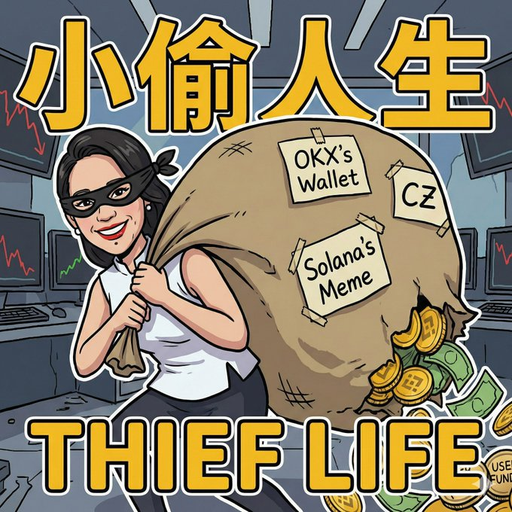
2025 Cryptocurrency Chaos: When Hackers Got Hacked and Meme Projects Lost Users
The year 2025 will be remembered as cryptocurrency’s most absurd chapter—a year where traditional notions of security, credibility, and common sense seemed to vanish alongside the hackers who thought they were smarter than everyone else. From founders staging elaborate death hoaxes to meme coins spiraling into oblivion, from billion-dollar blunders to wallets that emptied themselves, this year proved that even in a digital-first industry, the most ridiculous scenarios keep materializing. Here’s how we got here, and what it tells us about the world we’ve built.
Founder Vanishing Acts: From Missing Wallets to Fake Death Theater
The absurdity began early in 2025, when the TGE project’s founder Harold went dark in Myanmar, claiming he’d lost his multisignature wallet and laptop. In February, the DIN team announced they hadn’t heard from Harold in hours and appealed to venture capital firms and media for help locating him. Yet despite the supposed catastrophe, the DIN token launch proceeded without a hitch—two-thirds multisignature approval already secured, timeline unchanged.
The narrative didn’t sit right with skeptics. How does a founder go missing, lose critical security infrastructure, and somehow have the project chug along perfectly fine? Community members split between those who believed it was genuine misfortune and those convinced it was an orchestrated publicity stunt. Whether intentional or not, it worked: TGE became the year’s first cautionary tale about separation between hype and reality.
But nothing compared to what came next. In May, a video surfaced of Zerebro co-founder Jeffy Yu seemingly committing suicide during a live stream. Initial reactions treated it like another meme coin dev stunt—attention-grabbing theatrics in the vein of Pump.Fun’s infamous moments. Then an obituary appeared on social media, lending credibility to the “suicide” narrative. LLJEFFY, the associated meme token, rocketed past $30 million in market cap as traders scrambled to capitalize on the drama.
That’s when KOLs dropped the bomb: it was fake. Jeffy Yu had engineered an elaborate “fake death exit” and sent a detailed letter to early investors explaining everything. He claimed his ex-partner had harassed him relentlessly, leaked his personal information, and driven him to “permanently exit” through the hoax. His reasoning? Faking death was “the only way” to prevent the meme token’s price from collapsing. Historians may mark May 2025 as the moment cryptocurrency achieved peak absurdity: a founder whose project required his public suicide to maintain value.
The Hacker’s Dilemma: When Criminals Become Victims
If founder theater was disappointing, the hacker narrative was tragic-comic. In February, someone stole 2,930 ETH from zkLend. By April, that same hacker had made a confession that would become the year’s most ironic moment: while attempting to launder the stolen funds through Tornado Cash, they’d accidentally clicked on a phishing website and lost everything. All 2,930 ETH—gone.
The hacker’s on-chain message to zkLend read like a broken apology: “I intended to transfer funds to Tornado Cash, but I accidentally used a phishing website and lost all my funds. I’m devastated.” They begged zkLend to cooperate in recovering the stolen money from the phishing site operators. The security community later discovered the phishing website had been operating for over five years, suggesting this hacker wasn’t the first to fall for it.
This moment crystallized 2025’s defining theme: in a year dominated by meme coins and retail chaos, even sophisticated criminals couldn’t catch a break. The hacker had successfully pulled off one heist, only to become a victim themselves. Blockchain data can’t protect you from stupidity—a lesson that applied equally to hackers and everyday users.
Speaking of exposure, Clanker’s partnership with core developer proxystudio imploded in May when the team discovered he had a criminal past. What made this story genuinely bizarre was how the discovery happened: Clanker developer proxystudio was actually Gabagool.eth, a DeFi investigator known for on-chain detective work. But here’s the twist—Gabagool had previously stolen $350,000 from his team at Velodrome, only returning funds under community pressure in 2022.
The scandal resurfaced not through blockchain analysis or clever detection, but because Aerodrome founder Alex Cutler simply recognized him at FarCon, an offline conference. A person who built their reputation exposing on-chain crime had themselves been exposed through an entirely analog method: a familiar face at an event. Within hours, Clanker issued a statement: they’d “parted ways” with the developer, adding another layer to 2025’s theme of identity crises and unexpected vulnerabilities.
Market Manipulation and the Collapse of Credibility
If the hacker stories showed vulnerability, the market stories revealed outright fraud. Altcoin manipulators had progressed beyond simple candlestick chart manipulation—they were now drawing whatever they wanted. Charts showed lines that physics couldn’t explain, movements that defied order book logic, and patterns that screamed artificial creation. The infrastructure for detecting and preventing market abuse had become so inadequate that anyone with a bots and capital could reshape price history at will.
Meanwhile, stablecoin issuer Paxos had accidentally minted 300 trillion PYUSD tokens on October. Let that number sink in: $300 trillion, equivalent to more than twice the total global GDP. It took 22 minutes for the team to burn the entire supply after discovering the error, but those 22 minutes represented an unprecedented glimpse into what happens when critical financial infrastructure has no guardrails.
The Alby Bitcoin Lightning wallet contributed its own flavor of madness in June by implementing a policy to automatically zero out account balances after 12 months of inactivity. Users reported their funds simply disappearing—not hacked, not stolen, but confiscated by the platform’s own systems. Alby was rewriting what it meant to own a wallet.
When Projects Admit Defeat and Meme Coins Rule the Wasteland
By late 2025, even major projects had surrendered to the absurdity. Eclipse, the blockchain project, had spent years weathering scandals: founder sexual assault allegations, constant leadership turmoil, and persistent questions about user adoption. When Eclipse announced completion of a 36-month Harvard sociological study, they punctuated it with a stunning confession: “We have no users.”
Not “our user numbers are lower than expected.” Not “we’re in an early adoption phase.” Literally: no users. The study that consumed three years and presumably significant resources had concluded that the project was essentially empty. In what might be the year’s most honest statement from any crypto entity, Eclipse had indirectly acknowledged that their entire enterprise was a wasteland.
Meanwhile, meme coins had become the cultural center of gravity. Then, in a moment that even satire couldn’t capture, Trump’s wife released MELANIA, a token bearing her name, in what felt like the final proof that cryptocurrency had transcended all boundaries of credibility. Industry observers called it a disgrace—not because naming a meme coin after a political figure was unprecedented, but because it seemed to mark the point at which the line between satire and reality had permanently dissolved.
What 2025 Told Us About Crypto Culture
Looking back on 2025, the year’s chaos wasn’t random. Every event—from missing founders to hacked hackers, from meme tokens to market manipulation to stablecoins briefly representing twice the global GDP—pointed to the same underlying truth: cryptocurrency had become a space where the usual rules simply didn’t apply.
Hackers got phished. Developers got recognized at conferences. Meme coins became investment vehicles. Founders staged deaths. Wallets emptied themselves. Projects admitted they had no one using them. And through it all, thousands of retail traders survived by treating it all as a game, an entertainment, an experimental sandbox where the normal consequences of failure didn’t quite stick.
In this theater of the absurd, we’ve learned that on-chain data doesn’t prevent off-chain recognition, that security theater masks fundamental chaos, and that meme culture has thoroughly permeated what was supposed to be a revolutionary financial system. Whether that’s cause for celebration or horror might depend entirely on whether you made money or lost it in 2025.