

Trade
Basic
Futures
Futures
Hundreds of contracts settled in USDT or BTC
Options
HOT
Trade European-style vanilla options
Unified Account
Maximize your capital efficiency
Demo Trading
Futures Kickoff
Get prepared for your futures trading
Futures Events
Participate in events to win generous rewards
Demo Trading
Use virtual funds to experience risk-free trading
Earn
Launch
CandyDrop
Collect candies to earn airdrops
Launchpool
Quick staking, earn potential new tokens
HODLer Airdrop
Hold GT and get massive airdrops for free
Launchpad
Be early to the next big token project
Alpha Points
NEW
Trade on-chain assets and enjoy airdrop rewards!
Futures Points
NEW
Earn futures points and claim airdrop rewards
Investment
Simple Earn
Earn interests with idle tokens
Auto-Invest
Auto-invest on a regular basis
Dual Investment
Buy low and sell high to take profits from price fluctuations
Soft Staking
Earn rewards with flexible staking
Crypto Loan
0 Fees
Pledge one crypto to borrow another
Lending Center
One-stop lending hub
VIP Wealth Hub
Customized wealth management empowers your assets growth
Private Wealth Management
Customized asset management to grow your digital assets
Quant Fund
Top asset management team helps you profit without hassle
Staking
Stake cryptos to earn in PoS products
Smart Leverage
NEW
No forced liquidation before maturity, worry-free leveraged gains
GUSD Minting
Use USDT/USDC to mint GUSD for treasury-level yields

More



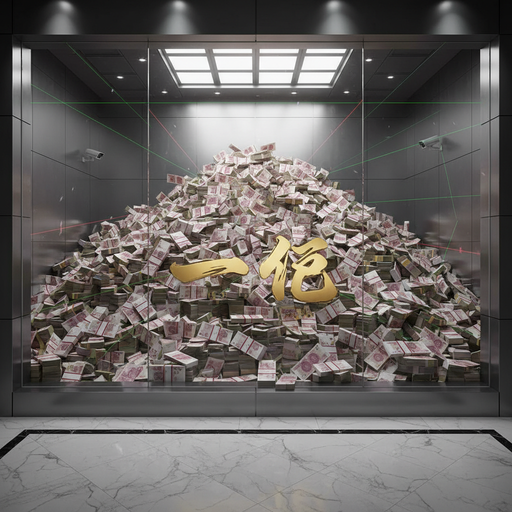



Redefining the meaning of meme coins: Innovation in community value beyond simple speculation
Starting from 2024, the cryptocurrency market has experienced an unprecedented meme coin boom. Over 20,000 new tokens are created daily, and platforms like Pump.fun generate over a million dollars in revenue. But a truly intriguing question arises: what does it mean for a meme coin to have a market capitalization of 1 billion dollars? Is it merely a speculative tool, or does it carry deeper significance?
How is token value created: Three value elements of meme coins
In the crypto ecosystem, the value of all tokens is fundamentally composed of three elements. Understanding these clarifies why meme coins can be valuable.
First, store of value. Like gold or Bitcoin, tokens can maintain their purchasing power over time. This requires broad trust and consensus among users, making it the most basic yet hardest-to-achieve form of value.
Second, value derived from cash flow and transaction demand. Ethereum and Solana generate real utility value through network transaction fees. DeFi tokens also accumulate value via mechanisms like profit sharing and token burning. Like traditional stocks, these tokens are evaluated based on sustainable cash flows.
Third, the most fascinating element is meme, narrative, and attention economy. This is where the true meaning of meme coins is revealed. This value element arises from community interest and participation. Projects that attract attention and build strong communities often become key value drivers in the crypto market. Meme coins exemplify this third element clearly.
These three elements are not mutually exclusive. Successful tokens implement a unique combination of all three, with their relative importance shifting as the project grows.
Bitcoin possesses all three elements. Mainly recognized as a store of value, it also has practical uses in payments and cross-border remittances, and its passionate community of maximalists enhances its cultural significance.
Ethereum and Solana primarily derive value from network transaction demand. As network activity increases, demand for their tokens directly rises. Their established economic positions and network effects also reinforce their status as reliable stores of value.
Dogecoin started as a meme but achieved stability through a dedicated community and ongoing relevance. It now functions as a store of value for loyal holders.
Bonk began as a meme token within the Solana ecosystem but expanded its utility through applications like BonkBot and Moonwalk. It is developing sustainable value through actual transaction demand.
Among thousands of existing tokens, fewer than 20 protocols are recognized as stable stores of value or generate ongoing demand. Most market values of tokens stem from the third element—mimetic status, narrative strength, and the ability to attract market attention.
Why do most meme coins disappear: the power of community and branding
To grasp the true meaning of meme coins, one must understand the difference between success and failure. Only a few of thousands of meme coins build sustainable communities and maintain value. The rest fade quickly after initial hype subsides.
First factor: background and narrative
A compelling origin story and persuasive narrative are key to successful meme coins. Like genes in evolutionary biology, memes spread through replication and evolution. However, only those with genuinely convincing narratives gain influence and appeal.
In early 2023, during the crypto market downturn, PEPE launched providing much-needed humor and irreverence, shifting market sentiment and sparking a broader meme coin renaissance. After the FTX collapse, BONK embodied resistance to centralized power, becoming a beacon of hope within the Solana ecosystem. Recently, GOAT carved out a niche as an AI-based meme coin proposed by Marc Andreessen.
What differentiates successful meme coins is not only entertainment value but also their ability to resonate with market sentiment and craft compelling storytelling that captures the public’s imagination.
Influential figures also play a crucial role. Consider Elon Musk and Dogecoin, Ansem and WIF, Murad and SPX. These key personalities go beyond mere supporters, becoming pillars of the community that shape the token’s growth and fundamental vision.
However, no matter how compelling the story or how strong the leadership, sustained success is not guaranteed. Looking at the meme coin supercycle in early 2024, most new tokens quickly lost relevance despite initial excitement. Price surges driven by FOMO are common, but when momentum stalls, predictable patterns emerge. As desperate exit competition ensues, holders scramble, and ultimately, the token’s value approaches zero.
Second factor: community and brand building
Yuval Noah Harari, in Sapiens, highlights humans’ unique ability to believe in fiction. The more people believe in a fiction, the stronger it becomes and the more it manifests as reality. Memes and communities operate similarly.
For a meme coin to convert initial hype and capital into sustainable value, it must build a strong community and brand foundation. Tokens like Bonk and WIF, and NFTs like Pudgy Penguins, CryptoPunk, and Milady, have evolved from mere memes into cultural icons and well-known brands.
Just as luxury fashion brands symbolize certain lifestyles, these digital assets give holders a sense of identity and belonging. Holding and engaging with these tokens is not just speculation but a new form of cultural participation.
Take Degen as an example: it directly rewards content creation and social engagement within the Farcaster community. Participants are not just consumers but creators of value. This creates a positive feedback loop, encouraging early adoption and long-term community loyalty, as early participants receive greater rewards.
Fairness and transparency determine the true value of meme coins
Decentralization is vital for blockchain networks, and fairness is equally essential for organic community building in meme coins. This aligns with Vitalik Buterin’s concept of “trustworthy neutrality.”
People are sensitive to discriminatory conditions favoring certain groups or individuals. They may be outraged by censorship on social media but less concerned when food delivery apps filter out low-rated restaurants. This reflects differing expectations of trustworthiness and fairness across platforms.
The value of meme coins depends on how many people resonate with and want to participate in their culture and community. Therefore, organic growth and fairness are not only moral imperatives but practical necessities. How tokens are issued and distributed transparently and fairly is a key criterion for earning trust and encouraging participation.
The success of platforms like Pump.fun in token issuance lies not only in lowering entry barriers but also in meeting market demand for fairness and transparency in initial token offerings.
The demand for fairness and organic growth can be measured quantitatively. Industry analyst Murad emphasizes metrics like the median holder rank and HHI( (Herfindahl-Hirschman Index) to evaluate fair distribution and holder loyalty. Originally designed to measure market monopoly concentration, HHI is now used to assess the concentration of token holdings among holders.
The future of meme coins: a community-centered new economy in the era of decentralization
The famous Benjamin Graham adage applies to all assets: “In the short run, the market is a voting machine; in the long run, it is a weighing machine.” Market events and investor sentiment drive short-term price fluctuations, but over time, assets revert to their true intrinsic value. This principle applies not only to stocks but also to real assets, tokens, and meme coins.
Certainly, meme coins are more volatile and react more strongly to market events than other assets. However, their success and failure cannot be explained solely by short-term trading or speculation. Only a small fraction of the thousands of meme coins build sustainable communities and maintain value; most vanish after initial hype.
Skeptics see blockchain and tokens as tools for gambling and speculation. Yet beneath the surface lies an ideology aimed at decentralization, better financial systems, and a new internet architecture. Regardless of good intentions, speculative demand has been a powerful catalyst for industry birth and growth.
Through trial and error, we see prediction markets replacing traditional media, stablecoins emerging as next-generation payment networks, and blockchain applications reaching a stage accessible to everyone.
The true meaning of meme coins lies behind their seemingly worthless and reckless speculative appearance. They embody the fusion of tokens, communities, and culture. They demonstrate that sustainable value can be created through community participation and transparent operation, without complex technology or financial products.
More meme coins will continue to appear and disappear. Through this cycle of innovation and failure, we gradually understand why digital communities thrive and how token economies can better align with human behavior and social dynamics. This ongoing evolution is unstable but steadily guides us toward more sophisticated and sustainable models of community-driven value creation in the digital age. Ultimately, what meme coins present is an experiment in the future of the economy and a new form of shared human-created value.