

Trade
Basic
Futures
Futures
Hundreds of contracts settled in USDT or BTC
TradFi
Gold
Trade global traditional assets with USDT in one place
Options
Hot
Trade European-style vanilla options
Unified Account
Maximize your capital efficiency
Demo Trading
Futures Kickoff
Get prepared for your futures trading
Futures Events
Participate in events to win generous rewards
Demo Trading
Use virtual funds to experience risk-free trading
Earn
Launch
CandyDrop
Collect candies to earn airdrops
Launchpool
Quick staking, earn potential new tokens
HODLer Airdrop
Hold GT and get massive airdrops for free
Launchpad
Be early to the next big token project
Alpha Points
Trade on-chain assets and enjoy airdrop rewards!
Futures Points
Earn futures points and claim airdrop rewards
Investment
Simple Earn
Earn interests with idle tokens
Auto-Invest
Auto-invest on a regular basis
Dual Investment
Buy low and sell high to take profits from price fluctuations
Soft Staking
Earn rewards with flexible staking
Crypto Loan
0 Fees
Pledge one crypto to borrow another
Lending Center
One-stop lending hub
VIP Wealth Hub
Customized wealth management empowers your assets growth
Private Wealth Management
Customized asset management to grow your digital assets
Quant Fund
Top asset management team helps you profit without hassle
Staking
Stake cryptos to earn in PoS products
Smart Leverage
New
No forced liquidation before maturity, worry-free leveraged gains
GUSD Minting
Use USDT/USDC to mint GUSD for treasury-level yields

More





RKT Hits Oversold Territory: Time for Patient Investors to Act?
Following the timeless investment wisdom that champions buying when fear peaks and selling when greed dominates, technical analysis provides us with measurable tools to identify these psychological extremes in the market. On Friday trading, shares of Rocket Companies Inc Class A (Symbol: RKT) descended into oversold conditions with a Relative Strength Index (RSI) reading of 29.0, marking a technical signal that recent selling pressure may be losing momentum. During the same period, the S&P 500 ETF (SPY) maintained a comparatively elevated RSI of 54.4, highlighting RKT’s isolated weakness.
When Fear Meets Technical Analysis
The Relative Strength Index, a momentum oscillator ranging from 0 to 100, offers investors a quantifiable method to gauge whether panic selling has reached an unsustainable level. When RSI falls below 30, it suggests that a security has been heavily sold and may be approaching a price recovery point. RKT’s descent to 29.0 represents precisely this type of extreme condition — one that historically precedes reversal patterns.
Investors who embrace contrarian strategies often interpret such extreme RSI readings as capitulation signals. Rather than interpreting continued selling as weakness, they view it as evidence that the fear driving the decline is beginning to run its course. For RKT specifically, this oversold signal raises the question of whether the market has overshot the downside, creating attractive risk-reward dynamics for those positioned to capitalize.
RKT’s Weakness Signals a Potential Buying Window
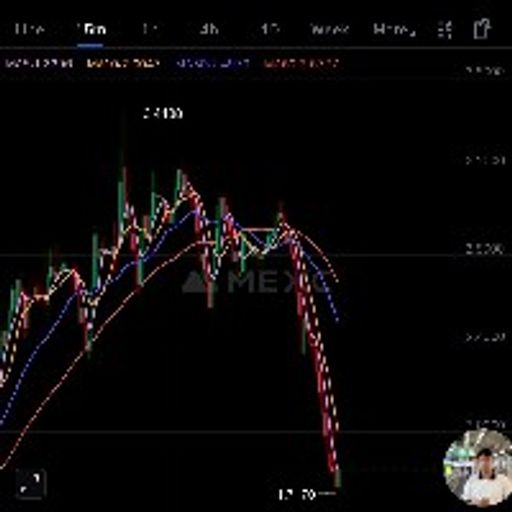
The question becomes: has RKT’s recent selloff exhausted itself? At $17.05 per share when the oversold signal triggered, RKT offered a compelling contrast to its recent highs. Over the past 52 weeks, the stock has traded between a low of $10.94 and a high of $24.36, positioning the current price toward the lower end of that range yet above its absolute floor.
This context matters. While oversold readings don’t guarantee immediate price bounces, they do indicate that negative momentum may be weakening. For value-conscious investors, such conditions represent the inverse of the widespread greed that typically precedes market corrections. The psychological shift from fear to rational assessment often begins precisely when technical indicators scream “oversold.”
Analyzing the 52-Week Range Context
RKT’s price action within its 52-week range provides additional perspective. The $17.33 last-traded price sits approximately 35% below the year’s high of $24.36, yet maintains a healthy buffer above the 52-week low of $10.94. This positioning suggests the stock has fallen substantially but hasn’t reached the extreme desperation levels that sometimes signal capitulation.
For bulls, the technical setup becomes interesting: the combination of extreme RSI readings and a mid-range position within the annual trading band creates a scenario where reversals have historically been more probable than further declines. Whether RKT’s oversold conditions mark a true inflection point or merely a temporary bounce remains to be seen, but the technical case for cautious optimism has strengthened. Investors following Buffett’s contrarian principle understand that such setups — where fear and technical extremes converge — often represent the moments when the most patient capital can be deployed most effectively.