AbuTurab

vip
On-chain Analyst
Market Analyst
Diamond Hands
No content yet
#USIranTalksProgress
U.S.–Iran Talks Show Cautious Progress as Both Sides Test Negotiation Boundaries
Recent signals from diplomatic channels suggest that U.S.–Iran engagement is gradually moving back into an active phase, with both sides cautiously exploring the possibility of renewed talks. However, the current environment is defined less by breakthroughs and more by conditional positioning, where each step forward is tied to specific demands and strategic constraints.
What stands out in this phase is the structure of engagement. Rather than direct agreement, the process is unfolding throug
CryptoSelf
#USIranTalksProgress
U.S.–Iran Talks Show Cautious Progress as Both Sides Test Negotiation Boundaries
Recent signals from diplomatic channels suggest that U.S.–Iran engagement is gradually moving back into an active phase, with both sides cautiously exploring the possibility of renewed talks. However, the current environment is defined less by breakthroughs and more by conditional positioning, where each step forward is tied to specific demands and strategic constraints.
What stands out in this phase is the structure of engagement. Rather than direct agreement, the process is unfolding through indirect communication and carefully framed expectations. This type of diplomacy often indicates that neither side is ready for full compromise, but both recognize the cost of prolonged tension.
A key driver behind this cautious progress is the broader geopolitical backdrop. Regional security concerns, energy market stability, and maritime route security continue to act as pressure points shaping negotiation behavior. As a result, discussions are not occurring in isolation, but within a wider strategic framework that limits flexibility.
At the same time, the tone of communication suggests a reduced appetite for escalation. While disagreements remain significant, the continuation of dialogue itself signals that diplomatic channels are still functioning. This alone helps reduce immediate uncertainty, even if long-term resolution remains distant.
From a broader perspective, this stage of negotiation is often characterized by volatility in expectations rather than concrete outcomes. Markets and observers tend to react strongly to signals of engagement, even when structural issues remain unresolved. This creates an environment where sentiment can shift quickly based on political statements or perceived progress.
What makes the current situation particularly important is timing. Global conditions remain sensitive, with energy prices, inflation dynamics, and geopolitical risk all interacting simultaneously. In such an environment, even incremental diplomatic movement can influence broader risk perception.
However, it is important to distinguish between progress and resolution. While dialogue is resuming, it remains highly conditional and fragile. The real test will be whether both sides are willing to move beyond signaling and toward substantive compromise.
For now, the situation reflects cautious engagement rather than a definitive diplomatic breakthrough.
#USIranTalksProgress #GateSquare #CreatorCarnival #ContentMining

repost-content-media
  • Reward
  • 4
  • Repost
  • Share
CryptoShadow:
DYOR 🤓
View More
#JustinSunSuesWorldLibertyFinancial
Justin Sun Moves Against World Liberty Financial, Escalating Legal Pressure in Crypto Circle
A new legal confrontation is drawing attention across the crypto sector as Justin Sun has reportedly initiated action against World Liberty Financial. The dispute adds another layer of tension in an industry already marked by increasing regulatory scrutiny and internal conflicts between major players.
What stands out in this case is the profile of the parties involved. Justin Sun, one of the most high-profile figures in the crypto space, has often been associated wi
SUN-0,42%
WLFI-0,6%
CryptoSelf
#JustinSunSuesWorldLibertyFinancial
Justin Sun Moves Against World Liberty Financial, Escalating Legal Pressure in Crypto Circle
A new legal confrontation is drawing attention across the crypto sector as Justin Sun has reportedly initiated action against World Liberty Financial. The dispute adds another layer of tension in an industry already marked by increasing regulatory scrutiny and internal conflicts between major players.
What stands out in this case is the profile of the parties involved. Justin Sun, one of the most high-profile figures in the crypto space, has often been associated with aggressive expansion strategies and high-visibility ecosystem moves. Legal action involving such a figure naturally amplifies market attention, even before details are fully clarified.
While the specific claims remain the subject of ongoing discussion, the broader implication is clear: crypto is entering a phase where legal structures are becoming more central to competitive dynamics. Disputes are no longer limited to code, governance votes, or market competition—they are increasingly being settled in formal legal frameworks.
This shift reflects a maturing industry. In earlier cycles, disagreements were often resolved through market forces or protocol changes. Today, as capital inflows increase and institutional participation grows, legal accountability is becoming a more prominent layer of enforcement.
From a market perspective, such developments tend to have mixed effects. On one hand, legal clarity can reduce long-term uncertainty and improve trust in the ecosystem. On the other hand, short-term reactions often reflect caution, especially when high-profile names are involved.
Another important dimension is perception. In crypto, narratives move quickly, and legal disputes involving well-known figures can influence sentiment even without immediate financial impact. This can lead to temporary volatility in related assets or ecosystems.
At the same time, it is important to separate legal escalation from systemic risk. A dispute between entities does not necessarily indicate broader instability in the market. However, it does highlight how interconnected reputation, regulation, and capital flows have become.
What makes this situation particularly noteworthy is its signaling effect. It reinforces the idea that influence in crypto is no longer purely technological or financial—it is increasingly legal and institutional as well.
For now, the case remains in development, and outcomes are uncertain. But the broader trend is clear: legal frameworks are becoming a defining force in how power and accountability are structured in the crypto industry.
#JustinSunSuesWorldLibertyFinancial #GateSquare #CreatorCarnival #ContentMining

repost-content-media
  • Reward
  • 3
  • Repost
  • Share
CryptoShadow:
LFG 🔥
View More
#ArbitrumFreezesKelpDAOHackerETH
Arbitrum Freezes Hacker Funds After Kelp DAO Exploit, Triggering Debate on DeFi Control
A major security response has unfolded after the recent Kelp DAO exploit, as the security council of Arbitrum intervened to freeze approximately 30,766 ETH linked to the attacker. The move has quickly become a focal point in ongoing debates about decentralization, security, and protocol authority in DeFi.
What stands out in this situation is the speed and decisiveness of the intervention. In traditional decentralized narratives, blockchain assets are expected to remain immu
ARB2,55%
ETH-1,44%
CryptoSelf
#ArbitrumFreezesKelpDAOHackerETH
Arbitrum Freezes Hacker Funds After Kelp DAO Exploit, Triggering Debate on DeFi Control
A major security response has unfolded after the recent Kelp DAO exploit, as the security council of Arbitrum intervened to freeze approximately 30,766 ETH linked to the attacker. The move has quickly become a focal point in ongoing debates about decentralization, security, and protocol authority in DeFi.
What stands out in this situation is the speed and decisiveness of the intervention. In traditional decentralized narratives, blockchain assets are expected to remain immutable once transferred. However, in practice, many Layer-2 ecosystems and governance structures now include emergency powers designed to respond to large-scale exploits.
This creates a tension at the core of DeFi philosophy. On one hand, users expect censorship resistance and permissionless execution. On the other hand, protocols are increasingly adopting mechanisms to mitigate systemic damage when vulnerabilities are exploited at scale.
The Kelp DAO incident itself has already triggered broader market reactions, particularly across lending and liquid staking ecosystems. When large amounts of capital are compromised or frozen, liquidity conditions tighten, and confidence can temporarily weaken across interconnected protocols.
What makes this case especially important is the precedent it reinforces. Freezing funds after an exploit is not new, but each instance strengthens the expectation that governance bodies will intervene in extreme scenarios. This gradually shifts the perception of decentralization from absolute autonomy toward conditional control.
From a risk perspective, such interventions can be viewed in two ways. They may enhance user protection by limiting attacker gains and increasing recovery chances. At the same time, they introduce questions about who ultimately controls execution when emergencies occur.
Another layer to consider is market impact. Events like this tend to create short-term uncertainty, but they can also stabilize sentiment if users believe protocols are capable of defending against large-scale losses.
In the broader context, this incident highlights the ongoing evolution of DeFi governance. As ecosystems grow in size and complexity, purely hands-off models become harder to maintain in practice. Hybrid structures—combining decentralization with emergency governance—are becoming more common.
For now, the focus remains on recovery, damage control, and restoring confidence in affected ecosystems. But the larger discussion around control versus decentralization is likely to continue well beyond this event.
#ArbitrumFreezesKelpDAOHackerETH #GateSquare #CreatorCarnival #ContentMining

repost-content-media
  • Reward
  • 4
  • Repost
  • Share
CryptoShadow:
1000x VIbes 🤑
View More
#SpaceXBids$60BforCursor
SpaceX-Linked Investment Rumor Sparks Attention as Cursor Deal Speculation Hits $60B Valuation Range
Market chatter has intensified around a potential large-scale bid reportedly linked to SpaceX interests targeting Cursor, with figures circulating as high as $60B. While details remain unconfirmed, the narrative alone has been enough to draw strong attention across both AI and tech investment circles.
What stands out here is the intersection of AI infrastructure and frontier capital. Cursor, as an AI-driven developer tool, sits directly within one of the fastest-growin
CryptoSelf
#SpaceXBids$60BforCursor
SpaceX-Linked Investment Rumor Sparks Attention as Cursor Deal Speculation Hits $60B Valuation Range
Market chatter has intensified around a potential large-scale bid reportedly linked to SpaceX interests targeting Cursor, with figures circulating as high as $60B. While details remain unconfirmed, the narrative alone has been enough to draw strong attention across both AI and tech investment circles.
What stands out here is the intersection of AI infrastructure and frontier capital. Cursor, as an AI-driven developer tool, sits directly within one of the fastest-growing segments of enterprise software: AI-assisted coding and productivity platforms. Any large acquisition or bidding activity in this space signals not just confidence in the product, but in the broader AI tooling ecosystem.
The rumored involvement of SpaceX-related capital adds another layer of market psychology. Elon Musk-linked entities have historically influenced sentiment across multiple sectors, from AI to crypto to space infrastructure. As a result, even speculative headlines tend to generate outsized attention and rapid narrative spread.
From a valuation perspective, the $60B figure reflects more than current revenue or user base. It represents expectations around long-term AI productivity gains, developer ecosystem dominance, and platform consolidation. In today’s market, AI tools are increasingly valued not just as software, but as infrastructure layers for future digital economies.
At the same time, it is important to separate speculation from confirmed transactions. In fast-moving AI markets, valuation rumors often emerge ahead of formal announcements, driven by private negotiations, secondary market activity, or strategic positioning by investors.
Another key factor is competitive pressure. The AI coding assistant space is becoming increasingly crowded, with major tech companies and startups competing for developer adoption. In such an environment, consolidation through acquisition is a realistic scenario, even if specific figures remain uncertain.
What makes this story particularly impactful is timing. AI investment momentum remains strong, with capital flowing aggressively into foundational tools, infrastructure, and enterprise applications. Any high-profile transaction in this segment reinforces the perception that AI productivity platforms are becoming core assets in the next technology cycle.
For now, the situation remains speculative, but the signal is clear: AI developer tools are being treated as strategic, high-value infrastructure rather than simple software products.
#SpaceXBids$60BforCursor #GateSquare #CreatorCarnival #ContentMining

repost-content-media
  • Reward
  • 3
  • Repost
  • Share
CryptoShadow:
LFG 🔥
View More
Children are the assurance of our future, our joy of living.
Raising today's child as tomorrow's adult is everyone's human duty.
Mustafa Kemal ATATÜRK 🤍🇹🇷
#23NİSAN #UlusalEgemenlikveçocukBayramı
CryptoSelf
Children are the assurance of our future, our joy of living.
Raising today's child as tomorrow's adult is everyone's human duty.
Mustafa Kemal ATATÜRK 🤍🇹🇷
#23NİSAN #UlusalEgemenlikveçocukBayramı
repost-content-media
  • Reward
  • 5
  • Repost
  • Share
CryptoShadow:
Diamond Hands 💎
View More
#WCTCTradingChallengeShare8MUSDT
WCTC S8: Where Discipline Defines the Outcome
When you first come across WCTC S8, the $8 million prize pool is the obvious focal point. It captures attention instantly, as it should. But after that initial reaction, a more meaningful perspective begins to take shape. The real significance of this event is not the size of the reward, but the structure of the environment it creates. Because environments like this don’t just highlight results—they reveal how those results are achieved.
Trading is often perceived as an individual activity. You sit alone, analyze t
CryptoSelf
#WCTCTradingChallengeShare8MUSDT
WCTC S8: Where Discipline Defines the Outcome
When you first come across WCTC S8, the $8 million prize pool is the obvious focal point. It captures attention instantly, as it should. But after that initial reaction, a more meaningful perspective begins to take shape. The real significance of this event is not the size of the reward, but the structure of the environment it creates. Because environments like this don’t just highlight results—they reveal how those results are achieved.
Trading is often perceived as an individual activity. You sit alone, analyze the chart, make a decision, and accept the outcome. It feels straightforward. But once you step into a competitive setting like this, that simplicity disappears. It’s no longer just about being right a few times. It becomes about maintaining consistency, applying discipline, and operating under pressure without losing structure. In reality, most participants don’t discover new strategies here—they confront their existing habits.
This is where many traders miscalculate. There’s a common belief that a few successful trades can make the difference. In practice, it rarely works that way. The real challenge lies in sustaining a standard across multiple decisions. Sometimes, choosing not to trade is more valuable than forcing an entry. Knowing this is one thing; applying it consistently is another.
Instead of approaching this purely as an individual effort, I decided to build a team: CryptoSelf. The idea was never to create a large group, but to establish a structured and controlled environment. From the beginning, the focus has been clear—improving the quality of decisions rather than increasing the quantity of trades. Within CryptoSelf, roles are defined, risk is managed carefully, and emotional reactions are minimized as much as possible. Through this process, one observation became very clear: most trading mistakes are not caused by a lack of knowledge, but by inconsistency in execution.
Being part of a team changes the dynamic. You are no longer accountable only to yourself, but to a system. That alone reduces impulsive behavior and forces a higher level of discipline. It shifts the focus from isolated decisions to structured execution.
Timing also plays a more critical role than most people expect. The pre-registration phase may seem like a minor detail, but in reality, it is part of the preparation process. Those who act early gain time to align, test, and refine their approach. Those who delay often find themselves starting without clarity. In a setting like this, that difference matters more than it seems.
Risk management remains the defining factor throughout. Especially in leveraged markets, a single mismanaged position can outweigh multiple correct decisions. That’s why sustainable performance is not built on aggression, but on control. How much you risk, when you step back, and how you respond after losses all shape the final outcome.
WCTC S8, in essence, is not just a competition. It is a structured environment where trading behavior is tested under real conditions. What ultimately matters is not how often you trade, but how consistently you follow a system.
https://www.gate.com/competition/wctc-s8?ref=UgMXU15Z&ref_type=165&utm_cmp=qK2FsaYI
Some will participate. Some will observe. But those who approach it with preparation and discipline will take away something far more valuable than short-term results.
#WCTCTradingChallengeShare8MUSDT
#WCTC交易赛瓜分800万USDT
repost-content-media
  • Reward
  • 4
  • Repost
  • Share
CryptoShadow:
Ape In 🚀
View More
Arbitrum Freezes Hacker Funds: A Rare Show of Intervention in DeFi Security
The decision by Arbitrum’s security council to freeze 30,766 ETH linked to the Kelp DAO exploit marks a significant moment for DeFi. Not because hacks are new—but because intervention at this level challenges one of the core assumptions of decentralized systems: that transactions, once executed, are irreversible.
What stands out here is the speed and coordination. Instead of watching funds move across the ecosystem and fragment into untraceable paths, action was taken to contain the damage early. In practical terms, th
ARB2,55%
ETH-1,44%
CryptoSelf
Arbitrum Freezes Hacker Funds: A Rare Show of Intervention in DeFi Security
The decision by Arbitrum’s security council to freeze 30,766 ETH linked to the Kelp DAO exploit marks a significant moment for DeFi. Not because hacks are new—but because intervention at this level challenges one of the core assumptions of decentralized systems: that transactions, once executed, are irreversible.
What stands out here is the speed and coordination. Instead of watching funds move across the ecosystem and fragment into untraceable paths, action was taken to contain the damage early. In practical terms, this limits the attacker’s ability to liquidate assets and reduces systemic fallout. But in principle, it opens a much larger conversation.
DeFi has always operated on a spectrum between decentralization and practical security. In theory, immutability is absolute. In reality, when large-scale exploits occur, communities often face a choice: preserve principles or protect the system. This decision by Arbitrum suggests that, at least in critical moments, protection is taking priority.
There’s also a trust dimension to this. Freezing stolen funds can restore confidence among users who fear that losses in DeFi are always permanent. It signals that there are mechanisms—formal or informal—that can respond to extreme scenarios. But at the same time, it raises questions about control. Who decides when intervention is justified? And where is the line drawn?
From a market perspective, this move may act as a short-term stabilizer. By limiting the immediate sell pressure from stolen assets, it reduces the risk of forced liquidity shocks. It also shows that ecosystems are becoming more responsive, not just reactive.
However, the longer-term implications are more nuanced. If intervention becomes more common, DeFi begins to resemble traditional systems more closely, where authority exists to override outcomes under certain conditions. That may increase security, but it also reshapes the narrative of decentralization.
What makes this situation particularly important is its timing. It comes during a period where DeFi is already under pressure from exploits, liquidity shifts, and confidence challenges. In that context, decisive action can either rebuild trust—or trigger debate about the direction the ecosystem is taking.
For now, the immediate impact is containment. But the broader conversation has only just begun.
#GateSquare #CreatorCarnival #ContentMining

repost-content-media
  • Reward
  • 3
  • Repost
  • Share
CryptoShadow:
LFG 🔥
View More
Bitcoin Breaks $77K: Momentum Builds, but Conviction Still Faces a Test
Bitcoin pushing through the $77,000 level marks another step in the ongoing recovery narrative, with a modest 1.54% daily gain reinforcing the idea that buyers are still active. On the surface, it looks like continuation. But when you look a bit deeper, the move feels more like controlled momentum rather than explosive strength.
What stands out is how this breakout is happening. It’s not driven by a single catalyst or a surge in euphoria. Instead, it’s building gradually, almost methodically. This kind of price behavior of
BTC0,08%
CryptoSelf
Bitcoin Breaks $77K: Momentum Builds, but Conviction Still Faces a Test
Bitcoin pushing through the $77,000 level marks another step in the ongoing recovery narrative, with a modest 1.54% daily gain reinforcing the idea that buyers are still active. On the surface, it looks like continuation. But when you look a bit deeper, the move feels more like controlled momentum rather than explosive strength.
What stands out is how this breakout is happening. It’s not driven by a single catalyst or a surge in euphoria. Instead, it’s building gradually, almost methodically. This kind of price behavior often reflects steady demand rather than aggressive speculation. And in many ways, that’s a healthier structure—but it also means the move still needs confirmation.
Breaking above $77K is important psychologically. It reclaims a level that sits close to recent resistance zones and signals that the market is willing to push higher despite ongoing uncertainty. But at the same time, it doesn’t automatically mean the path ahead is clear.
One thing I’m paying attention to is participation. For a breakout to sustain, it needs follow-through—not just in price, but in volume and broader market alignment. If Bitcoin continues to move higher while altcoins follow, that would reinforce the idea that risk appetite is expanding again. If not, this could turn into another short-lived push within a larger range.
There’s also the macro backdrop to consider. Geopolitical developments, shifting expectations around interest rates, and regulatory narratives are all still in play. None of these have fully resolved, which means the market is still operating in a layered environment. In such conditions, breakouts can happen—but they can also fade quickly if underlying support isn’t strong enough.
What I find interesting is the tone of this move. It doesn’t feel euphoric. It feels cautious. And that caution can work both ways. On one hand, it suggests the market isn’t overheated. On the other, it shows that conviction hasn’t fully returned.
This puts Bitcoin in a delicate position. It has momentum, but it still needs validation. If buyers continue to absorb supply at higher levels, the move could extend toward the next resistance zone. If not, the market may revisit lower support areas to rebuild strength.
For now, the breakout above $77K is a positive signal—but not a final one. It’s a step forward, not the end of the move.
#GateSquare #CreatorCarnival #ContentMining #BitcoinBouncesBack #Gate13thAnniversaryLive
repost-content-media
  • Reward
  • 4
  • Repost
  • Share
CryptoShadow:
Ape In 🚀
View More
WCTC S8: A Structured Arena for Real Trading Performance
In today’s evolving crypto landscape, trading is no longer defined by isolated decisions or short-term gains. It has become a discipline shaped by structure, consistency, and the ability to perform under pressure.
WCTC S8 reflects this shift.
With a total prize pool of $8 million, the event naturally draws attention. However, what truly distinguishes it is not the scale—but the framework it operates within. This is not simply a competition of outcomes; it is a system designed to evaluate process, discipline, and adaptability.
Beyond Size
CryptoSelf
WCTC S8: A Structured Arena for Real Trading Performance
In today’s evolving crypto landscape, trading is no longer defined by isolated decisions or short-term gains. It has become a discipline shaped by structure, consistency, and the ability to perform under pressure.
WCTC S8 reflects this shift.
With a total prize pool of $8 million, the event naturally draws attention. However, what truly distinguishes it is not the scale—but the framework it operates within. This is not simply a competition of outcomes; it is a system designed to evaluate process, discipline, and adaptability.
Beyond Size: A Performance-Oriented Design
The allocation of rewards across multiple categories is intentional. Team-based competition holds the largest share, highlighting the importance of coordination and collective execution. Meanwhile, solo and 1v1 formats ensure that individual precision and decision-making remain equally relevant.
This balance forces participants to think beyond a single strategy. Success here is not about doing more—it’s about doing the right things, consistently.
Multi-Market Exposure and Strategic Flexibility
One of the defining aspects of WCTC S8 is its multi-environment structure. Participants engage across different trading conditions, requiring them to adjust their approach rather than rely on a fixed edge.
This introduces a critical distinction:
High-frequency activity does not equal high performance.
Instead, top participants focus on:
Selective execution
Controlled exposure
Timing aligned with confirmation, not impulse
Adaptability becomes the key differentiator.
The Role of Team Intelligence
The prominence of team rewards reflects a broader market reality: information alone is no longer an edge—execution quality is.
Well-structured teams typically operate with:
Clear role distribution (analysis, execution, risk control)
Balanced exposure across positions
Coordinated entry and exit strategies
Efficient communication during volatility
Rather than amplifying risk, strong teams reduce it through alignment.
Timing as a Strategic Variable
The pre-registration phase is more than a formal requirement—it is a strategic window.
Participants who position early benefit from:
Access to stronger teams
Time to refine and test strategies
Early-stage incentives
Delaying entry does not just reduce time—it reduces optionality.
Risk Management: The Defining Factor
Opportunities in environments like WCTC S8 come with equally significant risks, particularly in leveraged markets.
What separates sustainable performers from the rest is not aggressiveness, but control:
Defined risk per trade
Consistency in execution rules
Emotional discipline under pressure
Without these, even strong strategies tend to break down.
Conclusion: More Than a Competition
WCTC S8 should not be viewed solely as a prize-driven event. It is a live performance environment where traders are tested not only on outcomes, but on how they operate within structured conditions.
In this context, success is not determined by how often one trades, but by how effectively one applies a system.
The real question is not whether the opportunity is large.
The question is whether you are prepared to operate at that level.
Registration
https://www.gate.com/competition/wctc-s8?ref=UgMXU15Z&ref_type=165&utm_cmp=qK2FsaYI
Final Thought
Some will enter to compete.
Some will observe.
Only a small group will approach it as it is meant to be approached:
a test of discipline, structure, and decision-making under pressure.
#WCTCTradingChallengeShare8MUSDT
#WCTC交易赛瓜分800万USDT
repost-content-media
  • Reward
  • 5
  • Repost
  • Share
CryptoShadow:
DYOR 🤓
View More
WCTC S8: Everyone Sees the Prize — Few Understand the Game
Let’s be honest for a second.
When you first hear “$8 million prize pool,” your attention shifts immediately.
That’s normal. It’s supposed to.
But after the first reaction fades, a more important question starts to form:
What kind of environment puts that much capital on the table—and why?
Because WCTC S8 isn’t just about rewards.
It’s about how you operate when the stakes feel real.
The Difference Between Trading… and Performing
Most traders are used to trading in isolation.
You open a chart.
You make a decision.
You win or lose.
Simp
CryptoSelf
WCTC S8: Everyone Sees the Prize — Few Understand the Game
Let’s be honest for a second.
When you first hear “$8 million prize pool,” your attention shifts immediately.
That’s normal. It’s supposed to.
But after the first reaction fades, a more important question starts to form:
What kind of environment puts that much capital on the table—and why?
Because WCTC S8 isn’t just about rewards.
It’s about how you operate when the stakes feel real.
The Difference Between Trading… and Performing
Most traders are used to trading in isolation.
You open a chart.
You make a decision.
You win or lose.
Simple.
But competitions like this change the context entirely.
Now there’s structure.
Now there’s visibility.
Now there’s pressure.
And under pressure, something interesting happens:
People don’t rise to their expectations.
They fall back to their habits.
That’s why events like WCTC don’t just measure skill.
They expose consistency.
Where Most Traders Get It Wrong
If you watch closely, you’ll notice a pattern.
A lot of participants come in thinking:
“I just need a few good trades.”
But that mindset rarely survives long.
Because the real challenge isn’t catching one opportunity.
It’s managing yourself across many decisions.
Knowing when not to trade
Accepting small losses without reacting
Staying consistent when nothing exciting is happening
That’s not strategy.
That’s discipline.
And discipline is harder to fake.
Building CryptoSelf: A Different Approach
When I decided to join WCTC S8, I didn’t want to approach it as an individual trying to outperform everyone.
So I built a team: CryptoSelf.
Not a random group.
Not a numbers game.
A structured environment.
From day one, the idea was simple:
Don’t try to trade more.
Try to trade better.
Inside CryptoSelf, we don’t chase every move.
We filter.
We don’t react emotionally.
We align decisions.
We don’t rely on confidence.
We rely on process.
And something becomes very clear when you operate this way:
Most mistakes in trading are not technical.
They’re behavioral.
Being in a team doesn’t just improve results.
It forces accountability.
Timing Isn’t Just About the Market
There’s also something people underestimate: timing outside the charts.
Pre-registration deadlines, team formation, preparation time…
These aren’t minor details.
They define how ready you are when the competition actually starts.
Joining late might seem harmless.
But in reality, it reduces your ability to:
Build alignment
Test your approach
Enter with clarity
And in environments like this, clarity is everything.
Risk: The Quiet Factor No One Talks About Enough
Everyone talks about winning.
Very few talk about surviving long enough to win.
In leveraged markets especially, one mistake can erase multiple correct decisions.
That’s why the real edge isn’t aggression.
It’s control.
How much you risk
When you step back
How you behave after a loss
These are the things that separate short bursts of success from sustained performance.
So What Is WCTC S8, Really?
If you strip away the marketing, the numbers, the hype…
What you’re left with is this:
A controlled environment where your habits meet pressure.
Some people will treat it like a game.
Some will treat it like an opportunity.
But a small group will treat it like what it actually is:
A mirror.
At some point, every trader reaches a moment where they have to decide:
Am I just participating…
or am I actually building something?
WCTC S8 doesn’t answer that for you.
It just gives you the space to find out.
https://www.gate.com/competition/wctc-s8?ref=UgMXU15Z&ref_type=165&utm_cmp=qK2FsaYI
Some will join for the prize.
Some will join for the experience.
But the ones who take it seriously?
They won’t just trade differently here.
They’ll leave different.
#WCTCTradingChallengeShare8MUSDT
#WCTC交易赛瓜分800万USDT
repost-content-media
  • Reward
  • 4
  • Repost
  • Share
CryptoShadow:
Ape In 🚀
View More
Bitcoin’s Structure Tightens as Institutions Accumulate and Spot Selling Pressure Builds
The current Bitcoin market is increasingly defined by contradiction rather than clarity. On one side, spot market behavior is showing renewed distribution, with CVD turning negative and indicating that sellers are becoming more aggressive in the short term. On the other side, institutional flows continue to provide steady support, with ETF inflows and large asset managers maintaining accumulation even during periods of intraday weakness.
This kind of divergence is rarely neutral. It usually signals a trans
BTC0,08%
CryptoSelf
Bitcoin’s Structure Tightens as Institutions Accumulate and Spot Selling Pressure Builds
The current Bitcoin market is increasingly defined by contradiction rather than clarity. On one side, spot market behavior is showing renewed distribution, with CVD turning negative and indicating that sellers are becoming more aggressive in the short term. On the other side, institutional flows continue to provide steady support, with ETF inflows and large asset managers maintaining accumulation even during periods of intraday weakness.
This kind of divergence is rarely neutral. It usually signals a transitional phase where control of the market is not fully established by either side. Instead, price action becomes a battleground between short-term liquidity pressure and long-term structural demand.
Institutional behavior remains one of the strongest stabilizing forces in the current environment. Continued accumulation from major players such as large traditional finance entities suggests that Bitcoin is still being treated as a strategic asset rather than a short-term trade. This type of flow does not react quickly to volatility; it tends to operate on longer time horizons, which can absorb selling pressure during weaker phases.
At the same time, the presence of persistent spot selling suggests that some participants are still using strength to reduce exposure. This is often seen when markets approach perceived resistance zones or when short-term uncertainty remains elevated. The result is a market that moves upward in controlled bursts but struggles to sustain acceleration.
The key question emerging from this structure is whether Bitcoin has already established a local bottom or whether this is simply a consolidation phase within a broader corrective structure. Institutional accumulation argues for the former, while spot distribution leaves the door open for further testing of lower liquidity zones.
Adding to this complexity is the behavior of broader market participants. Retail engagement is increasing again, which typically introduces more reactive liquidity into the system. While this supports volume, it can also increase volatility, especially when institutional and retail flows are not aligned in direction.
What makes this phase particularly important is that both sides appear active simultaneously. It is not a one-sided market. Instead, it is a layered environment where different time horizons are expressing different views of value.
In such conditions, price often compresses before it expands. The market does not immediately resolve disagreement—it builds tension until one side becomes dominant enough to define direction.
For now, Bitcoin appears to be in that accumulation–distribution overlap zone, where structure is forming but conviction is still divided. The next decisive move will depend on whether institutional demand continues to absorb supply at current levels or whether spot selling pressure begins to overwhelm passive inflows.
#GateSquare #CreatorCarnival #ContentMining #BitcoinBouncesBack #USIranTalksProgress

repost-content-media
  • Reward
  • 4
  • Repost
  • Share
CryptoShadow:
Ape In 🚀
View More
Aave Stress Deepens as Bad Debt Discussions Intensify and Liquidity Shifts Reshape DeFi
The situation surrounding Aave continues to evolve from a contained shock into a broader structural stress test for decentralized lending markets. What began as a protocol-level disruption has now expanded into a full-scale reassessment of risk, liquidity, and confidence across DeFi.
At the center of this pressure is the growing bad debt concern. As losses accumulate and collateral dynamics weaken, the protocol is now actively evaluating multiple resolution paths. While these discussions aim to stabilize th
AAVE2,13%
SPK34,85%
CryptoSelf
Aave Stress Deepens as Bad Debt Discussions Intensify and Liquidity Shifts Reshape DeFi
The situation surrounding Aave continues to evolve from a contained shock into a broader structural stress test for decentralized lending markets. What began as a protocol-level disruption has now expanded into a full-scale reassessment of risk, liquidity, and confidence across DeFi.
At the center of this pressure is the growing bad debt concern. As losses accumulate and collateral dynamics weaken, the protocol is now actively evaluating multiple resolution paths. While these discussions aim to stabilize the system, the very fact that emergency solutions are being considered highlights the seriousness of the imbalance. In DeFi, bad debt is not just an accounting issue—it is a signal that risk models are being pushed beyond expected boundaries.
What makes this phase particularly sensitive is the reaction of capital. Liquidity is not exiting DeFi entirely, but it is moving rapidly between protocols. This reshuffling is creating clear winners and losers within the ecosystem. Spark Protocol, in particular, has emerged as a key beneficiary of this rotation, attracting capital that is seeking perceived safety and stability in a time of uncertainty.
This behavior reflects a core reality of DeFi markets: trust is portable, but not permanent. When confidence shifts, capital does not simply leave the system—it re-prices where it feels safest within it. That dynamic is now playing out in real time.
The broader concern is that these shifts are happening during a period of already elevated sensitivity. Following recent exploits and liquidity stress events, participants are more reactive than usual. This increases the speed at which capital moves and amplifies the impact of each new development.
The Aave community is now closely watching the outcome of ongoing discussions. Any resolution will need to balance multiple priorities: protecting users, maintaining protocol solvency, and avoiding further confidence erosion. Achieving all three simultaneously is difficult, especially in an environment where perception can shift faster than implementation.
What stands out most in this phase is that the system is not breaking in a single point—it is adjusting across multiple layers at once. Liquidity migration, bad debt management, and protocol competition are all interacting, creating a complex restructuring process rather than a simple recovery or collapse.
In that sense, the current situation is less about failure and more about stress redistribution. But the outcome of that redistribution is still uncertain.
For now, DeFi lending is operating in a high-friction environment where capital is actively re-evaluating where it belongs.
#GateSquare #CreatorCarnival #ContentMining #GatePreIPOsLaunchesWithSpaceX #HKUnveilsNewCryptoRules

repost-content-media
  • Reward
  • 4
  • Repost
  • Share
CryptoShadow:
Ape In 🚀
View More
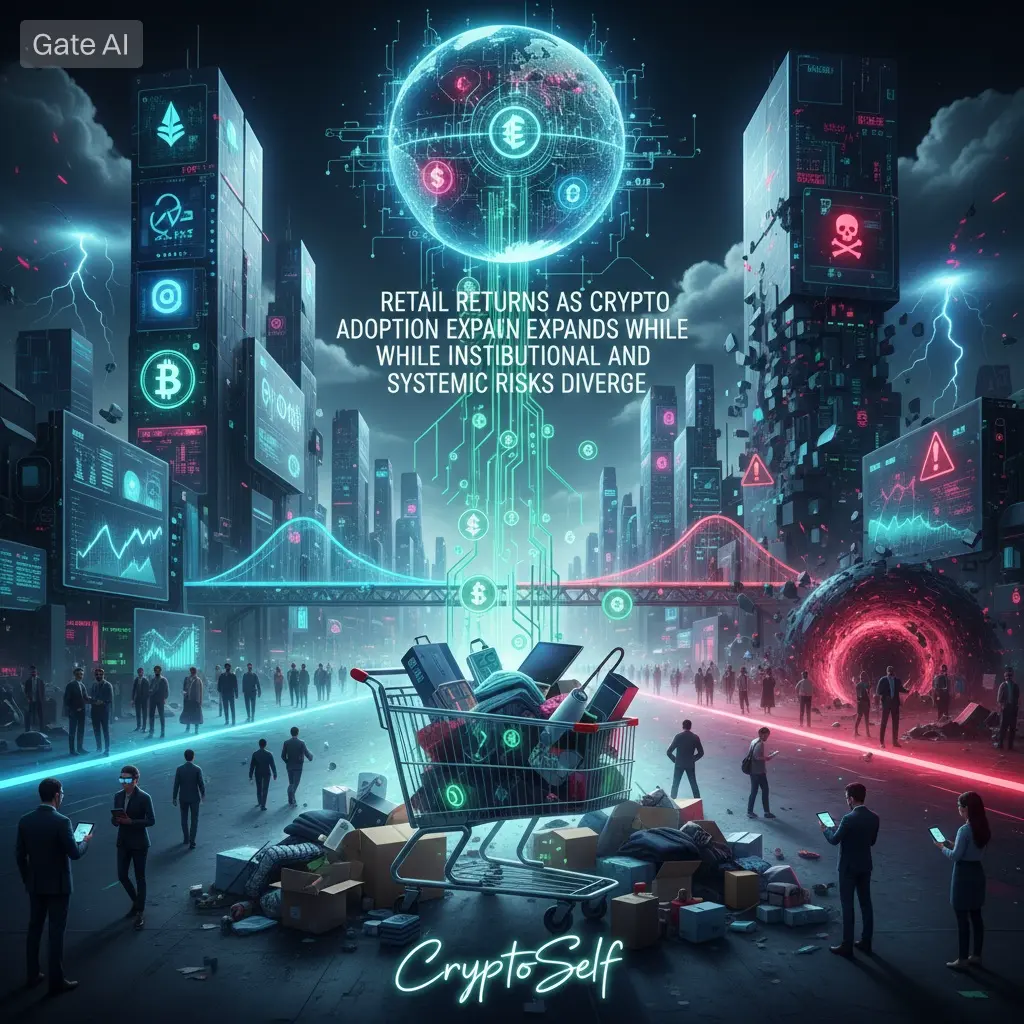
Retail Returns as Crypto Adoption Expands While Institutional and Systemic Risks Diverge
One of the more important underlying shifts in the current market structure is the gradual return of retail participation. Recent data suggesting that U.S. crypto engagement has risen to around 12%, with Bitcoin increasingly treated as a standard portfolio allocation by a large share of investors, points to a deeper normalization process taking place beneath short-term volatility.
This is not the speculative retail cycle seen in earlier phases of the market. Instead, it reflects a more structural adoption
BTC0,08%
CryptoSelf
Retail Returns as Crypto Adoption Expands While Institutional and Systemic Risks Diverge
One of the more important underlying shifts in the current market structure is the gradual return of retail participation. Recent data suggesting that U.S. crypto engagement has risen to around 12%, with Bitcoin increasingly treated as a standard portfolio allocation by a large share of investors, points to a deeper normalization process taking place beneath short-term volatility.
This is not the speculative retail cycle seen in earlier phases of the market. Instead, it reflects a more structural adoption pattern, where Bitcoin is being integrated into broader asset allocation frameworks rather than traded purely as a high-risk instrument. That distinction matters, because it changes how demand behaves during volatility.
At the same time, this return of retail participation is happening alongside very different conditions in institutional and DeFi markets. Institutional flows continue to show steady accumulation in Bitcoin, while parts of the DeFi ecosystem are experiencing stress, liquidity migration, and risk repricing. These two dynamics are not aligned, but they are occurring simultaneously.
What stands out is the divergence in behavior between participant groups. Retail investors are gradually increasing exposure, often driven by long-term positioning narratives. Institutions are maintaining or adding exposure through structured vehicles like ETFs. Meanwhile, DeFi capital is actively rotating in response to perceived risk and protocol-level instability.
This creates a multi-layered market structure where different segments are responding to entirely different signals. Retail behavior is shaped by adoption and accessibility. Institutional behavior is shaped by macro allocation strategy. DeFi behavior is shaped by liquidity efficiency and risk management within protocols.
The result is a market that appears unified on the surface but is actually fragmented underneath.
What makes the current retail return particularly notable is the context in which it is happening. It is not occurring during a euphoric breakout phase, but during a period of mixed signals—geopolitical uncertainty, regulatory delays, and intermittent market stress events. Historically, retail participation tends to accelerate either during strong upward momentum or after prolonged periods of perceived stabilization. This phase feels closer to the latter.
However, increased participation does not automatically translate into stability. In fact, rising retail engagement during uncertain conditions can amplify volatility, especially when positioning is uneven across market segments.
The key takeaway is that adoption is continuing, but the structure of that adoption is changing. Bitcoin is increasingly being viewed as a baseline allocation rather than a speculative outlier. At the same time, the broader ecosystem remains sensitive to shocks, liquidity shifts, and macro uncertainty.
This combination—growing structural adoption alongside fragmented risk behavior—creates a market that is expanding in participation but still unstable in direction.
In other words, the user base is becoming more mature, but the system itself is still in transition.
#GateSquare #CreatorCarnival #ContentMining #USIranTalksProgress #SaylorReleasesBitcoinTrackerUpdate

repost-content-media
  • Reward
  • 3
  • Repost
  • Share
CryptoShadow:
LFG 🔥
View More
OpenAI Outage Highlights Hidden Fragility in AI-Driven Market Infrastructure
A recent 4-hour global outage affecting ChatGPT exposed a less discussed but increasingly important layer of modern market structure: dependency on AI infrastructure. While at first glance this may appear to be a purely technical disruption, its implications extend far beyond a single platform.
What stood out during the outage was not only the downtime itself, but how quickly it rippled across workflows, analytics, and decision-making processes that now rely heavily on AI systems. In today’s environment, AI is no long
CryptoSelf
OpenAI Outage Highlights Hidden Fragility in AI-Driven Market Infrastructure
A recent 4-hour global outage affecting ChatGPT exposed a less discussed but increasingly important layer of modern market structure: dependency on AI infrastructure. While at first glance this may appear to be a purely technical disruption, its implications extend far beyond a single platform.
What stood out during the outage was not only the downtime itself, but how quickly it rippled across workflows, analytics, and decision-making processes that now rely heavily on AI systems. In today’s environment, AI is no longer just a tool—it has become part of the operational layer for research, trading analysis, content production, and even market sentiment interpretation.
This creates a subtle but important form of systemic risk. When a widely used AI system experiences downtime, it doesn’t directly impact financial markets in the traditional sense. However, it can temporarily disrupt information flow, delay analysis, and slow down decision-making processes across a wide range of participants.
In markets that are already highly reactive, even short delays in information processing can influence positioning. Traders, analysts, and institutions increasingly use AI-assisted tools to interpret data faster and filter noise. When that layer becomes unavailable, even briefly, it exposes how dependent the ecosystem has become on continuous digital infrastructure.
What makes this development more relevant is its timing. The broader market is already operating under conditions of uncertainty—geopolitical tension, regulatory delays, and shifting liquidity dynamics across both crypto and DeFi sectors. In such an environment, any additional friction in information access adds another layer of instability, even if indirectly.
It also raises a deeper structural question: as AI becomes more embedded in financial decision-making processes, how resilient are markets to interruptions in that layer? The answer is not yet clear, but events like this outage begin to highlight the dependency curve that is forming.
At the same time, this should not be interpreted as a failure of AI systems, but rather as a natural stage of technological integration. Every system that becomes critical eventually reveals its weak points under stress. The current phase simply shows that AI is now operating at that level of importance.
In the broader context, this event reinforces a key theme across modern markets: increasing interdependence. Finance, data, infrastructure, and technology are no longer separate layers—they are interconnected systems that now influence each other in real time.
And when one layer experiences disruption, even briefly, the effects are felt not just technically, but behaviorally.
#GateSquare #CreatorCarnival #ContentMining #Gate13thAnniversaryLive #GatePreIPOsLaunchesWithSpaceX

repost-content-media
  • Reward
  • 4
  • Repost
  • Share
CryptoShadow:
1000x VIbes 🤑
View More
13 Years of Gate — Where Markets Become Memories
When I look back at my journey with Gate, I don’t just see charts, trades, or numbers.
I see time.
I see people who crossed paths with me in ways I never expected.
I see conversations that started as simple market talk and slowly turned into something deeper — understanding, respect, and connection.
Gate, for me, has never been only a trading platform.
It became a place where I learned discipline from losses, patience from waiting, and clarity from chaos. But more importantly, it became a place where I met people who made this journey meaningful
CryptoSelf
13 Years of Gate — Where Markets Become Memories
When I look back at my journey with Gate, I don’t just see charts, trades, or numbers.
I see time.
I see people who crossed paths with me in ways I never expected.
I see conversations that started as simple market talk and slowly turned into something deeper — understanding, respect, and connection.
Gate, for me, has never been only a trading platform.
It became a place where I learned discipline from losses, patience from waiting, and clarity from chaos. But more importantly, it became a place where I met people who made this journey meaningful.
Some of them are still here with me.
Some I met through streams, some through discussions, some through random moments in the market — but all of them left something behind.
And I want them to know something clearly:
You are not just part of my journey in crypto.
You are part of my growth as a person.
Every friend I met here, every viewer who stayed, every person who shared a thought or supported a moment — you made this space feel alive.
That is something I will never take for granted.
As Gate celebrates its 13th anniversary, I don’t see it as just a platform milestone.
I see it as a celebration of everyone who built something real inside it — friendships, learning, mistakes, wins, and shared experiences.
Markets move every second.
But the memories and connections we build inside them… stay.
And maybe that is the real meaning of everything we do here.
Not just trading.
But becoming part of something bigger than ourselves.
Happy 13th Anniversary, Gate.
And thank you to everyone who made this journey feel personal.
#Gate13thAnniversary #MyGateStory #WhatIWantToSayToGate #Next13YearsPrediction
repost-content-media
  • Reward
  • 3
  • Repost
  • Share
CryptoShadow:
LFG 🔥
View More
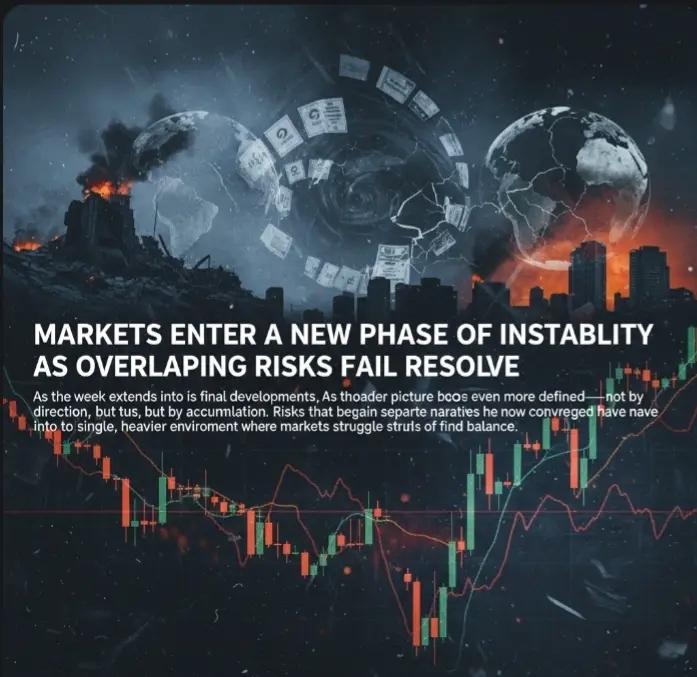
Markets Enter a New Phase of Instability as Overlapping Risks Fail to Resolve
As the week extends into its final developments, the broader picture becomes even more defined—not by direction, but by accumulation. Risks that began as separate narratives have now converged into a single, heavier environment where markets struggle to find balance.
What stands out most is the lack of resolution across all major fronts. Geopolitical tension around the ceasefire expiration has not fully escalated, but it has also not de-escalated. That in-between state is often where markets become most sensitive, be
BTC0,08%
ETH-1,44%
CryptoSelf
Markets Enter a New Phase of Instability as Overlapping Risks Fail to Resolve
As the week extends into its final developments, the broader picture becomes even more defined—not by direction, but by accumulation. Risks that began as separate narratives have now converged into a single, heavier environment where markets struggle to find balance.
What stands out most is the lack of resolution across all major fronts. Geopolitical tension around the ceasefire expiration has not fully escalated, but it has also not de-escalated. That in-between state is often where markets become most sensitive, because uncertainty persists without clarity. It keeps risk pricing unstable and reactions inconsistent.
At the same time, Federal Reserve expectations remain fluid. The leadership hearing and shifting rate cut probabilities have not produced a clear policy path. Instead, they have reinforced the idea that monetary direction is still under negotiation. And in markets where liquidity is the foundation, ambiguity around interest rates translates directly into hesitation.
Energy markets continue to act as a secondary pressure point. Oil volatility feeds into inflation expectations, and inflation expectations feed into rate outlooks. This chain reaction has been one of the key underlying drivers of the week, even when not always visible on the surface.
Crypto markets reflect this layered uncertainty in a very specific way. Instead of trending, they oscillate. Bitcoin reacts to macro pressure but fails to establish follow-through. Ethereum shows moments of conviction through large positions, but those moves exist in contrast to broader caution. Altcoins experience localized pressure from unlocks and liquidity shifts, but without a unified direction.
DeFi, in particular, has become a microcosm of this environment. Protocol-level stress, liquidity withdrawals, and trust recalibration events are not isolated anymore—they interact. Each incident feeds into the next, creating a feedback loop where confidence is constantly being tested but rarely fully restored.
What makes this phase particularly important is that it is not driven by a single shock. It is driven by accumulation of uncertainty. When multiple moderate risks overlap without resolution, their combined effect becomes more powerful than any individual event.
From a behavioral perspective, this leads to a market that is reactive but not committed. Participants respond quickly to news, but hesitate to build sustained positions. This creates volatility without trend, movement without direction.
In many ways, this is the defining characteristic of the current phase: not crisis, but instabiity without closure. And markets tend not to resolve such conditions gradually—they resolve them abruptly, once a dominant catalyst finally breaks the equilibrium.
Until that happens, hesitation remains the default state.
#GateSquare #CreatorCarnival #ContentMining #GatePreIPOsLaunchesWithSpaceX #Gate13thAnniversaryLive

repost-content-media
  • Reward
  • 5
  • Repost
  • Share
MasterChuTheOldDemonMasterChu:
Just charge forward 👊
View More
Aave Shaken by KelpDAO Fallout: $8.4 Billion TVL Drop Raises Questions on DeFi Stability
The recent shock following the KelpDAO hack has started to ripple through the DeFi ecosystem, and one of the clearest impacts is being seen in Aave. A drop of $8.4 billion in total value locked is not just a number—it’s a signal. It reflects how quickly confidence can shift when risk becomes real instead of theoretical.
What makes this situation particularly striking is the speed of the reaction. DeFi users are known for being agile, but movements of this scale suggest something deeper than routine reposit
AAVE2,13%
CryptoSelf
Aave Shaken by KelpDAO Fallout: $8.4 Billion TVL Drop Raises Questions on DeFi Stability
The recent shock following the KelpDAO hack has started to ripple through the DeFi ecosystem, and one of the clearest impacts is being seen in Aave. A drop of $8.4 billion in total value locked is not just a number—it’s a signal. It reflects how quickly confidence can shift when risk becomes real instead of theoretical.
What makes this situation particularly striking is the speed of the reaction. DeFi users are known for being agile, but movements of this scale suggest something deeper than routine repositioning. It’s not just about avoiding immediate exposure—it’s about reassessing trust in interconnected systems.
Aave, as one of the foundational protocols in decentralized finance, doesn’t operate in isolation. Its strength has always come from being deeply integrated into the broader ecosystem. But that same integration becomes a vulnerability when one part of the system fails. The KelpDAO incident doesn’t directly redefine Aave’s fundamentals, yet it influences how users perceive risk across the board.
From a structural perspective, this kind of TVL drop highlights how liquidity behaves under stress. Capital in DeFi is fluid by design. It moves quickly, often preemptively, seeking safety before clarity emerges. And once that movement begins, it tends to accelerate, not stabilize.
There is also a psychological layer that can’t be ignored. Trust in DeFi is not built solely on code—it’s built on consistency. When a major disruption occurs, even in a related protocol, users begin to question assumptions they previously took for granted. The system doesn’t need to break entirely; it only needs to feel uncertain.
At the same time, I don’t see this as a collapse. It feels more like a stress test. Moments like this force protocols to prove resilience—not just technically, but in terms of communication, transparency, and response speed. Recovery, if it comes, will depend less on the absence of risk and more on how that risk is managed.
What I find most compelling is how events like this reshape behavior going forward. Users become more selective, more cautious, and more aware of systemic connections. This doesn’t weaken DeFi—it refines it. But that refinement often comes through discomfort.
In the end, the $8.4 billion drop is not just about capital leaving. It’s about confidence being temporarily withdrawn. And in a system built on trustless technology, moments like this remind us how much trust still matters.
#GateSquare #CreatorCarnival #ContentMining #GatePreIPOsLaunchesWithSpaceX #Gate13thAnniversaryLive

repost-content-media
  • Reward
  • 6
  • Repost
  • Share
MasterChuTheOldDemonMasterChu:
Steadfast HODL💎
View More
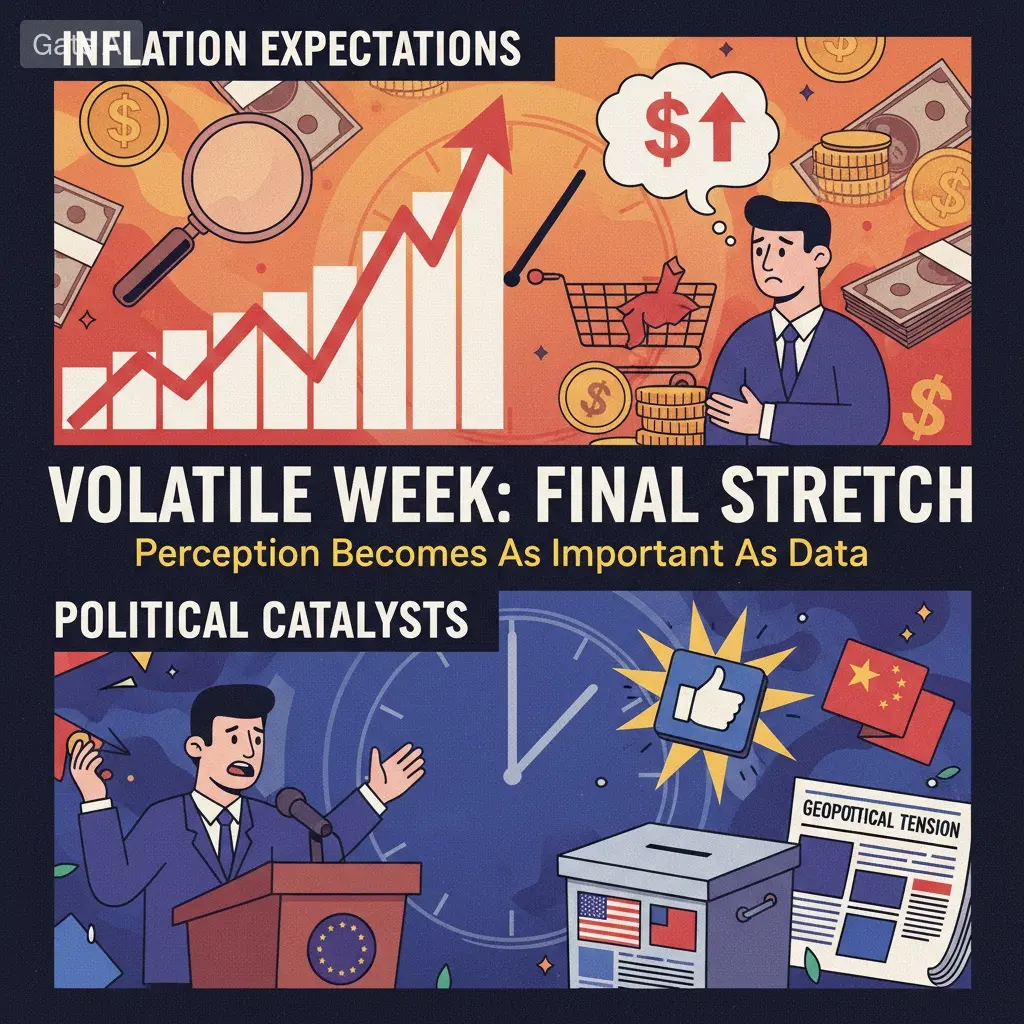
Inflation Expectations and Political Catalysts Dominate the Final Stretch of a Volatile Week
As the week moves toward its conclusion, attention shifts toward two key forces that often define short-term market direction: inflation expectations and politically driven sentiment events. After a sequence of geopolitical tension, macro uncertainty, and sector-specific volatility, the market now enters a phase where perception becomes just as important as data.
The U.S. 1-year inflation expectations release becomes a critical reference point. Unlike backward-looking indicators, this metric reflects h
TRUMP-0,96%
CryptoSelf
Inflation Expectations and Political Catalysts Dominate the Final Stretch of a Volatile Week
As the week moves toward its conclusion, attention shifts toward two key forces that often define short-term market direction: inflation expectations and politically driven sentiment events. After a sequence of geopolitical tension, macro uncertainty, and sector-specific volatility, the market now enters a phase where perception becomes just as important as data.
The U.S. 1-year inflation expectations release becomes a critical reference point. Unlike backward-looking indicators, this metric reflects how consumers and markets anticipate future price pressure. If expectations remain elevated, it reinforces the idea that inflation is not fully under control, which in turn limits the flexibility of central banks to ease policy. And in a liquidity-sensitive environment, that has direct implications for risk assets.
What makes this particularly important is timing. Inflation expectations don’t exist in isolation—they interact with everything that has unfolded earlier in the week. Geopolitical uncertainty, energy price fluctuations, and shifting Fed expectations all feed into how this number is interpreted. Even a neutral reading can feel meaningful when the broader context is unstable.
At the same time, attention turns toward a politically charged event involving Trump and a luncheon for $TRUMP holders. While this may appear symbolic on the surface, markets increasingly treat such events as sentiment catalysts, especially for niche segments like meme assets. These types of gatherings blur the line between political branding and market influence, creating short bursts of attention and volatility.
What stands out to me is how fragmented the market has become. Traditional macro indicators are still powerful, but they no longer operate alone. Political narratives, social sentiment, and speculative positioning all coexist and interact in real time. This creates an environment where reactions are often asymmetrical—strong in pockets, muted in others.
From a broader perspective, this phase of the week reflects a transition from data-driven uncertainty to sentiment-driven positioning. Inflation expectations provide the structural backdrop, while political events inject short-term volatility. Between the two, the market struggles to establish a clear directional bias.
I find it particularly interesting how quickly focus can shift at this stage. Earlier in the week, geopolitical risk dominated the narrative. Now, attention is dispersing across inflation data and politically linked catalysts. This shift itself signals something important: markets are searching for a new anchor.
Until that anchor forms, movement is likely to remain reactive rather than decisive. And in reactive markets, even small surprises can create outsized responses.
#GateSquare #CreatorCarnival #ContentMining #GatePreIPOsLaunchesWithSpaceX #Gate13thAnniversaryLive
repost-content-media
  • Reward
  • 7
  • Repost
  • Share
MasterChuTheOldDemonMasterChu:
Chong Chong GT 🚀
View More
BTC Market Outlook: Cautiously Bullish, but Fragile Beneath the Surface
Bitcoin is currently trading around $76,232, showing a 2.1% daily increase and a 2.8% weekly gain. Price action has been consolidating within a tight range between $73,700 and $76,500, with buyers consistently defending the $72,000 region. This structure signals underlying strength, but also highlights a market that is still searching for direction rather than fully committing to a trend.
---
Price Structure
The most important observation in the current structure is the sustained hold above key support levels. Repeated def
BTC0,08%
CryptoSelf
BTC Market Outlook: Cautiously Bullish, but Fragile Beneath the Surface
Bitcoin is currently trading around $76,232, showing a 2.1% daily increase and a 2.8% weekly gain. Price action has been consolidating within a tight range between $73,700 and $76,500, with buyers consistently defending the $72,000 region. This structure signals underlying strength, but also highlights a market that is still searching for direction rather than fully committing to a trend.
---
Price Structure
The most important observation in the current structure is the sustained hold above key support levels. Repeated defenses of the $72,000 area suggest that demand is active during dips, preventing deeper breakdowns. At the same time, the market has struggled to establish a decisive breakout above the $76,500–$78,000 zone, where supply continues to emerge.
This creates a compression-like structure where volatility is building, but resolution has not yet occurred.
---
Technical Picture
Positive technical alignment is present across multiple timeframes:
Short, medium, and higher timeframes show moving averages aligned in bullish order, indicating trend continuation pressure remains intact
Volume expansion over the last 24 hours suggests participation is increasing rather than fading
RSI behavior shows signs of positive divergence, often associated with early-stage reversals or continuation after correction phases
However, these bullish signals are not without friction.
Warning signals are also emerging:
Overbought readings across shorter timeframes indicate momentum may be stretched
MACD divergence suggests that while price is pushing higher, momentum strength is not fully confirming the move
Market sentiment remains cautious, with the Fear & Greed Index still in “fear” territory despite upward price movement
This combination typically reflects a market that is advancing, but not comfortably.
---
Institutional and Fundamental Flow
One of the strongest supporting elements in the current structure is institutional participation.
Recent large-scale accumulation activity from major corporate holders has reinforced the narrative that long-term positioning remains intact. At the same time, ETF inflows continue to act as a consistent demand source, with traditional financial channels increasingly integrated into Bitcoin exposure.
Additional developments in regulated finance access, including broader brokerage and institutional product expansion, are strengthening structural demand over time.
On-chain data also supports this view, particularly through evidence of significant BTC changing hands within the current price range. This suggests that a distribution zone is being actively absorbed rather than rejected.
---
Headwinds and Risk Factors
Despite strong demand signals, several pressure points remain:
Mining sector activity shows continued stress, with elevated BTC sales reflecting profitability constraints. This introduces a steady source of supply into the market.
Additionally, broader cycle behavior still reflects a more muted performance compared to previous expansion phases, suggesting that while demand exists, acceleration is not yet fully dominant.
Sentiment indicators remain cautious, which creates an interesting contrast with price strength. Historically, this type of divergence often appears during transitional phases rather than strong trend continuation phases.
---
Market Interpretation
Overall, Bitcoin is in a constructive but delicate phase.
The structure suggests accumulation and controlled upward pressure, but momentum is not yet strong enough to confirm a clean breakout. Instead, the market is balancing between absorption of supply and hesitation near resistance.
This type of environment often leads to one of two outcomes:
A continuation breakout if institutional demand strengthens further
Or a corrective pullback toward liquidity zones before continuation
---
Conclusion
The current outlook remains cautiously bullish, but not without risk.
Support zone: $72,000–$74,000 remains critical for trend preservation
Resistance zone: $78,000–$80,000 defines the next major breakout threshold
Invalidation risk: Loss of $72,000 could shift structure back into a broader correction phase
For now, the market is still building direction rather than confirming it.
#GateSquare #CreatorCarnival #ContentMining #GatePreIPOsLaunchesWithSpaceX #Gate13thAnniversaryLive
repost-content-media
  • Reward
  • 7
  • Repost
  • Share
MasterChuTheOldDemonMasterChu:
Chong Chong GT 🚀
View More
ETH Market Outlook: Cautiously Bullish With Building Structural Pressure Beneath the Surface
Ethereum is currently trading around $2,327.03, marking a 1.91% daily increase, supported by a moderate but noticeable rise in trading activity at approximately $456 million. Price action has remained relatively stable within a tight intraday range between $2,252.5 and $2,344.2, suggesting that the market is in a controlled consolidation phase rather than a directional breakout.
This kind of structure often reflects a market that is absorbing previous volatility while waiting for a stronger catalyst to
ETH-1,44%
BTC0,08%
ADX0,94%
CryptoSelf
ETH Market Outlook: Cautiously Bullish With Building Structural Pressure Beneath the Surface
Ethereum is currently trading around $2,327.03, marking a 1.91% daily increase, supported by a moderate but noticeable rise in trading activity at approximately $456 million. Price action has remained relatively stable within a tight intraday range between $2,252.5 and $2,344.2, suggesting that the market is in a controlled consolidation phase rather than a directional breakout.
This kind of structure often reflects a market that is absorbing previous volatility while waiting for a stronger catalyst to define the next trend leg.
---
Technical Structure
Short-term technical conditions remain supportive of upward continuation. On lower timeframes, moving averages are aligned in a bullish structure, indicating that momentum buyers are still active. This alignment suggests that the immediate trend has not been broken, even if it is not accelerating aggressively.
The ADX reading above 30 reinforces the idea that a trending environment is currently in place rather than a sideways chop. With directional indicators favoring buyers, Ethereum is still operating within a controlled bullish phase.
In addition, price positioning relative to trend-following indicators such as SAR suggests that the market is still technically supported from a risk management perspective, with pullbacks being treated as potential continuation zones rather than breakdown signals.
However, despite this constructive structure, momentum behavior is not fully aligned with price expansion. The presence of divergence patterns on higher timeframes suggests that while price is rising, momentum strength is not fully confirming the move. This is often an early sign that the trend may be maturing rather than accelerating.
---
Volume and Participation
One of the more supportive elements in the current structure is volume behavior. The recent increase in ETH traded volume indicates that participation is expanding alongside price movement. This is important because price increases without volume often lack sustainability, while volume-backed moves tend to reflect more genuine market interest.
That said, the quality of this participation matters as much as the quantity. While inflows are present, they are not yet at levels that suggest aggressive breakout positioning. Instead, the market appears to be in a steady accumulation phase rather than a momentum-driven expansion phase.
---
Sentiment Environment
Sentiment data presents a more complex picture.
Social engagement has increased significantly over recent days, and the majority of discussion tone remains positive. This reflects improving attention and renewed interest in Ethereum following recent volatility.
At the same time, broader market sentiment indicators remain in “fear” territory. This contrast is important because it shows a disconnect between social activity and macro sentiment. Historically, this type of environment often appears during early recovery phases, where participation begins to return before full confidence is restored.
---
Fundamental Drivers
Institutional activity remains one of the strongest underlying supports for Ethereum. Large-scale accumulation from major holders continues to reinforce the idea that long-term positioning is intact. This kind of consistent inflow is often more important than short-term price fluctuations because it reflects strategic allocation rather than speculative trading.
ETF-related flows also remain supportive, with steady institutional participation providing a structural demand base.
However, this positive backdrop is partially offset by recent ecosystem stress. Security-related incidents affecting DeFi infrastructure have introduced short-term confidence disruptions. Even when not directly linked to Ethereum’s core protocol, these events tend to influence perception across the entire ecosystem due to interconnected liquidity and collateral structures.
---
Risk Layer
Despite the constructive structure, there are several caution signals that should not be ignored.
Momentum divergence on higher timeframes suggests that upside acceleration may be slowing. This does not confirm reversal, but it does indicate that continuation strength is not yet fully aligned.
Relative underperformance compared to Bitcoin also highlights a subtle rotation dynamic, where ETH is participating in the broader move but not leading it.
Additionally, the longer-term context still reflects recovery conditions rather than a fully established uptrend. This means that while short-term strength exists, the market has not yet fully transitioned into a mature bullish cycle.
---
Market Interpretation
Ethereum is currently in a cautiously bullish phase, characterized by:
Strong but not explosive technical structure
Improving participation without euphoria
Institutional accumulation balancing short-term uncertainty
Momentum signals that are supportive but not fully confirming
This combination typically reflects a transitional environment where the market is building structure rather than expanding aggressively.
---
Key Levels
Support zone: $2,250 remains critical for maintaining short-term structure
Immediate resistance: $2,344 defines the current local ceiling
Psychological extension: $2,400 remains the first major breakout threshold
---
Conclusion
Ethereum remains technically supported with a constructive medium-term outlook, but the market is not yet in a fully confirmed bullish expansion phase.
The structure suggests accumulation and stabilization, with institutional demand acting as a stabilizing force. However, momentum divergence and relative weakness versus BTC indicate that caution is still warranted.
The market is moving forward—but not yet decisively.
#GateSquare #CreatorCarnival #ContentMining
#GatePreIPOsLaunchesWithSpaceX #Gate13thAnniversaryLive
repost-content-media
  • Reward
  • 7
  • Repost
  • Share
MasterChuTheOldDemonMasterChu:
Steadfast HODL💎
View More
  • Pin