GateUser-f8fabc01

vip
Age 0.2 Year
Peak Tier 0
No content yet
The cryptocurrency market is once again at a critical threshold. There is only one question on investors' minds: Can Bitcoin (BTC) surpass that psychological barrier and climb back to the $70,000 level?
​Current market dynamics show that this rally is not just a dream. Increasing institutional interest, the stabilization of demand for spot ETFs, and expectations of liquidity in the global economy are setting a strong foundation for Bitcoin. However, volatility will continue to be a part of the game on this journey.
​The $70,000 level is not just a number; it also signifies the restoration of c
BTC1.58%
  • Reward
  • Comment
  • Repost
  • Share
# CanBitcoinReclaim$70K?
cryptocurrency market is once again at a critical threshold. There is only one question on investors' minds: Can Bitcoin (BTC) surpass that psychological barrier and climb back to the $70,000 level?
Current market dynamics show that this rally is not just a dream. Increasing institutional interest, the stabilization of demand for spot ETFs, and expectations of liquidity in the global economy are setting a strong foundation for Bitcoin. However, volatility will continue to be a part of the game on this journey.
The $70,000 level is not just a number; it also signifies
BTC1.58%
  • Reward
  • Comment
  • Repost
  • Share
#BitcoinBouncesBack
The Resilience of Digital Gold and the Institutional Renaissance
​While crypto markets were shaken by a sharp correction following the historic peaks of late 2025, the landscape is shifting once again as of February 2026. The #BitcoinBouncesBack tag is more than just a social media trend; it is a summary of a "comeback" story where technical data, institutional strategies, and macroeconomic dynamics converge.
​From a professional perspective monitoring the market's pulse, let’s examine why Bitcoin is rising again and the core dynamics behind this recovery.
​1. The Liquidat
BTC1.58%
  • Reward
  • Comment
  • Repost
  • Share
ETH, which has recently retested the psychological $2,000 level, briefly rose above it but retreated due to selling pressure. Analysts note that on-chain data indicates that most of the selling is behind us and that volatility could pave the way for a significant upward move. However, overall risk appetite in the crypto market is low, with Fed expectations and liquidations creating pressure. The Ethereum market has experienced a sharp correction in the last 24 hours! Its market capitalization is around $232 billion, while trading volume remains high in the $20-21 billion range.
#ETHMarketAnaly
ETH1.67%
  • Reward
  • Comment
  • Repost
  • Share
Is Altcoin Season Really Coming in 2026? Comparison with Past Cycles
Hello Gate Square friends, I've been in crypto for 5 years now. I jumped into the sector right in the middle of the 2021 bull run, and since then I've both made money and gotten badly burned. 😅 I'm no longer a "newbie," but I still learn something new every day. In this post, using the current market (early February 2026) as a base, I'll explain whether altcoin season is actually here or not, while comparing it to past cycles. Maybe you can avoid some of the pits I fell into.
First, let's recall: When did altcoin season expl
BTC1.58%
ETH1.67%
DEFI11.75%
MEME-1.99%
CryptoSelfvip
Is Altcoin Season Really Coming in 2026? Comparison with Past Cycles
Hello Gate Square friends, I've been in crypto for 5 years now. I jumped into the sector right in the middle of the 2021 bull run, and since then I've both made money and gotten badly burned. 😅 I'm no longer a "newbie," but I still learn something new every day. In this post, using the current market (early February 2026) as a base, I'll explain whether altcoin season is actually here or not, while comparing it to past cycles. Maybe you can avoid some of the pits I fell into.
First, let's recall: When did altcoin season explode in 2021? When BTC dominance dropped from the ~70% range down to ~40%, money started flowing into altcoins. It happened around the ETH Merge buildup, during DeFi summer, and the NFT craze. Altseason usually arrives when BTC is consolidating or making a mild correction. BTC hits a new ATH, then goes sideways, dominance falls — boom, money flows to alts.
Now let's look at 2026. BTC ETFs came online in 2024-2025, institutional money poured in, and BTC reached 100k+ levels (maybe even higher). Right now, is dominance still high? (When I was writing this, it was floating around 55-60%, I think — you can check the current figure.) My observation: By the end of 2025, BTC stabilized, but altcoins are slowly starting to move. After ETH's spot ETF approval, the ETH/BTC ratio is rising — that's a classic sign. In my portfolio right now, I have ~40% BTC/ETH and 60% altcoins — it used to be the complete opposite.
Let me compare with past cycles:
2017-2018: ICO mania, led by ETH. But regulations hit suddenly and everything collapsed.
2021: DeFi + NFTs + meme coins. Whales entered early and pumped, retail jumped in with FOMO — classic rug pulls multiplied.
Now in 2025-2026: Much more institutional, much less hype. Restaking, AI+blockchain projects, RWAs (real world assets), etc. are the hot topics. Some of my favorites include restaking protocols similar to EigenLayer, or new DePIN projects in the Solana ecosystem. But be careful: Meme coins are still around, but they're not pumping like before — utility coins are taking the lead this cycle.
What has my strategy been over these 5 years?
Track dominance. When it drops below 50%, I start weighting more toward altcoins.
I watch whale movements (Whale Alert, Arkham Intelligence, etc.). Big transfers often signal bottoms or pumps.
DCA but smart: Not fixed USDT every month — I buy more at dips.
Risk management: Never put all my money into one coin. Max 10-15% per project.
I no longer sell emotionally. The coins I panic-sold in the 2022 bear market are now up 10x — that pain is still in my soul.
So what do I expect in 2026? I think altseason has lightly started, but the real explosion will come once BTC breaks the 120-150k range and then consolidates. If ETH reaches 8-10k, alts will go crazy. But regulatory risk is high (Trump-era policies, SEC, etc.), so I always keep some cash in stablecoins.
What do you guys think? Which altcoins are you positioned in right now? Have you noticed any dominance drop? Share in the comments, let's discuss together. Maybe we'll catch the next 10x as a group.
#DeepCreationCamp
#深度创作营

repost-content-media
  • Reward
  • Comment
  • Repost
  • Share
Hello everyone,
We are in the midst of a rapid transition from the traditional, classic understanding of cryptocurrencies to an integration into a new system. As Gate users, we are part of this tremendous change. Along with ETFs, RWAs have become the favorites of investors and portfolios. Billions of dollars in funds are moving away from the classic investment logic, and with the acceleration of tokenization, interest in RWAs is increasing day by day.
By 2025, everything has changed. We are witnessing a rapid transition from classic investment instruments and understanding to a completely new
BTC1.58%
RWA-0.82%
User_anyvip
Hello everyone,
We are in the midst of a rapid transition from the traditional, classic understanding of cryptocurrencies to an integration into a new system. As Gate users, we are part of this tremendous change. Along with ETFs, RWAs have become the favorites of investors and portfolios. Billions of dollars in funds are moving away from the classic investment logic, and with the acceleration of tokenization, interest in RWAs is increasing day by day.
By 2025, everything has changed. We are witnessing a rapid transition from classic investment instruments and understanding to a completely new investment approach. With ETFs and tokenization, those assets themselves are now coming to the blockchain. Institutions are rapidly taking their place in this change with massive funds. Tokenized Treasures have exceeded a total of 10-11 billion dollars. For example, even when BTC falls, RWA TVL increases by 6%+. Institutions are in risk-off mode in the game, but they don't want zero return. Real estate and government bond tokenization offers institutions the advantage of familiar assets + blockchain.
This change is making the market more mature: Volatility is decreasing, liquidity is increasing, and investors are shifting from speculation to real returns.
I think RWA will approach $50 billion by the end of 2026.
We no longer ask,
Crypto or TradeFi?
On a reliable platform like GATE, I can trade freely anytime, anywhere, 24/7 for very low commissions, and enjoy various advantageous events.
As someone who knows the challenges of traditional investing, I watch these dizzying developments with admiration. I shape my portfolio according to these developments.
As I always say, always do your own research before investing. Thank you for your time. I would appreciate it if you shared your thoughts on the subject in the comments.
I wish everyone abundant profits.🙏
#深度创作营
#DeepDiveCreatorCamp
repost-content-media
  • Reward
  • Comment
  • Repost
  • Share
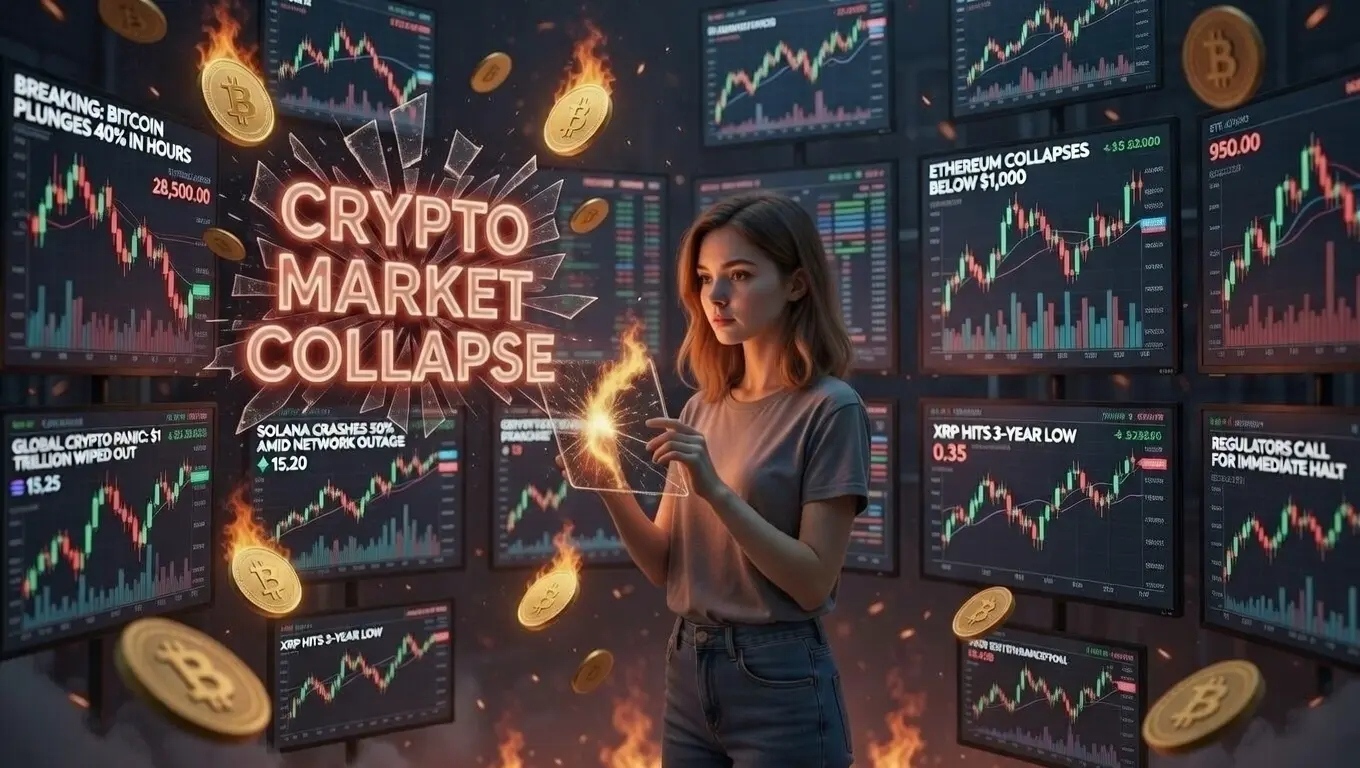
Geopolitical Storms in the Crypto Market: Why Is Bitcoin Crashing So Hard?
These past few days the crypto market has been completely turned upside down. Everyone is talking about why Bitcoin dropped so sharply, so I decided to dig a little deeper into it. It’s February 2026 right now and Bitcoin has fallen all the way back to around $64,000, while Ethereum is hovering near $1,800. I don’t think this is just normal market volatility — the real driver seems to be geopolitical tensions, especially Trump’s policies. It really shows how fragile crypto still is, but at the same time it’s creating so
BTC1.58%
ETH1.67%
Discoveryvip
Geopolitical Storms in the Crypto Market: Why Is Bitcoin Crashing So Hard?
These past few days the crypto market has been completely turned upside down. Everyone is talking about why Bitcoin dropped so sharply, so I decided to dig a little deeper into it. It’s February 2026 right now and Bitcoin has fallen all the way back to around $64,000, while Ethereum is hovering near $1,800. I don’t think this is just normal market volatility — the real driver seems to be geopolitical tensions, especially Trump’s policies. It really shows how fragile crypto still is, but at the same time it’s creating some interesting opportunities.
First let’s talk about Trump’s tariffs. Last week the Supreme Court struck down some of his earlier trade taxes, but the guy doesn’t stop. On Saturday he posted on social media that he’s going to slap an extra 15% tariff on foreign trade partners — and the market felt it immediately. This kind of move shakes the whole global economy. Investors are running away from risky assets and piling into safe ones like gold, the dollar or just cash. Bitcoin and other “risk-on” stuff gets hit hard. I felt it in my own portfolio — positions just melted. But when you think about it, it makes sense: these tariffs hurt trade with China and Europe, trading volumes drop, stablecoin flows slow down, everything gets affected.
Then there’s the Iran situation in the Middle East. Trump basically said “last 10 days” for a possible military move against Iran, troops are building up in the region, the nuclear deal is in crisis again, and oil prices are spiking. Why does crypto care? Because in times of big uncertainty everyone wants cash or safe assets. Remember 2022 when Russia invaded Ukraine? Bitcoin dropped over 20% in no time. Now in 2026 we’re seeing a similar story, except this time Trump’s more aggressive stance is making it hit even harder. On the bright side, regulation is moving in a slightly better direction under the new SEC leadership some big cases got dropped, pressure on exchanges eased a bit but it’s still not enough to lift the market mood right now.
Altcoins aren’t doing any better. Some projects are rolling out speed upgrades and improvements, but when the whole market is bleeding they all suffer together. This week we’ve also had several big token unlocks millions of dollars worth of tokens hitting the market, adding even more selling pressure and pushing prices lower. In my opinion these unlocks hurt short-term but help liquidity in the long run. Projects like Ripple are still building real blockchain infrastructure for financial services, but right now the overall sentiment is so bad that nothing seems to stick.
So what should we do? I think these levels could actually be a buying opportunity. Bitcoin making deep dips during geopolitical crises isn’t new history keeps repeating itself. Crises usually pass. On the regulatory side things are slowly improving, there’s even some bipartisan momentum in Congress. AI integrations in payments and other areas are picking up speed too, which is exciting. Personally I plan to keep accumulating a bit more, but carefully no crazy moves. The crypto space is still super thrilling, it just requires patience.
No one really knows how far this drop will go, but right now everyone is waiting for Trump’s upcoming speech to Congress. Maybe we’ll get a surprise spark from there, who knows? What do you guys think
#深度创作营
repost-content-media
  • Reward
  • Comment
  • Repost
  • Share
#CelebratingNewYearOnGateSquare
Yo, 2026 Year of the Horse vibes are already insane — and Gate Plaza decided to go all in! 🐎🎉
They turned Gate Square into this massive digital red envelope party and the prizes are actually wild.
First thing: $50k Red Envelope Rain is falling right now.
You post → you win something. If you're new, your very first post is 100% a winner. Drop something decent and you can grab up to 28 GT per post. Literally just share your thoughts and get paid for it.
Feeling lucky? Throw #CelebratingNewYearOnGateSquare (or the Chinese one #我在Gate广场过新年) on your post. One rand
GT0.14%
CryptoSelfvip
#CelebratingNewYearOnGateSquare
Yo, 2026 Year of the Horse vibes are already insane — and Gate Plaza decided to go all in! 🐎🎉
They turned Gate Square into this massive digital red envelope party and the prizes are actually wild.
First thing: $50k Red Envelope Rain is falling right now.
You post → you win something. If you're new, your very first post is 100% a winner. Drop something decent and you can grab up to 28 GT per post. Literally just share your thoughts and get paid for it.
Feeling lucky? Throw #CelebratingNewYearOnGateSquare (or the Chinese one #我在Gate广场过新年) on your post. One random person is walking away with 50 GT + a cool Spring Festival gift box. Could literally be you.
And if you're the type who likes leaderboards and flexing creativity → there's the Creator Contest. More posts, longer streaks, more likes/comments/retweets/quotes = higher rank. Top spots get the good stuff:
That dope Gate VIP camping tent setup
Real Inter Milan jersey (not fake ones)
Fancy travel kits
Gate x Red Bull jackets & caps (limited!!)
GT + trading perks
Super easy to join — web is already live, just update the app to 8.8.0+ if you're on mobile.
This whole thing feels like the Horse energy: fast, powerful, go-getter mode. Perfect timing if you're trying to start the year strong in crypto.
So… you posting or what?
Jump in, drop something fun, and let's see if we can both eat this New Year feast together! 🧧🚀🐴
#GateSquare$50KRedPacketGiveaway
repost-content-media
  • Reward
  • Comment
  • Repost
  • Share
AI + Crypto Integration: On-Chain AI Agents and Automated Trading in 2026
The convergence of artificial intelligence and blockchain technology has become one of the defining narratives of 2026. What started as experimental integrations in previous years has matured into practical, production-ready systems. On-chain AI agents – autonomous programs that live and execute decisions directly on the blockchain – are now handling complex tasks like automated trading, portfolio rebalancing, risk management, prediction market participation, and even decentralized governance voting. This shift is creati
TAO4.37%
ASI22.18%
VIRTUAL4.04%
CryptoSelfvip
AI + Crypto Integration: On-Chain AI Agents and Automated Trading in 2026
The convergence of artificial intelligence and blockchain technology has become one of the defining narratives of 2026. What started as experimental integrations in previous years has matured into practical, production-ready systems. On-chain AI agents – autonomous programs that live and execute decisions directly on the blockchain – are now handling complex tasks like automated trading, portfolio rebalancing, risk management, prediction market participation, and even decentralized governance voting. This shift is creating a new layer of intelligence within crypto ecosystems, where AI operates 24/7 without intermediaries, oracles, or off-chain dependencies in many cases.
The total value managed or influenced by AI agents in DeFi and trading protocols has grown dramatically. Estimates suggest that AI-driven strategies now account for a significant portion of on-chain trading volume, particularly in perpetual futures, liquidity provision, and yield optimization. Several factors have accelerated this trend: cheaper compute on modular chains, verifiable AI inference through zero-knowledge proofs, decentralized data feeds, and the rise of agent frameworks that allow developers to deploy intelligent agents with minimal friction.
Key Developments Driving AI + Crypto in 2026
1. On-Chain AI Agents
These are self-executing smart contracts enhanced with AI decision-making logic. Instead of rigid if-then rules, agents can adapt to market conditions using trained models or real-time learning. Popular use cases include:
- Autonomous trading bots that adjust positions based on sentiment analysis, volatility signals, or cross-chain arbitrage opportunities.
- Yield aggregators that dynamically shift liquidity across protocols to maximize returns while minimizing impermanent loss.
- Risk managers that monitor wallet health and automatically hedge or liquidate positions during extreme events.
Leading platforms include Bittensor (TAO), Fetchai (now part of the ASI alliance), SingularityNET, and newer agent-specific chains like Virtuals Protocol and Autonolas. These ecosystems provide the infrastructure for agents to own wallets, sign transactions, and interact with DeFi protocols natively.
2. Verifiable and Decentralized Inference
A major breakthrough has been the ability to run AI models on-chain or prove their outputs via zero-knowledge proofs. Projects like Worldcoin's World ID integration, Giza, and zkML frameworks allow users to verify that an agent's decision came from a legitimate model without revealing the full computation. This has unlocked trustless applications in prediction markets, insurance protocols, and lending where AI-driven risk scoring must be provably fair.
3. Automated Trading and Agentic Economies
Perpetual DEXs and spot markets now see heavy participation from AI agents. These agents excel at high-frequency strategies, cross-market arbitrage, and MEV-resistant execution. Some protocols even allow users to "rent" or subscribe to agent strategies, paying performance fees in tokens. In prediction markets like Polymarket or Augur successors, AI agents analyze news, social sentiment, and historical data to place informed bets, often outperforming human traders in niche events.
4. Data and Compute Layers
Decentralized oracle feed real-world data into agents, while compute networks provide GPU resources for training and inference. This creates a fully on-chain loop: data → AI reasoning → execution → reward distribution.
Benefits and Opportunities
- 24/7 Operation: Agents never sleep, react instantly to market shifts, and execute without emotional bias.
- Composability: Agents interact seamlessly with other protocols, creating emergent behaviors and new financial primitives.
- Democratized Access: Retail users can deploy or subscribe to sophisticated strategies that were previously only available to hedge funds.
- New Revenue Models: Agent creators earn from usage fees, token incentives, or governance rights within agent economies.
Challenges and Risks
Despite the excitement, several hurdles remain:
- Security: Agents with wallet control are high-value targets; exploits in agent frameworks have led to notable losses.
- Black-Box Decisions: Even with verifiable inference, fully understanding why an agent made a trade can be difficult.
- Regulatory Scrutiny: Autonomous agents managing large capital raise questions around accountability, especially in jurisdictions tightening AI and crypto rules.
- Energy and Cost: Running complex models on-chain or via decentralized compute can still be expensive, though costs continue to fall.
Looking Ahead
2026 is widely seen as the breakout year for truly agentic crypto. As infrastructure improves – faster L2s, better ZK tooling, more efficient models – we are moving toward a future where AI agents form the backbone of DeFi activity. Users may soon manage portfolios not through manual trades, but by directing fleets of specialized agents that negotiate, optimize, and execute on their behalf.
For developers, this opens massive opportunities to build agent marketplaces, strategy libraries, and governance systems. For investors, it means access to intelligent, adaptive tools that evolve with markets. The line between human and machine decision-making in crypto is blurring fast – and in many cases, the machines are already outperforming.
If you're exploring this space, start with Bittensor subnets for collaborative AI, Virtuals Protocol for consumer-facing agents, or DeFi platforms with built-in agent integrations. The era of intelligent, autonomous finance is no longer coming – it's already here.
#GateSquare$50KRedPacketGiveaway #CelebratingNewYearOnGateSquare
repost-content-media
  • Reward
  • Comment
  • Repost
  • Share
good
Discoveryvip
#VitalikSells21.7KETH
A New Era in the Ethereum Ecosystem: Vitalik Buterin’s Strategic Moves
The recent wallet activities of Vitalik Buterin, one of the most influential figures in the blockchain world, are creating a significant ripple across crypto markets. On-chain data reveals that since the beginning of February 2026, Ethereum’s co-founder has liquidated approximately 10,723 ETH, valued at over $21.7 million. These sales, which have intensified in recent days, hold critical clues regarding market dynamics and the future of the project.
Background of the Sales: The "Moderate Savings" Period
Contrary to market speculation, these sales are not an unplanned "dump" but are rooted in a previously announced ecosystem strategy. In late January, Buterin noted that the Ethereum Foundation (EF) had entered a period of "moderate savings." Within this framework, a total of 16,384 ETH was designated to fund open-source software projects, cybersecurity research, and decentralized infrastructure development.
The activity seen in February represents the gradual release of these planned resources into the market to meet operational needs and support technological advancement. With sales occurring at an average price of around $2,027, it is evident that the funds are being realized efficiently.
Technological Vision: Security and User Experience
In addition to his financial moves, Buterin continues to clarify Ethereum’s roadmap through simultaneous technical publications. A primary focus recently has been evolving wallet security into an "intent-based" structure. According to Buterin:
Transaction Simulations: Allowing users to see the outcome of a transaction before confirming it will prevent erroneous transfers and fraudulent activities.
The UX-Security Link: He emphasizes that security is not just a technical necessity but an integral part of the overall user experience.
Cyber Sovereignty: A large portion of funded projects focuses on privacy, self-sovereignty, and long-term network resilience.
Market Balance and Institutional Interest
While Buterin’s sales may create short-term price pressure, institutional confidence in the Ethereum ecosystem remains unshaken. The Ethereum Foundation announced plans to stake approximately 70,000 ETH from its treasury, using the rewards to cover operational costs. Simultaneously, the fact that major institutional players like BitMine continue to increase their ETH holdings proves that the long-term vision of Ethereum as a store of value is being preserved.
In conclusion, these transfers by Vitalik Buterin are not a "departure" but rather the intelligent management of resources necessary to build a more secure, scalable, and decentralized "world computer."
repost-content-media
  • Reward
  • Comment
  • Repost
  • Share
Discoveryvip
#GoldTops$5,190
Macroeconomic Uncertainty and the "Tariff" Impact
​As of February 2026, the primary catalyst for market volatility has been the implementation of new global trade tariffs by the U.S. administration. A universal 10% customs duty has reignited trade wars, prompting investors to pivot away from dollar-denominated assets in favor of tangible ones. Gold’s decisive breakthrough above the $5,000 threshold during this period serves as a clear indicator of waning confidence in paper assets.
​Strategic Moves by Central Banks
​According to analyses from major institutions like J.P. Morgan and Deutsche Bank, the pace of gold accumulation by central banks has reached an annual rate of 800 tons in 2026. In particular, the drive by Eastern bloc central banks to diversify their reserves has permanently disrupted the supply-demand balance in an upward direction. Experts emphasize that this institutional demand has transformed gold from a mere investment tool into a modern "reserve currency" alternative.
​Technical Outlook and Psychological Benchmarks
​Although gold prices entered a healthy correction phase following the peak of $5,500 seen in January, the $5,190 level now stands as a critical pivot point for current market equilibrium. Technical indicators suggest that maintaining stability above $5,100 supports a medium-term journey toward the $6,000 mark. While oscillators like the RSI and MACD hint at short-term consolidation, the geopolitical risk premium has become fully embedded in the pricing structure.
​A "Strong Transformation" in Investor Perception
​Following a massive 65% surge in 2025, gold’s ability to hold above $5,000 in 2026 is deflating "bubble" theories. Persistent inflationary pressures and rising global debt levels are driving record flows into physical gold and gold-backed Exchange Traded Funds (ETFs).
​Ultimately, the #GoldTops$5,190 tag represents the final destination for capital seeking stability during this era of financial recalibration. As long as disruptions in global trade routes and uncertainties in monetary policy persist, these figures may well be regarded as the new "floor" prices.
repost-content-media
  • Reward
  • Comment
  • Repost
  • Share
User_anyvip
Critics (sources like New Arab, Crypto Briefing, and Benzinga) argue that a Gaza-specific stablecoin could further isolate the region from the West Bank (and the overall Palestinian economy). This could, in the long term, bypass the Palestinian Authority and deepen political division by making Gaza a separate economic entity. Increased US and Israeli control
The stablecoin would be governed by the Board of Peace (led by Trump) and Gaza's interim technocratic administration (NCAG). This means the Gaza economy would largely fall under US-Israeli control. Some commentators see it as a tool of "financial control" and "soft power"; the traceability of transactions could put the public's financial movements under greater surveillance. Practical and infrastructure problems
Gaza suffers from frequent power outages, slow 2G/3G networks, and limited smartphone access. High-speed internet and device infrastructure are needed for the stablecoin to become widespread (some plans for improvements by July 2026). Without these, the project may be ineffective or limited to specific segments (recipients, traders). Trust and acceptance issues
The project may create suspicion among the public as it is seen as a "control tool". Although evidence that Hamas has raised significant funds through crypto is weak, adoption of the stablecoin may face resistance. In addition, the risk of depeg (although rare) or regulatory uncertainties of the stablecoin carries additional risks.
#TrumpGroupMullsGazaStablecoin
repost-content-media
  • Reward
  • Comment
  • Repost
  • Share
User_anyvip
#EthereumFoundationAdvancesDeFipunk
The Ethereum Foundation is redefining DeFi with a "punk" spirit. This isn't just a technical update; it's a commitment to transforming Ethereum's cypherpunk legacy into a financial revolution.
✨Ethereum Foundation makes headlines with its move to return DeFi to its Cypherpunk roots: New DeFi team established!
The Ethereum Foundation (EF) has taken a major step to strengthen its vision in the decentralized finance (DeFi) space. The foundation announced the creation of a dedicated DeFi unit under its App Relations department. This unit will support the development of protocols based on Ethereum's original cypherpunk values – censorship resistance, privacy priority, self-custody, and fully open source – centering on the "DeFipunk" philosophy. What is DeFipunk?
As highlighted in the Ethereum Foundation's official blog post:
"DeFi-punk isn't just a slightly better version of TradFi (traditional finance); it means finance that cannot exist without Ethereum."
This approach encourages radical innovations instead of simply improving existing systems:
ZK-based privacy-preserving undercollateralized lending
New hedging mechanisms with user-controlled AI + on-chain futures
Futarchy DAOs
Completely new financial primitives.
✨The team aims to make Ethereum the "global financial settlement layer" by supporting permissionless, censorship-resistant, and privacy-focused protocols. This is a strategy consistent with the Foundation's treasury's more aggressive focus on DeFi (investing ETH in protocols like Morpho, Aave, and Spark). Market Impact and Discussions
The announcement came at a time when the ETH price was under bearish pressure. However, many analysts believe this move will revitalize the Ethereum ecosystem in the long run and increase DeFi TVL (total value locked).
repost-content-media
  • Reward
  • Comment
  • Repost
  • Share
#MyViewOnWeb4.0’sOutlook
Web 4.0 (the intelligent/symbiotic web) is shaping up as the next phase of the internet: an era centered on AI, where machines can think and predict like humans, seamlessly merging the physical and digital worlds.
⚡ It hasn't fully arrived yet, but the foundations are being laid. AI agents (agentic AI) are becoming autonomous, integrating with blockchain, and EU Horizon programs are opening up millions of euros in funding for Web 4.0 standards and virtual world frameworks. XR (AR/VR), IoT, edge computing, and digital twins are rapidly spreading.
Key drivers: AI being
User_anyvip
#MyViewOnWeb4.0’sOutlook
Web 4.0 (the intelligent/symbiotic web) is shaping up as the next phase of the internet: an era centered on AI, where machines can think and predict like humans, seamlessly merging the physical and digital worlds.
⚡ It hasn't fully arrived yet, but the foundations are being laid. AI agents (agentic AI) are becoming autonomous, integrating with blockchain, and EU Horizon programs are opening up millions of euros in funding for Web 4.0 standards and virtual world frameworks. XR (AR/VR), IoT, edge computing, and digital twins are rapidly spreading.
Key drivers: AI being proactive (solving your needs without you having to tell it), hyper-personalization, real-time decision-making, and machine-to-machine economics (AI agents earning and paying themselves). It's taking the decentralization of Web 3.0 and making it "thinking."
2026 will be a volatile but exciting year. Like fears of AI disruption (as we saw in previous downturns), Web 4.0 will shake up some sectors, but those who adapt will win. It will accelerate towards the end of 2026 with immersive experiences (similar to a metaverse but smarter), an autonomous agent economy (with the potential for a $15T machine economy), and quantum-AI integration.
🤔 Web 4.0 will overcome the "overreaction" phase and explode between 2027-2030. Those who are ready (companies integrating AI, developers) will see huge gains; you need to stay alert. In short, Web 4.0 is transforming the internet from a "passive tool" into an "intelligent partner." 2026 is the transition year; the real revolution is near! 🚀
repost-content-media
  • Reward
  • Comment
  • Repost
  • Share
#GrayscaleEyesAVESpotETFConversion
A New Era in Crypto Asset Management: Analysis of Strategic Transformation
The digital asset ecosystem is navigating one of the most critical turning points of institutional adoption. In particular, the efforts of large-scale asset management companies to align their portfolios with traditional financial instruments are reshaping market depth and investor confidence. In this context, the process of converting fund structures into more accessible and liquid forms is not merely a technical operation; it is a reflection of global capital's perspective on the di
Discoveryvip
#GrayscaleEyesAVESpotETFConversion
A New Era in Crypto Asset Management: Analysis of Strategic Transformation
The digital asset ecosystem is navigating one of the most critical turning points of institutional adoption. In particular, the efforts of large-scale asset management companies to align their portfolios with traditional financial instruments are reshaping market depth and investor confidence. In this context, the process of converting fund structures into more accessible and liquid forms is not merely a technical operation; it is a reflection of global capital's perspective on the digital world.
Institutional Approval Mechanisms and Market Dynamics
Recent shifts in the attitudes of global regulatory authorities toward digital asset-based investment vehicles have breathed new life into the sector. The structural transformation of funds allows large capital groups to benefit from value appreciation in this market without the burden of directly holding digital assets. While this situation is seen as a stabilizing factor against market volatility, it also accelerates the recognition of digital assets as "proven" investment instruments.
The Rise of Liquidity and Transparency Standards
Transformation processes bring along stricter auditing and transparency standards. Digital funds integrated into traditional exchange structures enable investors to track prices in real-time and execute transactions with lower costs. Especially for institutional investors, the major hurdles of "secure custody" and "access to liquidity" are being overcome through these modern financial structures. Industry stakeholders anticipate that such strategic moves will exponentially increase market volume in the long run.
The Future of Strategic Adaptation
The bridges between the digital economy and traditional finance are becoming stronger every day. This evolution in asset management invites not only current investors but also conservative capital owners who have yet to step into digital markets into the ecosystem. In the future vision of the economy, such integration processes are expected to become a general standard rather than an exception
repost-content-media
  • Reward
  • Comment
  • Repost
  • Share
good
Discoveryvip
#WhiteHouseTalksStablecoinYields
Financial Sovereignty and the Yield Wars
In February 2026, the White House convened crypto industry leaders and traditional banking giants for a third round of closed-door discussions. The primary focus of these talks centers on the economic value stablecoins can return to users, a framework currently shaped by the GENIUS Act (Guiding and Establishing National Innovation for US Stablecoins).
While the GENIUS Act, which took effect in mid-2025, prohibited stablecoin issuers from paying direct interest, "reward" mechanisms offered by third-party platforms like Coinbase remain a subject of intense debate as a potential regulatory loophole.
The Banking Sector and "Deposit Flight" Concerns
Traditional financial institutions argue that the high yields offered by stablecoins pose a direct threat to bank deposits. Banks contend that shifting savings from traditional accounts to digital assets could diminish their lending capacity and jeopardize overall financial stability. Consequently, banking lobbies are exerting significant pressure on the White House to impose restrictions on yields provided not just by issuers, but by intermediaries as well.
Seeking Compromise: No to Idle Yield, Yes to Transactional Rewards
A recent proposal by the White House Digital Assets Advisory seeks to find middle ground. According to this new approach:
Idle Yield: Strict limitations are expected on interest-like payments for stablecoins held passively in wallets.
Transaction-Oriented Rewards: Rewards earned through a user's active trading or payment activities are being considered for exemption as legitimate incentives.
This distinction is part of a broader strategy to position stablecoins as a "payment method" rather than a purely speculative "investment vehicle."
Future Outlook and Market Expectations
Market experts suggest that the fate of the CLARITY Act, a comprehensive market structure bill expected to pass by April 2026, hinges on the outcome of these discussions. If the yield issue is not clarified, regulatory delays could weaken the United States' global competitiveness in this sector. However, the White House's direct involvement maintains a sense of optimism that a consensus will eventually be reached.
The future of digital assets will be reshaped by how interest rates are defined—not just within the halls of banks, but through smart contracts on blockchain networks.
repost-content-media
  • Reward
  • Comment
  • Repost
  • Share
#TrumpAnnouncesNewTariffs
New Fronts and Exceptions in Global Trade Wars
This tariff package features a more strategic "selective protectionism" compared to previous implementations. According to fact sheets released by the White House, certain critical sectors have been temporarily excluded, taking the needs of the U.S. economy into account:
Critical Minerals and Energy: Supply security is prioritized for raw materials vital to semiconductor production and the green energy transition.
Pharmaceuticals and Healthcare: Exemptions have been granted to specific medical products to prevent supply
Discoveryvip
#TrumpAnnouncesNewTariffs
New Fronts and Exceptions in Global Trade Wars
This tariff package features a more strategic "selective protectionism" compared to previous implementations. According to fact sheets released by the White House, certain critical sectors have been temporarily excluded, taking the needs of the U.S. economy into account:
Critical Minerals and Energy: Supply security is prioritized for raw materials vital to semiconductor production and the green energy transition.
Pharmaceuticals and Healthcare: Exemptions have been granted to specific medical products to prevent supply chain vulnerabilities.
Services and Software: The digital economy and service sectors currently remain outside these physical customs barriers.
In contrast, pressure remains at the highest level on industrial products and automotive parts coming from Canada, Mexico, and China, with the aim of protecting American manufacturers.
Reciprocal Trade Agreements
Washington is transforming these tariffs from a "threat" into a "negotiation tool." Under the "New Golden Age" vision, reciprocal trade agreements have already been signed with countries such as Indonesia, Argentina, and Bangladesh, easing their tariff burdens. Meanwhile, the United Kingdom and the European Union stand at a critical threshold between activating their own "trade shields" and seeking a new basis for agreement with Washington.
Economic Projection: Reshoring and Inflation Balance
While market analysts predict that this move will encourage domestic production (reshoring) within the U.S. market, the impact of increased import input costs on consumer prices remains a subject of ongoing debate. The White House strategy is based on using tariff revenues both to close federal budget deficits and to funnel them back as incentives for domestic industry.
How digital assets and blockchain-based customs tracking systems will accelerate oversight mechanisms in this new era will be the most significant technical agenda item for the trade world for the remainder of 2026.
repost-content-media
  • Reward
  • Comment
  • Repost
  • Share
#WhenisBestTimetoEntertheMarket
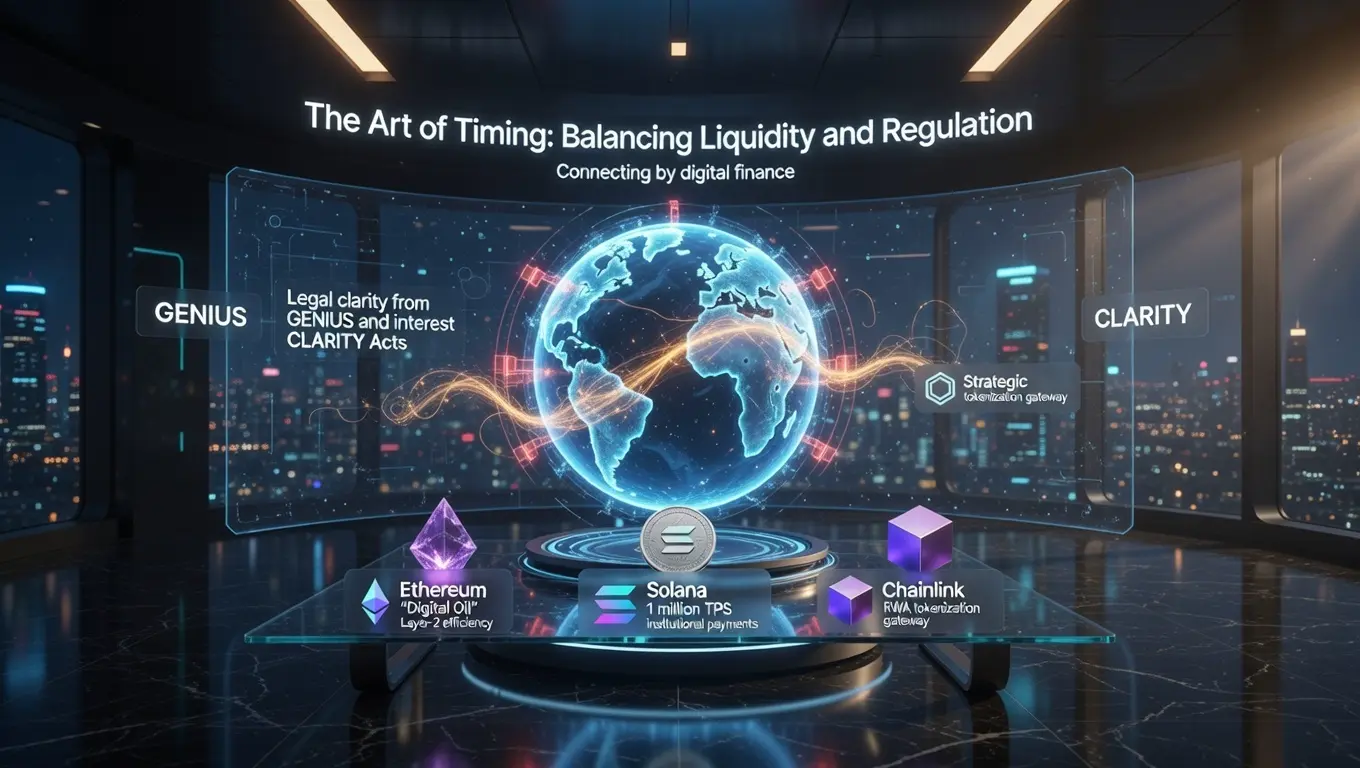
The Art of Timing: Balancing Liquidity and Regulation
As of February 2026, two primary pillars determine the optimal timing for market entry. The first is the legal clarity provided by the GENIUS and CLARITY Acts in the U.S.; the second is the stance of central banks within their interest rate cycles.
For professional investors, the "best time" is not at the peaks driven by irrational exuberance (FOMO), but during "consolidation" phases—times when the market is shaken by regulatory news yet its fundamental dynamics remain intact. The current market structure su
ETH1.67%
SOL3.13%
LINK1.44%
Discoveryvip
#WhenisBestTimetoEntertheMarket
The Art of Timing: Balancing Liquidity and Regulation
As of February 2026, two primary pillars determine the optimal timing for market entry. The first is the legal clarity provided by the GENIUS and CLARITY Acts in the U.S.; the second is the stance of central banks within their interest rate cycles.
For professional investors, the "best time" is not at the peaks driven by irrational exuberance (FOMO), but during "consolidation" phases—times when the market is shaken by regulatory news yet its fundamental dynamics remain intact. The current market structure suggests we are in a strategic accumulation phase, where "Smart Money" utilizes retail investor fear as a source of liquidity.
Strategic and Favorite Assets of 2026
Being in the right asset at the right time is the golden rule of portfolio management. Here are the projects currently standing out and exerting significant weight in the ecosystem:
Ethereum (ETH): Fully living up to its "Digital Oil" moniker in 2026. With Layer-2 (L2) solutions reaching ultimate efficiency and the legalization of institutional staking mechanisms, ETH has evolved from a mere asset into a foundational financial infrastructure. Pullbacks remain the strongest opportunity for long-term accumulation.
Solana (SOL): Having relegated network outages to history following the Firedancer update, Solana is approaching a capacity of 1 million transactions per second (TPS). It is rapidly becoming the blockchain backbone for institutional payment systems like Visa and Mastercard. An indispensable choice for investors focused on speed and cost-efficiency.
Chainlink (LINK): Serving as the sole gateway for the tokenization of Real-World Assets (RWA), Chainlink deepened its integration with SWIFT in 2026. It maintains a "safe haven" profile by acting as the essential infrastructure provider amidst market uncertainty.
Investment Strategy: DCA and Emotional Management
In the complex economic environment of 2026, the most professional approach is using the Dollar-Cost Averaging (DCA) method rather than a "lump-sum" (All-in) entry. While regulatory news from Hong Kong and Washington creates short-term volatility, for investors with a long-term projection, these fluctuations represent prime opportunities to lower cost basis.
Key Takeaway: Move based on value proposition, not market clocks. If an asset’s use case is expanding and institutional adoption is rising, technical corrections are simply "discounts."
In this new era of digital finance, the best time to enter is the moment your strategy takes precedence over your emotions.
repost-content-media
  • Reward
  • Comment
  • Repost
  • Share
💞💞
Discoveryvip
#GateSpringFestivalHorseRacingEvent
Festival Breezes on Digital Tracks
Starting in February 2026, this exclusive event blends traditional Spring Festival symbols with modern financial interaction. Participants have the opportunity to claim a share of a massive prize pool by accelerating their own "digital racing horses" through social activities on Gate Square.
The key dynamics driving this process include:
Social Fuel Mechanism: Shares, comments, and interactions generated by users on Gate Square transform into "boosts" that propel them forward in the race.
Collective Racing: In addition to individual performance, special "Treasure Chests" are unlocked when community goals are met, turning the event into a comprehensive team effort.
Prize Pool and Prestige Categories
The total prize pool, exceeding $50,000, caters to every type of user through various participation models:
1. Champions of the Track: The Leaderboard
The "jockeys" who accumulate the highest interaction points are rewarded not only with substantial Gate Token (GT) prizes but also gain prestige by being honored with exclusive badges like "Racer of the Year" on the platform.
2. Mystery Envelopes and Instant Gifts
Users who pass specific milestones during the race are distributed digital red packets containing numerous surprises, ranging from futures trading bonuses to discount coupons.
3. Limited Edition Collection Items
For participants who reach the summit of the race, signed jerseys representing Gate.io’s global sports partnerships (such as Inter Milan) and limited-edition VIP gift sets turn digital earnings into a physical memento.
Why Should You Participate? A Professional Evaluation
This event goes far beyond a simple giveaway structure, offering users the chance to experience the full spectrum of the platform’s features.
Ecosystem Integration: Racing tasks enhance financial literacy in an entertaining way by informing users about spot trading, futures, and staking.
Community Sentiment: The thousands of pieces of content shared under the event serve as a massive data mine for investors looking to gauge the pulse of current trends like AI, RWA, and Memecoins.
In Conclusion: This race, organized as part of the 2026 Spring Festival, proves once again how dynamic and lucrative social participation can be in the digital asset world.
repost-content-media
  • Reward
  • Comment
  • Repost
  • Share
Discoveryvip
#GateSpringFestivalHorseRacingEvent
Strategic Moves on Digital Tracks
In this year's event, Gate.io invites participants to share in a massive prize pool totaling 100,000 USDT. The campaign, centered around horse racing predictions and interactive tasks, enables users to both enjoy the experience and leverage their assets within the ecosystem. Notably, the "Ride to Success" leaderboard offers exclusive rewards to the top 50 performers, while surprising lucky participants with physical prizes such as 100 grams of gold.
The standout dynamics of the campaign include:
Million-Scale Red Packet Rain: The "Red Packet" tradition, a symbol of luck and prosperity during the traditional Spring Festival, comes to life on the digital platform with millions of gift coins distributed daily.
Prediction Carnival: Using the racing tickets they acquire, participants predict the outcomes of digital races to claim their share of the prize pool.
Community Engagement: The event builds an interactive bond through Gate Square and social media channels, bringing investors together and creating a sense of belonging rarely seen in the trading world.
A Visionary Approach: The Synthesis of Entertainment and Finance
This campaign proves once again that modern finance is not just about charts, but also about experience design. The platform’s 2026 vision masterfully employs gamification mechanics to bring blockchain technology to broader audiences. Every strategic move on the racetrack represents the decisive stance an investor must take in the actual market.
Combining the renewing energy of spring with the dynamism of digital assets, this event will continue until March 1, 2026. For participants, being part of a global celebration is regarded as the most valuable reward of this process, beyond just the winnings.
Bana bu yazıya uygun benzersiz bir tasarım uygulayarak teknolojik bir görsel oluştur
repost-content-media
  • Reward
  • Comment
  • Repost
  • Share
  • Pin

Trade Crypto Anywhere Anytime
qrCode
Scan to download Gate App
Community
English
  • 简体中文
  • English
  • Tiếng Việt
  • 繁體中文
  • Español
  • Русский
  • Français (Afrique)
  • Português (Portugal)
  • Bahasa Indonesia
  • 日本語
  • بالعربية
  • Українська
  • Português (Brasil)