How Stablecoins Are Transforming Cryptocurrency Payments and Shaping the Future of Global Financial Transactions

How Stablecoins Are Transforming Cryptocurrency Payments and Shaping the Future of Global Financial Transactions

Examining the transformative role of stablecoins in B2B payments. Discover how stablecoins such as USDT deliver cost-effective and efficient solutions for corporate cross-border settlements. Assess regulatory trends, technological innovation, and market outlooks in blockchain payment systems, offering expert perspectives for enterprise finance executives.
2026-01-18 12:46:12
OpenEden RWA Tokens: Unlocking Institutional-Grade Asset Tokenization

OpenEden RWA Tokens: Unlocking Institutional-Grade Asset Tokenization

OpenEden transforms financial markets through real-world asset (RWA) tokenization, introducing TBILL and USDO—institutional-grade products bridging traditional finance with blockchain efficiency. TBILL tokens represent U.S. Treasury bills with instant liquidity and 24/7 trading, while USDO delivers a yield-bearing stablecoin maintaining 1:1 dollar peg. Backed by The Bank of New York Mellon custody and rated 'A' by Moody's, these products offer institutional compliance with democratic accessibility. Deployed across Ethereum, Arbitrum, Solana, Base, and BNB Chain, OpenEden enables fractional ownership and seamless transfers. Integration with DeFi protocols like Curve and Balancer unlocks additional yield opportunities. With smart contract automation ensuring transparency and $5 million institutional funding, OpenEden leads the tokenized RWA sector positioned to capture exponential market growth as regulatory clarity improves and institutional adoption accelerates globally.
2026-01-18 11:25:18
TRON Crypto Surge: How TRON Surpassed Its Competitors with a Distinctive Token Economy

TRON Crypto Surge: How TRON Surpassed Its Competitors with a Distinctive Token Economy

Explore how TRON secures its lead across key competitive fronts in the crypto market with a negative issuance rate, seamless USDT integration, and DPoS consensus. This in-depth analysis covers tokenomics, Web3 strategy, and comparative performance against rivals. An indispensable resource for investors and traders.
2026-01-18 11:18:51
What does ONDO's SEC no-action letter reveal about crypto compliance and regulatory risks in 2025?

What does ONDO's SEC no-action letter reveal about crypto compliance and regulatory risks in 2025?

This article examines how Ondo Finance's SEC no-action letter reshapes crypto compliance and regulatory expectations in 2025. After two years of investigation, the SEC's decision to close without enforcement action signals that tokenized securities can operate within existing regulatory frameworks, eliminating ambiguity around digital asset compliance. The letter reveals three critical insights: tokenization requires substance-based compliance rather than novel regulations, robust KYC/AML implementation serves as competitive advantage rather than burden, and transparent regulator cooperation establishes industry standards. Ondo's transparent engagement transformed scrutiny into regulatory clarity, positioning the company as compliance exemplar. For institutional participants and platforms on Gate or similar exchanges, the case demonstrates that institutional-grade governance, established financial partnerships, and rigorous risk management frameworks attract regulatory confidence. The article addresses key qu
2026-01-18 11:18:37
What is Polygon (POL) fundamental analysis: whitepaper logic, use cases, and technology innovation in 2026

What is Polygon (POL) fundamental analysis: whitepaper logic, use cases, and technology innovation in 2026

This comprehensive Polygon (POL) fundamental analysis examines the Layer 2 scaling solution's core technology innovation, tokenomics, and enterprise ecosystem development through 2026. The article explores Polygon's dual-mechanism architecture delivering 178 million daily transactions with systematic 1 million POL daily token burns, creating deflationary pressure through 3.6 billion staked tokens. It details the Open Money Stack payment framework enabling enterprise adoption across healthcare and finance sectors with ISO 20022 compliance and 99.99% uptime SLAs. The analysis covers network fundamentals, organizational restructuring prioritizing payment solutions, and the 2026 roadmap targeting 100,000 TPS through Gigagas optimization. Perfect for investors and enterprises evaluating Polygon's competitive positioning against Arbitrum and Optimism on Gate exchange platforms.
2026-01-18 11:07:30
How does token economics model ensure PAXG gold-backed stability and value preservation in 2026

How does token economics model ensure PAXG gold-backed stability and value preservation in 2026

This article explores how PAXG's token economics model ensures stability and value preservation through 2026. The foundation rests on 1:1 physical gold backing with LBMA certification, where each token represents one fine ounce stored in professional vaults and independently audited monthly. Paxos's conversion to OCC trust charter provides federal regulatory oversight, elevating institutional confidence. Transparent reserve verification via KPMG attestations and comprehensive insurance protection safeguard holdings. Beyond custody, PAXG's DeFi integration with MakerDAO, Compound, and Aave enables productive collateral utilization, unlocking liquidity while maintaining gold exposure. This composability advantage strengthens market depth and acceptance across platforms, positioning PAXG as a superior alternative to traditional gold storage solutions in digital finance ecosystems.
2026-01-18 11:01:08
Spotlight on Altcoins: How Ethereum-Compatible Plasma Is Transforming Stablecoin Payment Systems

Spotlight on Altcoins: How Ethereum-Compatible Plasma Is Transforming Stablecoin Payment Systems

Explore the mechanics of Plasma sidechains, a groundbreaking scaling solution for blockchain that offers zero-fee USDT transfers, employs the PlasmaBFT consensus mechanism, integrates with more than 100 DeFi protocols, and features a minimized Bitcoin bridge. This in-depth review covers functionality, security, and practical applications for both crypto investors and developers.
2026-01-18 11:00:20
How does macroeconomic policy impact cryptocurrency prices in 2026: Fed decisions, inflation data, and market volatility explained

How does macroeconomic policy impact cryptocurrency prices in 2026: Fed decisions, inflation data, and market volatility explained

This comprehensive guide explains how macroeconomic policies directly reshape cryptocurrency valuations in 2026. The article addresses three primary mechanisms: Federal Reserve rate cuts that inject liquidity and boost digital asset demand through institutional portfolios; tariff-driven inflation eroding purchasing power, pushing investors toward Bitcoin hedges and defensive stablecoins; and traditional market contagion effects where S&P 500 volatility and gold correlations signal crypto price movements. Designed for institutional investors, crypto traders, and policy-aware portfolios, this analysis reveals how Fed decisions, inflation trajectories, and equity market stress transmit through cryptocurrency markets via established channels. By exploring Bitcoin-gold correlation divergence, institutional ETF adoption, and leverage dynamics, the article demonstrates cryptocurrency's evolution from isolated speculation into macro-sensitive assets integrated within broader financial ecosystems. Essential reading fo
2026-01-18 10:59:05
What is token economics model: LUNC allocation, inflation mechanics, burn strategy and governance explained

What is token economics model: LUNC allocation, inflation mechanics, burn strategy and governance explained

This comprehensive analysis examines LUNC's token economics model, exploring why Terra Classic's dual-token mechanism catastrophically failed from $120 to near-zero. The article deconstructs three critical failures: the algorithmic stablecoin's flawed mint-burn arbitrage model, Anchor Protocol's unsustainable 20% APY yield promises that depleted reserves, and the paradoxical death spiral where deflationary burn strategies reversed into hyperinflation through governance modifications. Following the May 2022 collapse, LUNC transitioned from a multi-functional token to a pure governance token with limited utility. Detailed exploration of allocation schemes, inflation mechanics, burn strategies, and decentralized governance mechanisms reveals fundamental vulnerabilities in sustainable token economics design. This cautionary case study demonstrates how protocol complexity, reserve mismanagement, and governance changes can trigger systemic ecosystem failures, reshaping modern understanding of crypto tokenomics arch
2026-01-18 10:50:48
Ripple, XRP, and Treasury Strategies: How Enterprises Are Harnessing Blockchain for Financial Innovation

Ripple, XRP, and Treasury Strategies: How Enterprises Are Harnessing Blockchain for Financial Innovation

Explore how Ripple and XRP are revolutionizing corporate treasury operations through rapid 3–5 second transaction times, low costs, and widespread institutional adoption. Examine blockchain strategies tailored for contemporary finance and the tokenization of Treasury bonds.
2026-01-18 10:49:07
What is Zebec Network (ZBCN): Whitepaper Logic, Use Cases, and Technical Innovation Explained

What is Zebec Network (ZBCN): Whitepaper Logic, Use Cases, and Technical Innovation Explained

Zebec Network (ZBCN) is a multi-chain RWA protocol revolutionizing real-time payments by bridging Web2 and Web3 finance through its Nacha partnership, providing direct access to the $85 trillion ACH network. The platform enables instant stablecoin payroll streaming and decentralized financial services across Solana, BNB Chain, and Ethereum, eliminating traditional settlement delays while maintaining institutional-grade compliance. ZBCN token powers the ecosystem through governance, transaction settlement, and network participation incentives, supported by integrated AI for automated fraud detection and tax compliance. Technical innovation includes high-throughput blockchain architecture achieving 2000+ TPS alongside FedNow integration announced for Q1 2026, enabling U.S. payrolls directly via blockchain infrastructure. Led by CEO Simon Babakhani with deep traditional finance expertise, Zebec's 2026 roadmap prioritizes regulated stablecoin salary payments as infrastructure, positioning the network as essential
2026-01-18 10:31:31
What is the SEC's stance on crypto compliance and regulatory risks in 2026?

What is the SEC's stance on crypto compliance and regulatory risks in 2026?

This article examines the SEC's transformed regulatory approach to cryptocurrency compliance in 2026, shifting from aggressive enforcement toward framework clarity. The GENIUS Act and CLARITY Act establish structured compliance pathways for stablecoins and digital asset exchanges. Crypto platforms must implement robust audit transparency, fair-value asset reporting, and comprehensive AML/KYC protocols aligned with FATF Travel Rule standards. The SEC's 2025 enforcement recalibration—reducing litigation while issuing no-action letters—signals expectation for proactive compliance over punitive actions. Key compliance domains include securities classification, custody standards, and transaction monitoring. Whether trading on Gate or operating platforms, organizations adopting continuous risk reporting and independent audits differentiate competitively. This regulatory evolution demonstrates crypto's institutional legitimacy, requiring participants to balance innovation with stringent investor protection and finan
2026-01-18 10:27:05
Top stablecoins to keep an eye on

Top stablecoins to keep an eye on

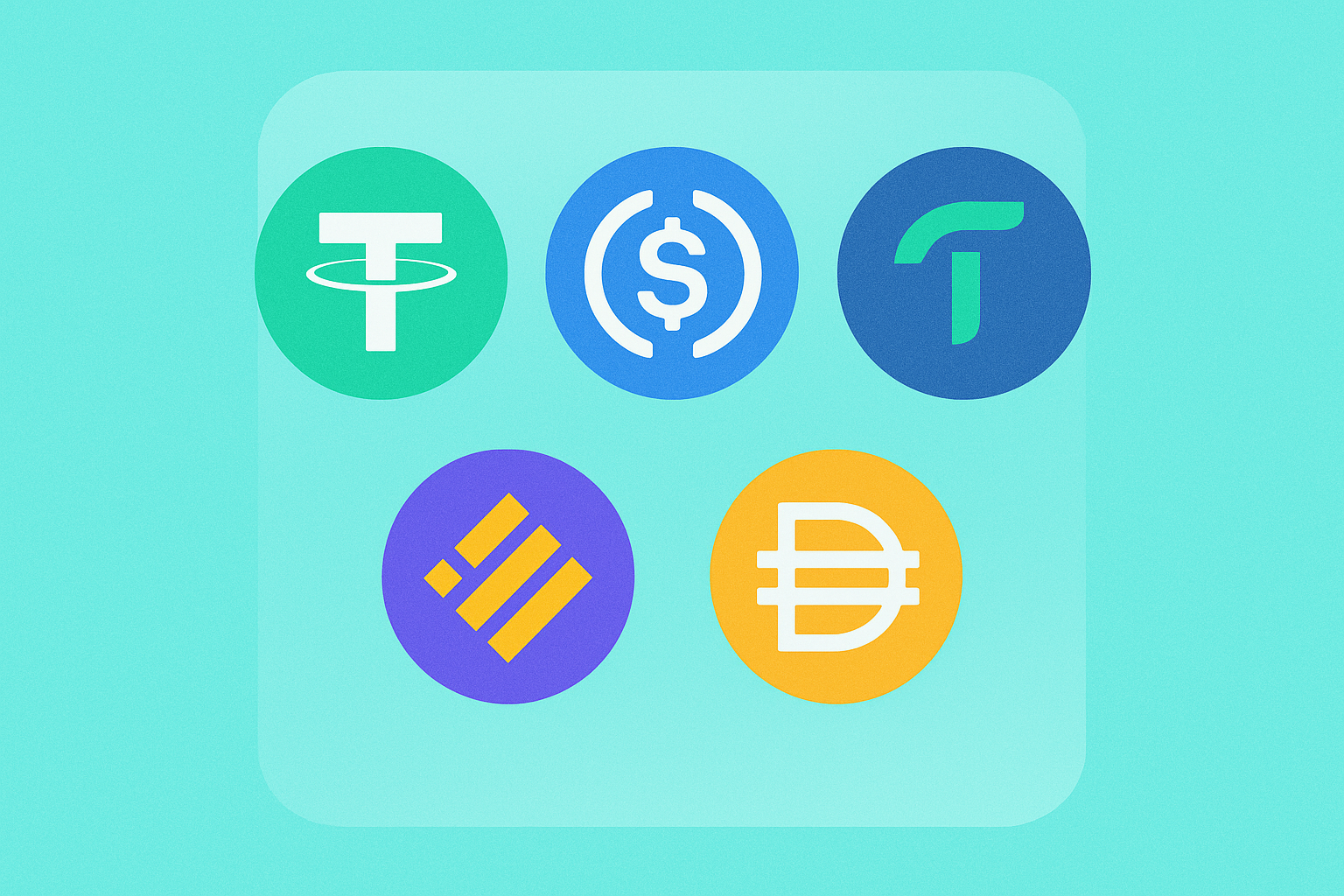
Learn what stablecoins are and how they function. This in-depth guide covers leading stablecoins—USDT, USDC, DAI, and others. Examine the advantages and risks of stablecoins in trading on Gate, their role in DeFi applications, and how they help mitigate volatility.
2026-01-18 09:02:22
What are the core compliance and regulatory risks in cryptocurrency markets in 2026: SEC oversight, KYC/AML requirements, and audit transparency

What are the core compliance and regulatory risks in cryptocurrency markets in 2026: SEC oversight, KYC/AML requirements, and audit transparency

This article provides a comprehensive analysis of critical compliance and regulatory risks facing cryptocurrency markets in 2026. It examines the SEC's evolving regulatory framework, including new token classification standards and enhanced audit transparency requirements that fundamentally reshape digital asset oversight. The piece explores multi-dimensional KYC/AML implementation challenges affecting 58 major exchanges globally, highlighting the operational friction between regulatory demands and user experience. Additionally, it addresses cross-border data protection compliance costs under GDPR and CCPA frameworks, demonstrating how regulatory enforcement escalates operational expenses. The article assesses how these regulatory developments have transformed exchange business models and risk management strategies, particularly through Travel Rule implementation and operational-resilience standards. Designed for compliance officers, exchange operators, and institutional investors, this guide clarifies regula
2026-01-18 08:53:25
Launch Your P2P Trading Career: Step-by-Step Guide

Launch Your P2P Trading Career: Step-by-Step Guide

Unlock powerful strategies to profit from P2P cryptocurrency trading. Explore proven arbitrage methods and begin trading on Gate and other leading platforms. This detailed guide for newcomers includes essential risk management advice and insights for scaling your operations globally.
2026-01-18 08:46:17