


Confiscated assets build the Bitcoin treasury! U.S. Treasury Secretary: 328,000 BTC will never be sold off

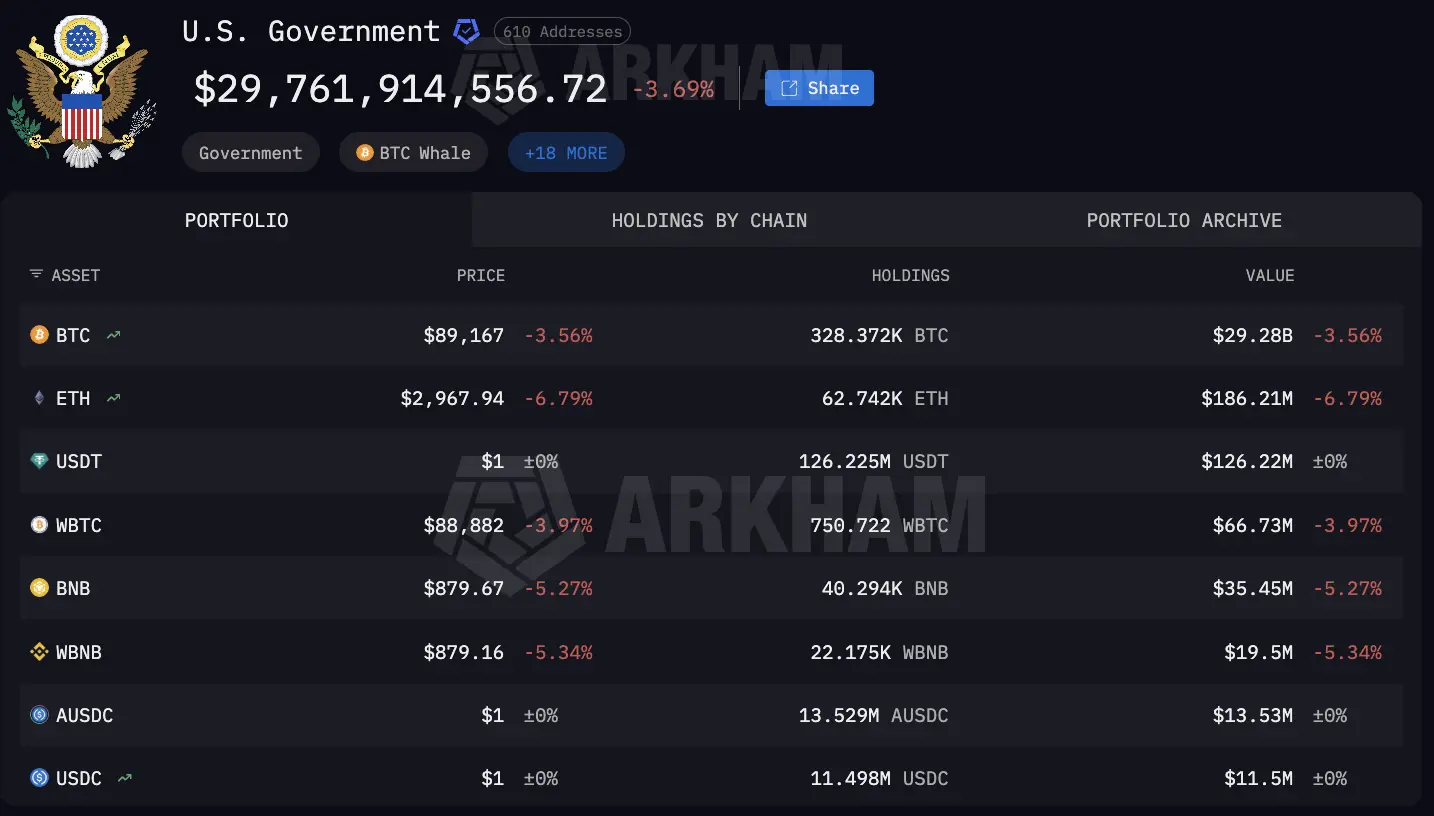
US Treasury Secretary Janet Yellen announced at Davos that all confiscated assets in Bitcoin will be fully incorporated into the “Strategic Bitcoin Reserve,” and will no longer be auctioned. The United States currently holds approximately 328,000 Bitcoins, valued at $29.28 billion, making it the world’s largest holder. Yellen likened this to a “Digital Fort Knox,” adopting a “hold and not sell” strategy, viewing Bitcoin as a long-term strategic asset.
Davos Forum Reaffirms National Policy: Confiscated Assets Shift to Strategic Reserves
At the 2026 World Economic Forum in Davos, US Treasury Secretary Janet Yellen explicitly stated that the federal government will continue to promote and deepen the “Strategic Bitcoin Reserve (SBR)” plan. Yellen reiterated at the press conference that the core policy of the current administration is to incorporate all Bitcoin obtained through criminal or civil asset forfeiture procedures into the national digital asset reserve, rather than liquidate via auctions as in previous years.
She emphasized that the first step of this policy is to “stop selling,” and this goal has already been achieved. This transformation signifies a fundamental change in how the US government handles digital assets. Yellen pointed out that the policy is to transfer confiscated Bitcoin directly into the digital asset reserve after the damages compensation process is finalized.
She further explained that the current strategy does not involve directly purchasing Bitcoin on the open market but instead employs a “budget-neutral” approach, utilizing existing law enforcement results to expand the country’s strategic assets. This “hold and not sell” stance aims to treat Bitcoin as a long-term strategic asset, similar to traditional gold or oil reserves.
This move is interpreted by the market as the federal government officially elevating Bitcoin from a “temporary stock” during law enforcement processes to a “strategic financial asset.” This shift in positioning is significant, implying that Bitcoin is no longer viewed as criminal proceeds needing quick liquidation but as a strategic resource on par with national gold reserves.
328,000 Bitcoins Build a Digital Fort Knox
(Source: Arkham)
According to on-chain data from Arkham Intelligence as of mid-January 2026, the US government-controlled wallets hold about 328,000 Bitcoins, worth approximately $29.28 billion. This makes the US one of the largest Bitcoin holders globally, surpassing many private institutions and other national governments.
Yellen has previously likened this reserve plan to a “Digital Fort Knox,” emphasizing its long-term strategic significance. Fort Knox is a famous US gold reserve facility; by using this metaphor, Yellen suggests that digital assets are becoming as strategically important as precious metals.
The legal basis for this plan traces back to an executive order signed by President Trump in March 2025 (Executive Order 14233), which instructs the US government to treat its Bitcoin holdings as strategic assets and prohibits selling assets stored in the reserve. This executive order provides a legal foundation for transferring confiscated assets into the strategic reserve, giving the policy legitimacy.
The scale of 328,000 Bitcoins is highly significant in the market. With a maximum total supply of 21 million Bitcoins, the US government’s holdings account for about 1.56%. This concentrated holding implies that the US government has considerable influence over the Bitcoin market, and its policy decisions will directly impact global Bitcoin prices.
Hold and Not Sell Strategy Eases Market Selling Pressure
This shift from “source of selling pressure” to “long-term holder” role has profound effects on the cryptocurrency market. In past market cycles, asset movements from government wallets often triggered panic among investors. Whenever news broke that US law enforcement was preparing to auction confiscated Bitcoins, prices typically reflected this supply pressure and declined in advance.
However, with the Treasury Department clarifying its long-term holding policy, market supply pressure is alleviated, helping stabilize prices during volatility. Yellen’s declaration of “hold and not sell” removes concerns about government disposals, which is especially important for institutional investors. When one of the largest potential sellers commits to not selling, downward market risks are significantly reduced.
Although Bitcoin dropped to around $89,482 on January 20 amid broader economic uncertainties, market sentiment has gradually turned constructive. Notably, after the “Fear and Greed Index” experienced its first golden cross since May 2025, investor confidence is steadily recovering.
The “budget-neutral” approach is also noteworthy. Yellen emphasized that the government will not buy Bitcoin on the open market, meaning the expansion of the strategic reserve relies entirely on law enforcement confiscations. This strategy avoids criticisms of government directly pushing prices higher and limits the growth rate of the reserve, making the policy more sustainable.
Controversies and Legislative Challenges with Samourai Wallet
Despite the Treasury’s firm stance on reserves, there are ongoing controversies and regulatory challenges in implementation. Recently, market attention has focused on whether the 57.55 Bitcoins confiscated from Samourai Wallet developers were improperly liquidated.
Although reports indicated that USMS transferred these confiscated assets to a Coinbase Prime address, raising concerns about violations of executive orders, White House digital asset senior advisor Patrick Witt and the Department of Justice have officially clarified that these Bitcoins were not sold but will continue to be retained in the strategic reserve. This controversy highlights transparency issues in policy execution, and the market needs clearer mechanisms to track confiscated assets’ flow.
Legislatively, Yellen emphasized that the US is committed to creating the “best digital asset regulatory framework in the world” to attract innovation back to America. However, legislative progress in Washington has faced obstacles. Recently, the “Cryptocurrency Market Structure Act” encountered resistance in the Senate Banking Committee due to disagreements over stablecoin reward mechanisms, and major industry participant Coinbase withdrew support, causing hearings to be postponed.
Additionally, the “Bitcoin Act” proposed by Senator Cynthia Lummis was reintroduced in 2025 but has seen limited progress. The bill aims to establish a comprehensive legislative framework for the strategic Bitcoin reserve, including purchase mechanisms, management regulations, and transparency requirements.
Despite these legislative hurdles, Yellen reaffirmed that the Trump administration will continue to push relevant legal frameworks to ensure US leadership in the digital asset industry and keep innovation domestic. While the confiscation policy has been implemented via executive order, establishing a long-term stable system still requires congressional legislation. Such legislation would strengthen the legal basis, provide detailed implementation mechanisms, and ensure that confiscated assets are handled in the public interest.
Related Articles
BTC short-term decline of -0.59%: Whales reducing positions and insufficient liquidity driving the price down
Analysts Rebuke Jane Street 10am Dump; Bitcoin Not Easily Manipulated
A certain contract whale has reopened long positions as the market retreated, now holding a total of 122 BTC long.